Introduction
Early-stage B2B founders face a hiring decision that can make or break pipeline momentum: should they hire an SDR, an AE, or both? Confusing these two roles costs startups thousands in wasted salary, months of lost time, and stalled revenue growth.
The problem is that SDRs and AEs serve fundamentally different parts of the sales funnel. Hiring the wrong role at the wrong stage ranks among the most common mistakes seed-to-Series A companies make. SDRs generate pipeline; AEs close it. Getting the sequence wrong burns runway fast.
Key Takeaways
- SDRs focus on top-of-funnel work: prospecting, qualifying leads, and booking meetings for AEs
- AEs own bottom-of-funnel revenue: running demos, negotiating terms, and closing deals
- Different skills, KPIs, and experience levels define each role — they're not interchangeable
- Most startups need consistent pipeline generation before (or alongside) hiring a closer
- Fractional models let you test both roles quickly without full-time commitment risk
AE vs SDR: Quick Comparison
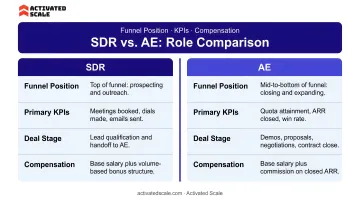
| Dimension | SDR (Sales Development Representative) | AE (Account Executive) |
|---|---|---|
| Primary Focus | Top of funnel: lead generation and qualification | Bottom of funnel: closing revenue |
| Position in Sales Funnel | Prospecting → Qualification → Meeting Handoff | Demo → Proposal → Negotiation → Close |
| Key Activities | Cold calling, cold emailing, LinkedIn outreach, initial discovery, meeting booking | Product demos, multi-stakeholder relationship building, contract negotiation, revenue generation |
| Success Metrics (KPIs) | Meetings booked, qualified leads generated, outreach volume, connect rate | Revenue closed (ARR/MRR), win rate, average deal size, sales cycle length |
| Required Experience | Entry-level to 3 years; resilience and high-volume discipline | Mid-to-senior level; 3-5+ years; strategic selling and negotiation expertise |
| Typical OTE (US) | $85,000 (median); $70K-$100K+ depending on experience and region | $190,000 (median); $156K-$197K+ total pay |
Full-time vs. Fractional:
In very early-stage startups, one person sometimes covers both functions temporarily, but this creates severe bottlenecks as volume increases. When a single rep must both generate and close pipeline, prospecting suffers during active deal negotiations and close rates drop when activity metrics crowd out deal quality.
Separating the roles typically improves conversion rates, shortens the time from first contact to closed deal, and allows each function to scale independently.
Fractional alternative: Activated Scale places fractional SDRs at $3,500-$4,500/month plus commission and fractional AEs at $4,500-$7,500/month plus commission—letting you test both roles in under 7 days without the 5.7-month ramp time and $115,000+ replacement cost risk of traditional full-time hires.
What is a Sales Development Representative (SDR)?
An SDR is the first point of contact in the outbound sales process. They identify potential buyers, initiate outreach, and qualify leads before passing them to an AE. SDRs don't close deals—they create the pipeline that makes closing possible.
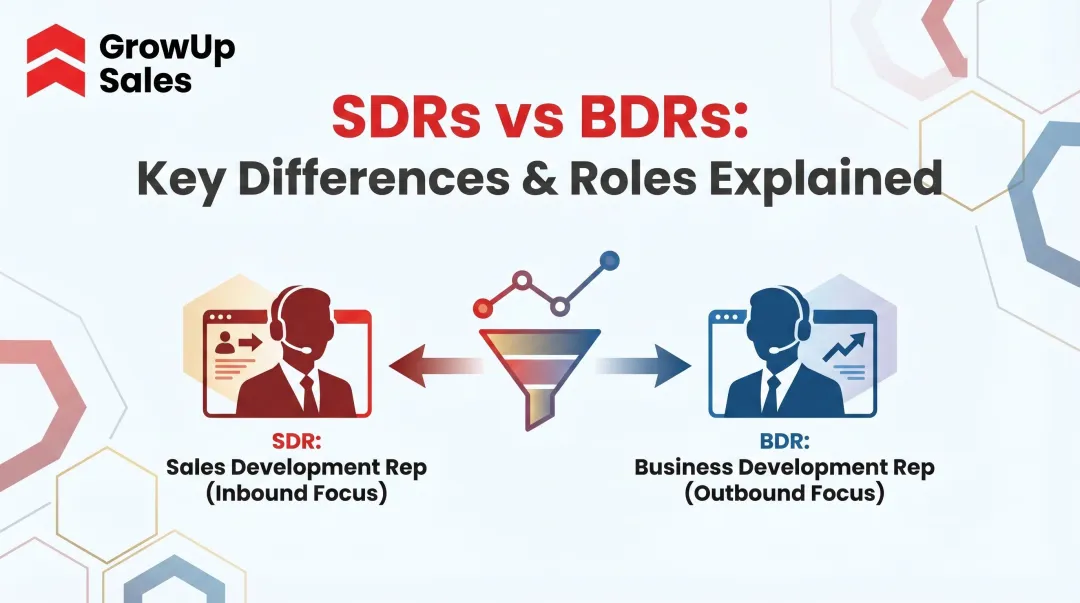
Inbound vs. Outbound SDRs:
- Inbound SDRs qualify marketing-generated leads (form fills, demo requests, content downloads)
- Outbound SDRs/BDRs cold prospect into target accounts, building pipeline from scratch
Many startups use one person for both, especially early on, when inbound volume is low and outbound drives most pipeline.
Core SDR Responsibilities
SDRs execute high-volume, top-of-funnel activities daily:
- Researching and building prospect lists based on ICP (Ideal Customer Profile)
- Cold calling target accounts (40-50 calls/day average)
- Cold emailing decision-makers (10-40 emails/day)
- LinkedIn outreach and social selling
- Conducting initial discovery conversations to surface pain points
- Scheduling qualified meetings for AEs
Critical distinction: SDRs are measured on pipeline volume, not closed revenue. Outbound SDRs schedule approximately 21 meetings per month with a 62% conversion rate, but their job ends at the handoff.
Key SDR Skills
- Tolerates rejection without losing momentum — cold outreach means hearing "no" constantly
- Maintains consistent daily activity volume (consistency beats perfection here)
- Identifies prospect pain points quickly in 5-10 minute discovery calls
- Tracks touchpoints, cadences, and qualification notes accurately in CRM
- Applies qualification frameworks like BANT or MEDDIC to assess lead fit
Lead qualification frameworks:
- BANT (Budget, Authority, Need, Timeline): Best for deals under $50K with straightforward buying processes
- MEDDIC/MEDDPICC (Metrics, Economic Buyer, Decision Criteria, Decision Process, Identify Pain, Champion, Competition): Adopted by 73% of high-ARR SaaS companies and delivers 18% higher win rates in complex B2B sales
What SDRs DON'T Do
SDRs are not responsible for:
- Running product demos
- Presenting proposals or pricing
- Negotiating contract terms
- Closing deals
Passing unqualified leads to an AE wastes expensive closing time and tanks conversion rates. A strong SDR filters rigorously — only qualified opportunities should reach the AE's pipeline.
SDR Performance Benchmarks
Use these benchmarks to set realistic expectations when hiring or evaluating an SDR:
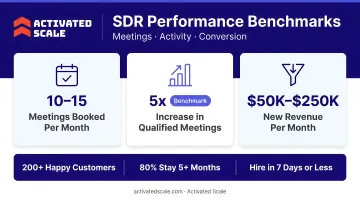
Meetings booked:
- 10-20 meetings per month (general range)
- Ramped SDRs (6+ months): 15-25 meetings/month
- Early ramp (Months 1-3): 5-10 meetings/month
Activity volume:
- 80-100 total activities per day (calls + emails + LinkedIn touches)
- 4.4 quality conversations per day
- 4.4% connect rate (4.4 connects per 100 outreach attempts)
Lead-to-opportunity conversion:
- 58% conversion rate from SDR-qualified lead to sales opportunity
- Meeting show rate: 75-85%
Use Cases for SDRs in B2B SaaS Startups
SDRs are especially valuable when a startup has a defined ICP but lacks a reliable inbound engine. They build predictable pipeline from scratch, which matters most at pre-product-market-fit and early growth stages.
Common scenario:
A seed-stage SaaS founder is doing all outreach themselves. They're cold emailing 20 prospects per week, booking 2-3 meetings per month, and spending 15+ hours weekly on prospecting. Meanwhile, product development stalls and fundraising prep gets pushed back.
Impact of adding one SDR:
- Prospecting and qualification move off the founder's plate entirely
- Meeting volume increases to 15-20 per month within 3-4 months
- Founder reclaims 15-20 hours weekly to focus on closing, product, and fundraising
- Pipeline becomes predictable and measurable
That pattern plays out consistently in practice. Activated Scale's fractional SDRs help clients book 10-15 qualified meetings per month within the first 30-60 days, running cold email, phone, and LinkedIn outreach across target accounts.
What is an Account Executive (AE)?
An AE is a mid-to-senior sales professional who takes qualified leads and guides them from initial interest through close. AEs are revenue-generating roles, directly accountable for closed-won deals and quota attainment.
Core AE Responsibilities
- Running tailored product demonstrations that connect features to prospect pain points
- Building relationships with decision-makers and navigating multi-stakeholder buying processes
- Managing a pipeline of active deals through CRM
- Creating and presenting customized proposals
- Negotiating pricing, contract terms, and implementation timelines
- Managing client expectations and objections through the sales cycle
Skills Required for AEs
AEs need a different skillset than SDRs:
- Positions product features against competitor offerings with deep knowledge of the solution
- Diagnoses business problems and prescribes solutions through consultative selling
- Handles pricing objections, procurement teams, and legal redlines in complex negotiations
- Reads stakeholder dynamics and adapts messaging across buying committees
- Commands a room—virtual or in-person—when presenting to C-level buyers
- Prioritizes deals, forecasts accurately, and manages pipeline velocity in the CRM
Why AEs and SDRs can't be interchangeable: SDRs thrive on high-volume, short-cycle activities. AEs focus on low-volume, long-cycle strategic selling. One role runs on resilience and discipline; the other requires deep product expertise and relationship-building skill.
AE Performance Benchmarks
Revenue closed:
- Median annual quota: $800,000 ACV (up from $740K in 2022)
- Quota-to-OTE ratio: 4.2x median
Win rates:
- Median win rate: 19% across all SaaS companies
- SDR-sourced opportunities: 22% closed-won rate
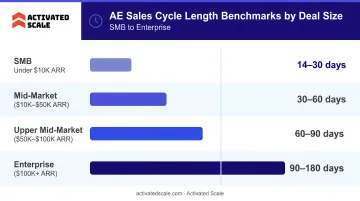
Sales cycle length:
- SMB (<$15K ACV): 14-30 days
- Mid-Market ($15K-$50K ACV): 30-60 days
- Upper Mid ($50K-$100K ACV): 60-90 days
- Enterprise (>$100K ACV): 90+ days
Quota attainment:
- 51% of AEs hitting quota in 2024 (down from 66% in 2022)—reflecting tighter market conditions and longer cycles
Upselling and Account Expansion
Great AEs don't stop at the close. Account Managers own 42% of upsell and 36% of cross-sell opportunities in most SaaS organizations, though some companies assign this to Customer Success. AEs who maintain relationships post-close surface expansion opportunities that increase customer lifetime value, turning a $20K initial deal into $60K+ over 18 months.
Use Cases for AEs in B2B SaaS Startups
Startups need an AE once inbound or SDR-sourced meetings are being booked, but the founder or generalist closer can no longer handle them all without sacrificing deal quality.
When to hire an AE:
You're booking 10+ qualified meetings per month (via inbound, founder outreach, or SDR), but:
- Deals are stalling in demo or proposal stages
- Win rates are dropping because follow-up is inconsistent
- The founder is spending 25+ hours weekly on sales, crowding out product and strategy work
Hitting those thresholds without bringing on a dedicated closer creates compounding damage.
What happens without a strong AE:
27% of qualified pipeline is lost due to poor handoff processes—and without a dedicated closer, that number climbs. The downstream effects compound quickly:
- SDRs lose motivation when meetings consistently fail to convert
- Pipeline metrics look healthy while actual revenue stalls
- The startup burns budget on sourcing activity that never closes
AE vs SDR: Which Role Does Your Startup Need?
Hire an SDR first if:
- Your primary bottleneck is getting in front of qualified buyers
- Pipeline is dry or inconsistent
- You're not booking 10+ qualified meetings per month
- You have time to close deals but lack leads to work
Hire an AE first if:
- You already have inbound interest or a founder-led pipeline
- Deals are stalling or not closing
- You're booking 10+ meetings per month but conversion rates are low
- The founder's closing time is crowding out product, fundraising, or strategic work
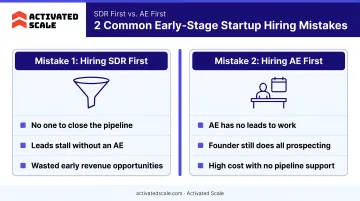
The Most Common Early-Stage Mistake
Hiring an AE before you have pipeline.
What happens: You pay $190K OTE for an experienced closer who has nothing to close. The AE becomes a glorified SDR (inefficiently), morale drops, and you miss revenue targets while burning $15K-$20K/month in fully loaded costs.
The opposite problem is just as costly.
What happens: Meetings go nowhere. The SDR books 15-20 meetings per month, but without a skilled closer, conversion rates stay below 10%. The SDR loses motivation, and you're paying for activity without revenue.
The "Founder as AE" Phase
Many early-stage startups have the founder closing deals—and this is valid up to a point. The inflection point comes when the founder's closing time crowds out product development, fundraising, and strategy work.
Signs you've hit the inflection point:
- You're spending 25+ hours weekly on sales
- Product roadmap is delayed because you're in back-to-back demos
- Fundraising prep stalls because your calendar is full of prospect calls
At that point, a dedicated AE isn't a luxury—it's what lets the rest of the business move forward.
Activated Scale's Fractional Solution
Full-time SDR and AE hires carry real risk: 44 days to fill, 5.7 months to ramp for AEs, and $115,000-$195,000 in replacement costs if the hire doesn't work out. Activated Scale gives B2B SaaS founders access to vetted fractional SDRs and AEs without those stakes.
How it works:
- Engage the right role for your stage in 7 days or less (sometimes same-day)
- Try-before-you-buy structure de-risks the hiring decision
- 60% of clients convert fractional talent to full-time after proving performance
- Fractional SDRs: $3,500-$4,500/month + commission
- Fractional AEs: $4,500-$7,500/month + commission
You get the sales capacity you need now—without locking in a six-figure commitment before you know whether the role fits.
How SDRs and AEs Work Together to Drive Revenue
The SDR-to-AE handoff is the most critical moment in the B2B sales process—and where it most commonly breaks down.
What a Good Handoff Looks Like
The SDR passes comprehensive meeting notes to the AE:
- Prospect's stated pain points and business challenges
- Budget signals (explicit or inferred)
- Decision-making timeline and urgency drivers
- Key stakeholders identified and their roles
- Competitive landscape or current solutions in place
The AE picks up the conversation seamlessly without making the prospect repeat themselves. Structured handoff processes yield 82% pipeline conversion vs. 31% with no documented process. When handoffs move from 72 hours to 18 hours, conversion jumps from 61% to 78%.
The Feedback Loop That Improves Pipeline Quality
High-performing teams build a continuous feedback loop:
- AEs report back to SDRs: Which leads converted? Which didn't? Why?
- SDRs refine targeting and messaging: Drop accounts that don't convert; double down on profiles that do
- Pipeline quality improves over time: Conversion rates rise, deal velocity increases, and cost-per-closed-deal drops
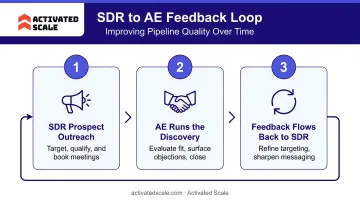
Without it, SDRs and AEs operate in silos—booking unqualified meetings, burning time on dead-end opportunities, and dragging down the entire pipeline.
Revenue Multiplication Effect
When SDRs and AEs operate in sync:
- AEs spend more time closing, less time prospecting
- Conversion rates rise (22% on SDR-sourced opportunities vs. lower rates on self-sourced)
- Deal velocity improves because qualified leads move faster through the funnel
The numbers back this up:
- SDRs generate 30-45% of total sales pipeline
- SDRs are responsible for 46-73% of pipeline conversion
- Median SDR pipeline value: $3M per SDR annually
Most SaaS companies run 2.6 AEs for every 1 SDR, reflecting just how much qualified pipeline a single SDR can generate.
Activated Scale builds fractional SDR and AE pairs into this same structured handoff model from day one—clients typically book 10-15 qualified meetings per month and add $50K-$250K in new monthly revenue as a result.
Frequently Asked Questions
Frequently Asked Questions
What is the difference between an account executive and a sales development rep?
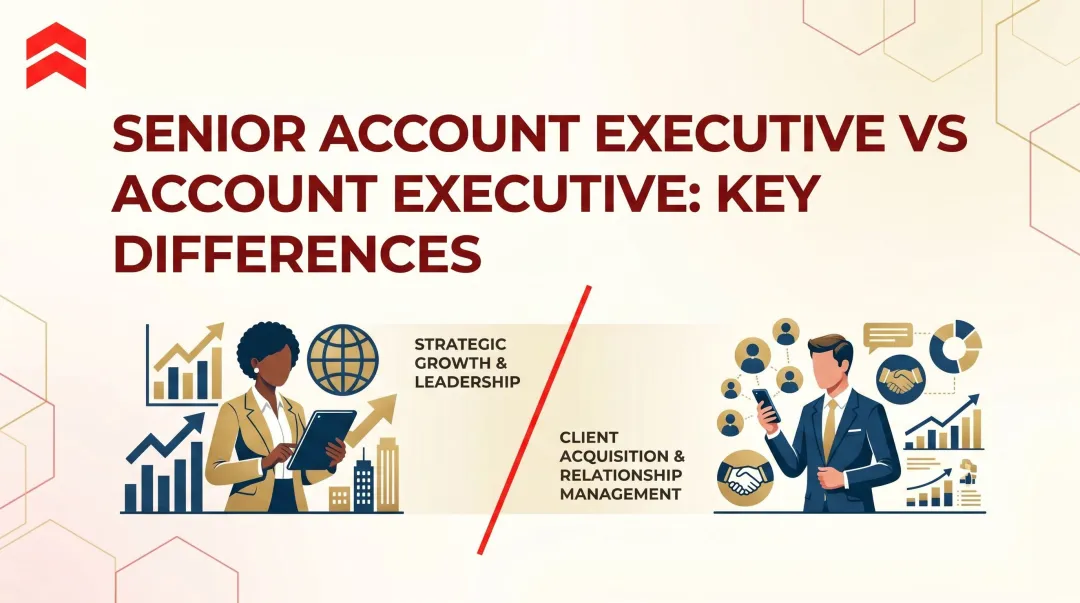
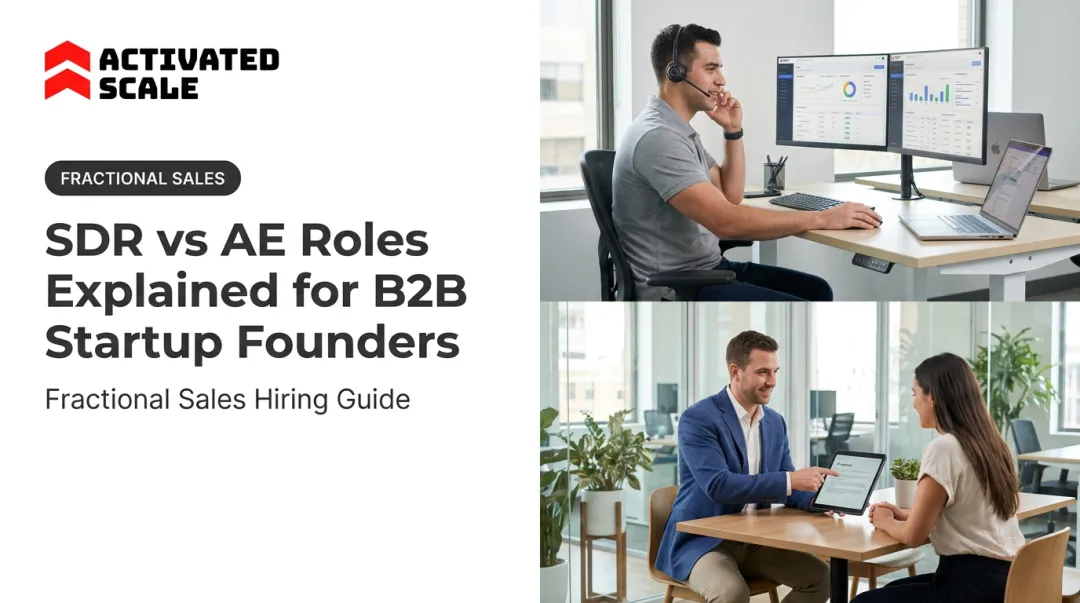
SDRs work at the top of the funnel, generating and qualifying leads through cold outreach and initial discovery. AEs work at the bottom of the funnel, closing deals through demos, proposals, and negotiation. They are sequential, complementary roles in the B2B sales process—not interchangeable.
Is account executive higher than SDR?
Yes. AEs are typically more senior, require 3-5+ years of experience, and earn higher compensation (median $190K OTE vs. $85K for SDRs). Most AEs start as SDRs and progress after 12-24 months of consistent performance and quota attainment.
Is an account executive the same as a sales rep?
"Account Executive" and "sales rep" are often used interchangeably, but in structured sales teams the AE role specifically focuses on closing qualified opportunities handed off by SDRs. A generic "sales rep" title typically covers the full cycle from prospecting through closing.
Should a startup hire an SDR or AE first?
Hire an SDR if you lack pipeline and need meetings booked. Hire an AE if you already have inbound interest or founder-sourced leads that need a dedicated closer. Fractional options let you test both roles without full-time commitment, reducing risk and shortening time-to-productivity.
What metrics are used to measure SDR vs AE performance?
SDRs are measured on activity and pipeline generation:
- Meetings booked and qualified leads generated
- Outreach volume and response rates
AEs are measured on revenue outcomes:
- Revenue closed, win rate, and average deal size
- Pipeline-to-close conversion rate and sales cycle length
Can one person handle both the SDR and AE role?
This "full-cycle" model is common in very early-stage startups but creates real bandwidth constraints as volume grows. Prospecting stalls during active deal negotiations, and close rates suffer when reps split focus—most teams benefit from splitting the roles once they reach 2+ salespeople.