
While the concept sounds straightforward, results vary dramatically based on whether you've defined your ICP, chosen the right talent model, and set up the right process. Most small businesses either over-invest in full-time hires too early or under-invest entirely.
This guide walks through the exact steps to implement a BDR solution cost-effectively, what's required before starting, the variables that determine success, and the most common mistakes to avoid.
Key Takeaways
- A BDR solution combines talent, tools, process, and ICP to generate qualified outbound pipeline
- Fractional talent and a lean tool stack can deliver results at a fraction of full-time hiring cost
- Fractional/AI-assisted setups run $2,500-$8,000/month vs. $100,000-$150,000+ annually for a full-time BDR
- The four core steps: define your ICP, choose your BDR model, build your tech stack, and track performance metrics
- Most BDR failures stem from skipping ICP definition or committing to talent before the message is validated
How to Implement a Cost-Effective BDR Solution for Your Small Business
Step 1: Define Your Ideal Customer Profile (ICP)
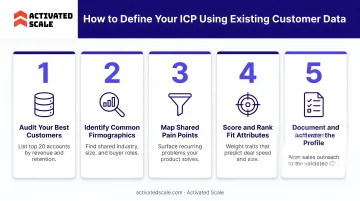
The ICP is the non-negotiable foundation. Outreach sent without it is expensive noise, not pipeline. Your ICP includes industry, company size, geography, decision-maker title, and trigger events — the specific signals that indicate a prospect needs your solution now.
Build your ICP using existing customer data:
- Identify your 3-5 best current customers
- Map their shared characteristics (revenue range, employee count, tech stack, growth stage)
- Document the specific buyer title who signed the contract
- Note any trigger events that preceded their purchase (funding round, leadership change, technology adoption)
- Use that pattern as your targeting baseline rather than guessing
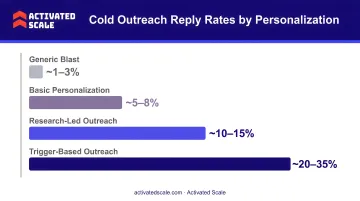
The precision of your ICP directly determines conversion rates. Trigger-based outreach yields 6.1% reply rates versus 1.5% for generic templates — a 4x improvement. A BDR targeting "tech companies" will underperform one targeting "Series A B2B SaaS companies with 10-50 employees that recently hired a VP of Sales."
Step 2: Choose Your BDR Model
Three core models are available to small businesses:
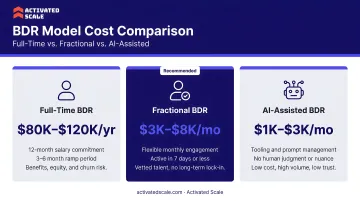
Full-Time BDR Hire:
- Cost: $100,000-$150,000+ annually (base salary, benefits, taxes, tools)
- Base salary ranges from $50,000-$60,000 with OTE of $75,000-$100,000
- Ramp time: 3.1-3.2 months on average; 5.7 months for SaaS-specific roles
- Best for: Companies with proven messaging, repeatable close rates, and 12+ months of runway
Fractional or Contract BDR:
- Cost: $2,500-$8,000/month for 15-20 hours per week
- Onboarding: As fast as 7 days
- Typical engagement: 3-6 months with option to convert to full-time
- Best for: Companies testing messaging, validating ICP, or lacking full-time budget
AI-Assisted Outreach Tools:
- Cost: $37-$3,000/month depending on volume
- Examples: Instantly.ai Growth plan at $37.60/mo; full AI SDR platforms at $500-$3,000/mo
- Best for: Founder-led outbound at early stage with limited complexity
Start lean if your messaging is unvalidated — fractional or AI-assisted outreach lets you test without overcommitting. Companies with a proven message and repeatable close rate can justify full-time investment. The wrong sequencing burns cash: a full-time BDR at $8,000/month fully loaded who ramps for 3 months costs $24,000 before generating a single qualified opportunity.
Platforms like Activated Scale place B2B SaaS startups with vetted, US-based fractional BDRs sourced from companies like Salesforce and Oracle. Placement takes as few as 7 days, with a try-before-you-hire model that removes traditional recruiting risk.
Step 3: Build a Lean Outreach Tech Stack
Every small business BDR setup needs three core tools:
CRM for pipeline tracking:
- HubSpot CRM: Free (core features)
- Pipedrive: $14/user/month (annual billing)
- Zoho CRM: Free for up to 3 users; $14/user/month for Standard plan
Email sequencing platform for outreach automation:
- Instantly.ai: $37.60/month (annual billing)
- Lemlist: $63/month (annual billing)
- Apollo.io: $49/user/month (annual billing, includes 5,000 contact credits)
Data provider for contact information:
- Apollo.io: 100 free credits; $49/month for 5,000 credits
- Hunter.io: 50 free credits/month; $34/month for 2,000 credits
- Lusha: 40 free testing credits; $29.90/user/month for 250 credits
Total minimum viable stack cost: $37-$111/month before scaling.
Avoid over-stacking tools. Adding sales intelligence, call recording, and intent data platforms before validating the message is a common budget drain with no measurable return. Prove that your message generates meetings first — then invest in tools that add volume or efficiency.
Step 4: Set Up Metrics and Feedback Loops
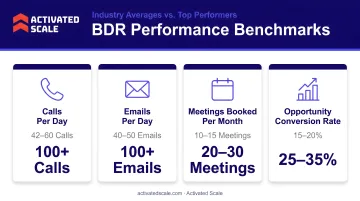
Once your outreach is running, the message needs a scoreboard. Track these four metrics from week one:
- Outreach-to-reply rate: Industry average is 3.1%; top performers reach 8-12%
- Reply-to-meeting-booked rate: Average 0.7%; strong performers hit 2-3%
- Meeting-to-qualified-opportunity rate: Median is 48%; best-in-class achieve 75%+
- Pipeline value generated per month: Benchmark is $2.7M per SDR per year (roughly $225K/month)
Each metric tells you where the process breaks down. Low reply rates indicate targeting or messaging problems. Low meeting-to-opportunity conversion signals qualification issues or misalignment between BDR and sales team.
Weekly review cadence matters more than monthly reporting at the early stage. Small data sets require fast iteration. Waiting a month to adjust messaging means wasting four weeks of outreach volume. Review weekly, adjust messaging and targeting immediately, and measure the impact the following week.
What You Need Before Building Your BDR Function
Preparation directly determines how fast the BDR function generates return. The two most common reasons BDR setups fail in the first 60 days: launching without a clear value proposition and launching without pipeline tracking in place.
Positioning and Messaging Readiness
BDRs — whether human or AI — cannot generate qualified pipeline without a sharp, articulate value proposition. Before any outreach begins, the founder must clearly answer:
- Who we help (specific ICP)
- What problem we solve (in the prospect's language, not product features)
- Why we are the right choice over alternatives (differentiation)
If you can't articulate this in two sentences, your BDR will struggle to book meetings. Worse, they'll waste your ICP list testing messages that should have been validated by the founder first.
Minimum Tech and Tracking Infrastructure
A CRM — even a lightweight, low-cost option — must be in place before outreach begins. Every conversation, follow-up, and opportunity needs to be tracked. Founders often start with spreadsheets, but once you're managing 50+ active prospects, a spreadsheet becomes unmanageable fast.
Non-negotiable tracking minimums:
- All prospect contacts logged with date and outcome
- Follow-up sequences tied to each active lead
- Deal stage or opportunity status visible at a glance
Budget and Timeline Expectations
Calculate realistic all-in monthly cost:
Fractional BDR setup:
- Talent: $2,500-$8,000/month
- Tools: $100-$500/month
- Founder time: 5-10 hours/month (weekly reviews, messaging iterations)
- Total: $2,600-$8,500/month
Full-time BDR setup:
- Salary + benefits: $8,000-$12,500/month fully loaded
- Tools: $100-$500/month
- Founder time: 10-15 hours/month (onboarding, coaching, reviews)
- Total: $8,100-$13,000/month
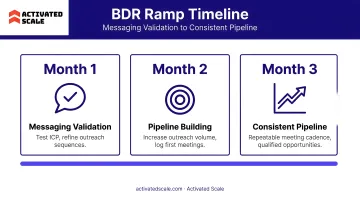
Most BDR functions take 60-90 days to generate consistent pipeline. Set expectations accordingly:
- Month 1 — Messaging validation: testing what resonates with your ICP
- Month 2 — Cadence refinement: optimizing sequence timing and touchpoints
- Month 3 — Meaningful pipeline begins to appear
Key Variables That Determine Your BDR Solution's Success
Two small businesses can run the same BDR setup and get dramatically different results. How well you manage these core variables determines your outcomes — not your tools or budget alone.
ICP Precision
The tighter and more specific the ICP, the higher the conversion rates at every stage of the funnel. Verified email lists achieve 2x the reply rate and nearly 3x the meetings booked compared to unverified lists.
Before/After ICP Example:
Before (generic):
- Industry: Technology
- Company size: 50-500 employees
- Decision-maker: VP of Sales
After (precise):
- Industry: B2B SaaS, Series A funded
- Company size: 10-50 employees
- Decision-maker: VP of Sales hired in the last 6 months
- Trigger: Company recently raised funding and posted 2+ sales roles on LinkedIn
The second ICP targets a specific moment when the prospect is most likely to buy. The first spreads effort across hundreds of companies that aren't ready — wasting outreach capacity you can't afford to burn.
Personalization vs. Volume Balance
There's a tradeoff between sending high-volume generic outreach and lower-volume highly personalized messaging. Response rate differences are significant:
- No personalization (generic template): 1.5% reply rate
- First name + company name: 2.8%
- Role-specific pain point: 4.2%
- Trigger-based (recent event/signal): 6.1%
For small businesses with limited follow-up capacity, personalization is the higher-leverage approach. Sending 100 highly personalized emails that generate 6 replies beats sending 500 generic emails that generate 8 replies, because your team can't handle 500 follow-ups anyway.
Follow-Up Cadence
That capacity constraint also shapes how you sequence follow-ups. Most replies in cold outreach come after the third to sixth touch — yet 48% of reps never send a second follow-up, and 30-40% of all replies come from that first email alone. Single-email sequences leave significant pipeline on the table.
A 4-6 email sequence over 14-21 days hits the sweet spot. Going beyond 6 emails increases unsubscribes faster than it increases responses. Space emails 2-3 days apart and vary the angle:
- Email 1: Establish value and relevance
- Email 2: Share a case study or proof point
- Email 3: Ask a direct question
- Email 4: Offer a resource or insight
BDR Talent Quality and Domain Fit
The experience level and domain relevance of the BDR dramatically affects conversion rates. A BDR who has sold into your target buyer before will outperform a general-purpose SDR. This matters more at the small business stage where every meeting counts.
The difference shows up immediately in the numbers:
- Domain-experienced BDR: Knows the buyer's pain points, budget cycle, and objections on day one
- Generalist BDR: Spends the first 30 days learning what the experienced hire already knows
At the early stage, that 30-day ramp costs you pipeline you can't recover.
Common Mistakes Small Businesses Make When Implementing a BDR Solution
Launching outreach before the ICP is fully defined
This results in scattered, unfocused outreach. Low reply rates are falsely attributed to the BDR or tools when the real problem is targeting the wrong people with the wrong message. If you're getting 1% reply rates, the issue is likely ICP precision, not outreach volume.
Over-investing in tools before validating the messaging
Small businesses frequently spend on sales intelligence platforms, intent data subscriptions, and multi-channel outreach tools before they have a single repeatable sequence that converts. Validate your message first, then invest in scale. A $200/month tool that helps you send 10,000 emails is useless if your message generates 0.5% reply rates.
Hiring a full-time BDR before the sales process is proven
A full-time BDR hire at $8,000-$12,000/month fully loaded creates significant financial pressure if the ICP and messaging haven't been validated. The numbers add up fast:
- 40-50% annual BDR attrition rates mean replacement costs of $97,000-$115,000 per rep
- Ramp time runs 3-6 months before a BDR reaches full productivity
- A rep who churns at month 9 costs $72,000-$108,000 with only 3 months of productive output
- A failed hire at this stage can set an early-stage company back 6-12 months
When a Full-Time BDR Hire Isn't the Right Move
Several signals indicate it's too early for a full-time BDR hire:
- No documented outreach process
- Fewer than 3-5 closed deals from outbound
- No repeatable close rate (you're still figuring out what works)
- Less than 12 months of runway
Hiring before these conditions are met puts your company at high financial risk with low probability of return.
Fractional BDRs are a cost-effective alternative for early-stage companies. They bring experienced sales talent on a flexible basis, so founders can build and validate a sales process without the full-time salary commitment.
Activated Scale, for example, connects B2B SaaS startups with vetted, US-based fractional BDRs from companies like Salesforce and Oracle. Key details:
- Placements happen in as few as 7 days
- Try-before-you-buy model removes traditional hiring risk
- Engagements typically run 3-6 months at 15-20 hours per week
- 60-80% of clients convert their fractional hire to a full-time role
Criteria for knowing when you're ready to convert to full-time
You're ready to convert a fractional BDR to full-time when:
- Consistent monthly pipeline generation (3+ months of hitting targets)
- Documented and repeatable outreach process (sequences, templates, cadences are codified)
- Clear path to ROI from the BDR's activity (pipeline value exceeds cost by 3-5x)
- Sufficient runway to sustain the role for at least 12 months
When these conditions are met, the conversion is low-risk — you've already validated the person's performance before committing to the full-time cost.
Frequently Asked Questions
How much does a BDR solution cost?
Lean fractional/AI-assisted setups (tools + part-time talent) run $2,600-$8,500/month total. Full-time BDR hires cost $100,000-$150,000+ annually fully loaded, or roughly $8,000-$12,500/month. The entry-level fractional approach delivers 70-80% of the output at 30-50% of the cost.
What are BDR solutions?
In a sales context, a BDR solution refers to the complete system — people, tools, and process — used to identify, contact, and qualify outbound prospects. Unlike SDR functions, which typically handle inbound lead qualification, BDR is purely outbound.
What's better, SDR or BDR?
BDRs focus on outbound prospecting and new business development while SDRs often handle inbound lead qualification. For small businesses building pipeline from scratch with no inbound volume, a BDR function typically delivers more immediate value.
Can a small business run a BDR solution without a dedicated sales hire?
Yes. Using fractional BDR talent or AI-assisted outreach tools, small businesses can build a functioning BDR process without a full-time hire. The key is having a defined ICP and validated messaging before investing in either.
How long does it take to see results from a BDR solution?
Most BDR functions take 60-90 days to generate consistent pipeline. The first month focuses on messaging validation, the second on cadence refinement, and meaningful pipeline typically appears in month three.
What metrics should I use to evaluate my BDR solution's performance?
Track these four core metrics weekly to allow for faster iteration:
- Outreach-to-reply rate (benchmark: 3.1%)
- Reply-to-meeting rate (benchmark: 0.7%)
- Meetings-to-qualified-opportunity rate (benchmark: 48%)
- Total pipeline value generated per month