_edi.png)

In the U.S., high ticket sales scams are on the rise. Tech support scams were the most prevalent, while investment scams resulted in the highest financial losses. These scams often target individuals looking to invest in business opportunities or personal growth, promising high returns with little effort.
High ticket sales scams are increasingly common in industries like coaching, real estate, and online marketing. While the potential for significant earnings is real, scammers often disguise themselves as legitimate opportunities, leaving victims out of pocket and disillusioned. A high ticket sales scam targets founders and professionals with expensive coaching, hiring programs, or sales partnerships that promise rapid revenue growth but lack verifiable delivery, transparent contracts, or measurable pipeline outcomes.
As an entrepreneur or business leader, it’s essential to be able to spot these scams. The consequences of falling for a high ticket sales scam can be devastating, both financially and reputationally. In this blog, we’ll walk you through the common tactics used in these scams and provide you with the ideas to protect yourself.
Quick Insights
- Research indicates that approximately 67% of B2B buyers prefer to complete their vendor research independently, without engaging with sales representatives.
- High-ticket sales scams often rely on urgency signals, income guarantees, and lifestyle-driven marketing rather than measurable pipeline outcomes.
- Founders can reduce risk by validating attribution ownership, conversion benchmarks, and contract transparency before committing to high-ticket sales partnerships.
- 74% of buying groups face internal conflicts when choosing vendors, creating challenges for founders in distinguishing credible high-ticket partners from risky alternatives.
- More than 50% of significant B2B transactions now begin with digital self-service channels, allowing dubious programs to gain access to decision-makers earlier in the process.
What are the High ticket Sales?
High ticket sales refer to products or services priced at $1,000 or more. These types of sales are often seen in industries where the value of the offering justifies the high price tag, such as real estate, luxury goods, or professional coaching.
In sectors like real estate, high ticket sales are the norm, with properties selling for tens or even hundreds of thousands of dollars. Similarly, in coaching or consulting, individuals may charge premium prices for specialized expertise. Luxury goods, such as high-end watches or designer furniture, also fall under high ticket sales.
4 Examples of High Ticket Sales Scams
1. One common high-ticket sales scam appears in closer certification programs that promise remote closing roles with large commission potential. Participants are told they will be introduced to premium clients selling offers priced between $5,000 and $20,000, but first they must complete a paid certification.
After enrollment, the promised client access often never materializes, and the program shifts its focus toward additional training sessions rather than real placement opportunities. In these cases, revenue comes primarily from certification fees instead of actual sales performance.
2. Another example appears in coaching funnels that promote fast income through high-ticket closing frameworks. These programs typically begin with a free webinar that leads to a paid workshop, followed by progressively more expensive mastermind tiers.
The messaging emphasizes lifestyle transformation and rapid earnings rather than operational execution or pipeline access. Many founders discover that the structure depends on continuous upsells instead of delivering measurable revenue systems.
3. Some entrepreneurs encounter high-ticket agency partnerships that promise a predictable number of qualified meetings each month. After signing a multi-thousand-dollar engagement, they realize the definition of a qualified meeting is unclear, and the underlying lead sources remain undisclosed.
Without visibility into attribution or Customer Relationship Management (CRM) integration, it becomes difficult to determine whether pipeline activity is genuine or simply repackaged outreach metrics presented as results.
4. High-ticket affiliate ecosystems sometimes require participants to purchase the same expensive product they are expected to promote. These offers present themselves as business opportunities rather than traditional affiliate arrangements, encouraging members to recruit additional participants instead of selling to independent customers.
Over time, growth depends more on internal enrollment than external demand, which weakens the credibility of the revenue model.
While High ticket sales can be a lucrative and legitimate way to do business, it’s crucial to be aware of unethical practices. Scammers often exploit the perceived value of high-priced offerings to lure in unsuspecting buyers with promises of easy profits.
Also Read: Leading AI Sales Recruiting Agencies in 2026
Common Psychological Tactics Used in High Ticket Sales Scams
High ticket sales scams often rely on psychological manipulation and deceptive marketing techniques to lure people in. Scammers know that their target audience is eager for financial independence, and they use tactics that prey on these emotions. 74% of buying groups experience internal conflict during decisions, which increases risk when vendors lack clear performance evidence.
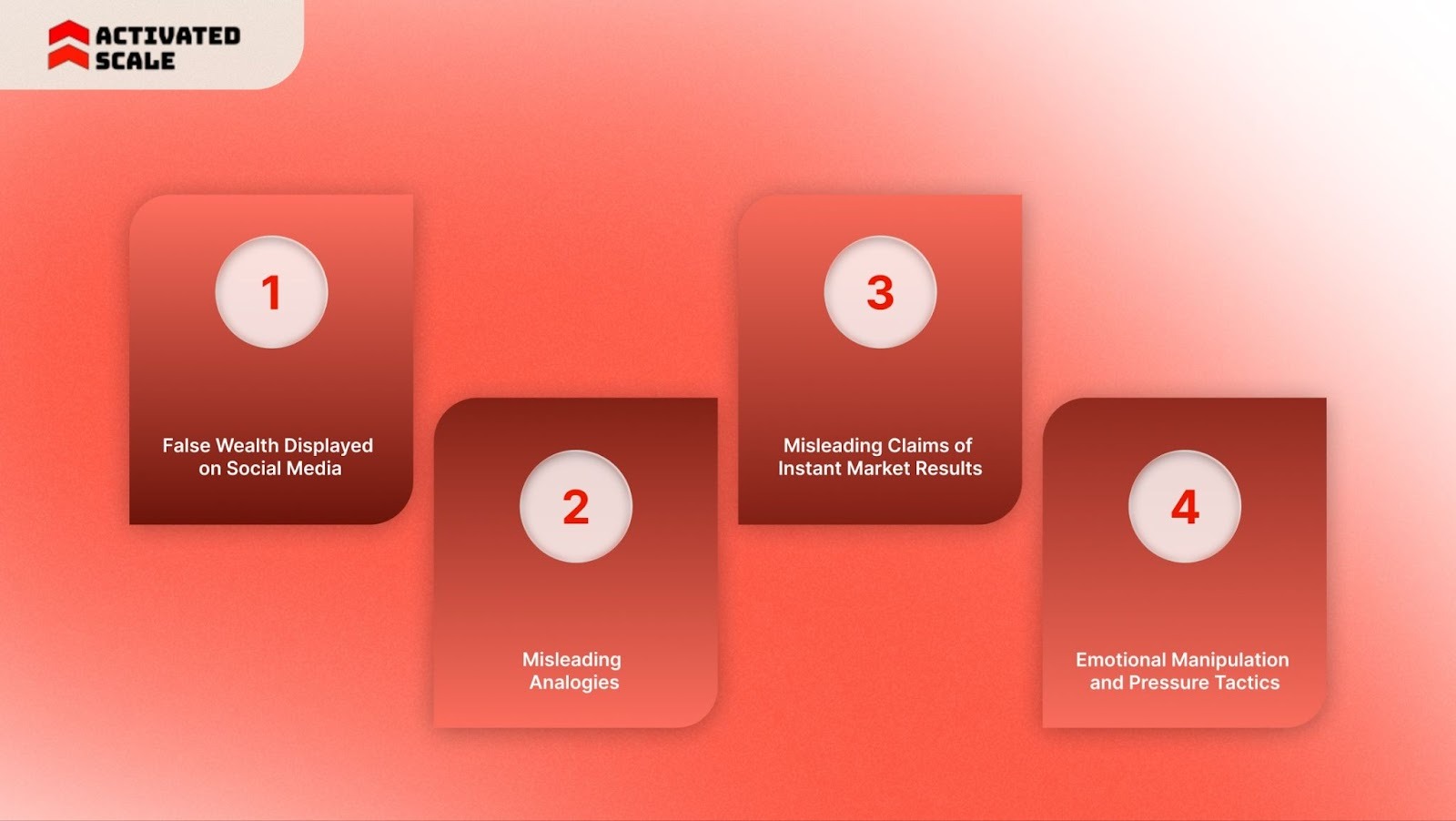
Here are some of the most common strategies they use:
- False Wealth Displayed on Social Media: Scammers often post images of luxury cars, expensive vacations, and extravagant lifestyles to create a false sense of success. This illusion of affluence makes their business seem like a quick path to riches.
- Misleading Analogies: They frequently compare the sales process to something as simple as “plugging into a proven system” or “following a blueprint.” These analogies make the process sound effortless and downplay the real work involved.
- Misleading Claims of Instant Market Results: Scammers often promise immediate profits, like “earn $10,000 in your first month.” These claims appeal to those seeking fast financial returns but are rarely based in reality.
- Emotional Manipulation and Pressure Tactics: High-pressure sales tactics are common, with phrases like “This opportunity won’t last long” or “You must act now.” These create urgency and manipulate emotions, encouraging hasty decisions without proper research.
If you’re evaluating high-ticket sales support for your business, work with partners who show verifiable pipeline outcomes instead of income promises. Activated Scale connects founders with vetted U.S.-based SDRs and fractional sales leaders who operate inside structured revenue systems.
What to Do If You’ve Fallen for a High ticket Sales Scam?
If you realize you’ve engaged with a high ticket sales scam, don’t panic, but act quickly and decisively. As an entrepreneur, safeguarding your business reputation and finances should be your top priority. Here’s what to do next:
- Report the Scam to Relevant Authorities: File a complaint with the Federal Trade Commission (FTC) and relevant business bureaus. This protects others and helps preserve your credibility.
- Pursue Financial Recovery: Contact your payment provider or credit card company to explore dispute options. Many platforms offer buyer protection for fraudulent transactions.
- Document Everything: Keep a record of all communications, payments, and marketing materials you received. These will be critical if you need to escalate the situation legally.
- Communicate Transparently: If clients, partners, or stakeholders were indirectly affected, address it openly. Transparency helps maintain trust even during setbacks.
4 Strategic Recoveries to Implement After a Scam in the U.S.
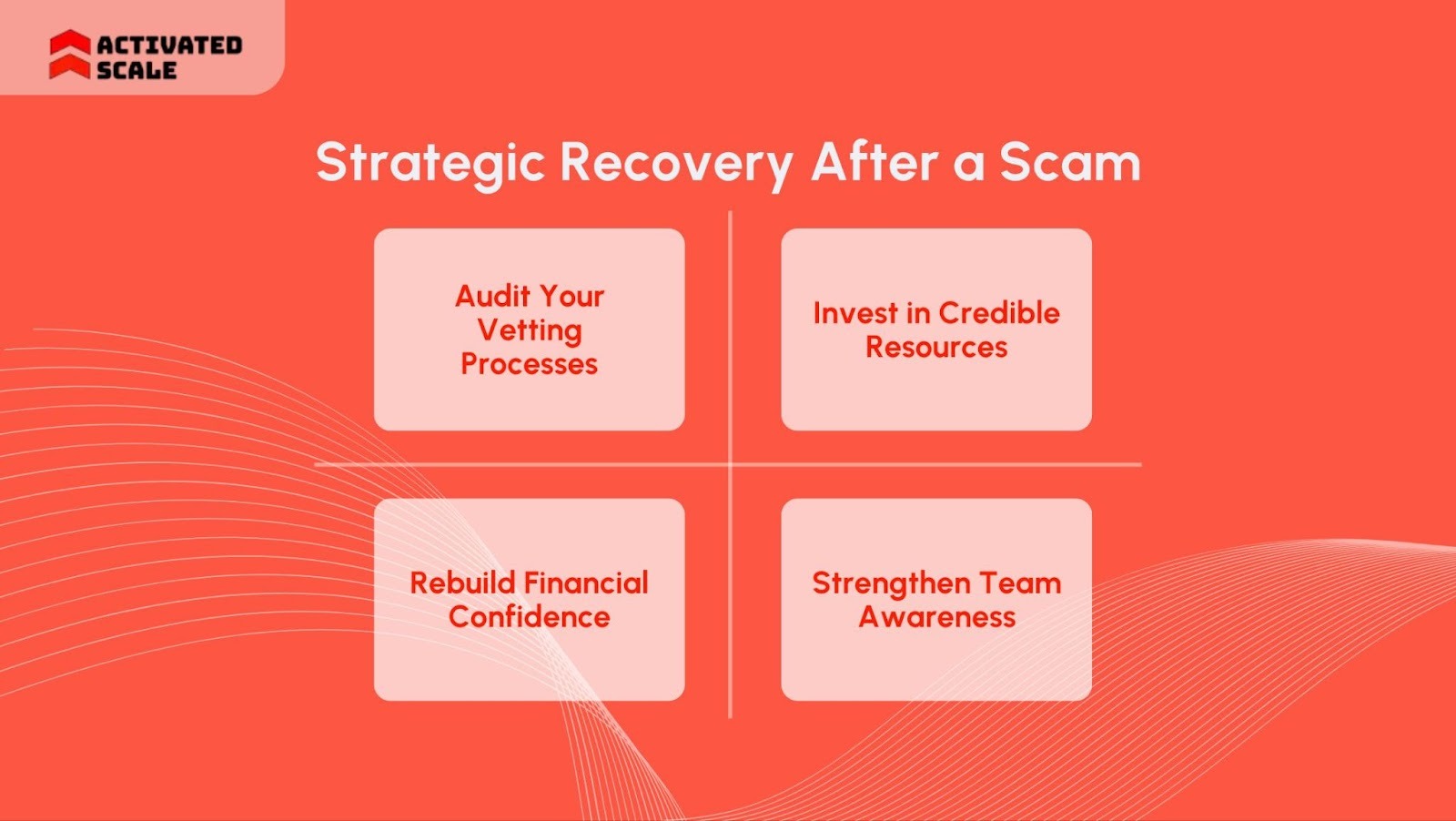
More than half of large B2B purchases now happen through digital self-serve channels, increasing exposure to unverified coaching or closer offers online. So if you have fallen for a scam in the recent days in the U.S., that’s not unusual.
However, we understand that falling for a scam can be frustrating, but it’s also a signal to strengthen your business systems. Here’s how to turn the setback into strategic action:
- Audit Your Vetting Processes: Review how you assess vendors, partnerships, and high ticket opportunities. Tighten your due diligence standards moving forward.
- Invest in Credible Resources: Connect with legitimate sales and business growth platforms that prioritize real value over hype. Focus on partners that have verifiable results and client references.
- Rebuild Financial Confidence: Realign your budget and cash flow projections. Take calculated steps to recover losses without rushing into risky opportunities.
- Strengthen Team Awareness: If you have a team, run internal sessions to train them on spotting red flags. Building scam awareness internally protects your future investments.
Remember, a setback doesn’t define your business journey, but how you respond does.
Also Read: Enterprise Sales Guide
5 Ethical Practices to Apply While Working in a High-Ticket Sales Program
High ticket sales can be a profitable and rewarding career, but only when conducted with integrity. It’s crucial to build trust, deliver value, and focus on long-term relationships rather than quick profits. Here’s how you can build ethical high-ticket sales practices that actually fuel growth:
- Hire sales talent that truly values the buyer’s success. You need people who prioritize solving real problems, not just hitting quotas. A strong sales team focuses on value creation, not quick wins.
If you are ready to scale your sales team with people who understand the real value of ethical selling, Activated Scale is here to help. You can check out their Fractional Selling service. In this way, you can cost-effectively size up or down your sales team.
- Design a sales system that promotes total transparency. Your buyers deserve clear, accurate information at every stage. Avoid exaggerated claims or half-truths. Every promise must be backed with evidence and results you can proudly show.
- Deliver value at every single touchpoint. From the first conversation to post-sale support, make sure your buyer feels heard, respected, and supported. A high-ticket sale is not just a transaction; it’s the beginning of a relationship.
- Commit to trust over tactics. High-pressure closes might land a few wins today, but they will burn your brand tomorrow. True growth comes from building loyalty and trust over time. Protect your brand by staying honest and customer-focused.
- Invest in building a long-term, ethical sales culture. This means setting expectations early, coaching your team regularly, and refusing to reward shady behavior, even when it "works" short-term.
The truth is, ethical high-ticket sales are not just the right thing to do, but they are the smartest way to build lasting success.
Also Read: What is a Sourcing Agency and Why You Need One
Conclusion
High ticket sales offer incredible potential for both sellers and buyers, but they come with risks. Scams and unethical practices can taint the industry, making it crucial for both salespeople and consumers to stay informed and cautious.
By recognizing red flags, understanding legitimate sales practices, and focusing on delivering genuine value, you can navigate the high ticket sales world with confidence.
If you’ve fallen for a scam or are looking to avoid one, remember: always do thorough research, ask questions, and trust your instincts. Legitimate high ticket sales opportunities are out there, but it's essential to approach them with care and transparency.
Ready to explore ethical high ticket sales opportunities? Focus on skill development and transparency to make your mark in the industry. If you're looking for expert guidance or need help finding legitimate sales leadership, Book a Demo Call Today with Activated Scale.
FAQs
1. Can a legitimate high-ticket sales program require upfront payment?
Yes, some legitimate training or advisory programs charge upfront fees. The difference lies in whether outcomes, deliverables, timelines, and refund conditions are documented clearly before enrollment. Programs that rely primarily on income promises rather than operational value indicators should be evaluated carefully.
2. Why do high-ticket closer job offers often involve certification fees?
Some closer networks require certification to standardize messaging or positioning. However, when certification becomes the primary revenue source instead of placement outcomes, the structure shifts toward recruitment-driven incentives rather than performance-driven hiring.
3. Are outsourced high-ticket sales agencies riskier than in-house teams?
Outsourced teams are not inherently risky, but founders lose visibility if attribution tracking, pipeline ownership, and reporting cadence are unclear. Strong agencies typically provide CRM access, structured onboarding plans, and defined conversion benchmarks early in engagement.
4. How can founders verify whether testimonials in high-ticket programs are real?
Ask for references you can contact directly, case studies tied to measurable revenue outcomes, and examples involving similar industries or deal sizes. Generic lifestyle testimonials without operational context usually indicate weak validation standards.
5. What is the safest way to test a high-ticket sales partner before committing long-term?
A short pilot engagement with defined milestones is the most reliable approach. Testing delivery quality, communication cadence, and pipeline contribution over a limited period reduces exposure before scaling the relationship.
6. Is high ticket affiliate marketing a scam?
High ticket affiliate marketing itself is not a scam, but risk increases when programs emphasize recruitment over product value. Legitimate affiliate models focus on selling established products with clear pricing, customer outcomes, and transparent commission structures.
Offers that require large upfront payments before earning eligibility or rely heavily on recruiting new affiliates instead of customers should be evaluated carefully.
7. Are social media luxury lifestyle claims reliable indicators of high ticket sales success?
Luxury positioning is frequently used as persuasion rather than proof of delivery capability. Reliable indicators of credibility include repeatable client outcomes, conversion benchmarks, and transparent engagement models. Entrepreneurs benefit more from evidence tied to pipeline performance than from branding signals that highlight income potential alone.
The Ultimate Guide to Hiring a Salesperson!
Get the step-by-step guide to hiring, onboarding, and ensuring success!