
But knowing the market needs sales advisors and knowing how to actually land one of those roles are two different things. This guide covers both: what the role involves, the skills and qualifications you need, a clear step-by-step path into the career, and what you can realistically expect to earn in different markets.
Key Takeaways
- A sales advisor guides customers to the right purchasing decision while building long-term relationships — not just closing one-off transactions.
- You need strong communication skills and at least a high school diploma; a bachelor's degree strengthens your candidacy for corporate or B2B roles.
- Tech, real estate, healthcare, and financial services sectors are all actively hiring sales advisors.
- Following a structured path — education, experience, certifications, and networking — accelerates your entry into the field.
What Is a Sales Advisor?
A sales advisor helps customers identify the right product or service, communicates its value, and builds the trust that keeps clients coming back.
The distinction from a basic sales rep is consultative approach. Advisors ask questions, listen carefully, and tailor recommendations — rather than pushing a standard pitch at every prospect.
How the Title Varies by Industry
The same core role looks different depending on where you work:
- Retail roles are customer-facing on the floor, helping shoppers make decisions in real time
- B2B and tech roles involve consultative selling with pipeline management, demos, and multi-stakeholder negotiations
- Insurance and real estate require state-issued licenses before you can legally sell
When searching for jobs, you'll also see these overlapping titles:
- Sales Consultant
- Sales Representative
- Business Development Representative (BDR)
- Retail Sales Associate
- Account Executive
The responsibilities often overlap significantly. Don't filter too narrowly when job searching — the role you want might be posted under a different title.
Key Responsibilities of a Sales Advisor
Day-to-day, a sales advisor's work falls into three broad categories.
Customer-Facing Activities
- Engaging prospects to understand their goals and pain points
- Presenting tailored product or service recommendations
- Handling objections without pressure tactics
- Closing sales and following up post-purchase to strengthen loyalty
Performance and Reporting
- Tracking personal sales metrics (conversion rates, pipeline value, average deal size)
- Maintaining accurate CRM records
- Meeting monthly and quarterly revenue targets
- Collaborating with teammates and management to align on priorities
Ongoing Development
Top-performing sales advisors treat product knowledge as an ongoing responsibility, not a one-time onboarding task. That means keeping up with product updates, tracking competitor offerings, following industry trends, and understanding how regional market dynamics shift by sector. Advisors who stay current tend to close more confidently, retain clients longer, and earn referrals that volume-focused reps rarely see.
Skills and Qualifications You Need
Core Skills
Three skills consistently separate strong sales advisors from average ones:
- Communication and active listening — Customers buy from people who make them feel understood, not from people who recite features. Asking the right questions and processing the answers is what drives consultative selling.
- Persuasion through problem-solving — Competitive, customer-savvy markets reward this approach. The consultative approach consistently outperforms high-pressure tactics.
- Adaptability — A sales advisor might work in tourism one year and SaaS the next. Each industry has its own buyer psychology, sales cycle, and vocabulary, so the ability to adjust quickly is a real differentiator.
Educational Requirements
| Level | What It Gets You |
|---|---|
| High school diploma or GED | Qualifies for retail and entry-level sales roles |
| Bachelor's degree (business, marketing, communications) | Preferred for B2B, corporate, or higher-paying positions |
| State license (industry-specific) | Required for insurance, real estate, and financial services in most states |
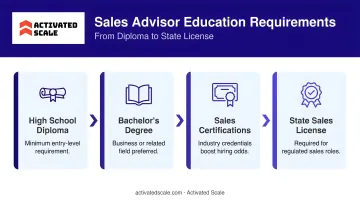
For licensed industries, check your state's business and professional regulation authority or department of financial services for your specific requirements before applying.
Certifications and Tools Worth Adding
- HubSpot Sales Certification — free, widely recognized, and signals CRM competency
- Certified Professional Sales Person (CPSP) — credible for B2B roles
- CRM proficiency (Salesforce, HubSpot, Pipedrive) — expected in most tech and corporate environments
Certifications won't replace experience, but they help candidates with limited track records stand out in applicant pools.
How to Become a Sales Advisor: Step-by-Step
Step 1: Build Your Foundation
Start with the right educational base and get clear on which industry you want to enter. That decision shapes everything else — the certifications that matter, the job boards to monitor, and the type of experience that will make your resume competitive.
If you're targeting retail or hospitality sales, a diploma and some customer service experience is enough to start applying. If you're aiming for tech, SaaS, or corporate B2B roles, a degree and a couple of relevant certifications will improve your odds.
Step 2: Get Licensed If Your Industry Requires It
Many states regulate several sales-adjacent professions. You cannot legally sell in these fields without the appropriate license:
- Insurance — requires a license from your state's department of financial services (Life & Health and General Lines licenses are common categories)
- Real estate — requires completing a state-approved course and passing your state's real estate licensing exam
- Financial services/securities — may require FINRA Series 7 or Series 63 exams, depending on the role
Start the licensing process before you start applying — these approvals take time, and having them in hand makes you immediately hireable.
Step 3: Gain Real-World Sales Experience
Entry-level paths include:
- Retail sales associate
- Customer service representative with upsell responsibilities
- Inside sales rep at a call center or SMB
For those targeting B2B or tech roles, fractional and contract-to-hire engagements offer a faster path to building a credible track record. Platforms like Activated Scale connect experienced sales professionals with startups for part-time SDR, Account Executive, and VP of Sales engagements. All roles are remote and US-based, so professionals anywhere can work with growing companies nationwide.
That conversion path is worth noting: roughly 85% of startups on the platform hire their fractional sales talent full-time after the initial contract. For someone building a B2B track record quickly, those are meaningful odds.
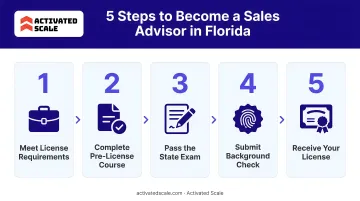
Step 4: Build Your Network in Key Markets
The sales job market responds well to in-person and digital networking. Useful starting points:
- LinkedIn — connect with hiring managers and sales directors at companies you're targeting
- Regional tech week events — annual events drawing startups and sales talent from across the area
- Local tech community groups — regular meetups and active professional networks
- State or regional professional associations — industry networking across multiple verticals
- Industry-specific associations for healthcare, real estate, or financial services depending on your target sector
One good contact inside a company beats twenty cold applications. Treat your network like a long-term asset, not a job-search shortcut.
Step 5: Apply Strategically and Prepare for Interviews
A few things that separate strong candidates from the rest:
- Quantify everything on your resume — "increased monthly revenue by 18%" beats "responsible for sales"
- Research the company's product, customer base, and recent news before every interview
- Prepare behavioral answers for common sales interview questions: handling objections, recovering from a bad month, managing a difficult customer
Expect interviewers to ask for specific examples. Vague answers about being "a people person" won't get you the role — concrete stories about results will.
Sales Advisor Salary and Career Growth
What to Expect
According to ZipRecruiter data, sales advisor salaries vary by experience level, industry, and metro area. The national median sits around $62,907 annually — though high-incentive tech and real estate roles can push total compensation well above it.
Regional variation is real:
- Major metro tech hubs — higher base salaries, driven by tech and financial services; higher cost of living offsets some of the gains
- Growing secondary markets — expanding SaaS and healthcare sectors pulling up compensation in B2B roles
- Tourism-heavy regions — strong hospitality and tourism sales, with healthcare and tech expanding
Compensation Structures by Industry
| Industry | Typical Structure |
|---|---|
| Retail | Hourly + small incentive |
| Real estate | Variable-heavy (often 100%) |
| Insurance | Base + incentive |
| B2B / SaaS | Base salary + incentive + bonus |
| Financial services | Base + incentive + licensing requirements |
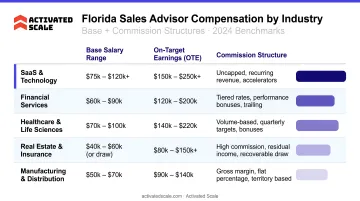
B2B and SaaS roles in major growth hubs tend to offer the most upside through incentive, especially as you move up the experience ladder.
Career Progression
A typical trajectory in corporate and tech sectors:
Sales Advisor → Senior Sales Advisor → Sales Team Lead → Sales Manager → Director of Sales
Strong performers in tech and B2B can move through this progression in 4–6 years. The move from individual contributor to management is where compensation jumps the most. A documented track record of hitting targets is what determines who gets there.
The sales job market has a few things working in your favor right now:
- Major metro areas rank consistently among top U.S. markets for startup activity and tech hiring
- SaaS and B2B sales roles are expanding faster than retail or hospitality positions
- Entry-level openings are plentiful, with clear paths into higher-paying senior roles
- Some states have no state income tax, meaning your take-home pay stretches further than in many comparable markets
Frequently Asked Questions
What does a sales advisor do?
A sales advisor helps customers identify the right product or service for their situation, communicates its value clearly, and closes the sale while building a long-term relationship. The role is consultative rather than transactional, focused on finding the right fit rather than hitting volume targets.
Do you need a license to be a sales advisor?
It depends on the industry. General retail and B2B sales advisors don't need a license. Roles in insurance, real estate, and financial services require a state-issued license. The relevant regulatory bodies are your state's department of financial services and real estate licensing authority.
What is the average salary of a sales advisor?
Salaries track close to the national median of around $62,907, with significant variation by industry and experience. Variable-heavy roles in real estate and SaaS often push total compensation well above that, while entry-level retail positions tend to sit below it.
What industries hire sales advisors?
The strongest hiring sectors for sales advisors include tech and SaaS, real estate, healthcare, financial services, and hospitality/tourism. B2B roles in the tech sector are among the fastest-growing.
How long does it take to become a sales advisor?
You can enter the field within a few months with a high school diploma and customer service experience. Mid-level roles typically require 1–3 years of experience, while senior and sales management positions generally take 4–6 years to reach.