_edi.png)

Starting a new sales role can overwhelm even the best. New hires face product details, market dynamics, and team processes all at once. Without a clear path, productivity and confidence stall.
About 59% of buyers say reps don’t take the time to understand their unique problems or their goals. How do you create order from this chaos? The solution is a structured 30-60-90-day sales plan.
Since a new hire's ramp-up period directly impacts your team's revenue and retention, a clear plan sets your new reps up for immediate success.
In this blog, we'll build a winning 30-60-90-day sales plan and show you how to set the right goals, avoid common pitfalls, and track real progress.
TL;DR
- A structured 30-60-90 Day Sales Plan removes guesswork and gives new reps a clear ramp-up path.
- 59% of buyers say sales reps don’t understand their problem. This plan fixes that through structured learning and discovery.
- The first 30 days focus on immersion, the next 30 on execution, and the last 30 on optimization and early wins.
- A strong plan boosts alignment and accountability; engaged teams can lift customer loyalty by around 10%.
- Avoid common pitfalls like vague goals and static plans. Only 20% of employees get weekly feedback, so scheduled check-ins are essential.
- The plan helps leaders track progress objectively, reduce managerial load, and retain top performers.
What is the Core Understanding of the 30-60-90 Day Plan?
A 30-60-90-day sales plan is a strategic document that guides new team members through their first critical quarter. This plan breaks the first 90 days into three distinct phases.
Each 30-day chunk has a specific focus and a consistent three-phase framework for building momentum:
- First 30 Days (Days 1-30): This phase focuses on onboarding and absorbing information. The new hire learns about the company, its products, target market, and sales processes.
- Second 30 Days (Days 31-60): The rep begins applying their knowledge. They start active prospecting, conduct discovery calls, and build a pipeline. The focus shifts from pure learning to initial selling activities.
- Final 30 Days (Days 61-90): Optimization and Impact. The emphasis is on closing initial deals and refining strategies. The rep analyzes what's working, seeks their first wins, and establishes a sustainable workflow.
Once you understand what to do, you should also learn about its benefits, as this could be the ultimate motivator to implement the plan.
Also Read: Using AI Tools for Effective Lead Generation
5 Reasons This Plan is Your Secret Management Weapon
This plan is not just for the new rep. It is your most powerful management tool for the quarter. It provides control and clarity during a high-stakes transition. Let's examine the five core benefits you gain as a sales leader:
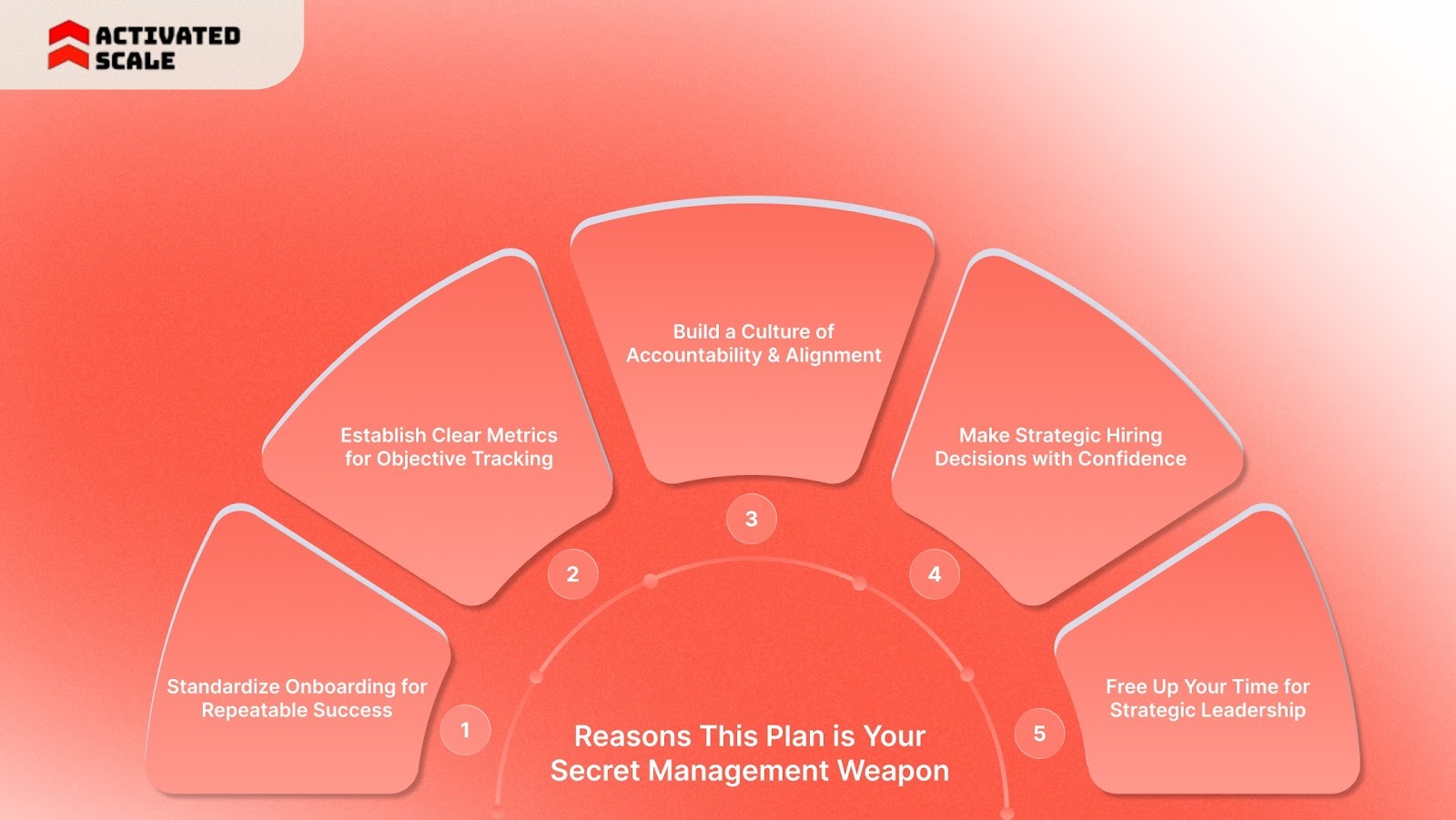
1. Standardize Onboarding for Repeatable Success
You delegate learning tasks with clear expectations. This structure accelerates ramp-up time dramatically. New reps move from learning to executing much faster. You build a scalable process for growing your team.
2. Establish Clear Metrics for Objective Tracking
"Getting up to speed" is not a measurable goal. A strong plan replaces ambiguity with specific, time-bound goals. You can track progress against concrete milestones.
Is the rep mastering product knowledge? Are they building a qualified pipeline? The plan gives you answers. This allows for objective performance monitoring.
3. Build a Culture of Accountability and Alignment
A shared plan creates mutual ownership of success. The rep knows exactly what is expected. You have a documented agreement on goals and timelines.
This ensures their daily activities align with team and company objectives. Employee engagement can lift customer loyalty and engagement by around 10%. Everyone works from the same playbook toward shared targets.
4. Make Strategic Hiring Decisions with Confidence
With this plan, you see their planning skills and strategic approach before they start. This can be a decisive factor between qualified candidates. You can hire someone who has already thought deeply about contributing to your team's success.
5. Free Up Your Time for Strategic Leadership
A self-guided plan reduces the rep's constant need for direction. It answers their "what should I do next?" questions. This significantly reduces daily managerial overhead for you.
So, you spend less time on basic supervision and gain more time for coaching, strategy, and developing the rest of your team.
If you hire reps from Activated Scale's Contract-to-Hire Sales Recruiting service, you can easily meet these benefits. Since they are vetted professionals, they can easily adapt to a new plan.
You understand the plan's immense value. You see how it structures success. But the final output is only as strong as its foundation. Rushing to fill out a template is a common trap.
The Three Pillars of a 30-60-90 Day Plan for a New Sales Territory Plan
Each successful plan has pillars; without them, it will yield nothing. So, we're sharing pillars that separate a generic document from a targeted strategy. Here are the three non-negotiable pillars to establish first:
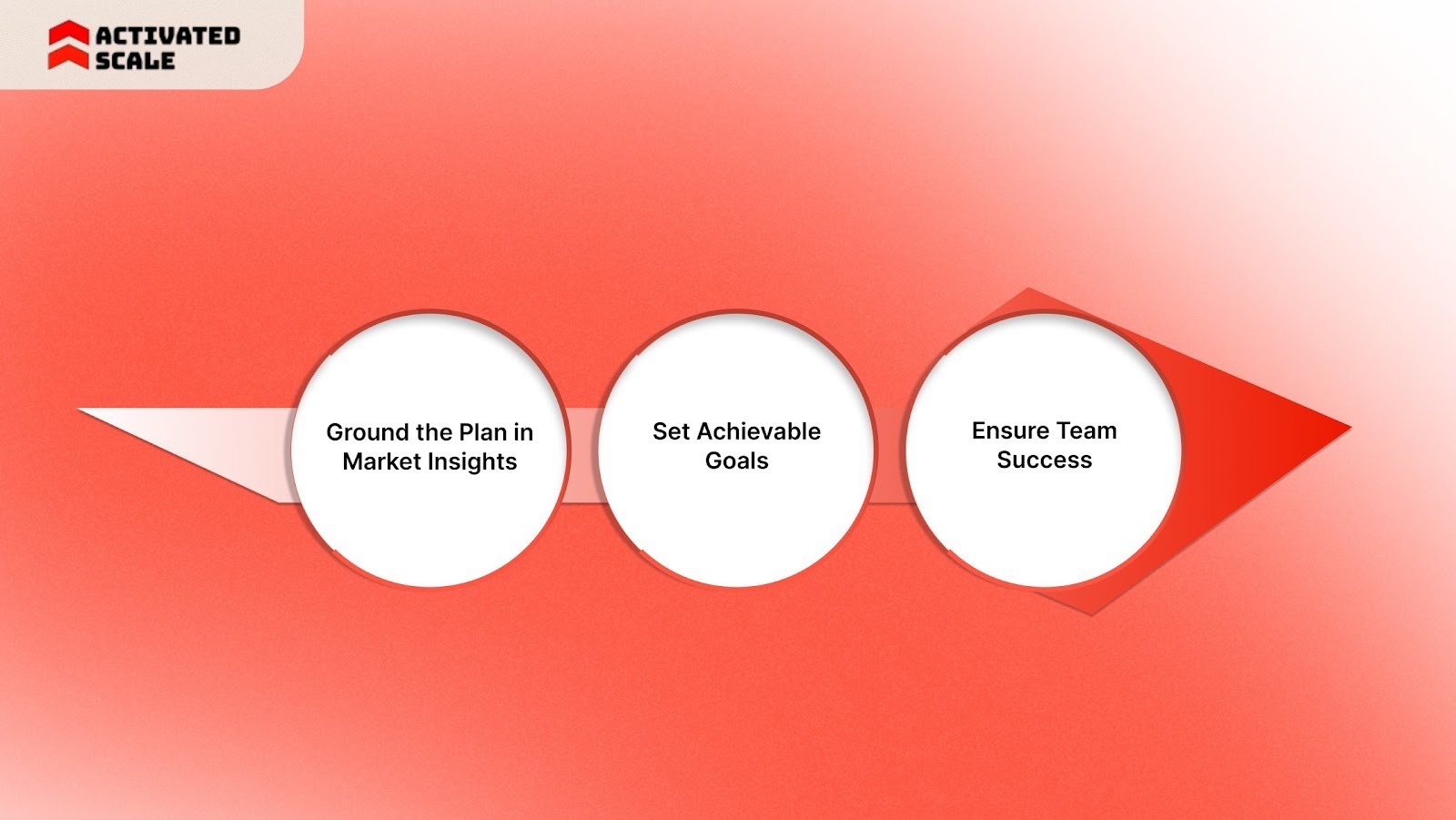
1. Anchor the Plan in Market Knowledge
A plan created in a vacuum will fail. It must reflect your specific business reality. Before drafting, immerse the new hire in your world.
They must understand your company's core mission and sales culture. This research phase provides the essential context. It ensures every subsequent goal is relevant and informed.
2. Set Achievable Goals
Unrealistic goals destroy confidence and momentum. The initial 90 days are for building a foundation, not breaking records. Work with the new hire to set challenging but reachable targets.
Honest assessment prevents early discouragement. It creates a runway for sustainable growth and early wins that fuel motivation.
3. Ensure Team Success
A rep's plan cannot exist in isolation. Their individual priorities must directly support the broader team's objectives. This alignment is critical for cohesion. It turns a personal roadmap into a chapter of the team's playbook.
The pillars set the mindset for your new hire’s first quarter, but mindset alone cannot drive revenue. You need a clear structure that turns goals into steady progress.
Also Read: Effective Lead Generation Hacks for 2024
How to Build Your 30-60-90 Day Plan
Since you're building a team to gain success repeatedly, your strategy should outrank your competitor's. How to do that?
You need a winning plan that will build a pipeline, master processes, and accelerate toward quota.
Phase 1: Days 1-30
The goal is to build a solid foundation of knowledge and relationships. Immerse in the company, product, market, and team. Complete all formal onboarding and training programs.
Key Activities:
- Master the product's value proposition.
- Meet with key stakeholders across departments.
- Shadow top-performing reps on sales calls.
- Achieve proficiency in core tools like the Customer Relationship Management (CRM).
How to Implement
- Complete all required company training and certifications.
- Schedule meetings with each sales team member.
- Study product features, benefits, and competitive differences.
- Research target market, key accounts, and ideal customer profiles.
- Shadow at least three top-performing reps on calls.
- Master your CRM and sales tools through hands-on practice.
Success Metrics: Training completions, a stakeholder map, and the ability to articulate the company's value proposition clearly.
Phase 2: Days 31-60
The second month shifts from learning to doing. The rep begins applying their knowledge in real-world scenarios. Start active selling, build a pipeline, and refine strategies.
Key Activities:
- Begin prospecting and conducting supervised discovery calls.
- Set and work towards weekly activity goals (calls, emails, meetings booked).
- Develop a target list of prospects and start outreach.
- Analyze past performance data to identify early opportunities.
How to Implement
- Create a target prospect list for your territory.
- Begin outbound prospecting with manager-reviewed scripts.
- Schedule and conduct your first discovery calls.
- Log all activities and prospect details in your CRM.
- Build a pipeline of at least 15 qualified opportunities.
- Review call recordings weekly with your manager for feedback.
Success Metrics: Number of qualified meetings booked, value of pipeline created, and feedback scores from early customer interactions.
Our Fractional Selling service at Activated Scale provides immediate, expert support. We embed a veteran Sales Development Representative (SDR) into your team to execute with confidence from day 31 according to your business needs.
Phase 3: Days 61-90
With engagement levels falling to 21% globally, companies faced productivity losses that added up to nearly $438 billion. So, the final phase focuses on closing deals and taking ownership. The rep operates with increasing independence.
Key Activities:
- Manage the full sales cycle independently.
- Analyze win/loss data to refine the sales approach.
- Propose one improvement to the sales process or playbook.
- Establish a strategic plan for their territory or accounts.
How to Implement
- Move qualified prospects through the full sales cycle.
- Close your first deals from the pipeline.
- Analyze win/loss data from initial sales attempts.
- Refine your sales approach based on real feedback.
- Develop a repeatable weekly workflow for prospecting.
- Establish goals for the next quarter based on learnings.
Success Metrics: First deals closed, percentage of quota attainment (e.g., 75-100%), measurable impact from a process improvement.
Although you have a solid plan, a few practical examples may help you further.
Also Read: Metrics and KPIs for Measuring Customer Retention
30-60-90 Day Sales Plan Examples
Concrete examples transform abstract ideas into a working model. These examples show how the framework adapts to different, critical scenarios for a sales leader.
The specifics will change based on the role. However, the core principle remains. Here is how it looks for two key hires: A new sales rep and a new sales manager.
Example 1: The New Sales Rep Plan
This plan focuses on building a seller from the ground up. It moves them from learning the playbook to executing it.
- Phase 1 (Days 1-30: Learn): Complete all sales methodology training. Build a target list of 100 prospects in the assigned territory.
- Phase 2 (Days 31-60: Execute): Begin personalized outreach to the target list. Build a qualified pipeline worth 150% of the quarterly quota.
- Phase 3 (Days 61-90: Optimize): Close the first 2-3 deals from the pipeline. Analyze win/loss data to refine the sales pitch. Propose one improvement to the team's email outreach template.
Example 2: The New Sales Manager Plan
This plan shifts focus from individual selling to team leadership and process. It transitions a top performer into an effective coach.
- Phase 1 (Days 1-30: Learn): Audit the current sales pipeline and process documentation.
- Phase 2 (Days 31-60: Execute): Lead two team training sessions on a core skill gap identified in Phase 1.
- Phase 3 (Days 61-90: Optimize): Propose and implement a revised quota or territory structure. Establish key performance indicators for the next quarter.
The Fractional Sales Leadership service at Activated Scale provides you with fully vetted, top-tier sales professionals, on a flexible contract basis first. This lets you see their skills in action, in your specific role, before making a full-time commitment.
But can we really avoid any upcoming issues while creating a plan? If not, how do you tackle this?
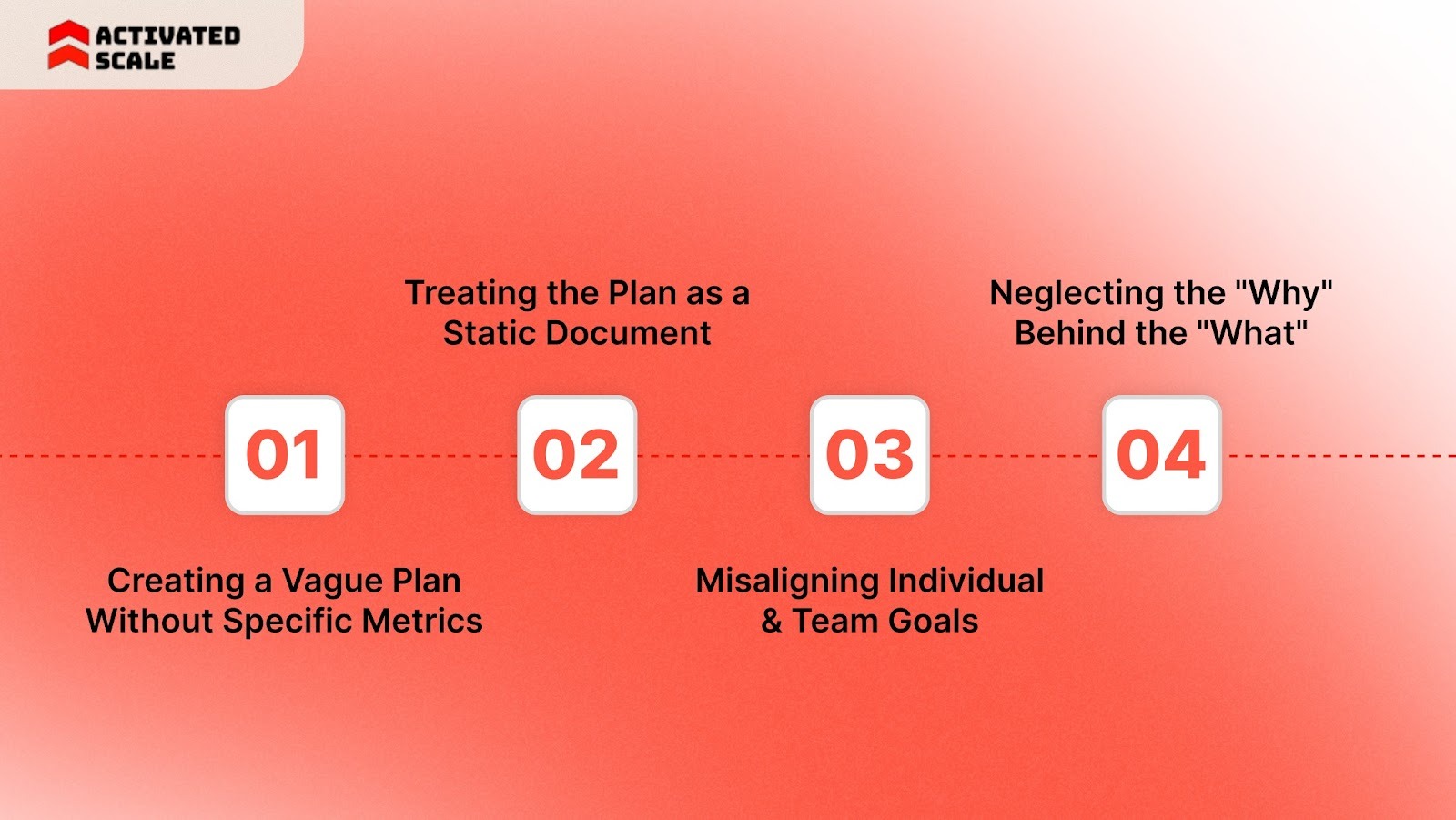
4 Common Mistakes to Avoid to Protect Your Plan
A great plan can still fail in execution. As a sales leader, your role is to guide and prevent these common errors. Awareness of these pitfalls protects your investment in the new hire and the plan itself.
Mistake 1: Creating a Vague Plan Without Specific Metrics
A plan filled with goals like "get up to speed" or "learn the product" is useless. These are not measurable.
- The Fix: Replace "learn the product" with "Complete three product certification modules and deliver a 10-minute demo to the team by Day 20."
Mistake 2: Treating the Plan as a Static Document
A rigid, one-and-done plan becomes obsolete quickly. Only 20% of employees say they get feedback every week, while roughly half of managers claim they give it that often.
- The Fix: Schedule mandatory weekly check-ins. Adjust the next 30-day goals based on real-time feedback and results. The plan is a living GPS, not a printed map.
Mistake 3: Failing to Connect Individual Goals to Team Objectives
A rep focused solely on their own list of tasks can become a silo. Their work may not align with the team's current strategic push or quarterly numbers, creating misalignment.
- The Fix: From Day 1, explicitly link their Phase 2 and 3 goals to the team's targets. For example, "Build a pipeline covering 30% of the team's Q3 target."
Mistake 4: Neglecting the "Why" Behind the "What"
Managers often assign tasks without context. A new rep told to "make 50 calls" doesn't understand the strategy behind the activity. This leads to robotic execution without buy-in.
- The Fix: For every key activity, explain the purpose. "We need you to make 50 targeted calls this week to test this new value proposition with the fintech segment."
A 30-60-90 day sales plan does more than accelerate revenue. It builds a culture that retains top talent. The data is conclusive.
Read Also: Key Skills and Competencies for a Successful Sales Operations Manager
The Final Thought
Your 30-60-90-day sales plan directly addresses this costly churn. It provides the clarity, support, and path to success that new hires need. This investment protects your recruitment budget and builds a stable, high-performing team.
The result is a team that ramps faster, sells more, and stays longer. Building and managing this process in-house demands significant time from your leadership team. This is time taken from strategy, coaching, and driving current revenue.
Book a call with Activated Scale today to build a team that grows and stays.
FAQs
1. What is the single most important element for the plan's success?
The manager's weekly involvement. The plan itself is just a document. Its success depends entirely on consistent coaching and feedback from the sales leader. Regular check-ins turn the plan into a dynamic coaching tool.
2. How do we create a plan for a new hire entering an existing, underperforming territory?
Structure Phase 1 for diagnosis, not just learning. Goals should include auditing the current account base, analyzing past deal data, and interviewing key customers to understand churn. The focus shifts from foundational learning to forensic analysis.
3. Should the sales rep or the sales manager write the first draft of the plan?
The new hire should write the first draft. This demonstrates initiative and ownership. The sales manager's role is to review, provide resources, and align it with the company's strategy. This collaboration builds trust and clarifies expectations from the start.
4. What happens after the 90-day plan is complete?
Use the final week of Phase 3 to co-create a new plan. This next plan should focus on achieving full quota ownership, mastering advanced sales skills, and contributing to team strategy. The process should repeat in quarterly cycles to foster continuous growth.
The Ultimate Guide to Hiring a Salesperson!
Get the step-by-step guide to hiring, onboarding, and ensuring success!