_edi.png)
Finding the right supplier sounds simple, until it isn’t. Prices vary wildly, quality is hard to verify, and every wrong decision costs time, money, or both. For many businesses, the real challenge isn’t sourcing products; it’s sourcing the right partners consistently.
This is where sourcing agencies come in. Not as middlemen, but as specialists who already know the market, the suppliers, and the common failure points businesses run into when sourcing on their own.
Instead of starting from scratch, companies use sourcing agencies to shorten decision cycles, reduce risk, and avoid costly trial-and-error.
Key insights
- A sourcing agency helps businesses find, vet, negotiate with, and manage external suppliers or partners, reducing the time and risk involved in sourcing
- Companies use sourcing agencies to lower costs, access global supplier networks, and avoid trial-and-error when entering new markets
- Key benefits include better pricing through supplier relationships, expert handling of regulations and logistics, and stronger supplier reliability
- Sourcing agencies are especially valuable when internal teams lack the bandwidth, experience, or networks to manage sourcing independently
- Activated Scale applies this model to sales hiring by connecting companies with pre-vetted sales talent through contract-to-hire and fractional options, helping teams scale intentionally
What Is a Sourcing Agency?
A sourcing agency is a company that helps businesses find, evaluate, and work with external suppliers or service providers. Instead of sourcing partners on their own, companies rely on a sourcing agency to identify reliable options, negotiate terms, and verify quality standards.
Sourcing agencies act as intermediaries between businesses and suppliers. They manage supplier research, pricing discussions, and relationship oversight, reducing the time and risk involved in sourcing.
By using established networks and market expertise, sourcing agencies help companies access vetted partners, avoid unreliable vendors, and make more informed sourcing decisions.
The Role of a Product Sourcing Agency
A product sourcing agency helps businesses find manufacturers or suppliers that can produce finished goods or components based on specific requirements. It’s commonly used by companies that sell physical products but don’t have the time, expertise, or network to source reliably on their own.
The process usually starts with defining product specifications, materials, quality standards, pricing targets, and volumes. The agency then identifies suitable manufacturers, evaluates their capabilities, and shortlists suppliers that meet those criteria.
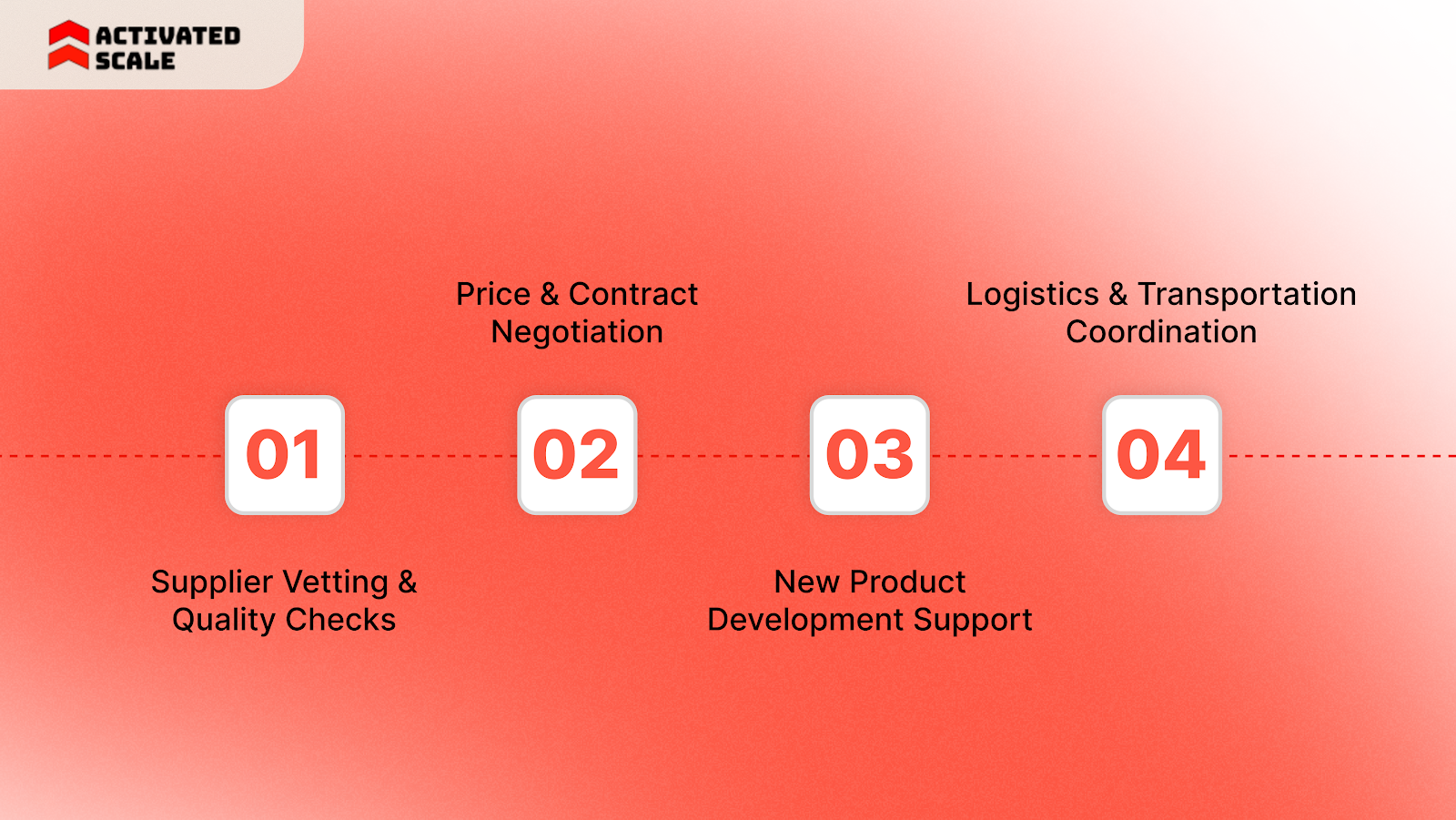
Beyond supplier discovery, product sourcing agencies often support:
- Supplier vetting and quality checks
- Price and contract negotiation
- New product development support
- Logistics and transportation coordination
This role is especially valuable for businesses without internal sourcing teams or the budget to manage supplier relationships independently. By handling supplier search and coordination, a product sourcing agency reduces operational burden while improving sourcing reliability.
When Should You Consider Using a Sourcing Agency?
Working with a sourcing agency can unlock speed and reliability, but only in the right situations. It’s most effective when complexity, scale, or lack of internal capacity starts slowing the business down.
You should consider using a sourcing agency if:
You’re Expanding Into International Markets
Sourcing internationally adds layers of complexity, supplier discovery, pricing differences, regulations, and logistics. A sourcing agency brings local market knowledge and existing supplier relationships, helping you avoid costly trial-and-error when entering new regions.
You Lack In-House Sourcing Expertise
Not every company has the resources to manage supplier research, negotiations, and quality checks internally. A sourcing agency takes ownership of these tasks, ensuring suppliers meet pricing, compliance, and quality expectations without building a full internal team.
Also read: How to Outsource Marketing Services for Business Growth
You Need to Save Time and Stay Focused on Core Operations
Sourcing is time-intensive. Managing vendors, tracking production, and resolving issues can quietly pull focus away from growth-driving activities like sales and marketing.
This is similar to how founders approach sales hiring. Instead of stretching internal teams thin, many rely on Activated Scale to handle sales talent sourcing through contract-to-hire and fractional models, freeing leadership to focus on strategy rather than coordination.
You’re Managing High-Volume or Repeat Orders
As order volume grows, sourcing becomes more complex. Agencies help identify suppliers that can scale production reliably while negotiating better terms and maintaining consistency across large orders.
You Want Stronger Product Quality Control
Quality issues can erase margins quickly. Sourcing agencies often conduct supplier audits and pre-shipment inspections to ensure products meet defined standards, reducing the risk of defects, returns, or customer dissatisfaction.
You Need Flexibility Without Long-Term Commitment
For many businesses, sourcing needs fluctuate. A sourcing agency provides access to expertise without long-term overhead, much like fractional or contract-based models used in other functions. This flexibility is especially valuable when demand is uncertain or seasonal.
A sourcing agency makes the most sense when the cost of managing sourcing yourself is higher than the cost of outsourcing it. The goal isn’t to give up control, it’s to regain focus and reduce risk where execution complexity is highest.
Benefits of Using Sourcing Agencies
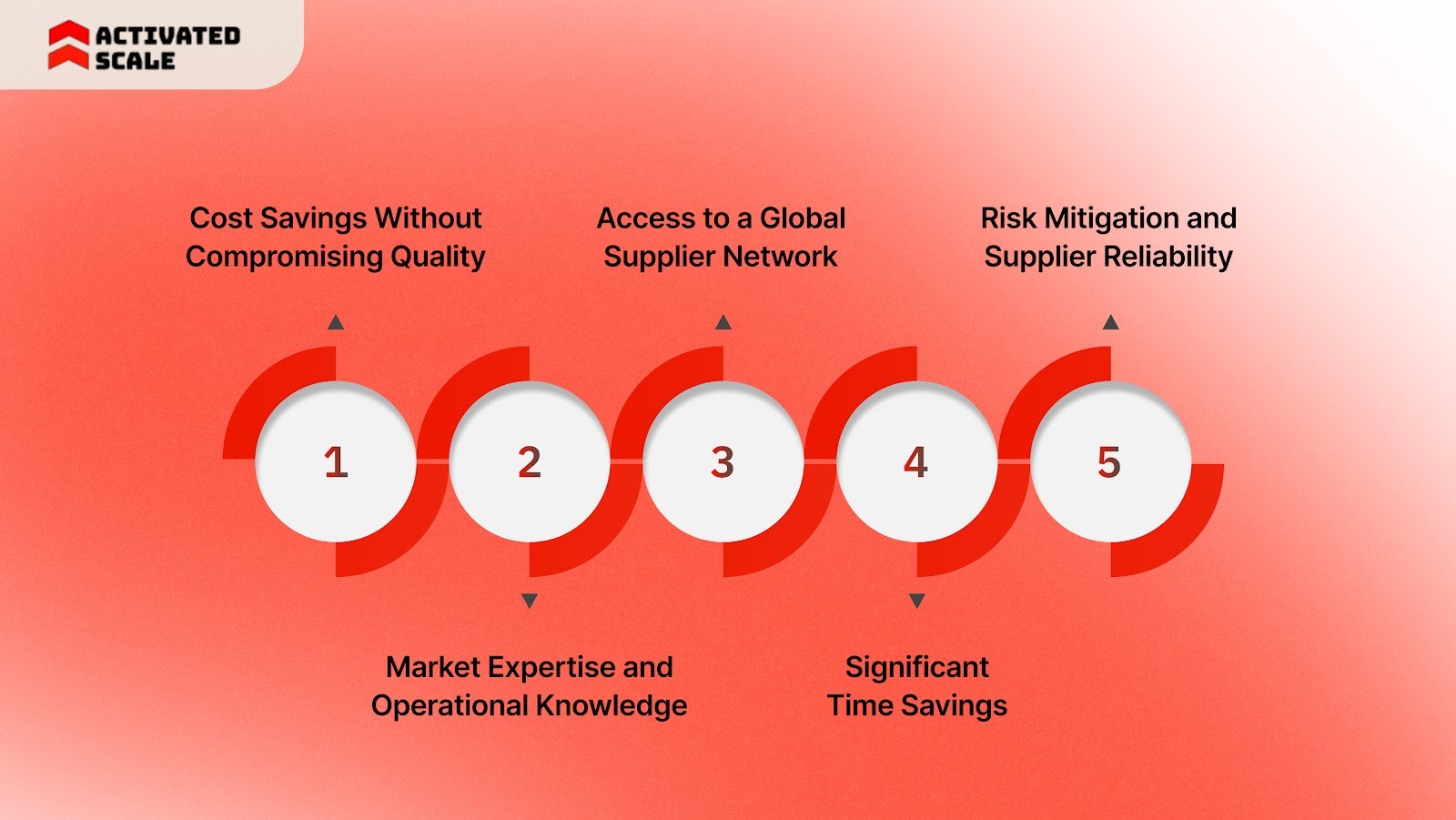
Working with a sourcing agency helps businesses simplify complex procurement decisions while reducing cost, risk, and operational strain. Below are the key advantages companies gain when they partner with experienced sourcing professionals.
1. Cost Savings Without Compromising Quality
Sourcing agencies help businesses reduce costs by tapping into established supplier networks, often across lower-cost international markets. Their existing relationships allow them to negotiate better pricing on materials, components, and finished products.
Beyond unit costs, agencies also optimize:
- Shipping and logistics routes
- Packaging and consolidation strategies
- Payment and contract terms
The result is lower total sourcing cost, not just cheaper products.
2. Market Expertise and Operational Knowledge
Sourcing internationally is rarely straightforward. Regulations, tariffs, customs processes, and language barriers introduce complexity that many businesses aren’t equipped to manage.
Sourcing agencies bring hands-on knowledge of:
- Import/export regulations
- Country-specific compliance requirements
- Supplier communication and negotiation norms
This expertise helps businesses avoid costly mistakes, delays, and compliance issues that can derail sourcing efforts.
3. Access to a Global Supplier Network
A sourcing agency connects businesses to a broader pool of suppliers than they could realistically reach on their own. This access improves flexibility, whether the goal is lowering costs, improving quality, or finding specialized manufacturing capabilities.
With global sourcing options, companies aren’t locked into a single market or vendor, which strengthens negotiating power and supply continuity.
4. Significant Time Savings
Finding, vetting, and managing suppliers is time-intensive. A sourcing agency takes ownership of this process, from supplier discovery to negotiation and delivery coordination.
This allows internal teams to focus on:
- Product strategy
- Sales and growth initiatives
- Customer experience
The same principle applies across business functions. That’s why teams use platforms like Activated Scale, to offload complex hiring work while staying focused on execution. In both cases, the value lies in freeing up leadership time.
5. Risk Mitigation and Supplier Reliability
International sourcing introduces risks around quality, payment, shipping, and compliance. Sourcing agencies reduce these risks by conducting supplier vetting, quality checks, and process oversight.
They help manage:
- Supplier reliability and consistency
- Quality control standards
- Payment and customs risks
By acting as a buffer between businesses and suppliers, sourcing agencies provide greater confidence and predictability throughout the procurement process.
Learn more about: 12 Sales Training Techniques That Work for Successful Leaders
What This Means for Talent Sourcing (and Sales Teams in Particular)
At its core, a sourcing agency exists to solve one problem: finding the right external partner faster, with less risk. That principle doesn’t stop at products or suppliers, it applies just as strongly to hiring critical talent.
Many growing companies struggle not because they can’t hire, but because sourcing the right people takes time, context, and market knowledge. This is where modern talent-focused sourcing models come in.
Activated Scale applies the same sourcing discipline to sales hiring.
Through flexible options like:
Teams can validate fit and performance before making long-term commitments.
Just like a product sourcing agency reduces procurement risk by leveraging expertise and networks, Activated Scale helps businesses source sales talent more intentionally, saving time, avoiding mis-hires, and scaling only when it makes sense.
Final Thoughts
A sourcing agency isn’t just a middleman, it’s a risk-reduction tool. Whether you’re sourcing products, suppliers, or specialized expertise, the value comes from access, experience, and time saved. Instead of navigating unfamiliar markets alone, businesses use sourcing agencies to make smarter decisions with fewer blind spots.
The same principle applies beyond procurement. When companies grow, they face similar challenges in hiring, especially for revenue-critical roles. That’s why teams turn to Activated Scale to source experienced, pre-vetted sales talent without committing too early.
Let’s connect and explore how flexible sourcing models can support your growth.
FAQs
1. What does a sourcing agency do?
A sourcing agency identifies, evaluates, and manages suppliers or partners on behalf of a business, helping reduce risk and save time.
2. Are sourcing agencies only for large companies?
No. Small and mid-sized businesses often benefit the most, especially when they lack internal sourcing expertise or global networks.
3. How is a sourcing agency different from buying directly from suppliers?
Sourcing agencies handle vetting, negotiation, and risk management. Direct sourcing often requires more time, experience, and trial-and-error.
4. Do sourcing agencies help beyond supplier discovery?
Yes. Many support negotiation, quality checks, logistics coordination, and ongoing relationship management.
5. Can the sourcing model apply to hiring talent as well?
Absolutely. Platforms like Activated Scale apply sourcing principles to sales hiring, connecting companies with vetted talent while reducing hiring risk.
The Ultimate Guide to Hiring a Salesperson!
Get the step-by-step guide to hiring, onboarding, and ensuring success!