_edi.png)
Startup teams often feel the pressure to fill key roles quickly, especially when product timelines are tight and growth targets depend on specialized talent. When the right skills are hard to source locally, it’s no surprise that 73% of companies are increasing international hiring through remote models.
But hiring across borders introduces extra steps, documentation, and coordination that can overwhelm a lean team if the process isn’t clear. This guide breaks down the essential stages of the international recruitment process. It will also give founders and hiring managers a strategic path to hiring strong global talent without slowing momentum.
Quick Overview
- International hiring expands access to talent, especially when local candidates are limited.
- A structured process needs mapping, sourcing, evaluation, compliance checks, and onboarding to keep global hiring moving smoothly.
- Time zones, cultural differences, and legal requirements are the most common blockers for founders.
- U.S. market readiness matters, especially for sales roles where buyer expectations and communication styles are specific.
- For sales hiring, Activated Scale helps startups access vetted, U.S.-based reps without long sourcing cycles.
What does the International Recruitment Process involve?
The international recruitment process is the structured path companies use to find, assess, and hire talent outside their home country. For U.S. startups, it acts as a practical framework for scoping roles, sourcing across regions, evaluating candidates in different time zones, and managing compliance and country-specific paperwork.
A clear process helps lean teams move faster, avoid legal issues, and maintain consistent hiring decisions while adding global talent or building out new market capabilities.
Also Check: Outsource Inside Sales: Comparison, Pros, and Selection Guide.
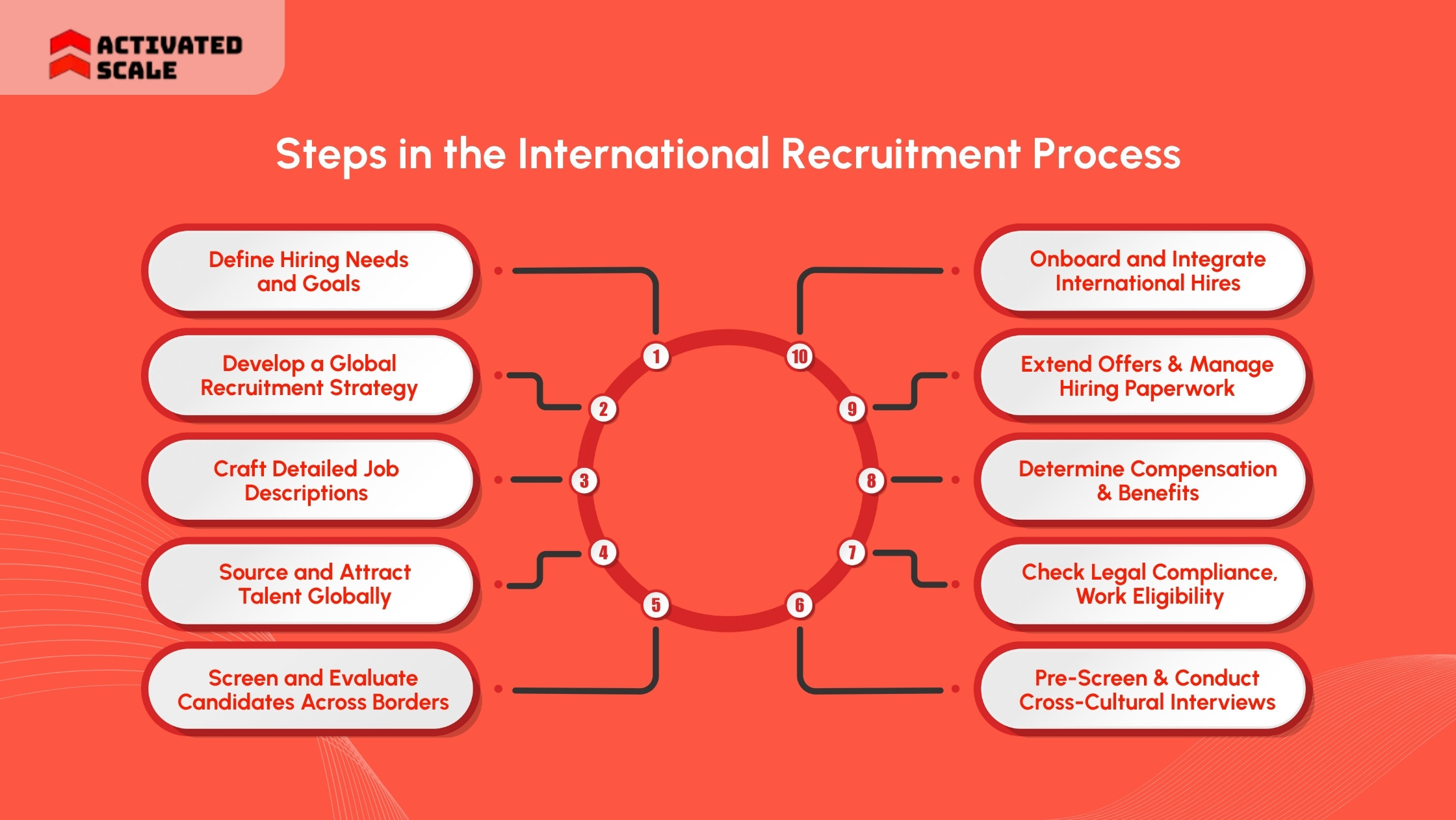
Essential Steps in the International Recruitment Process
A structured approach helps startup teams move through global hiring with fewer delays. The steps below outline the core stages that keep the international recruitment process clear and manageable.
1. Define Hiring Needs and Goals
Global hiring moves faster when the team aligns early on what the role must accomplish and why international talent is being considered.
Key considerations:
- Skills that are scarce or expensive to hire locally
- If the role requires experience with U.S. buyers (critical for sales)
- Time-zone coverage needed for customers, product, or GTM workflows
- Expected growth path of the role, and if you need a candidate on contract, full-time, or for future U.S. relocation
2. Develop a Global Recruitment Strategy
A documented strategy keeps the process consistent, especially when several team members share hiring responsibilities.
Build your plan around:
- Target regions with the right mix of skills, English proficiency, and availability
- Channels that reliably surface strong candidates
- Screening criteria aligned to U.S.-market expectations
- Defined owners, timelines, and approval steps
3. Craft Detailed Job Descriptions for Global Audiences
International candidates rely heavily on job descriptions to understand expectations, especially when working with U.S. founders they’ve never met.
Strengthen your JD by including:
- Performance expectations tied to metrics
- Required overlap with U.S. time zones
- U.S.-specific buyer or workflow context (for sales roles)
- List tools, systems, and processes the candidates must know
- Transparent compensation ranges
4. Source and Attract Talent Globally
To reach the right global talent, you need channels that deliver candidates familiar with SaaS environments and remote work.
High-ROI sourcing includes:
- Talent pools in countries with strong English fluency
- Niche communities for SaaS, GTM, product, and engineering roles
- Remote marketplaces with pre-vetted professionals
- Global referrals from advisors, partners, or current team members
You can avoid long sourcing cycles by working with platforms that deliver vetted, U.S.-ready sales talent. If you’re looking for qualified sales hires without running an extensive global search, Activated Scale is a trusted option you can count on.
5. Screen and Evaluate Candidates Across Borders
Evaluation needs to be more structured when candidates come from different cultural and professional backgrounds.
Key screening areas:
- Communication clarity and English proficiency
- Experience working with U.S. customers or teams
- Ability to work async and document progress
- Ownership mindset and comfort in a startup environment
- Familiarity with U.S.-centric tools and workflows
Also Read: B2B Sales Outsourcing: Definition, Benefits, Top Companies.
6. Pre-Screen and Conduct Cross-Cultural Interviews
Cross-cultural interviews reveal how well a candidate can operate within a U.S.-based startup’s pace, feedback style, and expectations.
Look for the following:
- Comfort with direct communication
- Initiative and problem-solving without constant guidance
- Adaptability to time-zone constraints
- Awareness of U.S. customer norms if the role is sales-facing
7. Check Legal Compliance, Work Eligibility, and Immigration
Every country has different rules, and founders must ensure compliance from day one.
Verify the following:
- Local labor requirements and mandatory benefits
- Contractor vs. employee classification
- IP protection and confidentiality agreement standards
- Currency/payment regulations and invoicing rules
- Eligibility for cross-border work activities
8. Determine Compensation and Benefits
International pay is nuanced, and misalignment can lead to gaps in expectations or talent loss.
Benchmark:
- Competitive pay for the role within the target region
- U.S.-aligned variable pay if hiring for sales
- Mandatory local benefits and leave policies
- Currency stability and payment timelines
- Tax obligations tied to the chosen arrangement
Recommended: Sales Rep Compensation Plans: Guide with Examples.
9. Extend Offers and Manage International Hiring Paperwork
Once you’ve selected the right candidate, closing quickly is essential as international professionals often receive multiple offers at once.
Include the following aspects:
- Clear KPIs and expectations
- Contracts aligned with local legal requirements
- IP, data security, and confidentiality terms
- Payment and invoicing structure
- Access to tools and onboarding materials
10. Onboard and Integrate International Hires
A thoughtful onboarding plan ensures new hires can contribute effectively from day one, regardless of geography.
Best practices include:
- Share a clear 30-60-90 plan
- Provide a buddy or point of contact
- Set expectations for communication and response times
- Offer shadowing opportunities for U.S. calls and workflows
- Schedule early check-ins to address roadblocks quickly
Effective onboarding creates long-term productivity and retention. After defining the process, the next step is checking if talent is prepared for U.S. market expectations.
Recommended: Recruitment SaaS: Strategies, Platforms, & Top Hiring Firms.
How to Evaluate Global Talent for U.S. Market Readiness
Some international candidates struggle with U.S. buyer expectations or the structure of a U.S.-focused sales environment. Evaluating market readiness early helps revenue teams avoid misalignment, long ramp periods, and uneven performance.
Key factors to evaluate:
- Communication Style and Clarity: Candidates should handle direct communication, crisp updates, and quick back-and-forth. U.S. buyers expect clear messaging, minimal ambiguity, and prompt responses.
- Familiarity With U.S. Sales Expectations: Ask about their experience with quota targets, pipeline reviews, objection handling, and forecasting. A candidate who understands typical U.S. sales pressure will adjust faster.
- Experience With U.S.-Based Clients or Teams: Prior work with American companies is one of the strongest indicators of readiness. It shows they can handle U.S. work rhythms, documentation style, and service expectations.
- Competence With SaaS Tools Common in U.S. Teams: Tools like HubSpot, Salesforce, Outreach, Loom, ZoomInfo, and Slack are standard. A strong candidate should solve problems with these tools rather than learn them from scratch.
- Cultural Adaptability: Working with U.S. buyers requires comfort with direct feedback, short timelines, and open communication. Look for examples of adaptability and self-management.
A structured grading rubric helps founders compare candidates fairly across regions and hiring rounds. Now, the next step is identifying where to find candidates who match that standard.
Also Check: Fractional Talent Guide: Everything You Need to Know.
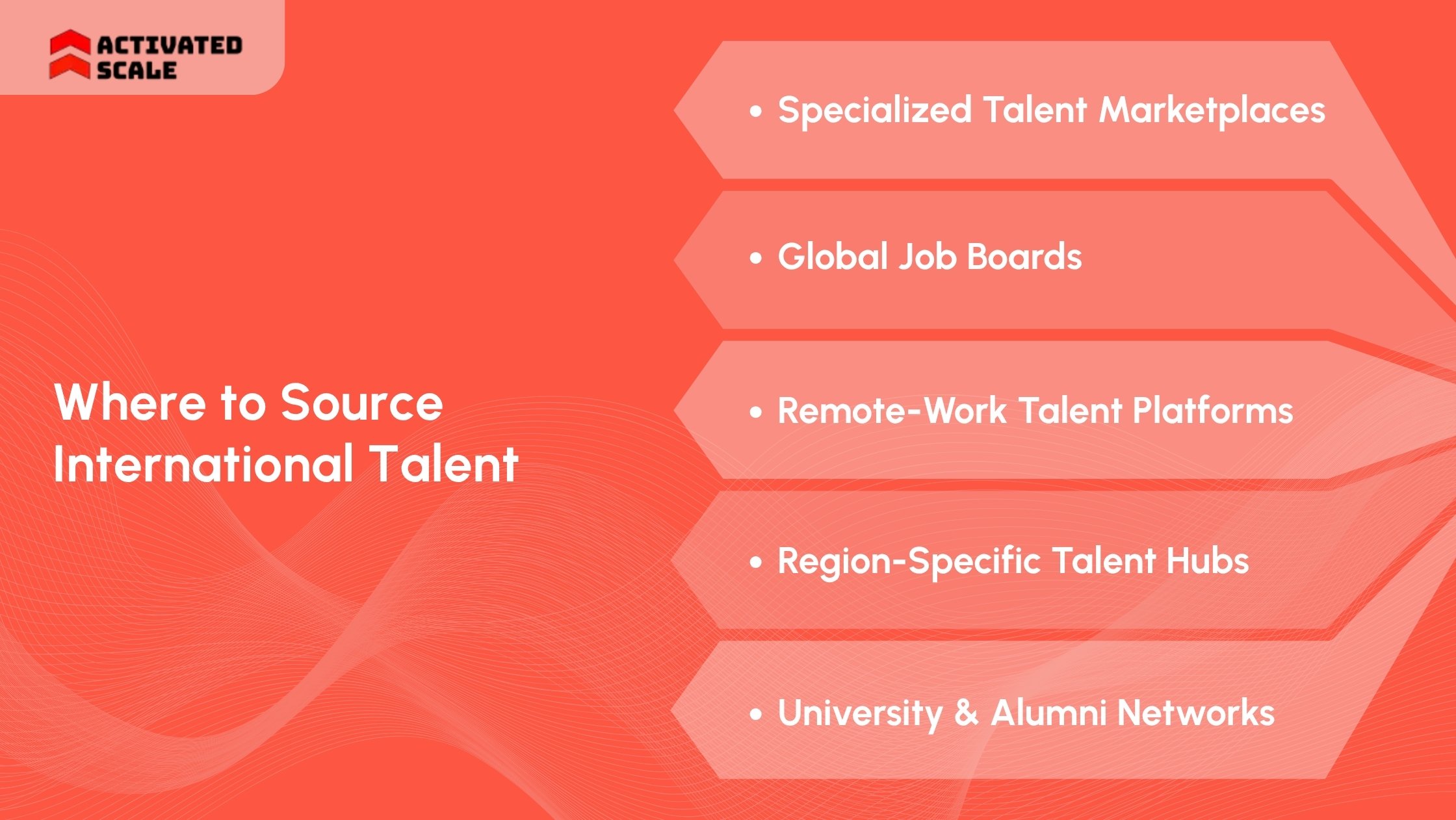
Where to Source International Talent
Below are some options to make your international hiring process simpler so you can choose what fits your stage and budget.
1. Specialized Talent Marketplaces
These platforms focus on specific functions and provide pre-vetted professionals, helping lean teams avoid long screening cycles.
- Activated Scale: U.S.-based SDRs, AEs, and sales leaders vetted for startup environments. Ideal for teams needing a sales team that already understands U.S. buyers.
- Toptal: Curated engineers and product talent.
- MarketerHire: Experienced marketing contractors.
- Braintrust: Technical and creative freelancers with transparent pricing.
2. Global Job Boards
Best for broad visibility and reaching active global job seekers.
- LinkedIn Jobs
- Indeed Global
- Wellfound (AngelList)
These are strong for mid- to senior-level roles but require more in-house screening.
3. Remote-Work Talent Platforms
Designed for distributed teams hiring across multiple regions and time zones.
- Remote OK
- We Work Remotely
- Himalayas
Ideal for roles where location flexibility is acceptable.
4. Region-Specific Talent Hubs
Useful when targeting talent in specific markets for language, time zone, or cost considerations.
- Latin America: GetOnBoard, Torre
- Eastern Europe: DJinni, No Fluff Jobs
- APAC: JobStreet, Seek
These sites typically feature candidates who are comfortable working with U.S. teams.
5. University & Alumni Networks
Valuable for early-career roles or specialized skills.
- Global MBA programs
- Erasmus alumni groups
- Regional CS/engineering programs
Teams use this route when hiring interns, analysts, or research-heavy roles.
How Activated Scale Supports Global Hiring for Sales Teams
Building a cross-border sales function is difficult, especially when you need reps who can sell to U.S. buyers from day one. Activated Scale focuses exclusively on sales talent and connecting founders with vetted, U.S.-based candidates who can ramp quickly and support revenue growth without long hiring cycles.
Roles available through Activated Scale:
- Fractional SDRs: Handle prospecting, outreach, and meeting booking.
- Fractional AEs: Run full sales cycles, from demos to closing.
- Fractional VPs of Sales: Build playbooks, coach reps, and structure the GTM motion.
- Contract-to-Hire Reps: Work with candidates on a trial basis before converting to full-time.
Let’s talk if you need ready-to-perform sales talent without slowing hiring momentum.
Conclusion
International recruitment gives founders access to talent they can’t always find locally, but coordinating across borders, aligning expectations, and staying compliant can stretch a small team. These steps apply to every function, yet sales roles demand extra care, especially when you need people who already understand how U.S. buyers make purchasing decisions.
If you’re specifically exploring international options for sales talent, Activated Scale can support you with vetted, U.S.-based SDRs, AEs, and sales leaders who ramp quickly and reduce hiring delays.
Book a quick call to get started.
FAQs
1. How early should startups begin planning for international hiring?
Most teams benefit from starting 6–8 weeks before the role is needed. This gives enough time to prepare documentation, set up compliant processes, and avoid rushed decisions that lead to misalignment later.
2. Do founders need an entity in another country to hire internationally?
Not always. Many startups use Employer of Record (EOR) services to handle contracts, payroll, and compliance without opening a local entity. It’s a flexible approach for early-stage hiring.
3. How can small teams maintain a consistent candidate experience across countries?
Create a simple interview structure, align feedback expectations among interviewers, and set clear communication timelines. Candidates respond well to predictability, even across time zones.
4. What tools help streamline global recruitment workflows?
Applicant tracking systems, interview scheduling platforms, EOR dashboards, and cross-border background check tools can reduce manual work and prevent delays at each stage.
5. How do founders protect IP when hiring internationally?
Use contracts with clear confidentiality, invention assignment, and data-handling clauses. Most EORs and global legal partners provide templates aligned with local regulations to reduce risk.
The Ultimate Guide to Hiring a Salesperson!
Get the step-by-step guide to hiring, onboarding, and ensuring success!