_edi.png)

Closing is not just the final step in a startup sales cycle. It is the sum of every conversation, question, and decision that came before it.
And when you’re selling without a big brand behind you, strong closing skills become even more important.
Buyers hesitate more. Stakes feel higher. Deals stall for reasons that have nothing to do with your product.
This is why early-stage teams need reps who can diagnose problems quickly, guide the buyer with confidence, and remove friction well before the contract stage.
In this guide, we break down the closing techniques that actually move deals forward and help you build a closing motion that matches the pace and pressure of startup sales.
At a glance:
- Strong closing skills come from a clear, consistent sales process where the buyer understands the problem, the value, and the next step at every stage.
- Early-stage teams need stronger closers because buyers take on more risk and expect clarity, confidence, and momentum before committing.
- The most effective closers guide the buyer, create meaningful urgency, address concerns early, reinforce outcomes, and reduce perceived risk.
- Deals stall for preventable reasons such as unclear next steps, missing decision-makers, or insufficient discovery. Fixing these patterns improves close rates immediately.
- Activated Scale helps startups strengthen their closing motion with vetted AEs, SDRs, and fractional leaders who bring proven experience without long hiring cycles or early-stage hiring risk.
What Is Sales Closing?
Sales closing is the moment when a buyer commits to moving forward, but it is not a single question or tactic. Effective closing is the result of guiding a buyer through a process where the value is clear, the risks feel manageable, and the next step is obvious.
In early-stage companies, closing often carries more weight because buyers are betting on your product, your team, and the confidence you project.
A strong close happens when you have diagnosed the problem accurately, aligned your solution to real impact, addressed concerns before they become objections, and created enough clarity for the buyer to make a decision.
In simple terms, closing is the outcome of doing the rest of the sales cycle well.
Why Strong Closing Skills Matter for Startup Sales Teams
Buyers take a bigger risk when they choose a young company, which means your reps need the closing skills to reduce uncertainty, build trust quickly, and keep momentum through each stage.
Here’s why closing skills matter so much:
- Early-stage buyers take more risk, so they require more clarity and reassurance before committing. Your reps must help them understand the problem, the impact, and why your solution is worth betting on.
- Sales cycles are shorter, and budgets are tighter, which means deals stall easily if next steps aren’t clear or if value isn’t communicated early. Strong closing skills keep the deal moving.
- Closing happens throughout the entire sales process, not just in the final call. Every discovery question, follow-up, and demo moment is an opportunity to move the buyer closer to a decision.
- Stronger closing skills lead to higher win rates with fewer resources, which is critical when you don’t have a full sales team or heavy tooling. A good closer can do more with less.
The bottom line: better closing skills create cleaner pipelines, faster decisions, and more consistent revenue without increasing headcount.
Also read: How to Get Started on Remote Closing Jobs
Essential Closing Skills (With Techniques to Apply Them)
Strong closing skills aren’t about using one perfect line at the end of a call. They’re about guiding the buyer, reducing risk, and making it easy to say yes.
Below are the skills every rep needs, paired with proven techniques that bring each skill to life.
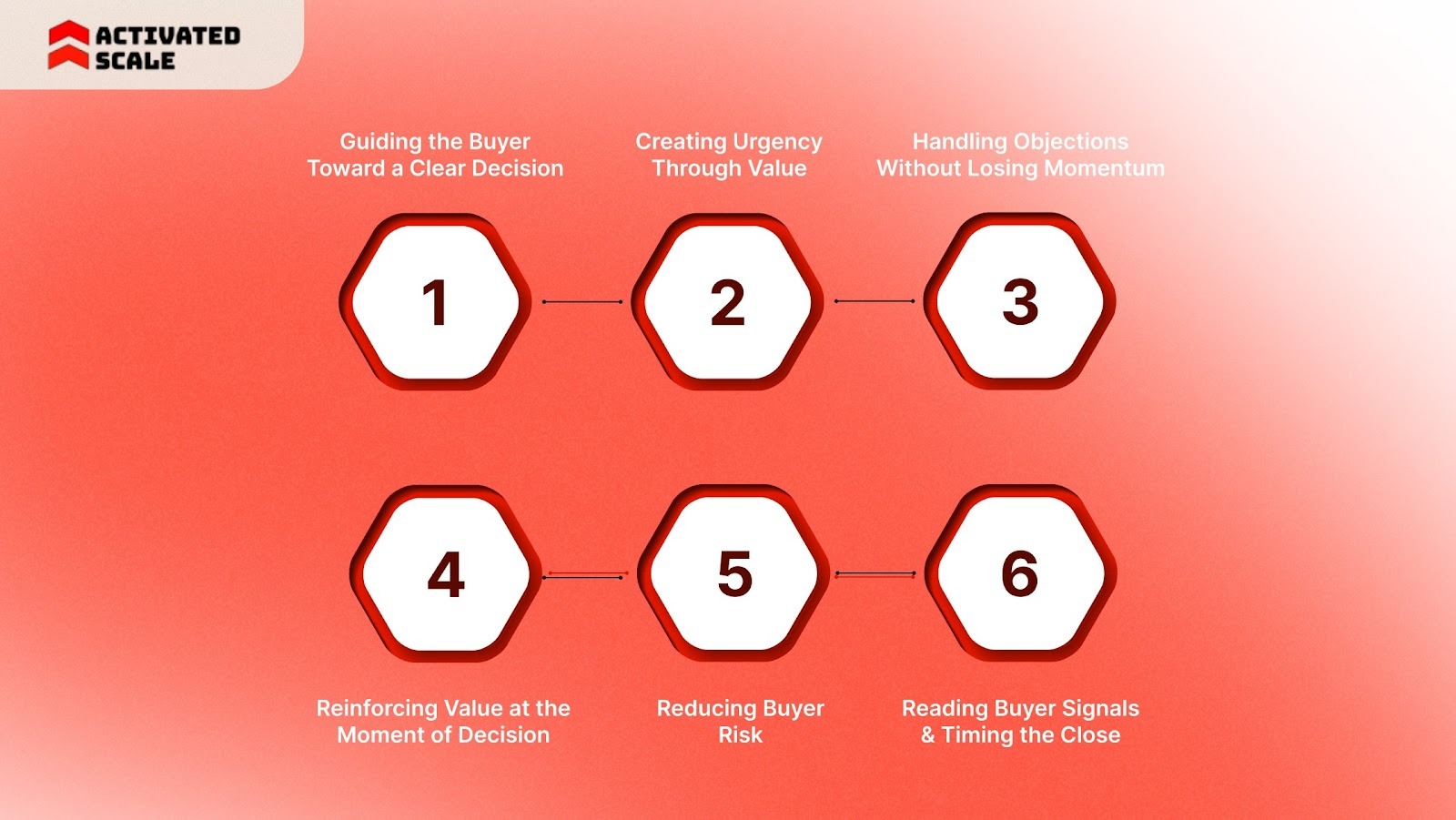
Skill 1: Guiding the Buyer Toward a Clear Decision
Deals usually stall when buyers are unsure about the next step. Strong closers remove that uncertainty. They guide the process, set clear expectations, and help buyers feel confident about moving forward. This skill matters even more in early-stage sales where the rep often carries the full weight of the buyer’s clarity.
What top reps do well: They lead the conversation with direction instead of waiting for follow-up emails that may never come. Buyers appreciate clarity and structure, especially when the decision has real business impact.
Techniques that demonstrate this skill:
1. The Assumptive Close
Move ahead as though the buyer is ready. This approach works when the conversation has already created alignment.
Example: “I will send over the onboarding details so you can review them before we meet next week.”
2. The Option Close
Give two positive choices that both move the deal forward.
Example: “Would you like to start with the Pro plan or the Growth plan?”
3. The Question Close
Use direct questions to confirm understanding and surface hesitation early.
Example: “Does this approach solve the challenge you described in our first call?”
These techniques help buyers feel guided instead of pressured and reduce the friction that often slows down deals.
Skill 2: Creating Urgency Through Value
Most buyers delay decisions because they have not connected the timing of the purchase to the actual impact on their business. When urgency feels meaningful and tied to outcomes, buyers move faster. This skill is about helping them see the cost of waiting, not pushing them into a deadline.
What top reps do well: They highlight the value of moving now instead of relying on hard expiry dates or last-minute incentives. The buyer sees urgency for themselves, which builds confidence rather than resistance.
Techniques that demonstrate this skill:
1. The Now or Never Close
Use when timing creates real advantages.
Example: “If we start this quarter, your team will be fully ramped before the holiday peak.”
2. The Impending Event Close
Point to an upcoming change that naturally affects value or timing.
Example: “Pricing for your current tier updates next month and signing now will lock in your rate.”
3. The Takeaway Close
Remove an option to help the buyer recognize its importance.
Example: “If analytics is not essential right now, we can remove it and revisit later.”
These techniques help buyers see how timing affects outcomes, which motivates them to act sooner.
Skill 3: Handling Objections Without Losing Momentum
Objections appear in almost every deal. They are not setbacks. They are signals that the buyer is interested but not fully convinced. Strong closers approach objections with curiosity and clarity. They welcome them because resolving concerns early often speeds up the close.
What top reps do well: They uncover the buyer’s real concern instead of jumping into a rapid response. Buyers feel understood and are more willing to share what is holding them back.
Techniques that demonstrate this skill:
1. The Objection Solicitation
Invite concerns before they linger under the surface.
Example: “What concerns are still on your mind as you think about this approach?”
2. The Probe for Opinion Close
Encourage the buyer to share how they feel about the solution.
Example: “How does this option compare to what you are doing today?”
3. The If I–Will You Close
Clarify whether the objection is real or a placeholder.
Example: “If we can meet the security requirement, are you comfortable moving forward?”
These techniques help reps understand what is really slowing down the decision, which removes friction and keeps the deal on track.
Skill 4: Reinforcing Value at the Moment of Decision
Even the strongest pitch fades over time. Buyers often remember how they felt during the conversation, not the details. This skill helps reps restate the value clearly and tie it back to the buyer’s goals so the decision feels straightforward.
What top reps do well: They recap the story the buyer already told and connect it directly to outcomes. This gives the buyer a clearer picture of the impact and reduces hesitation.
Techniques that demonstrate this skill:
1. The Summary Close
Restate the buyer’s goals, challenges, and desired outcomes, then show how the product supports them.
Example: “You shared three priorities at the start of our call. Here is how today’s plan aligns with each one.”
2. The Ben Franklin Close
Use a simple pros-and-cons list to strengthen logical reasoning.
Example: “Let’s look at the advantages you gain immediately and the few concerns you mentioned.”
These techniques help the buyer feel informed, confident, and aligned with the decision they are making.
Skill 5: Reducing Buyer Risk
Many deals stall not because the buyer doubts the product but because the decision feels risky. Strong closers lower that risk by giving the buyer a safe environment to experience value or test assumptions before committing fully.
What top reps do well: They reduce the emotional and practical cost of moving forward, which helps the buyer shift from hesitation to confidence.
Techniques that demonstrate this skill:
1. The Puppy Dog Close
Give the buyer a chance to try the product so they feel the value directly.
Example: “Let’s set you up with a pilot environment. You can experience the workflow firsthand before making a full decision.”
2. The Something for Nothing Close
Offer a small value add that builds goodwill and reduces perceived risk.
Example: “I can include onboarding support at no cost so your team is fully set up from day one.”
These approaches help buyers feel safer moving ahead by reducing uncertainty and building trust.
Skill 6: Reading Buyer Signals and Timing the Close
Closing is as much about timing as it is about technique. Strong reps pay attention to verbal cues, engagement levels, and the buyer’s confidence. They sense when the buyer is ready and choose the right moment to ask for commitment.
What top reps do well: They observe buyer behavior closely and adjust their pace, tone, and next steps based on what the buyer signals. This prevents premature closes and avoids dragging the deal too long.
Techniques that demonstrate this skill:
1. The Backwards Close
Start with the buyer’s desired outcome and work backward to create a clear path.
Example: “If your goal is to launch by next month, here is what the timeline would look like.”
2. The Scale Close
Use a simple readiness question to surface hidden concerns.
Example: “On a scale of 1 to 10, how ready do you feel to move forward with this plan?”
This skill turns vague interest into a clear direction and helps reps approach the close with confidence.
These skills create the foundation for consistent closing. The next step is understanding where deals break down when these skills aren’t applied well.
Also read: From Prospect to Partner: The Ultimate Guide To Closing A Deal
Closing Mistakes That Hurt Win Rates
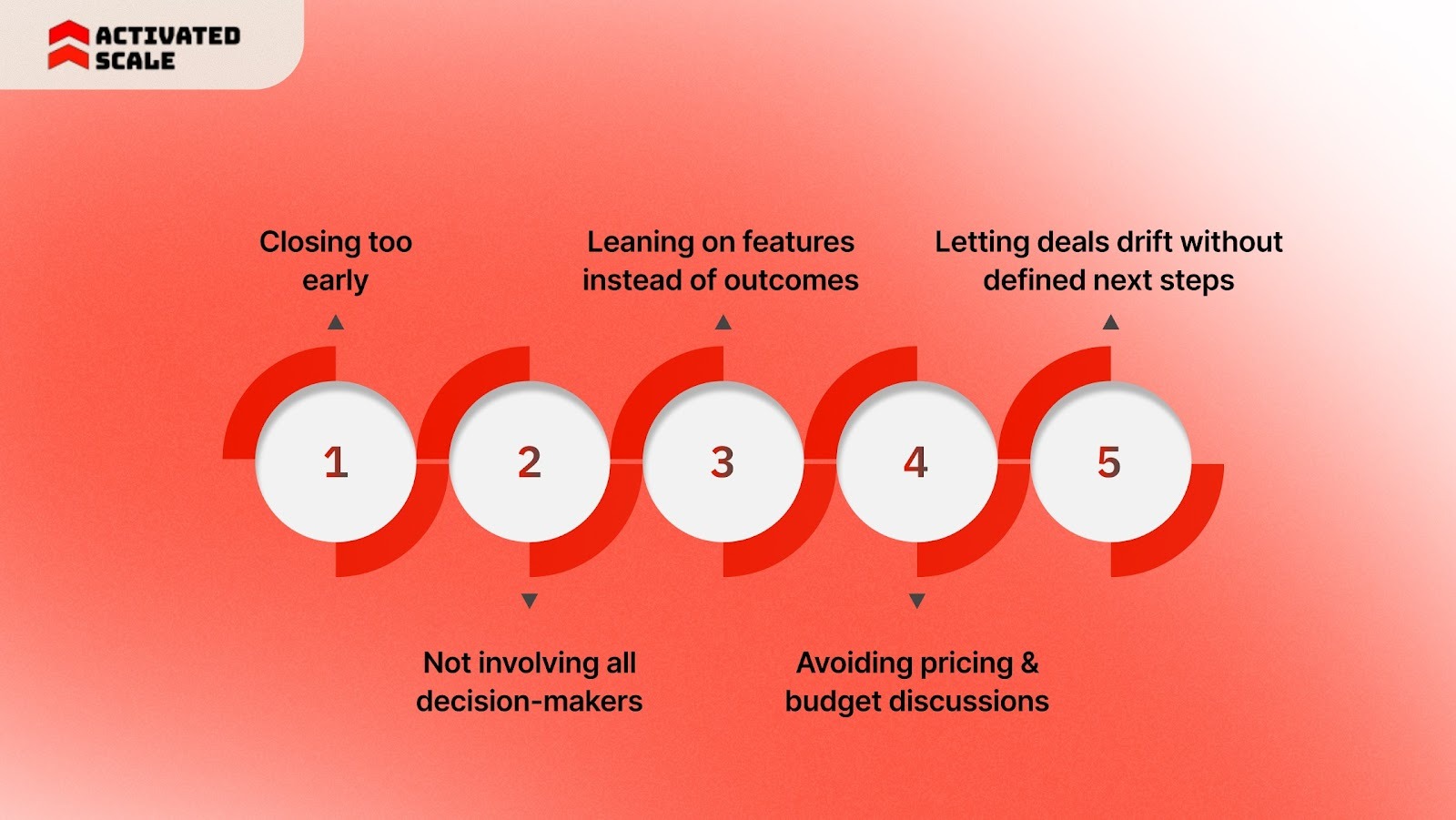
Even strong reps lose deals when avoidable mistakes creep in. Most of these issues appear not because the rep lacks skill but because the process lacks structure.
Here’s what you should keep in mind:
- Closing too early: Trying to secure a commitment before the buyer sees clear value creates hesitation. Strong discovery fixes this by giving the buyer a clear link between their problem and your solution.
- Not involving all decision-makers: Deals stall when a VP, finance lead, or technical reviewer appears late in the process. Identify stakeholders early and invite them in before you reach pricing or next steps.
- Leaning on features instead of outcomes: Buyers care about impact, not functionality. Reps who translate features into results have an easier time guiding the buyer toward a confident decision.
- Avoiding pricing and budget discussions: Holding back on pricing leads to misalignment and delays. Bring the budget into the conversation early, so the close feels straightforward and transparent.
- Letting deals drift without defined next steps: A vague follow-up is one of the most common reasons deals stall. Always confirm the next meeting, who needs to attend, and what will be decided.
These mistakes are easy to fix once you recognize them. Cleaning up these patterns alone can significantly improve your close rates and shorten your sales cycle.
How Reps Can Level Up Their Closing Skills
Closing improves fastest when reps practice deliberately instead of relying on experience alone. These simple habits strengthen the core skills that move deals forward.
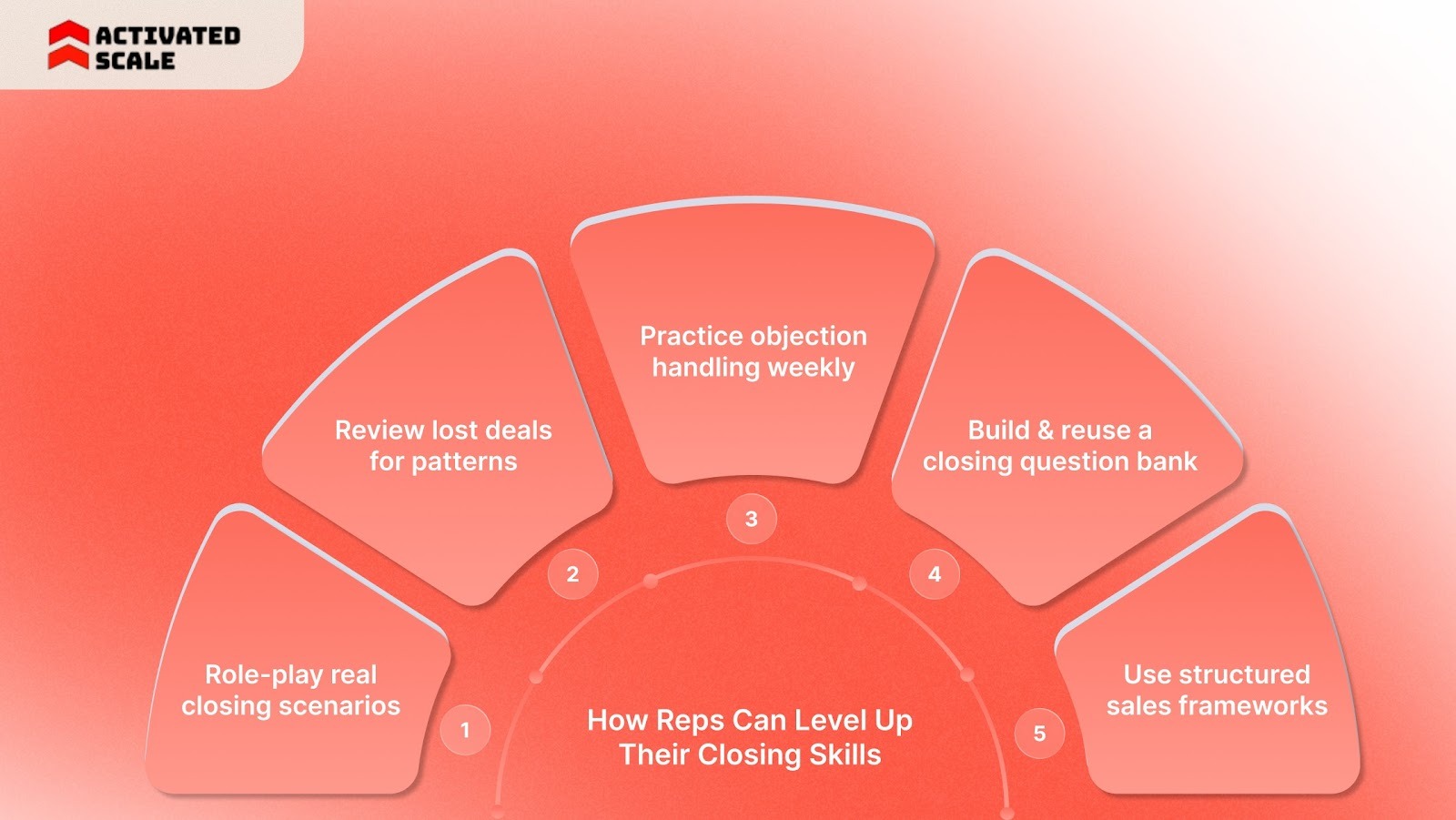
- Role-play real closing scenarios: Short, targeted role-plays build confidence and reduce hesitation during live calls. Focus on objection handling, next steps, and commitment questions.
- Review lost deals for patterns: Look for the moments where momentum broke. Most teams discover the same issues repeating: unclear value, missing stakeholders, or weak urgency.
- Practice objection handling weekly: Consistent practice reduces emotional reactions and helps reps respond with clarity. Use real objections pulled from recent conversations.
- Build and reuse a closing question bank: Strong questions reveal readiness, blockers, and decision dynamics. Keep a shared list so every rep has proven phrasing to work with.
- Use structured sales frameworks: Lightweight methods such as mutual action plans or simple qualification frameworks create consistency. A clear structure helps reps guide buyers more effectively.
These habits strengthen decision-making, control, and confidence, which are the foundations of strong closing skills.
How Activated Scale Strengthens Your Closing Motion
Strong closing skills start with the right people and the right support. Activated Scale gives startups access to sales talent that can drive revenue immediately, without long hiring cycles or the risk of early mis-hires.
Access to Vetted AEs With Real Closing Experience
You get Account Executives who know how to run discovery, guide deals, and close consistently. They bring proven techniques and the confidence that comes from experience.
Fractional Sales Leaders Who Coach Reps and Improve the Funnel
Experienced sales leaders work hands-on with your team. They refine messaging, tighten qualification, and strengthen the parts of your process where deals typically stall.
SDRs Who Qualify Better, Leading to Stronger Closes
Better qualification creates smoother handoffs and cleaner pipelines. When SDRs identify real pain and confirm urgency early, AEs spend more time on deals that can actually close.
A Contract-to-Hire Model That Reduces Hiring Risk
You can evaluate talent in real conditions before extending a full-time offer. This lowers the cost of a bad hire and helps you make confident decisions.
Activated Scale gives you a way to strengthen your closing motion without slowing down, over-hiring, or taking on unnecessary risk.
Wrapping Up
Strong closing skills come from a clear process, consistent follow-through, and the ability to help buyers make confident decisions. When reps ask better questions, manage momentum, and address concerns early, deals move forward without friction. These are the habits that separate steady closers from those who rely on end-of-call tactics alone.
If you want to improve your team’s closing ability without long hiring cycles, Activated Scale connects you with vetted AEs, SDRs, and fractional sales leaders who can make an immediate impact.
See how Activated Scale helps startups close more deals with the right sales talent at the right time.
FAQs
1. What is a closing skill?
A closing skill is a salesperson’s ability to guide a buyer toward a confident decision by managing momentum, addressing concerns, asking the right questions, and reinforcing value at the right moments in the sales process.
2. What are the 7 steps of selling skills?
The seven commonly referenced steps are prospecting, preparation, discovery, presenting the solution, handling objections, closing the deal, and following up to reinforce the relationship.
3. What is a closing technique?
A closing technique is a specific method used to help a buyer commit to the next step or finalize a decision. Examples include the Summary Close, the Option Close, and the Question Close, each designed to create clarity and reduce hesitation.
4. What is the 1/10 closing technique?
The 1/10 closing technique asks the buyer to rate their readiness to move forward on a scale of one to ten. Their number reveals confidence or hesitation, allowing the rep to address remaining concerns and guide the conversation toward a clear next step.
The Ultimate Guide to Hiring a Salesperson!
Get the step-by-step guide to hiring, onboarding, and ensuring success!