_edi.png)

If you’re running a growing startup, finance decisions don’t usually feel hard because you lack numbers; they feel hard because the numbers don’t tell you what to do next. Cash looks healthy one quarter, uncertain the next. Forecasts keep shifting. And without realizing it, you’ve become the default CFO.
There’s a reason this happens. According to CB Insights, 38% of startups fail because they run out of cash or can’t raise capital in time. Not because they didn’t sell, but because financial decisions lagged behind growth.
Hiring a full-time CFO can feel premature, yet operating without strategic financial guidance is risky. That gap is exactly why more founders are turning to outsourced CFOs to gain clarity, forecasting, and control without committing to a full-time executive.
Quick Snapshot
- An outsourced CFO provides senior financial leadership without the cost or commitment of a full-time hire.
- Best suited for startups and growing companies facing cash flow, forecasting, pricing, or fundraising decisions.
- Focuses on decision-making, not bookkeeping, turning financial data into clear, actionable guidance.
- Offers flexible engagement models (part-time, project-based, or interim) that adapt as the business grows.
- Helps reduce hiring risk by delivering impact before committing to a permanent CFO.
- Works alongside internal finance teams to strengthen reporting, controls, and financial visibility.
- Mirrors the same flexible leadership approach founders already use with revenue teams through Activated Scale, where leaders scale talent only when it proves value.
What Is an Outsourced CFO?
An outsourced CFO is an experienced financial leader who steps in to guide your business without joining your payroll full-time. Instead of owning day-to-day accounting tasks, they focus on how money moves, how long it lasts, and what decisions it should support.
Their work usually sits at the intersection of strategy and execution. That includes building budgets that reflect reality, forecasting cash flow under different scenarios, analyzing financial data to surface risks early, and translating numbers into clear guidance for founders and leadership teams.
The key difference is flexibility. Outsourced CFO services are typically engaged on a part-time, interim, or project basis. This allows companies to get senior financial judgment when it matters, without locking into the cost, timing, or scope of a permanent hire.
For growing businesses that don’t need a CFO in every meeting but do need one for the right decisions, this model fills the gap.
What Does an Outsourced CFO Do?
The value of an outsourced CFO isn’t in producing more reports; it’s in turning financial data into decisions you can act on quickly. Their work usually splits into two layers: strategic leadership and operational oversight. Both matter, but they show up at different moments.
Strategic Responsibilities
This is where an outsourced CFO has the biggest impact.
Financial planning and forecasting form the backbone of their work. They analyze historical performance, spot trends early, and build forward-looking models that reflect how your business actually operates, not best-case assumptions.
Scenario modeling pressure-tests decisions before they become expensive. Best-case, worst-case, and base-case models help founders understand what happens if revenue slows, costs rise, or hiring accelerates faster than planned.
Pricing and margin analysis digs into what’s really driving profitability. Many growing companies sell more but earn less. An outsourced CFO identifies where margins leak and what needs to change.
Investor readiness and board reporting turn financial noise into clear narratives. This includes tightening forecasts, cleaning up metrics, and ensuring leadership can answer tough questions with confidence.
This is often the point where founders realize they don’t need a CFO full-time, but they do need this level of thinking consistently.
Operational & Oversight Responsibilities
Strategy only works if the fundamentals are solid.
Cash flow management is usually the most immediate win. An outsourced CFO tracks cash patterns, flags shortfalls early, and improves working capital so growth doesn’t quietly drain runway.
Budget ownership ensures spending supports priorities. This matters most when teams expand quickly.
Many founders rely on fractional leadership across functions to stay flexible, for example, using Fractional Sales Leadership from Activated Scale to build a revenue engine without committing to a full-time VP too early. Finance follows the same logic: senior guidance, scaled to actual needs.
Financial reporting standards bring consistency and credibility. Clear, reliable reports reduce confusion internally and build trust with investors and stakeholders.
Risk and compliance oversight protect the business as complexity increases. This includes identifying financial vulnerabilities, strengthening internal controls, and ensuring reporting accuracy as the company scales.
When this layer is missing, founders end up reacting instead of planning.
Strategic vs. Operational Focus at a Glance
For many founders, the challenge isn’t understanding what needs to be done; it’s avoiding rigid hires before the timing is right. That’s why flexible, trial-based models resonate.
Just as teams use Fractional Selling from Activated Scale to execute revenue goals without full-time overhead, outsourced CFOs offer senior financial leadership that adapts as the business evolves.
Key Benefits of Outsourced CFO Services for Growing Companies
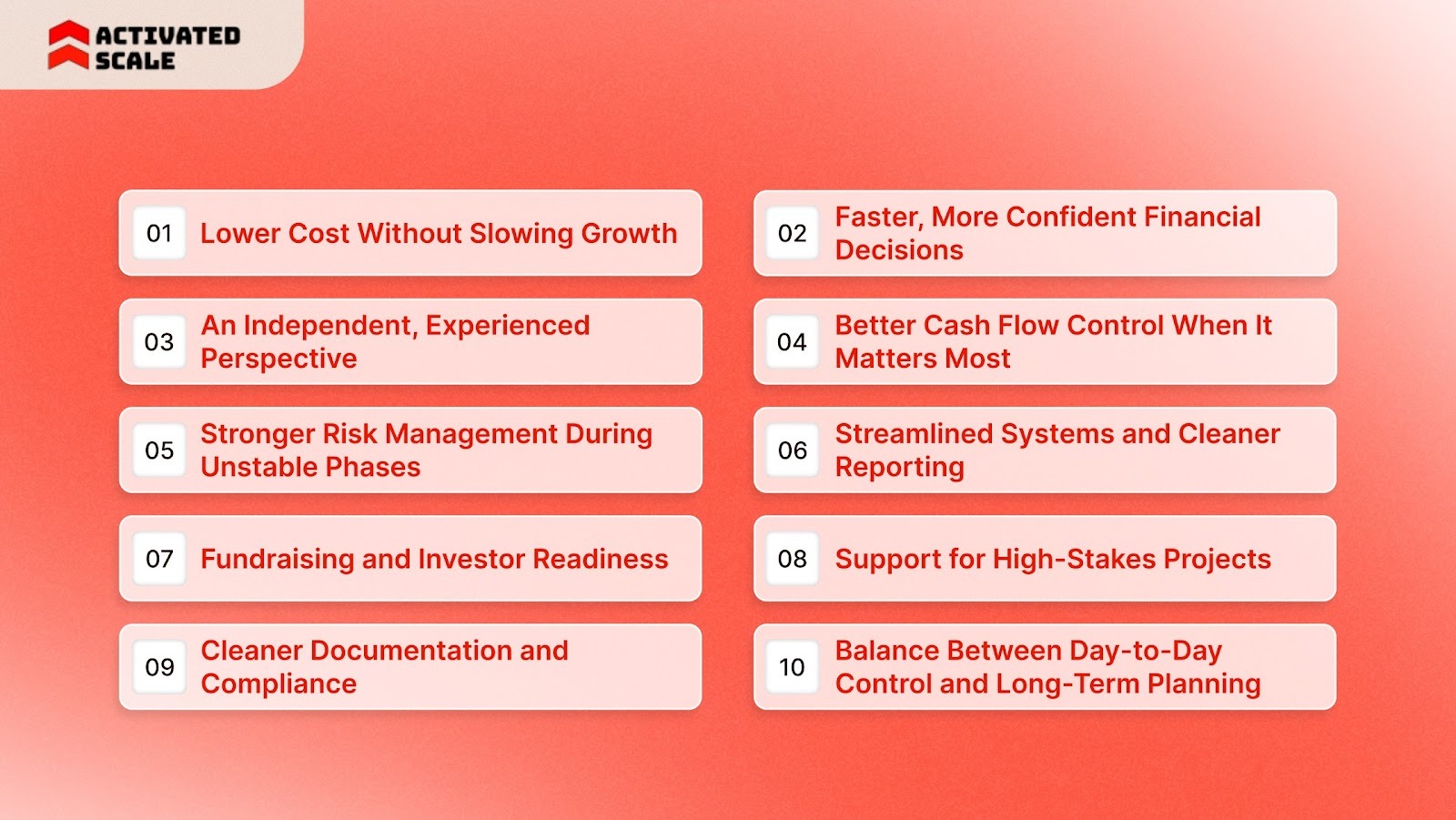
Outsourcing the CFO function isn’t about saving money alone. It’s about reducing blind spots while growth is still fragile. The real benefits show up in how decisions get made and how quickly problems are caught.
1. Lower Cost Without Slowing Growth
A full-time CFO brings salary, benefits, taxes, and long-term commitment. An outsourced CFO gives you senior financial judgment without locking in fixed overhead. That flexibility matters when revenue isn’t fully predictable yet.
Founders often apply this same thinking across leadership roles. Instead of committing too early, they test impact first. That’s why many teams already use Contract-to-Hire Sales Recruiting through Activated Scale to validate performance before making a permanent hire. Finance benefits from the same risk-reduction mindset.
2. Faster, More Confident Financial Decisions
When finance leadership is outsourced, you’re not waiting weeks for answers. You get direct input on pricing changes, hiring plans, or investment decisions while there’s still time to adjust.
3. An Independent, Experienced Perspective
Internal teams can become too close to the numbers. An outsourced CFO brings an outside viewpoint shaped by working across multiple companies, markets, and growth stages. That distance helps surface risks that founders often overlook.
4. Better Cash Flow Control When It Matters Most
Cash flow issues rarely appear overnight. They build quietly through hiring decisions, contract terms, or delayed collections. Outsourced CFOs monitor these patterns early and adjust before problems turn urgent.
For founders scaling sales, this alignment is critical. Revenue growth without financial control creates pressure fast. Pairing disciplined finance with flexible sales leadership keeps growth sustainable instead of stressful.
5. Stronger Risk Management During Unstable Phases
Markets shift. Sales cycles are slow. Costs rise. An outsourced CFO plans for disruption before it happens, through scenario modeling, internal controls, and contingency planning.
This is especially valuable during transitions: new revenue motions, leadership changes, or expansion phases. The goal isn’t perfection; it’s resilience.
6. Streamlined Systems and Cleaner Reporting
As companies grow, financial systems often lag. Outsourced CFOs review accounting workflows, reporting structures, and controls to remove friction and improve accuracy.
Clean reporting doesn’t just help finance; it helps sales, operations, and leadership align. The same reason founders rely on experienced partners instead of building everything in-house applies here, too.
7. Fundraising and Investor Readiness
When investors ask tough questions, preparation shows. Outsourced CFOs help organize financials, tighten forecasts, and present numbers clearly, so leadership isn’t scrambling during diligence.
This is another moment where flexibility pays off. Just as founders avoid premature sales leadership hires by using fractional models, outsourced CFOs let companies step up financially without overcommitting too early.
8. Support for High-Stakes Projects
M&A reviews, system implementations, and pricing overhauls; these moments need senior judgment, not trial and error. Outsourced CFOs step in with experience when the stakes are high and the timelines are tight.
9. Cleaner Documentation and Compliance
Accurate records, compliant reporting, and organized financial documentation reduce stress with regulators, investors, and auditors. Outsourced CFOs ensure this groundwork stays solid as complexity grows.
10. Balance Between Day-to-Day Control and Long-Term Planning
Outsourced CFOs don’t just handle immediate needs. They balance daily financial oversight with long-term planning, budgeting, forecasting, and profitability analysis, so growth doesn’t outpace discipline.
Outsourced CFO services work best when companies want senior financial leadership without committing too early. It’s the same logic behind fractional and contract-to-hire models: test impact, reduce risk, and scale only when it’s proven.
Learn more about: What is a Sales Associate's Role in 2026?
Outsourced CFO vs. In-House CFO: A Practical Comparison
Choosing between an outsourced CFO and an in-house CFO isn’t about titles; it’s about timing, flexibility, and risk. Both roles offer strategic financial leadership, but they fit very different stages of growth.
Side-by-Side Comparison
When an In-House CFO Makes More Sense
An in-house CFO typically becomes the right move when:
- The company has predictable revenue and stable cash flow
- Financial complexity requires constant executive involvement
- Long-term strategic planning outweighs flexibility needs
Until then, outsourced CFO services offer a way to stay disciplined without locking into a decision too early.
How Much Does an Outsourced CFO Cost?
The cost of an outsourced CFO isn’t fixed, and that’s the point. Pricing usually depends on how senior the expertise needs to be, how complex the work is, and how often you need involvement.
Most outsourced CFOs charge in one of three ways:
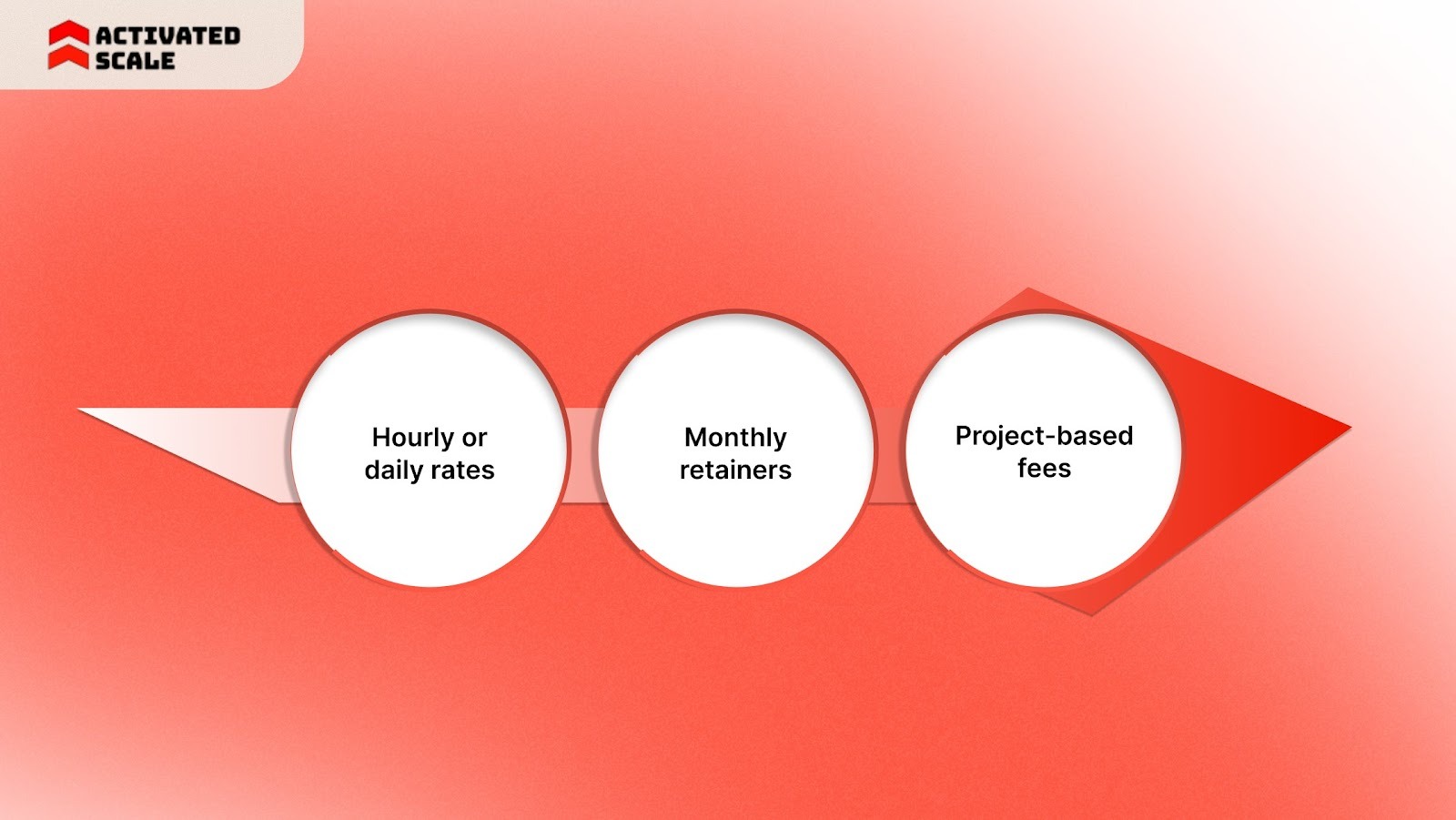
- Hourly or daily rates for short-term or advisory work
- Monthly retainers for ongoing strategic and operational support
- Project-based fees for specific needs like financial modeling, due diligence, or fundraising prep
In practice, this flexibility makes outsourced CFO services more cost-effective than a full-time hire. You’re not paying for idle time, benefits, or long-term overhead; you’re paying for impact when it’s needed.
What matters more than the rate is timing. Many founders overpay by hiring too early or hesitate too long and pay later through missed opportunities, cash flow mistakes, or poor investor readiness.
Also read: Complete Guide to Outsourced Sales Leadership For Startups
How Does an Outsourced CFO Actually Create Value?
Value usually shows up when clarity is missing.
Take a company selling both a product and service contracts. Revenue is coming in, but expenses aren’t clearly split. The founder can’t tell which side is profitable, which metrics matter, or where margins are leaking. Decisions still get made, but they’re based on incomplete signals.
That’s where an outsourced CFO steps in as a translator, not a reporter. They turn scrambled financial data into something leadership can act on.
An outsourced CFO creates value by:

- Separating signal from noise: allocating costs correctly across products, services, and teams
- Defining the right KPIs: different metrics for software, services, and blended models
- Fixing inputs before outputs: quantities, pricing, margins, cash flow timing
- Making data decision-ready: clear narratives for founders, boards, and investors
When financial information is inaccurate or poorly organized, it quietly erodes profitability, market share, and access to capital. Clean data isn’t just nice to have; it’s leverage.
This is similar to what founders experience in revenue teams. When sales data is messy or roles aren’t clearly defined, performance stalls. That’s why many leaders rely on Activated Scale to bring in experienced operators, through Fractional Sales Leadership or Contract-to-Hire Sales Recruiting, who can quickly diagnose gaps and translate activity into outcomes.
Final Thoughts
Most founders don’t need a full-time CFO; they need better financial answers, faster. An outsourced CFO fills that gap by turning raw financial data into clear, timely guidance without forcing a long-term commitment.
The real advantage isn’t cost alone. It’s timing. You get senior financial leadership when decisions carry risk, fundraising, pricing, hiring, or cash planning, while keeping flexibility as the business changes.
Founders already use this approach to reduce hiring risk in revenue teams. The same principle applies across leadership roles. With Activated Scale, companies access vetted, experienced operators through contract-to-hire and fractional models, so leadership scales only when it’s proven to work.
Explore how Activated Scale helps founders scale the right way.
FAQs
1. What problems does an outsourced CFO solve first?
Most start with cash flow visibility, forecasting, and cost structure. These three areas usually uncover where risk is hiding and which decisions need immediate attention.
2. How is an outsourced CFO different from an accountant or controller?
Accountants record what happened. Controllers manage accuracy and process. An outsourced CFO focuses on what should happen next, using financial data to guide strategy, pricing, and growth decisions.
3. Can an outsourced CFO work alongside an existing finance team?
Yes. Many work on top of internal bookkeepers or controllers, providing strategic oversight while internal teams handle execution.
4. How long should a company work with an outsourced CFO?
There’s no fixed timeline. Some companies engage for a few months around fundraising or restructuring. Others keep the role fractional until revenue and complexity justify a full-time hire.
5. What should founders prepare before hiring an outsourced CFO?
Clean historical financials, clarity on current challenges, and specific questions they need answered. The clearer the inputs, the faster the value.
The Ultimate Guide to Hiring a Salesperson!
Get the step-by-step guide to hiring, onboarding, and ensuring success!