_edi.png)
For any sales leader, a pipeline for business development is a lifeline for their business. Without a clear pipeline, opportunities slip away and teams lose focus.
In fact, research shows that 84% of salespeople miss their sales quota. The reason for this challenge is that most of your reps are not aligned in a sales cycle.
We understand that as a sales leader, you're not just focused on "getting leads". So, you need a reliable way to track progress, refine processes, and close deals.
That's where pipeline management can give your sales reps clearer visibility into your revenue future. In this blog, we explore pipeline business development, breaking down the 7 essential stages that power consistent revenue growth.
TL;DR (Too Long; Didn't Read)
- Sales pipeline = structured process to track and manage leads through different sales stages.
- Key pipeline stages are prospecting, lead Qualification, initial contact, relationship building, proposal, negotiation, and close.
- Customer Relationship Management (CRM) software is essential for tracking leads and managing customer interactions.
- Sales analytics tools help measure Key Performance Indicators (KPIs) like conversion rate and deal age for better forecasting.
- Team collaboration tools like Slack and Zoom streamline communication, helping close deals faster.
What You’ll Need Before You Start Building Your Pipeline?
Pipeline business development refers to the ongoing process of managing and nurturing potential sales opportunities. It is about building and maintaining a structured pathway for opportunities to progress toward a sale.
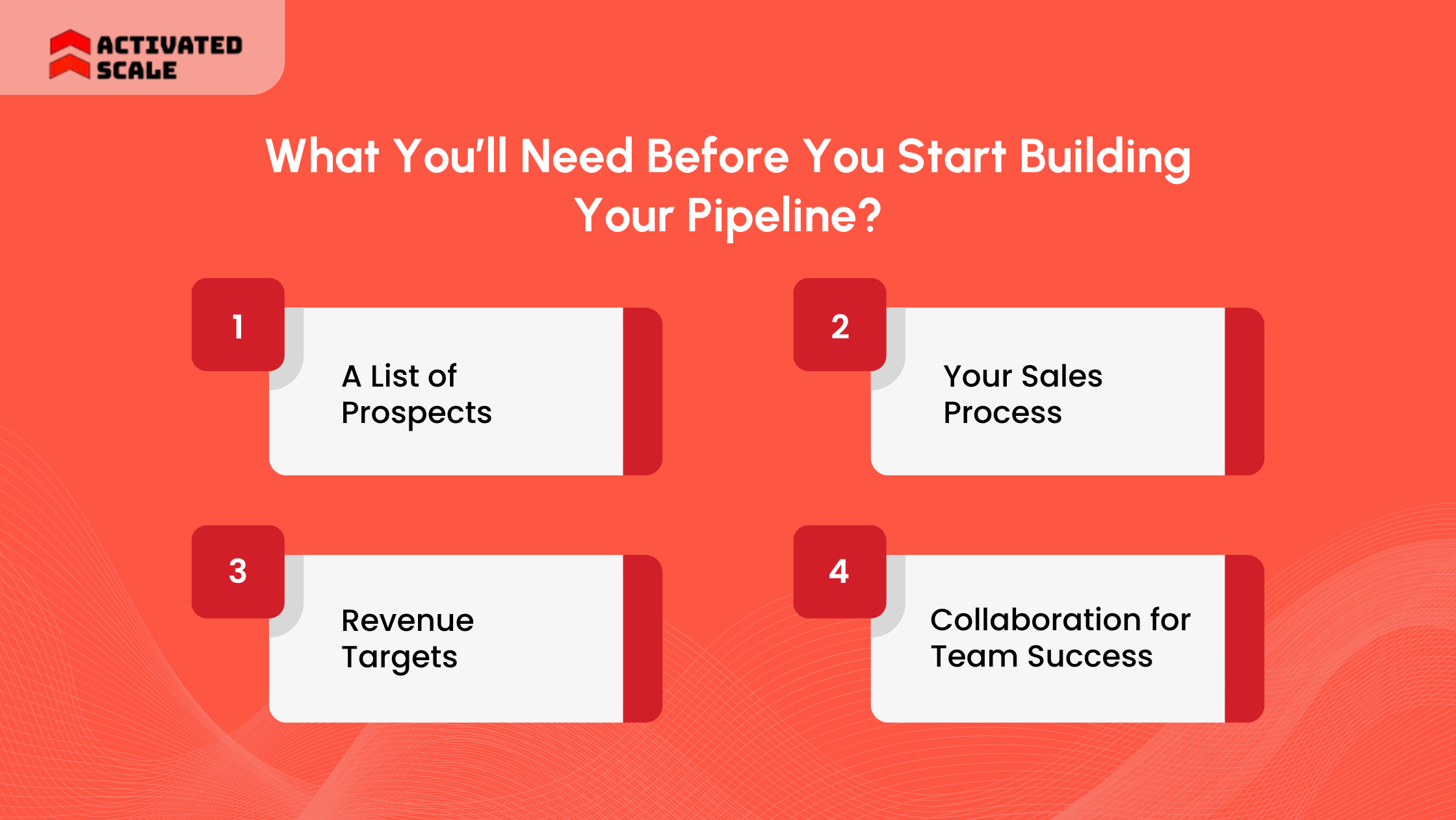
Here's what you need before building a pipeline:
- A List of Prospects
- A comprehensive list of prospects is crucial. This should include detailed contact information, company profiles, and buyer personas.
- Your prospect list should be regularly updated and aligned with your target market.
- Your Sales Process
- To move deals efficiently through your pipeline, you need a clear sales process. This step-by-step formula guides your team on how to engage with prospects.
- It ensures consistency and clarity in how each lead is handled, increasing the likelihood of success.
- Revenue Targets
- Revenue targets give your pipeline a purpose. They help define the number of deals you need at each stage of the pipeline to meet your financial goals.
- With clear targets, you can assess the health of your pipeline and determine whether you have enough qualified leads.
- Collaboration for Team Success
- Building a pipeline isn't a solo effort. Involving your sales team from the outset ensures that everyone is aligned on the sales process and pipeline stages.
- Collaboration promotes better communication, accountability, and a streamlined approach to moving deals forward.
These components lay the groundwork for a solid pipeline. Once you’ve gathered these resources, you can start building the structure that will guide your team’s business development efforts.
So, what is the tangible return on investing in this structured approach? We'll discover how a pipeline transforms from a simple tracking tool into a critical asset.
Also Read: Sales Pipeline Templates for Improved Tracking
3 Benefits of a Well-Managed Sales Pipeline in Business
With clear tracking, proper management, and strategic oversight, your sales efforts become more efficient. Ultimately, that's your end goal.
Here's what you can expect:
1. Increased Visibility
A well-maintained pipeline gives your business development team clear visibility into current opportunities, sales prediction, and any roadblocks that could hinder progress.
Now, you can more easily anticipate cash flow and adjust strategies to address any challenges that may arise.
2. Higher Conversion Rates
With the right leads moving through the pipeline, the chances of conversion improve significantly.
In other words, a well-managed pipeline optimizes sales activities, organizing the path from interest to final sale.
3. Better Resource Allocation
A sales pipeline helps you identify inefficiencies in your sales process. Once you address this, your team spends more time on what matters most: Closing deals.
If you're ready to organize your sales process and build a high-performing business development pipeline, consider Activated Scale's Fractional Sales Leadership services. Hire a Fractional VP of Sales to help you implement a customized pipeline strategy that aligns with your business goals.
So, how do you translate these strategic benefits into a tactical process? The answer lies in mastering the seven key stages of the business development sales pipeline.
The 7 Key Stages of a Pipeline for Business Development
Is your sales process reactive, leaving promising leads to stagnate? A structured sales pipeline is the antidote, providing the clarity and control needed to systematically nurture prospects.
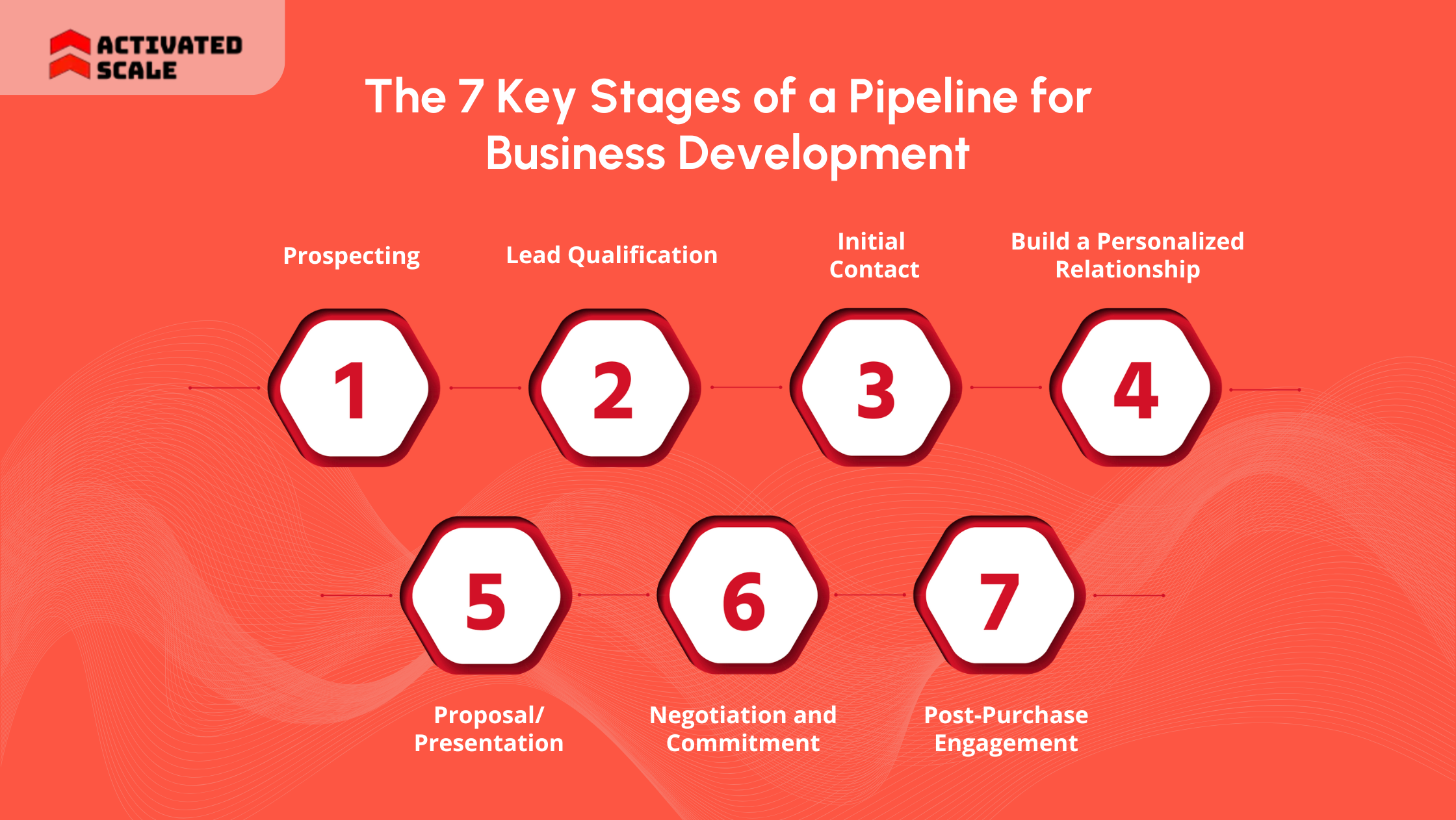
Below, we break down the seven essential stages that will help you convert more leads:
Stage 1: Prospecting
The first stage of any pipeline is identifying potential buyers. Prospecting involves generating leads from a variety of sources, such as inbound marketing, cold outreach, and referrals.
Methods for Generating Leads:
- Inbound Marketing: Content marketing, SEO, webinars, and more
- Cold Outreach: Direct emails, cold calls, or social media outreach
- Referrals: Leveraging current customers, partners, or networks
Stage 2: Lead Qualification
Once you’ve identified potential leads, the next step is to qualify them. Not every lead is ready to buy. So, qualifying helps you separate those with genuine potential from those who are less likely to convert.
Criteria for Qualifying Leads:
- Budget: Make sure the prospect has the financial resources to purchase your product.
- Decision-Making Authority: Ensure that you're speaking with the right person who has the power to decide.
- Readiness to Buy: The prospect should be actively seeking a solution instead of just gathering information.
Use lead scoring to assign value to prospects based on their likelihood to convert. This helps prioritize efforts on high-potential leads.
Stage 3: Initial Contact
Once a lead is qualified, it’s time to make initial contact. This stage is all about reaching out and introducing your solution to the prospect.
First Outreach:
This stage focuses on introducing your product or service and gauging the lead’s interest.
Customization:
Personalize your communication to the lead’s unique needs, challenges, and industry to make the interaction more relevant and engaging.
Stage 4: Build a Personalized Relationship
Building trust with your prospects is crucial for moving them through the pipeline. This stage involves ongoing nurturing, engaging with the lead on a deeper level, and providing value.
Relationship building ensures that your leads don’t lose interest and remain committed to the buying process.
Nurturing Through Follow-Ups:
- Send valuable content, answer questions, and keep communication open.
- Use educational content such as white papers, case studies, or video demos to address the prospect’s pain points. In fact, 78 % of B2B buyers use case studies or customer stories to evaluate purchase decisions.
The more you invest in building a relationship, the more likely the prospect is to trust you when it’s time to make a purchase.
Stage 5: Proposal/Presentation
At this point, the lead is interested in your solution, and it’s time to showcase what you offer. The proposal or presentation stage allows you to demonstrate the value your product brings to the prospect’s business.
Customizing the Proposal:
- Customize your pitch to directly address the lead’s specific needs, challenges, and goals.
- Provide a detailed plan or offer that aligns with the prospect’s expectations.
Stage 6: Negotiation and Commitment
Once the prospect is convinced, it’s time to finalize the deal. Negotiation involves adjusting the terms, discussing final pricing, and addressing any lingering concerns.
This stage is critical for closing the deal and moving toward the contract signing.
Addressing Objections
- Be prepared to discuss any remaining concerns and offer solutions.
- Adjust terms where necessary to reach a mutually beneficial agreement.
Make sure the terms are clear, and both parties are aligned on expectations. The goal is to gain a firm commitment.
Stage 7: Close and Post-Purchase Engagement
Once you’ve secured the sale, the final stage involves closing the deal and continuing to nurture the relationship. Make sure the post-sale activities, like support and potential upselling, are aligned with the client.
Closing the Deal:
- Finalize the contract, get signatures, and transition to implementation.
- Celebrate the win, but ensure a smooth transition for the customer.
Keep the relationship strong with ongoing support, as satisfied customers are likely to return and refer others.
So, with your pipeline stages defined, how do you know if it's actually working? The answer lies in moving beyond simple tracking to a deep analysis of performance at each stage.
Read Also: Sales Pipeline Templates for Improved Tracking
How to Evaluate the Effectiveness of Your Pipeline Business Development?
A business development pipeline is only as good as the insights it provides. To ensure your pipeline is driving real growth, it’s essential to evaluate key metrics that show how well your sales process is functioning.
These metrics help you identify where leads may be stalling and where to focus your efforts for maximum conversion.
Here are some critical metrics to evaluate pipeline performance:
1. Number of Qualified Leads
The number of leads that make it to the qualification stage is one of the most important metrics. Qualified leads are those that meet the criteria you’ve defined as a good fit for your product or service.
Formula: Qualified Leads = Total Leads * Lead Qualification Rate
2. Conversion Rate
Conversion rate is the percentage of leads that move from one stage to the next and eventually become paying customers. It provides insight into how effective your team is at nurturing leads through the pipeline.
A low conversion rate could indicate issues in specific stages, such as poor follow-up or ineffective proposals.
Formula: Conversion Rate = (Number of Deals Closed / Number of Leads Entering Pipeline) * 100
3. Average Deal Size
Knowing the average deal size helps you gauge the revenue potential of your pipeline. Larger deals may require more time to close, but can contribute significantly to your overall revenue.
Formula: Average Deal Size = Total Revenue / Number of Deals Closed
4. Sales Cycle Length
The length of time it takes to close a deal is a critical metric for evaluating pipeline efficiency. With this, you can identify where prospects are getting stuck and find ways to shorten the process.
Formula: Sales Cycle Length = (Date Deal Closed - Date Deal Entered Pipeline) / Number of Deals
5. Lead Source and Activity Tracking
Tracking the source of each lead (e.g., social media, email marketing) and their associated activities provides valuable insights about marketing efforts.
Formula: Lead Source Conversion Rate = (Leads from Source * Conversion Rate from Source) / Total Leads
6. Pipeline Coverage
Pipeline coverage refers to the ratio of potential sales opportunities to sales targets. A healthy pipeline should have a higher number of opportunities than the sales target.
This ensures that even if some leads don’t convert, there are enough qualified leads to meet your goals.
Formula: Pipeline Coverage = Total Value of Opportunities in Pipeline / Revenue Target
If pipeline coverage is too low, you’ll need to refine the qualification process to ensure enough opportunities are in the pipeline.
The Fractional Selling service from Activated Scale can guide you through optimizing your pipeline. This ensures your team is equipped with the right tools to close more deals.
Knowing how to evaluate your pipeline reveals exactly what you need from the tools that support it. The right technology stack is critical.
As it will automate your processes, ensuring your team can execute this evaluation consistently and stay organized and efficient.
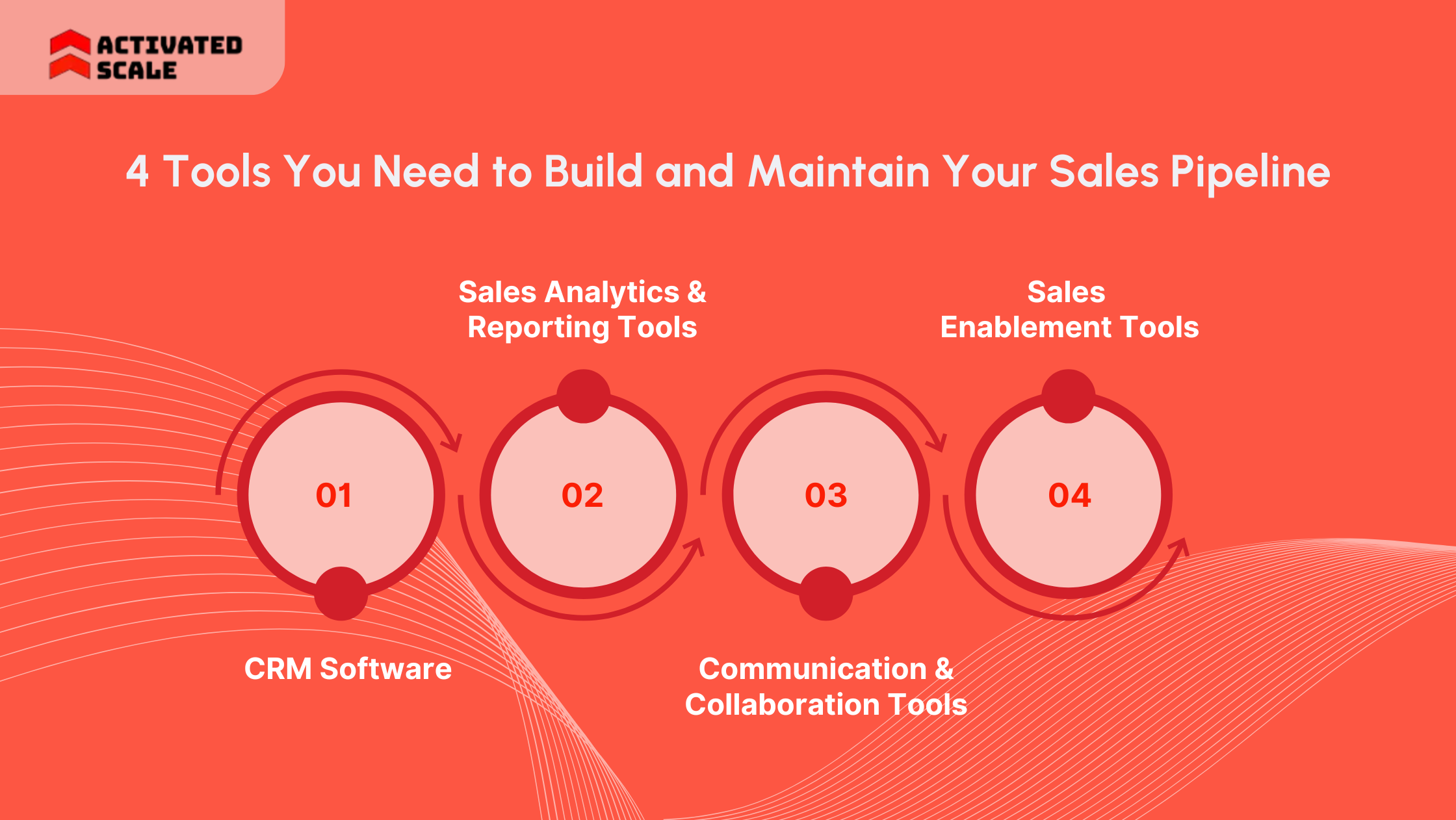
4 Tools You Need to Build and Maintain Your Sales Pipeline
A sales pipeline relies on the right tools to ensure that prospects move smoothly from one stage to the next.
Below are the core tools that will help you effectively manage and optimize your business development pipeline.
1. CRM Software
A good CRM system allows your sales team to manage and monitor leads as they progress through the stages.
Examples:
- Salesforce: It is known for its features and customization options.
- Pipedrive: A user-friendly CRM focused on sales pipeline management.
- HubSpot: Offers an intuitive interface with free tools for smaller teams and advanced features for larger operations.
2. Sales Analytics and Reporting Tools
Sales analytics tools provide metrics that help you measure key performance indicators (KPIs). These insights allow you to improve pipeline performance.
Examples:
- Databox: This provides real-time business performance dashboards and KPIs.
- Tableau: A powerful tool for visualizing and analyzing pipeline data, allowing for reporting and insights.
3. Communication and Collaboration Tools
If you use the right communication tools, you ensure that everyone is aligned and that your prospects receive timely responses.
Examples:
- Slack: A platform for team communication and real-time collaboration.
- Zoom: For remote meetings and customer interactions.
- Microsoft Teams: A hub for team collaboration, offering messaging, file sharing, and meeting scheduling.
4. Sales Enablement Tools
Sales enablement tools help salespeople be more effective in their outreach. This ensures that prospects receive consistent, high-quality communication.
Examples:
- Highspot: A sales enablement platform that helps sales teams find and share content.
- Seismic: A sales enablement tool that provides content management, analytics, and training resources to improve sales effectiveness.
Also Read: 7 Steps to Optimize Your Sales Funnel for Improved Conversion Rates
Learn How Activated Scale Helps Your Team Build a Sales Pipeline
As you refine your business development pipeline, consider using Activated Scale’s expert services. What are those?
Here are three key services we offer:
1. Contract-to-Hire Sales Recruiting
Our Contract-to-Hire Sales Recruiting service lets you hire vetted sales talent on a flexible, trial basis before making long-term decisions.
Ensure they’re the right fit for your team and your pipeline before you commit.
2. Fractional Selling
Not every business needs a full-time sales team right away. With Fractional Selling, you can access experienced Sales Development Representatives (SDRs) and Account Executives (AEs) on a temporary basis.
This helps fill sales gaps without the overhead of permanent hires, allowing you to focus on growing your pipeline.
3. Fractional Sales Leadership
Our Fractional Sales Leadership service provides access to experienced VPs of Sales who can help you design and implement go-to-market strategies.
They’ll also guide your team, set clear goals, and optimize your sales pipeline for scalable growth.
Let’s wrap things up with a summary and next steps for maintaining a thriving business development pipeline.
Wrapping It Up
Ultimately, a sales pipeline should be less of a static flowchart and more of your business development team's central nervous system. It should be capable enough to convert individual activity into a collective strategy.
This continuous investment in the pipeline for business development converts a managerial task into a sales operation built to scale.
Ready to build a high-performing sales pipeline? Schedule a consultation today and start accelerating your sales pipeline success with expert guidance.
FAQs
1. Why is pipeline management important for business development?
Proper pipeline management ensures consistent revenue generation, better resource allocation, and improved sales forecasting.
2. How do I qualify leads in my sales pipeline?
Lead qualification involves assessing whether a lead fits your target customer profile, has the budget, and is ready to buy.
3. What tools are best for managing a sales pipeline?
Tools like CRMs (Salesforce, HubSpot), sales analytics (Databox, Tableau), and collaboration platforms (Slack, Zoom) are essential for managing and optimizing your pipeline.
4. How often should I evaluate my sales pipeline?
Regular evaluation, at least quarterly, is crucial to understanding pipeline health and adjusting strategies. This ensures you’re on track to meet revenue goals.
The Ultimate Guide to Hiring a Salesperson!
Get the step-by-step guide to hiring, onboarding, and ensuring success!