_edi.png)
Startups and growing SaaS teams often struggle to decide how much to allocate to sales training. The spend can feel significant, especially when you're working with tight budgets and ambitious targets.
Recent research states that companies with comprehensive training programs see 218% higher income per employee than those without formal training. Insights like this make it easier to view training as a revenue driver rather than a cost center.
Even with strong evidence, it’s important to understand the factors that determine the final price. Elements such as the trainer’s background, training format, and customization all influence the investment. This article outlines these cost drivers so you can make informed decisions that support growth.
Quick Overview
- Sales training cost depends on trainer experience, customization, duration, team size, format, and materials.
- Hidden expenses include lost selling time, internal coordination, and ongoing reinforcement.
- Investment pays off through faster ramp-up, higher conversion rates, and consistent messaging across reps.
- Pricing tiers range from free/low-cost online courses ($0–$4,000) to customized programs ($10,000+).
- Activated Scale provides pre-vetted U.S.-based sales talent, reducing training time and opportunity costs while improving team performance.
Why Invest in Sales Training?
Investing in sales training strengthens your team’s ability to generate revenue efficiently and close deals faster. Well-trained reps adapt to your product, process, and buyers more quickly, reducing ramp time and missed opportunities.
- Higher Conversion Rates: Teams perform better when guided by proven techniques.
- Faster Ramp-Up: New hires reach productivity sooner, minimizing lost selling time.
- Consistent Messaging: Training ensures a unified approach across all reps and channels.
Now, let’s look at the typical costs for different programs, so your team can plan and allocate resources effectively.
Recommended: Strategies for Successful Sales Leadership: Skills and Practices.
Typical Costs for Sales Training
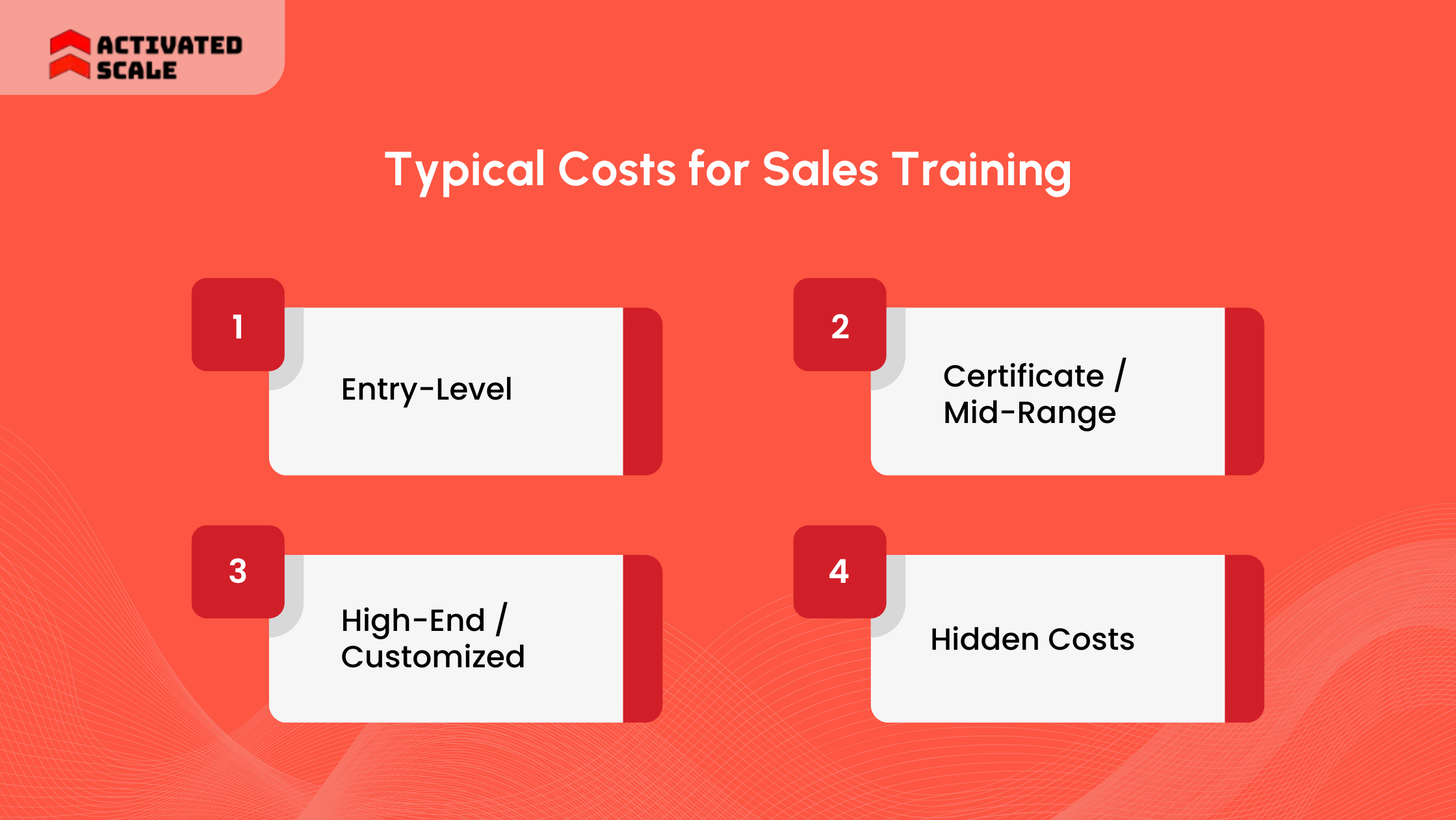
Sales training programs often fall into identifiable cost ranges, helping startups plan budgets more accurately. Knowing these tiers allows companies to weigh investment against expected skill adoption and team impact.
- Entry-Level ($0–$4,000): Basic online courses or standard group workshops. Suitable for small teams seeking foundational skills.
- Certificate / Mid-Range ($2,000–$6,000+): Structured programs, including university certificates or established online providers. These typically cover multi-week curricula with more organized content.
- High-End / Customized ($10,000+): Fully tailored programs with on-site sessions, bespoke materials, and alignment with a company’s specific sales process. Costs increase due to personalization and trainer involvement.
- Hidden Costs: Beyond program fees, factor in lost selling time, internal coordination, and ongoing reinforcement, which can add substantially to the total investment.
Typical program costs give a baseline, but what a startup actually spends varies depending on several factors.
Also, Check: How to Build a Scalable Sales Pipeline Step-by-Step.
7 Factors That Drive Sales Training Cost

When planning sales training for a startup or growth‑stage SaaS team, the actual cost goes beyond the quoted fee. Expenses vary depending on who delivers the training, how it’s delivered, the level of customization, and the support that follows. Let’s take a look at them below so you can plan a budget that maximizes impact while keeping resources under control.
1. Trainer’s Experience and Identity
The credentials and industry relevance of your trainer directly affect your cost and potential return. For a U.S.‑based startup selling to American buyers, a trainer who has operated in similar SaaS GTM settings is more expensive but often more effective.
- Industry Expertise: Trainers with a proven track record in SaaS B2B or startup sales usually command higher fees.
- Content Ownership: Trainers who develop their own materials typically charge more than those who use pre-packaged content.
- Relevance to Your GTM: Trainers aligned with your sales model and buyer persona increase engagement and adoption.
- Hybrid Models: “Train the trainer” approaches reduce costs by enabling internal teams to continue reinforcement.
2. Customization Level
When the training content is aligned to your specific sales process, buyer personas, product complexity, and GTM model, it becomes more expensive, but often more impactful. Generic programs cost less but may deliver weaker behavior change or relevance for your team.
- Full Customization: Includes discovery sessions, stakeholder interviews, and role-plays tailored to your sales process.
- Semi-Custom Programs: Core material with minor adjustments balances relevance and budget.
- Impact on ROI: The more unique your sales process, the more justified the investment in customization.
3. Program Duration and Size
The length of the program and the number of participants impact cost in two ways: direct fees and the opportunity cost (time off selling). For a startup with limited resources, those hidden costs matter.
- Length of Training: Multi-week or coaching-focused programs cost more than single-day workshops.
- Team Size: Small cohorts allow personal attention but increase per-person cost; larger groups reduce cost per person but may dilute engagement.
- Opportunity Cost: Time spent in training is time away from revenue-generating activities.
Recommended: Top Startup Sales Tips to Build a Winning Sales Strategy.
4. Training Format
How you deliver the training impacts logistics, engagement, cost, and scalability. For U.S.‑based sales teams, virtual formats may offer cost efficiencies without major sacrifice, if done well.
- In-Person Delivery: Includes travel, accommodation, and venue costs.
- Virtual Training: Live online sessions or asynchronous modules lower costs while maintaining accessibility.
- Hybrid Approach: Combines live interaction with self-paced modules for flexibility and moderate cost.
5. Content and Materials
Beyond the trainer and delivery, the materials (workbooks, simulations, e‑learning modules, tools) add cost, and in many cases, they determine how usable the training will be long‑term.
- Material Complexity: Workbooks, simulations, video modules, and e-learning platforms increase investment.
- Customization: Content that matches your product and buyer context enhances adoption but costs more.
- Licensing & Access: Consider how new team members will access materials in the future.
6. Ongoing Reinforcement and Support
Initial training is important, but for a startup or scaling SaaS team, reinforcement and follow‑through often determine whether skills stick and translate into revenue. Thus, reinforcement adds to cost but safeguards ROI.
- Coaching & Check-Ins: Regular follow-up sessions and manager support maintain momentum.
- Refresher Modules: Short, periodic refreshers help retain knowledge and skills.
- Internal Support: Peer coaching and structured huddles reduce external reinforcement costs.
7. Hidden & Opportunity Costs
Cost‑planning often focuses on the vendor quote, but the true total cost (and risk) includes the less visible expenses. Recognizing these helps you set a realistic budget for scale.
- Time Away from Selling: Sales reps in training are not closing deals—lost pipeline is a real cost.
- Internal Implementation: Manager and enablement hours to integrate new skills add to expenses.
- Productivity Dip: Adopting new methods may temporarily reduce performance.
- Total Cost of Ownership: Includes fees, lost selling time, internal effort, and ongoing reinforcement.
While understanding cost drivers is important, many startups still need practical ways to build skills without large investments.
Also Read: Why Outsourcing Sales Helps Startups and SMBs Scale Faster.
Recommended Free & Low‑Cost Sales Training Resources
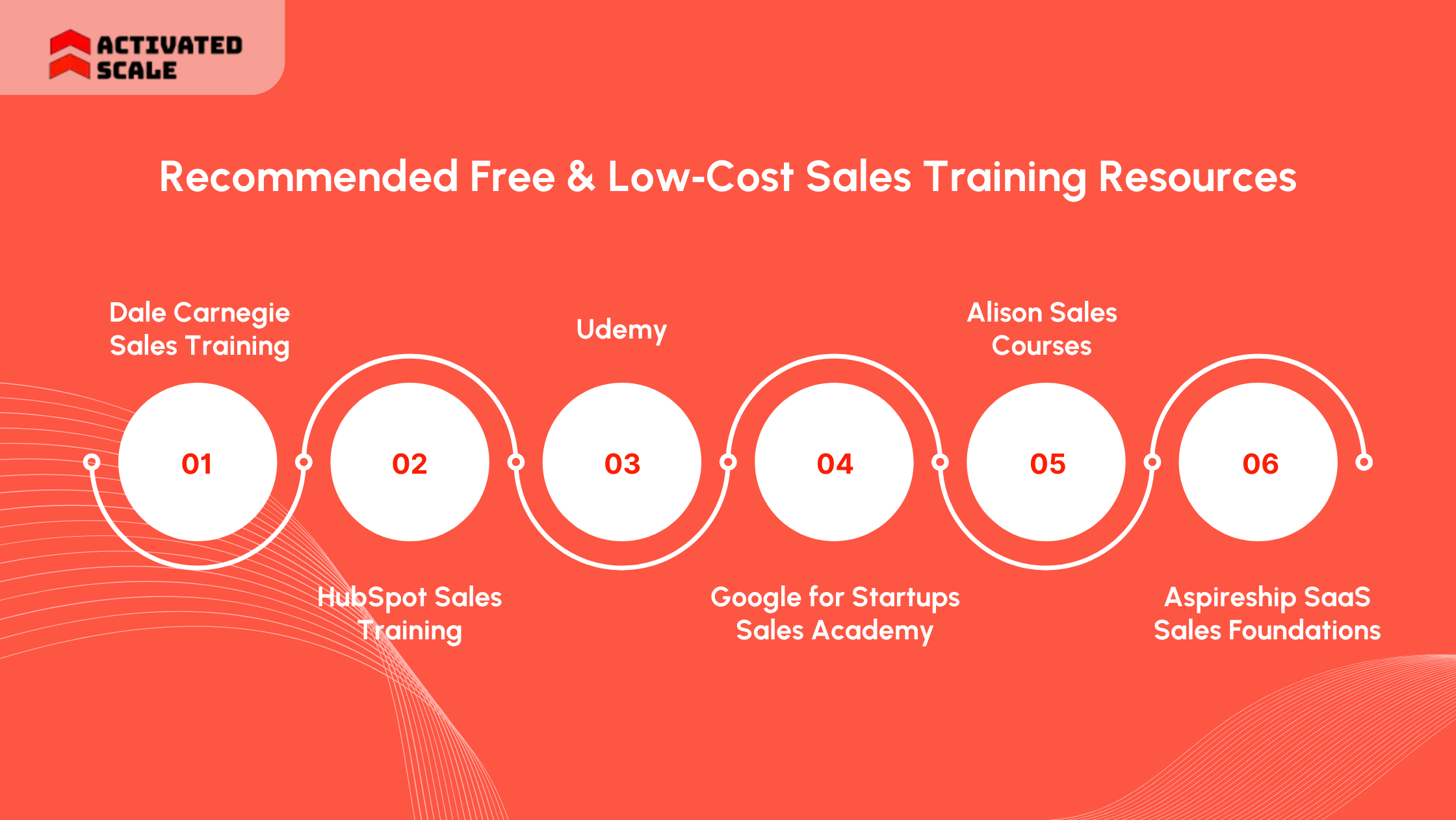
Here are options for courses and training programs that align with startup/SaaS needs and budget awareness.
- Dale Carnegie Sales Training: Focuses on relationship-based selling, credibility, and value communication. Ideal for teams ready to sharpen professional skills.
- HubSpot Sales Training & Certification: Covers inbound sales, CRM, and buyer-centric outreach. Free and structured for SDRs/AEs.
- Udemy: Free courses on fundamentals, buyer context, and common sales paths.
- Google for Startups Sales Academy: Nine-week virtual program tailored to early-stage teams and founders.
- Alison Sales Courses: A Range of free online courses for beginners to B2B sales managers.
- Aspireship SaaS Sales Foundations: 20-hour on-demand program with assessment and certification, designed for SaaS sales onboarding.
However, what if you could bring in pre-vetted, experienced sales professionals who are ready to contribute from day one?
How Activated Scale Helps Manage Sales Training Costs
Startups and growing SaaS teams often struggle with the time and cost of training new sales hires. Activated Scale provides access to vetted, U.S.-based sales professionals who are already skilled and require minimal onboarding, allowing teams to focus on closing deals rather than training.
- Experienced U.S.-Based Talent: Pre-vetted SDRs, AEs, and Fractional VPs of Sales with SaaS and U.S. market experience.
- Flexible Hiring Models: Part-time, fractional, or contract-to-hire options that scale with team needs.
- Targeted Onboarding: Professionals arrive ready to follow your sales process and engage buyers.
- Reduced Hidden Costs: Less time spent training and fewer productivity gaps compared with inexperienced hires.
Book a call to see how pre-vetted U.S.-based sales talent can integrate into your team with minimal onboarding.
Conclusion
Managing sales training costs can be a major challenge for startups and growing SaaS teams. Between trainer fees, program duration, customization, and hidden opportunity costs, expenses add up quickly.
Activated Scale provides experienced, U.S.-based sales professionals who require minimal onboarding, helping teams maintain momentum while reducing wasted time and resources. Startups can integrate skilled reps and fractional sales leaders directly into their workflows, focusing on driving revenue rather than training.
Connect with us today to skip lengthy training cycles and bring top sales talent to your team.
FAQs
1. What factors determine the cost of sales training?
Sales training cost depends on trainer experience, program customization, duration, team size, delivery format, quality of materials, and ongoing reinforcement. Hidden costs, such as lost selling time and internal coordination, also affect total expenditure.
2. How can startups control sales training expenses?
Startups can manage costs by choosing experienced professionals who require minimal onboarding, opting for targeted training modules, using virtual delivery when appropriate, and planning reinforcement efficiently.
3. Why is trainer experience important in budgeting?
Experienced trainers with SaaS or startup sales knowledge reduce ramp-up time and improve skill adoption. While their fees may be higher, the return comes from faster integration and reduced need for follow-up training.
4. What hidden costs should companies consider?
Indirect costs include time away from selling, internal hours for implementation, productivity dips during skill adoption, and ongoing reinforcement. Accounting for these helps startups plan a realistic total training budget.
5. How does Activated Scale reduce training costs for startups?
Activated Scale provides pre-vetted, skilled U.S.-based sales professionals who require minimal training. Fractional or contract-to-hire models allow teams to scale effectively, reduce lost selling time, and access ongoing guidance without additional high-cost programs.
The Ultimate Guide to Hiring a Salesperson!
Get the step-by-step guide to hiring, onboarding, and ensuring success!