_edi.png)

Are you scrambling to fill quota‑carrying sales positions fast? In 2026, global demand for contingent and contract talent is rising. The staffing and recruiting market now totals roughly USD 642.3 billion.
This surge makes using external staffing firms more common than ever. Staffing agencies are companies that help organizations find, recruit, and sometimes manage temporary, contract, or permanent employees.
They handle many tasks, including sourcing candidates, screening resumes, and conducting interviews. This takes the pressure off internal HR teams. However, their services come at a price, both financially and operationally.
In this blog, we unpack the pros and cons of staffing agencies from a sales‑leader’s view. You’ll see when they can accelerate sales hiring and where they may also pose hidden risks.
Key Takeaways
- For short-term or temp roles, agencies usually add a markup of around 25–40% on top of the worker’s base hourly pay.
- Over 12.7 million temporary and contract jobs were filled by staffing agencies in the U.S. last year.
- To assess fit and performance before making a long-term commitment.
- Working with a staffing agency can shave weeks off your hiring process, often finding candidates faster than if you did it all in-house.
- To give you a sense of scale, companies worldwide spend more than $642.3 billion each year on staffing and recruiting services.
- Temp-to-hire options provide a practical safety net in the hiring process.
What Do You Understand by a Staffing Agency?
Staffing agencies act as intermediaries between employers and job seekers, managing the hiring process on behalf of businesses. They connect companies with pre-vetted talent from their industry-specific networks.
This allows businesses to bypass the most time-consuming parts of the hiring process and access skilled professionals with greater speed.
Beyond just filling permanent roles, agencies are a key resource for flexible workforce solutions, providing temporary staff for busy periods or project-based work.
Many also offer a "try before you buy" model, letting companies assess a candidate on the job through temp-to-hire arrangements before extending a full-time offer.
So, shall you opt for it? If so, the next section is for you, as it discusses the important benefits you can access from these agencies.
Also Read: 5 Best Hiring Agencies to Consider in 2026
Pros of Using Staffing Agencies for Sales Teams
Speed is the ultimate sales hiring currency. To win top talent and outpace competitors, you need a faster, more efficient process. This is where a specialized staffing agency delivers, turning weeks of recruitment into a strategic acceleration of your team-building goals.
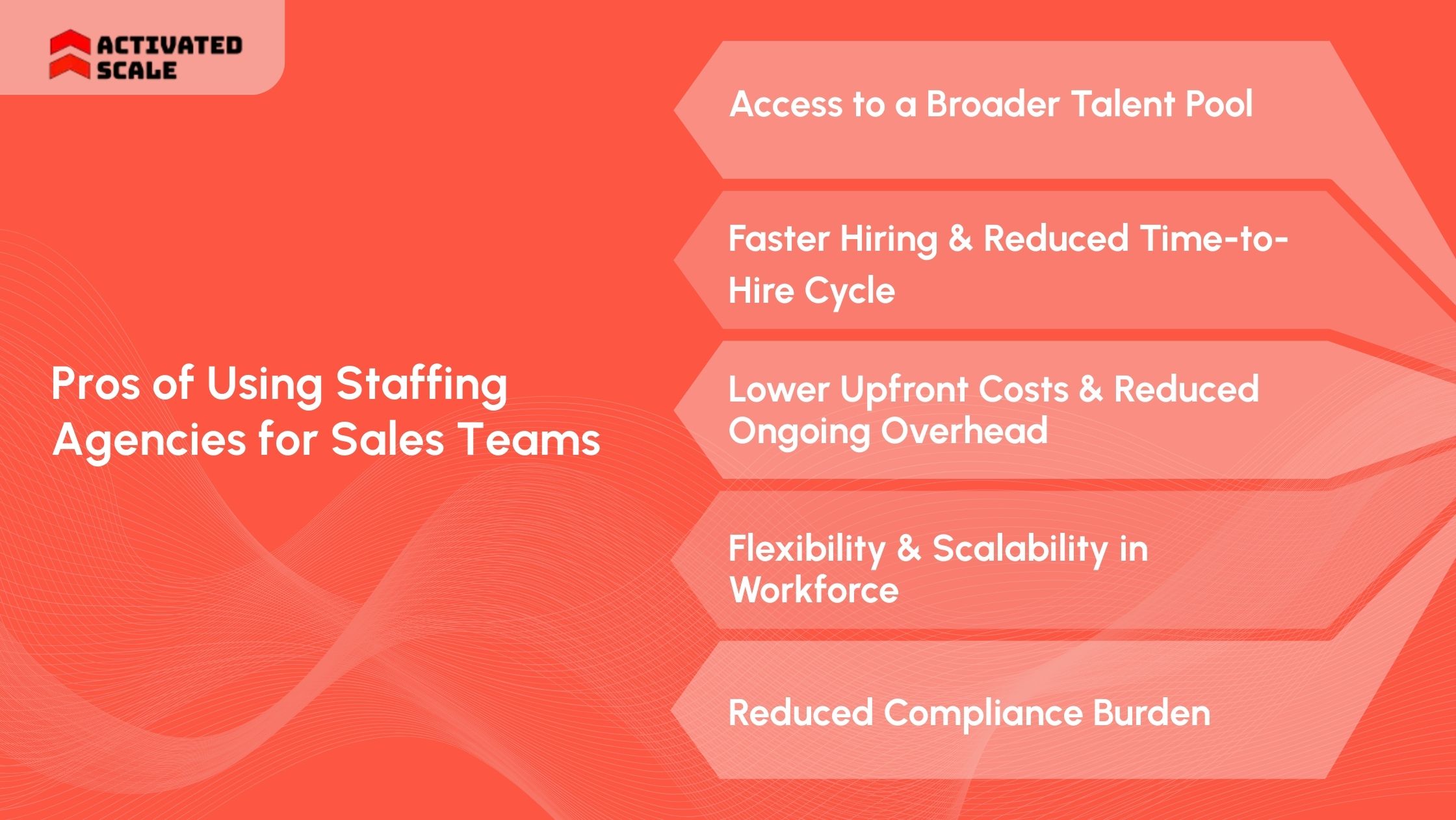
Pros of Using Staffing Agencies for Sales Teams
1. Access to a Broader Talent Pool
Staffing agencies are especially valuable when you need specialized sales professionals, such as those with SaaS or enterprise sales experience. With a vast database of candidates, agencies can help you find the right fit quickly.
In fact, staffing firms in the U.S. filled over 12.7 million temporary and contract jobs in 2023, showing their ability to find the right candidates fast.
2. Faster Hiring & Reduced Time-to-Hire Cycle
Outsourcing through staffing agencies can cut time-to-hire compared to traditional hiring methods. This means you can secure the right sales talent faster, bypassing long job postings.
Their speed is particularly useful when you need to fill urgent roles, ensuring your sales team remains fully staffed and effective.
3. Lower Upfront Costs and Reduced Ongoing Overhead
Using a staffing agency can save your company money in areas like advertising, background checks, and benefits management.
You won’t have to worry about managing payroll taxes or workers’ compensation liabilities. For temporary or contract staff, agencies also take on the responsibility for compliance and insurance, allowing you to focus on revenue generation.
4. Flexibility & Scalability in Workforce
The demands on a sales team are rarely static; seasonal rushes, new product releases, and market shifts can all create sudden spikes in workload. This is where a staffing agency becomes a strategic advantage, offering the precise flexibility to expand or contract your team in real time.
You gain the ability to right-size your workforce dynamically, responding to opportunity or change without the commitment of a permanent hire.
5. Reduced Compliance Burden
Staffing agencies handle employment law compliance, background checks, payroll taxes, and other legal responsibilities.
So, collaborating with a staffing agency can organize your hiring in three key ways: You'll fill roles significantly faster, gain the agility to scale your team up or down as needed, and operate with greater overall efficiency.
At Activated Scale, we specialize in providing flexible sales solutions to meet your specific needs. If you’re looking for a Contract-to-Hire Sales Recruiting service to test talent before committing, we’re here to help you build a stronger, more effective sales force.
While staffing agencies offer significant advantages, it’s important to consider the potential disadvantages that could impact your hiring strategy and business operations.
Read More: Hire or Outsource: What to Choose for Your Business
What to Watch Out For When Hiring from Staffing Agencies?
Staffing agencies are powerful allies for finding talent, but not all partnerships are created equal. To ensure a smooth process and secure the best candidates, it's crucial to enter the relationship with clear expectations.
Let's explore what to watch for to make your agency collaboration a success:
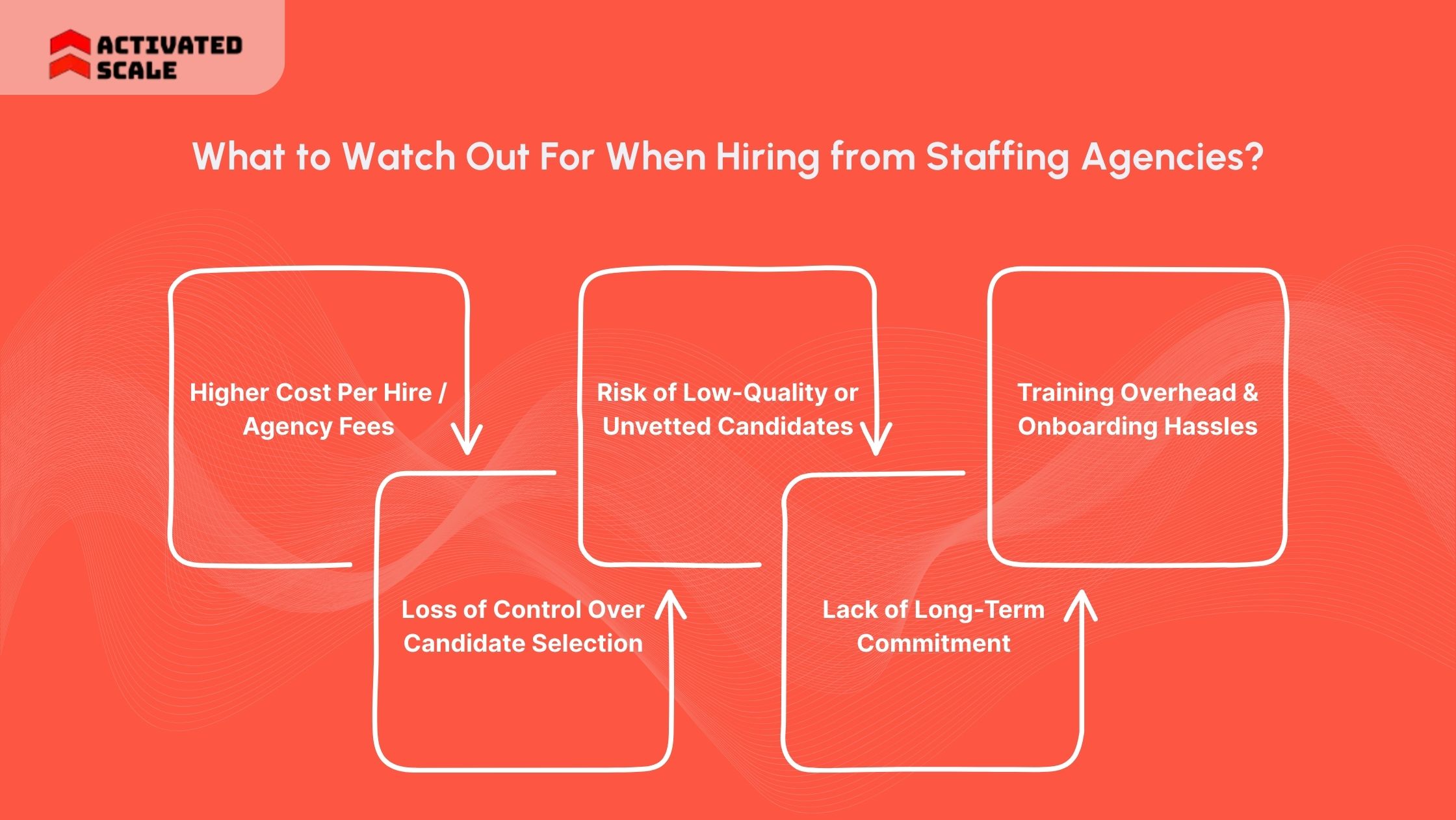
1. Higher Cost Per Hire / Agency Fees
While staffing agencies save time and effort, they come at a cost. Agencies typically charge a fee or markup on the candidate’s salary. For permanent hires, this can be a percentage of the annual salary.
For temporary positions, the agency often charges an hourly rate that’s 25‑40% above the base pay. These fees may seem reasonable when you're focused on the speed of filling positions, but they can add up, especially for long-term hires.
2. Loss of Control Over Candidate Selection
One of the biggest risks of using staffing agencies is losing control over the candidate selection process. Often, you won’t have the chance to directly interview or vet candidates before they are placed in your organization.
This could lead to cultural mismatches, poorly suited candidates, or misalignments in skills and expectations.
3. Potential for Poor Quality or Unvetted Candidates
Not all staffing agencies maintain high standards in their candidate pools. Some agencies may be overextended or lack the necessary resources to vet candidates, leading to poor-quality hires. In such cases, you may end up with candidates who are ill-suited for the role, which can result in re-hiring costs or increased turnover.
4. Lack of Long-Term Commitment
Temporary workers may struggle to integrate into your sales team, especially when their role is short-term. The lack of long-term commitment can affect team cohesion, morale, and overall productivity.
Employees who know they are temporary may not feel as invested in the company’s success, leading to lower loyalty and engagement. Frequent turnover can disrupt continuity and reduce the effectiveness of your sales team.
5. Training Overhead and Onboarding Hassles
Temporary or contract workers often require training and orientation, which takes time and resources from your team. If you’re constantly bringing in new temporary staff, it can lead to ongoing training costs.
Most importantly, if they don't fit, they exist in your organization. In fact, many experts estimate that replacing an employee (due to turnover) can cost a company between 33% and 200% of that employee’s annual salary.
So, by now you have known two sides of hiring from staffing agencies. If you still want to hire, how will you decide?
Read Also: How to Scale Sales Without Full-Time Hires
Key Questions Before Using a Staffing Agency For Employers
Rushed hiring, misaligned candidates, and unclear contracts can turn a staffing agency partnership from a solution into a new problem. The best way to prevent this is with due diligence.
Before you sign an agreement, use this checklist of critical questions to secure the right fit and protect your interests:
1. What Kind of Staffing Do You Need?
If your business needs temporary or project-based roles filled quickly, a staffing agency may be ideal. Staffing agencies excel in filling short-term needs but may not always align with the expectations for permanent hires.
2. How Urgent is the Need?
One of the biggest advantages of staffing agencies is the speed with which they can fill positions. However, if you have more flexibility, you might consider a more traditional recruitment approach to avoid the higher costs of agency fees.
3. What’s Your Hiring/Employment Budget?
Staffing agencies come with associated fees. If your budget is tight, you’ll want to calculate the total costs, including the markup and overhead that agencies charge. For smaller or less urgent needs, these costs may outweigh the benefits.
4. Is Company Culture, Long-Term Fit, and Team Integration Important for the Role?
If team cohesion and cultural alignment are key to the role you're hiring for, relying on temporary staff may pose risks.
5. Evaluate the Reputation and Specialization of the Staffing Agency
Not all staffing agencies are created equal. When selecting an agency, consider its industry specialization and track record. Agencies that focus on specific fields, such as sales, often provide better quality candidates that align with your team’s unique needs.
This checklist will help you determine if a staffing agency aligns with your immediate needs and future goals.
For businesses looking to fill sales roles, Activated Scale offers a range of solutions that balance flexibility with strategic expertise:
- Contract-to-Hire Sales Recruiting: Evaluate potential sales candidates in real-world scenarios before making a full-time commitment. This flexible option allows you to assess both skill fit and cultural alignment over time, reducing long-term hiring risks.
- Fractional Selling: Access skilled Sales Development Representatives (SDRs) and Account Executives (AEs) on a flexible basis. This service allows you to fill critical gaps in your sales team without the need for permanent hires.
- Fractional Sales Leadership: Gain expert sales leadership without the cost of hiring a full-time executive. This service offers senior-level strategic guidance, team development, and performance improvement personalized to your organization’s specific needs.
Contact Activated Scale to learn how we can support your hiring strategy with our fractional hiring services.
With your evaluation checklist in hand, you're ready to build a successful partnership. To maximize the return on this strategic decision, implement these best practices from day one.
5 Best Practices If You Choose to Use a Staffing Agency
Even with the perfect agency match, a partnership can underperform without clear frameworks and proactive collaboration. To ensure you see a strong return on your investment, embed these essential best practices into your engagement:

- Treat the Agency as a Partner: Be clear about job requirements, skills, and company culture. This ensures the agency understands your needs and delivers the right candidates.
- Choose an Industry-Specific Agency: Select an agency with expertise in your field. Their specialization ensures better candidate matches and faster placements.
- Use Temp-to-Hire for Long-Term Roles: Test candidates through temp-to-hire arrangements before committing to full-time. This reduces risk and helps you assess cultural fit.
- Budget Realistically: Factor in agency fees and markups while considering savings on overhead and compliance costs.
- Maintain Feedback Loops: Regularly check in with the agency and the new hire to track performance and address issues early.
By following these practices, you can ensure your staffing agency partnership delivers the best results.
Also Read: Top 14 Sales Training Programs for 2026
Conclusion
Choosing to work with a staffing agency can be a smart move for businesses looking to fill roles quickly and efficiently. However, it’s important to weigh both the pros and cons of staffing agencies.
After carefully evaluating your hiring needs, budget, and long-term goals, you can make a more informed decision about when other approaches might be more suitable.
The key to success lies in finding the right staffing partner, maintaining clear communication, and setting expectations from the start. With the right strategy, staffing agencies can keep your business moving forward.
Get in touch with Activated Scale to learn how we can support your growth.
FAQs
1. What are the best practices for managing remote sales teams?
Managing remote sales teams requires clear communication, setting expectations, and using technology to stay connected. Regular virtual check-ins, goal-setting, and collaboration tools like Slack or Zoom can ensure your remote sales team stays aligned.
2. How can I boost my sales team's productivity?
To boost productivity, ensure your team has the right tools, adequate training, and a clear strategy. Regular coaching sessions, building a competitive but supportive environment, and using data analytics to measure performance are also key.
3. What are some ways to keep sales staff motivated throughout the year?
Offer recognition for achievements, set realistic goals, and provide incentives. Encouraging professional development and maintaining a positive, inclusive company culture also keeps your sales team engaged and motivated.
4. How do I evaluate the performance of a sales team?
Evaluate performance using clear metrics such as sales quotas, conversion rates, customer retention, and feedback from clients. Regular performance reviews and self-assessments can help identify areas for improvement and celebrate achievements.
The Ultimate Guide to Hiring a Salesperson!
Get the step-by-step guide to hiring, onboarding, and ensuring success!