_edi.png)

Recruiting is a crucial factor in your business’s growth. The challenge? The competition to attract high-performing candidates is fierce.
The traits that make an exceptional salesperson can be difficult to assess. Most importantly, sometimes a polished resume doesn't do justice to the actual skills of the hired reps.
For sales professionals, the turnover rate is 7.3%. So, how do you make sure that these statistics don't become your company's scenario, too?
Don't worry. In this blog, we’ll explore the essential steps for recruiting salespeople, providing you with practical insights to organize your hiring. Once you finish this guide, you can build a successful sales team that can drive business growth.
TL;DR
- Define the ideal candidate: Focus on traits like problem-solving, communication, and empathy.
- Craft compelling job descriptions: Highlight your company’s culture, responsibilities, and growth opportunities.
- Use the right channels: Use LinkedIn, job boards, and employee referrals to find top talent.
- Streamline interviews and assessments: Use structured interviews and practical exercises to evaluate skills.
- Offer competitive compensation: Provide an attractive package and make swift offers to top candidates.
- Onboard effectively: Personalize onboarding to match the learning style of new hires for faster productivity.
How to Prepare for Recruiting Salespeople?
The salesperson persona serves as your roadmap. It should detail the qualities and experience that will make a candidate successful in your sales environment.
Start by having in-depth discussions with your top performers to determine the traits that have worked well in your business.
For instance, do your top performers excel in consultative selling, or do they have a strong knack for negotiation? Are they adaptable and quick learners?
Once you’ve gathered insights from your team, look at current sales trends within your organization. Identify what’s working and what’s not, and use this data to craft a persona.
This will guide your job descriptions, interviews, and recruitment efforts moving forward. The next step? Writing job descriptions that attract candidates who fit this profile. Stay tuned.
Also Read: The Art of Spotting Sales Talent: Key Traits to Look for in A High-Performing Sales Team
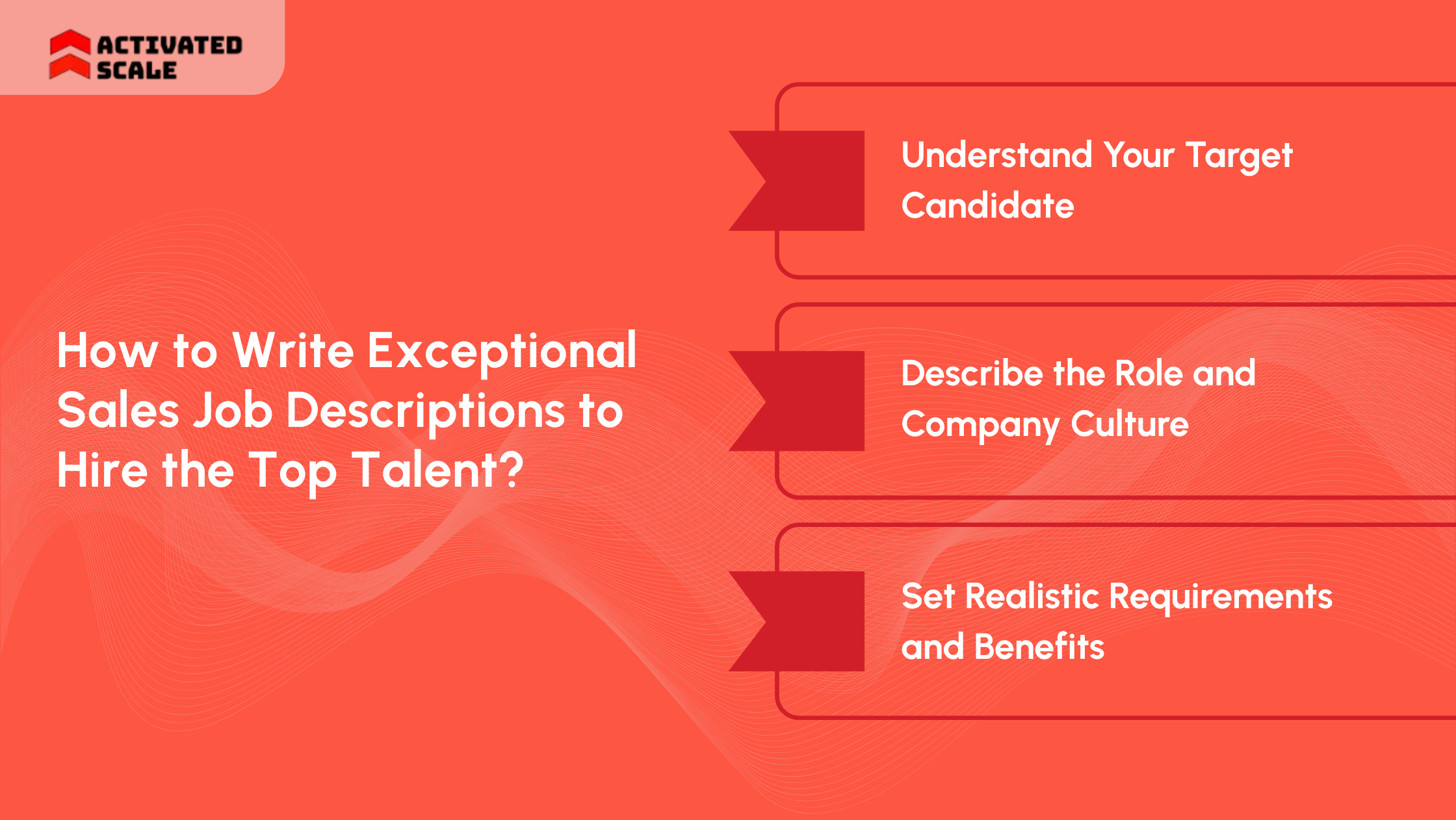
How to Write Exceptional Sales Job Descriptions to Hire the Top Talent?
Put yourself in the shoes of a top-tier salesperson, constantly sought after by companies. What catches your attention?
Probably not a generic job listing that’s all about duties and responsibilities. To grab the attention of skilled salespeople, you need an engaging, transparent, and compelling job description.
Here's how you can ensure that:
1. Understand Your Target Candidate
Learn about top talent's career aspirations, what drives them, and the responsibilities they enjoy. This data will help you shape a job description that appeals directly to candidates with similar characteristics.
For example, if your top performers enjoy a mix of inbound and outbound sales, your job title should reflect that.
2. Describe the Role and Company Culture
Define what success looks like in your company. Explain how the sales rep will contribute to the overall business strategy.
Additionally, emphasize your company culture. Showcase your company's core values, mission, and the work environment they’ll be a part of.
3. Set Realistic Requirements and Benefits
List the roles and responsibilities needed for the role, but avoid being overly restrictive. For example, while experience in B2B sales is essential, it doesn’t require niche industry experience if it isn’t absolutely necessary.
Highlight unique benefits like health insurance, paid time off, and professional development programs. This proves that your company is invested in the growth of its employees.
Sample Job Description
- International Inside Sales Representative at [Company Name]
At [Company Name], we operate globally with offices in top cities like [City names]. We are seeking a driven and passionate Inside Sales Representative to join our sales team.
This role will allow you to work with clients worldwide, helping them find solutions that meet their unique needs.
- Position Perks and Benefits
- Competitive base salary with performance bonuses
- Remote work flexibility (work from home two days a week) (if available)
- Comprehensive training to elevate your sales skills
- Access to a vibrant office canteen and healthy food options
- Opportunities for growth and professional development
- Requirements
- 2+ years of experience in Inside Sales
- A degree in Sales, Marketing, or a related field
- Excellent communication and customer relationship-building skills
- B2B sales knowledge and a proven track record of meeting sales targets
- Responsibilities
- Communicate with prospects and clients via phone, email, and video calls
- Follow up with leads and close deals
- Maintain detailed records of sales activities in Customer Relationship Management (CRM)
- Collaborate with marketing and product teams to optimize sales efforts
As you craft your sales strategy and attract top talent, Activated Scale offers solutions to help you hire the best sales reps. Consider our Fractional Sales Leadership service to evaluate candidates on a trial basis for expert guidance in building your sales strategy.
So, you know how to find candidates. But how can you be sure you've found a great one? The difference often lies in a core set of attributes that aren't always on a resume.
10 Fundamental Skills of a Top Salesperson
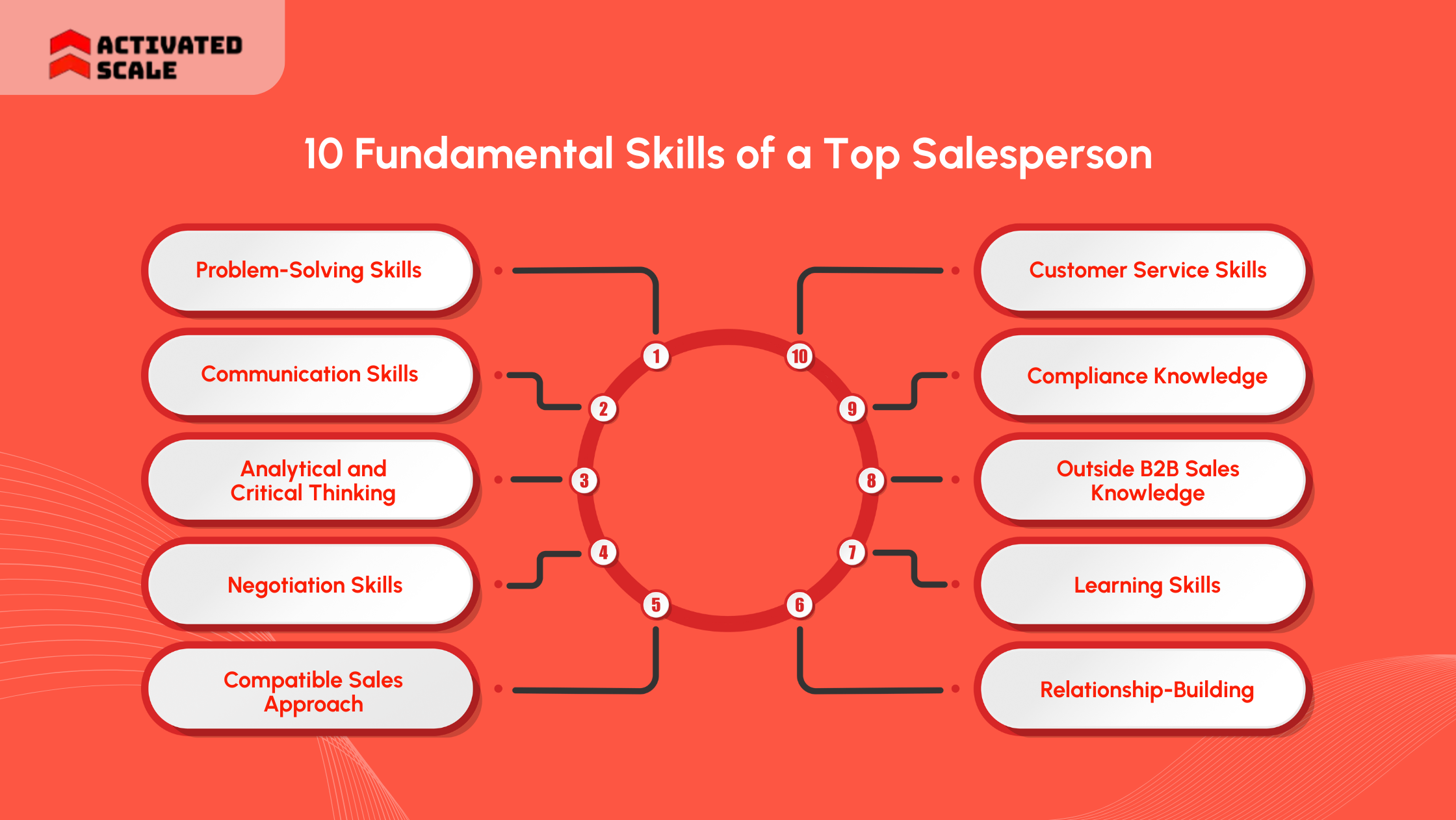
Building a high-performance sales team requires a specific blend of innate traits and honed skills. So, let's break down non-negotiable fundamentals that define top salespeople, giving you a definitive checklist.
Below are the 10 key traits and skills you should look for when hiring:
1. Problem-Solving Skills
A top salesperson is adept at solving problems, whether it's figuring out how to meet a prospect’s unique needs or overcoming obstacles to closing deals.
They excel in identifying the problem and breaking it down into smaller, actionable parts, making it easier to address and resolve.
2. Communication Skills
Salespeople spend a lot of their time communicating with prospects, so communication skills are a must. This includes the ability to use body language effectively to convey confidence and establish trust.
3. Analytical and Critical Thinking
Critical thinking allows sales reps to analyze situations, identify causes, and recognize assumptions. When a prospect declines an offer, a top salesperson can pivot and turn the "no" into a "yes."
They do this by understanding the root of objections and adapting their approach accordingly.
4. Negotiation Skills
Sales often involve negotiation, and great salespeople are skilled negotiators. A skilled negotiator knows how to balance the prospect’s losses and gains, make strategic concessions, and find mutually beneficial solutions.
5. Compatible Sales Approach for Commission-Based Pay
Top salespeople thrive in commission-based environments, but their approach to sales should align with your organization’s sales strategy. Their sales style, whether consultative or transactional, must fit the overall sales approach your company adopts.
For example, if your company focuses on long-term relationships, ensure that the salesperson’s approach matches this strategy.
6. Empathy, Trust, and Relationship-Building
A successful salesperson builds relationships. Empathy is critical for understanding a prospect's pain points and needs.
42% of sales reps said understanding customer goals was a top driver of repeat business. So, reps can then use this understanding to build trust and rapport with clients that is genuinely in their best interest.
7. Learning Skills
Sales strategies and market trends grow quickly, so the best salespeople are always learning. They absorb and apply new knowledge swiftly, whether it's about a new product or market changes.
A commitment to learning keeps them ahead of the curve and ready to adapt to new challenges.
8. Outside B2B Sales Knowledge
Top performers should have experience qualifying leads, handling objections, and closing deals in a B2B environment. They must also understand the unique challenges, such as longer sales cycles and complex decision-making processes.
9. Business Ethics and Compliance Knowledge
Top salespeople know that unethical sales practices can damage both their reputation and the company’s. A strong ethical foundation ensures that salespeople act with integrity on trust.
10. Customer Service Skills
Sales don’t end when the deal is closed. Successful salespeople are proactive in ensuring customer satisfaction and maintaining strong post-sale relationships.
Their ability to deliver an experience is crucial for retaining clients and encouraging repeat business.
So you have your foundation for the perfect salesperson, but how do you find them? The answer lies in a deliberate and structured recruitment process.
Moving from theory to practice, we'll now walk through the essential steps to bring that high-performing individual onto your team.
Also Read: Building a Powerful Founder-Led Sales Strategy
Recruiting Salespeople Through a Step-by-Step Process

Anyone can post a job ad and hope for the best. However, building an elite sales team requires a deliberate system that consistently separates the average from the exceptional.
This is about installing a revenue driver. Here’s a systematic nine-step approach to ensure you’re recruiting top sales talent effectively:
Step 1: Define Your Ideal Sales Rep Profile
Before beginning your recruitment process, it's crucial to define the qualities you seek in a sales representative. Focus on key traits along with the technical skills and qualifications that align with your sales strategy.
Step 2: Write a Job Description That Sparks Interest
A job description is a sales pitch to top candidates. Craft descriptions that clearly highlight growth opportunities and emphasize your commitment to employee development.
Step 3: Choose the Right Recruitment Channels
The next step is to determine where you’ll find your ideal candidates. Use employee referrals, LinkedIn, industry-specific job boards, and sales networks to cast a wide net.
These channels will help you connect with candidates, but don't confirm their skills. That's where Activated Scale can support your recruiting salespeople:
We offer three key services to help your sales recruitment process:
- Contract-to-Hire Sales Recruiting: Hire vetted sales professionals on a flexible, trial basis before you offer them full-time employment. This allows you to assess their performance and cultural fit before making a permanent commitment.
- Fractional Selling: Access experienced SDRs (Sales Development Representatives) and AEs (Account Executives) to fill sales gaps without hiring full-time employees. Perfect for businesses that need quick, flexible support without the long-term commitment.
- Fractional Sales Leadership: Hire Fractional VPs of Sales to design playbooks, establish partnership programs, and select the right sales tools for your team. This is a great option for companies looking for strategic leadership without the full-time cost.
Book a Call with Activated Scale to get into our extensive network and hire faster and more effectively.
Step 4: Screen Applications and Resumes Effectively
Once you begin receiving applications, it's time to screen resumes and applications efficiently. Look for relevant sales experience, technical proficiency, and evidence of past success.
Consider using AI-assisted screening tools (HireVue, Pymetrics, etc.) to identify the best candidates more quickly.
Step 5: Conduct Structured Interviews
An interview should assess both skills and cultural fit. Develop a set of behavioral and role-specific questions that evaluate problem-solving abilities, communication, and negotiation skills.
Evaluate candidates based on their:
- Proven sales background and achievements.
- Methodology for pipeline development and oversight.
- Insight into target customer pain points.
- Competence in resolving multifaceted sales challenges.
Step 6: Assess Candidates Through Practical Exercises
To truly evaluate a candidate’s capabilities, include practical exercises such as mock sales pitches or role-playing scenarios. This will give you a better understanding of how they handle objections and adapt to various sales situations in real-time.
Step 7: Check References and Backgrounds
Don’t skip the reference check. Verify the candidate’s employment history, education, and past achievements. Speaking with previous employers or colleagues will give you valuable insight into the candidate's work ethic.
Step 8: Craft a Job Offer They Can’t Refuse
Once you’ve found the perfect candidate, make a quick and attractive offer to ensure you don’t lose them to a competitor. Include competitive salary packages, commission structures, and other benefits that will motivate top talent to accept the offer quickly.
Step 9: Onboard Effectively
The journey continues after onboarding. Companies that customize onboarding with the help of Artificial Intelligence (AI) to each new hire’s learning style report higher retention.
So, regular check-ins during the probationary period are essential to provide ongoing support and feedback.
Ongoing training should focus on key areas such as sales techniques, product knowledge, and aligning with company expectations. The goal is to ensure your sales reps are constantly refining their skills.
Read Also: Tips for Hiring a Sales Director for Your Top-Performing Team
Final Thoughts
Recruiting salespeople is a strategic investment that can significantly impact your company's growth. After understanding the ideal skills of sales reps, defining a clear hiring process, you lay the foundation for a top-performing sales team.
A thoughtful, structured approach helps attract candidates who align with your company culture, which is essential for long-term success. At Activated Scale, we offer flexible services to streamline your hiring process.
Ready to take your team to the next level? Let us help you in an initial call with Activated Scale to find and onboard the right sales talent today.
Frequently Asked Questions (FAQs)
1. How long does the recruitment process typically take for sales roles?
The process usually takes between 3 and 6 weeks, depending on the role’s complexity and the candidate's availability.
2. What are the best sources for finding qualified sales candidates?
Activated Scale, LinkedIn, industry-specific job boards, employee referrals, and sales networking events are excellent sources for top-tier talent.
3. How can I assess a sales candidate’s communication skills?
During interviews, ask candidates to explain complex sales concepts clearly. Consider using communication-focused exercises like mock sales calls.
4. Why is onboarding so important for sales reps?
A structured onboarding process ensures new hires understand their role, the company’s culture, and performance expectations. This boosts their productivity.
The Ultimate Guide to Hiring a Salesperson!
Get the step-by-step guide to hiring, onboarding, and ensuring success!