_edi.png)

Sales Development Representatives (SDRs) have grown into a strategic force in B2B marketing. Their role goes beyond qualifying leads; they play a crucial part in aligning sales and marketing efforts.
In fact, companies with aligned sales and marketing teams are 67% more likely to close deals. SDRs ensure that marketing-qualified leads (MQLs) are nurtured and qualified before being passed to the sales team.
This blog will help you understand how SDRs act as the bridge between these two departments, driving stronger collaboration. For sales leaders, understanding this alignment is key to scaling your business's sales performance.
Key Takeaways
- Sales Development Representatives (SDRs) Marketing Role: SDRs qualify and nurture leads, ensuring they are sales-ready before being passed to Account Executives (AEs).
- Tools for SDR Marketing: Customer Relationship Management (CRM) systems, prospecting tools, sales engagement platforms, and email automation are essential for efficiency.
- Key Skills for SDRs: Strong communication, active listening, marketing knowledge, and research skills are crucial.
- Performance Measurement: Lead conversion rates, engagement metrics, pipeline contribution, and revenue impact are key performance indicators.
- Hiring SDRs: Look for candidates with communication skills, curiosity, time management abilities, and a passion for sales.
How Do the Responsibilities of SDRs Help in Marketing?
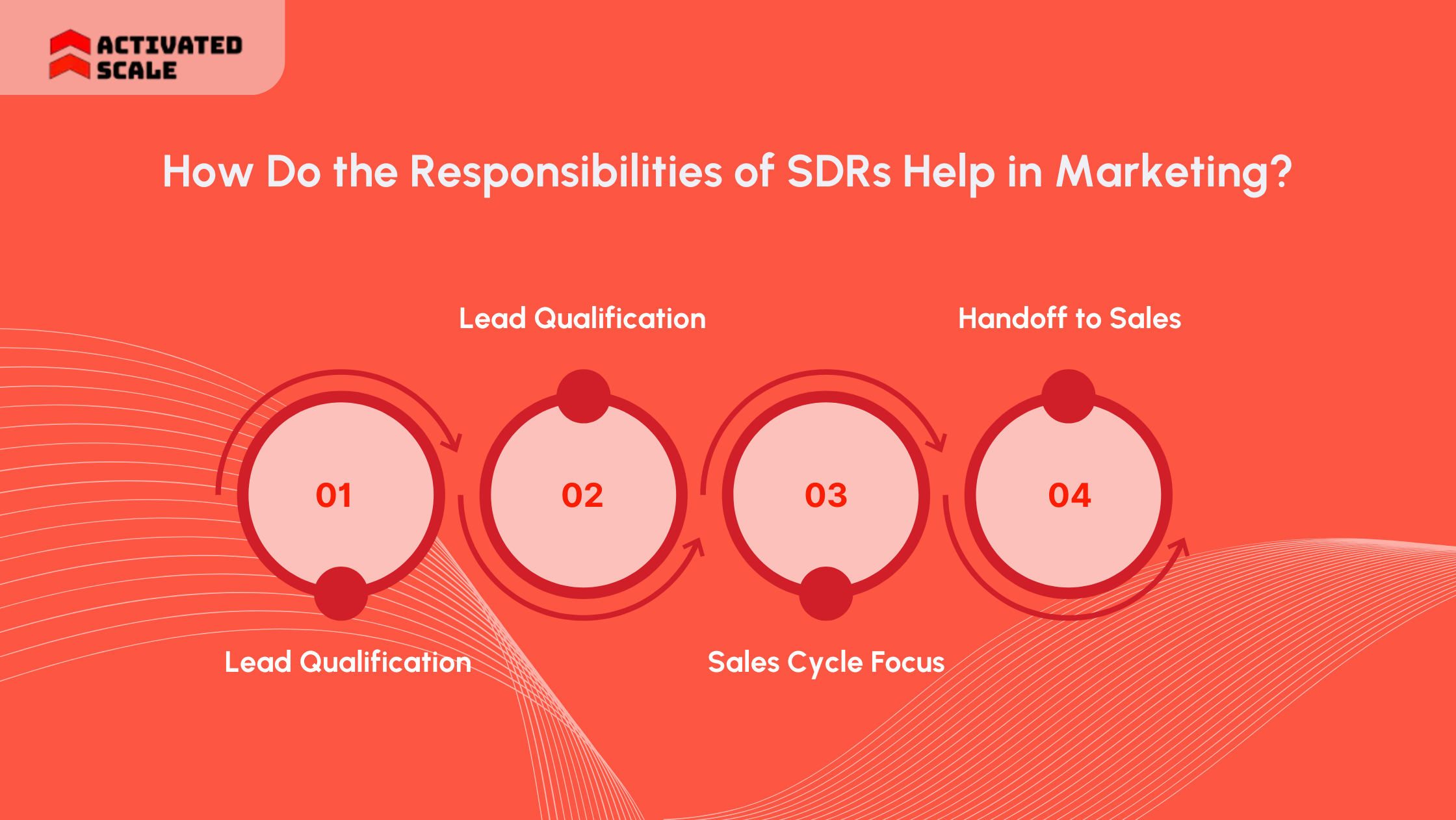
Sales Development Representatives (SDRs) in a marketing role are about driving efficient lead flow through the sales pipeline.
Key Responsibilities of SDRs in Marketing:
1. Lead Qualification
SDRs work closely with Marketing Qualified Leads (MQLs) that are generated through campaigns. They assess these leads using criteria such as budget, authority, need, and timing (BANT).
It ensures only high-quality leads move to the next stage in the sales process.
2. Lead Nurturing
Beyond just qualifying, SDRs keep the communication going with MQLs. They nurture leads by educating them, answering questions, and keeping the conversation relevant. This ongoing communication helps position the company as a trusted solution provider.
So leads remain warm for when they're ready to make a decision.
3. Sales Cycle Focus
SDRs focus on the early stages of the sales cycle without stalling the leads for a long time. This ensures speeding up the sales process and improving productivity.
4. Handoff to Sales
SDRs provide AEs with detailed information about the lead’s pain points, interests, and any specific requirements.
Building on these core responsibilities, the SDR's day is a carefully orchestrated sequence of tasks. They are constantly juggling communications and managing a high volume of leads across different platforms.
This demanding routine is the engine that drives the sales pipeline.
Also Read: Steps to Build and Train a Successful SDR Team
While a structured daily routine is the engine of an SDR, it is their foundational skills that provide the fuel. The ability to engage, qualify, and connect with prospects is what ultimately drives results.
If you're looking to level up your sales process and drive qualified leads, hiring the right SDRs is key. For hiring experienced SDRs, Activated Scale offers Fractional Selling services that help you get the right talent quickly.
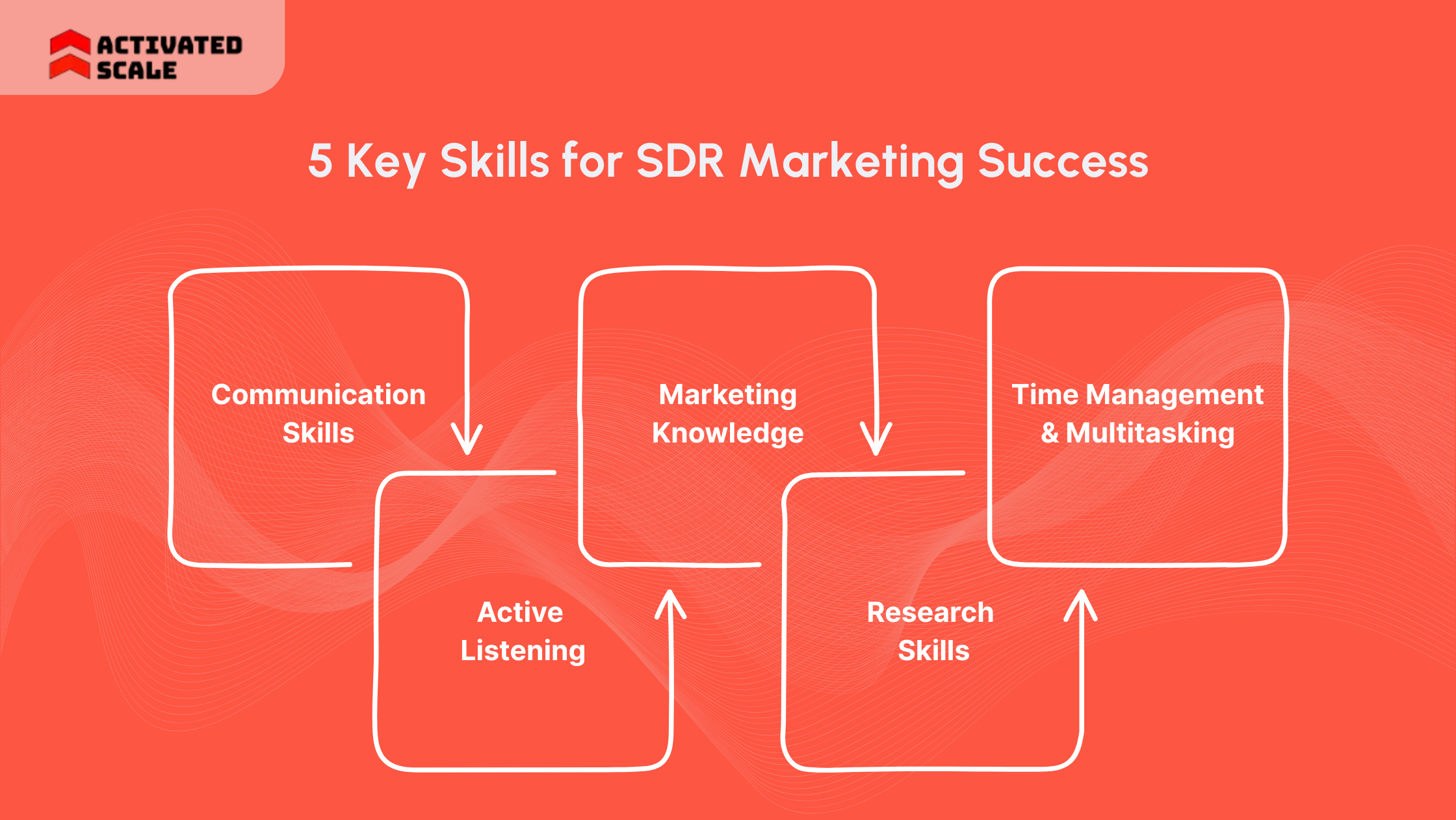
5 Key Skills for SDR Marketing Success
The relentless pace of an SDR's day is unsustainable without the right toolkit. The difference between burnout and breakthrough lies in mastering these six essential skills.
This enables SDRs to work smarter, engage better, and qualify more effectively. Here are the five core skills that contribute to SDR in marketing:
1. Communication Skills
Effective communication is at the heart of SDR marketing success. SDRs must articulate the value of the product in a way that resonates with each lead’s unique needs.
Clear, persuasive communication helps SDRs build relationships and move leads further down the funnel.
2. Active Listening
Listening is about truly understanding their challenges. SDRs must listen carefully to identify their prospects’ needs and concerns. Active listening allows SDRs to ask the right follow-up questions.
3. Marketing Knowledge
An SDR in marketing must understand the company’s marketing strategy and target audience. This knowledge allows them to qualify leads based on what they know about the prospect and the company’s offerings.
4. Research Skills
Effective research is essential for SDRs to understand the background of the prospect and ensure personalized outreach. SDRs should be able to quickly gather information about a prospect’s company, industry, and competitors, providing valuable insights into their challenges.
This allows SDRs to approach prospects with relevant, insightful conversations and establish trust.
5. Time Management and Multitasking
From prospect outreach to lead qualification and follow-up, effective time management is crucial. SDRs must ensure no lead is left behind.
Balancing daily tasks and consistently meeting performance goals requires strong multitasking abilities.
Now, these essential skills are meaningless if they don't translate into results. To validate their effectiveness and optimize your strategy, you must measure performance against the key metrics that define SDR success.
Also Read: How to Implement Predictive Sales Analytics for Forecasting
How to Measure Your SDR Marketing Team's Performance?
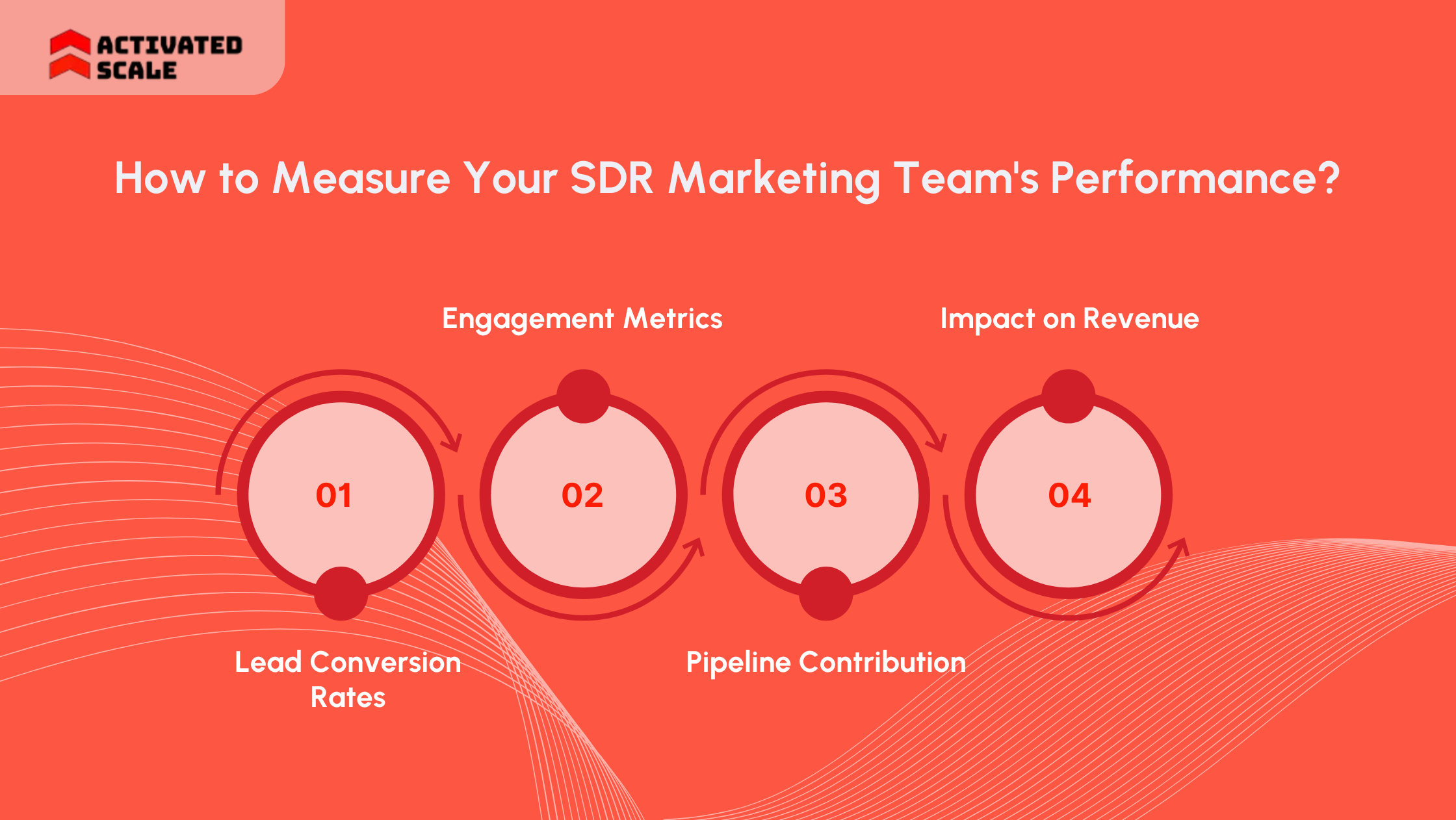
Without a clear measurement strategy, SDR activities can become a black box of busywork. This section outlines how to define the metrics that matter to hold your team accountable and continuously refine your go-to-market motion.
Here’s how to measure SDR marketing performance:
1. Lead Conversion Rates
One of the most critical metrics for SDRs is the lead conversion rate.
Lead Conversion Rate = (SQLs / MQLs) * 100
A high conversion rate indicates that your SDRs are effectively qualifying leads and moving them through the sales pipeline. Monitoring this rate helps you understand whether your lead qualification process is working or needs adjustment.
2. Engagement Metrics
Engagement metrics track how well your SDRs are interacting with leads across various channels.
Engagement Rate = (Responses / Emails Sent) * 100
These metrics provide insights into how compelling your SDRs' outreach is and how much interest they’re generating. A higher engagement rate usually correlates with stronger SDR performance and more meaningful interactions with potential customers.
3. Pipeline Contribution
The number of qualified leads an SDR adds to the sales pipeline is another critical performance metric. Tracking this helps assess whether they’re consistently building opportunities for the sales team.
Pipeline Contribution = Number of Qualified Leads Added to Pipeline
The more leads SDRs contribute, the healthier the pipeline will be for Account Executives to close deals.
4. Impact on Revenue
While SDRs don’t directly close sales, their role in generating qualified leads has a significant impact on overall revenue.
SDRs help accelerate the sales cycle by consistently passing high-quality leads to the sales team.
Revenue Impact = (Revenue from SQLs / Total Revenue) * 100
Monitoring the revenue impact from leads they’ve qualified and passed on to sales is a great way.
Are you ready to boost your SDR marketing team’s efficiency and performance? Our Fractional Sales Leadership service offers access to experienced SDR leaders who can implement strategies and training to elevate your team’s efforts.
Metrics define the goal, but tools provide the execution. The modern SDR relies on an integrated tech stack to operationalize their daily tasks, turning data-driven insights into a smoothly flowing pipeline.
5 Tools and Platforms for Your SDR Team
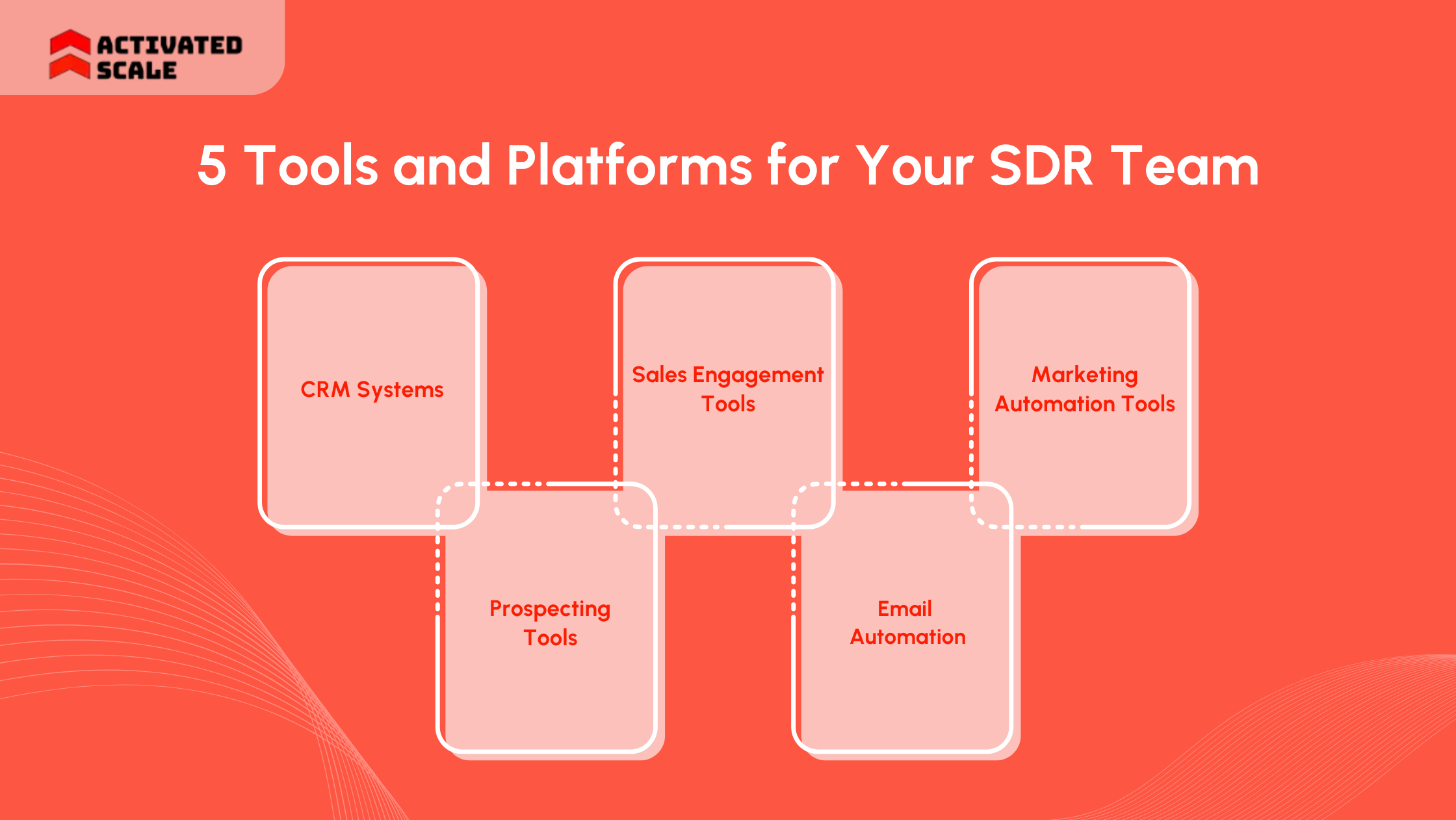
Effective SDR marketing relies on using the right tools to manage leads, track interactions, and maintain seamless communication across teams. Here’s a look at the key platforms that power SDR marketing success:
- CRM Systems: CRM tools like Salesforce, HubSpot, and Zoho CRM are essential for managing leads and tracking communications. These platforms allow SDRs to organize lead information and log interactions.
- Prospecting Tools: LinkedIn Sales Navigator, Apollo, and ZoomInfo are powerful prospecting tools that allow SDRs to gather detailed information on potential leads.
- Having access to high-quality prospect data is crucial for making outreach efforts more relevant and effective.
- Sales Engagement Tools: Tools like Outreach.io and Salesloft automate outreach efforts, enabling SDRs to engage with leads more consistently and efficiently. S
- ales engagement tools help SDRs maintain high levels of productivity and effectiveness throughout the qualification process.
- Email Automation and Campaign Tools: Mailchimp and ActiveCampaign allow SDRs to run automated nurturing campaigns.
- Email automation helps SDRs nurture MQLs over time, keeping prospects engaged until they’re ready to be passed to the sales team.
- Marketing Automation Tools: Marketo, Pardot, and HubSpot Marketing Hub are marketing automation tools that help align SDR activities with broader marketing strategies.
- Marketing automation ensures that SDRs receive the right leads at the right time, optimizing the entire lead-handling process.
At Activated Scale, we understand the importance of equipping your SDR marketing team with the right tools to succeed. So, we provide top-tier Contract-to-Hire Sales Recruiting service, from where you can hire reps who have access to the best tools.
Read Also: Building a Sales Strategy for Startups
The Bottom Line
Building a predictable sales pipeline demands a system of talent, technology, and strategy. The SDR marketing team helps you move this pipeline.
At Activated Scale, you get top-tier SDRs who can fully align your marketing with sales.
The result? Your business grows beyond qualification to become a direct, measurable source of revenue growth.
Ready to activate your pipeline's potential? Book a Call with Activated Scale to create your SDR team.
FAQs
1. What is the difference between SDR marketing and traditional sales development?
SDR marketing focuses on aligning sales and marketing efforts to generate qualified leads. On the other hand, traditional sales development is more about direct lead generation and closing deals.
2. How do I know if my SDRs are using the right tools?
Monitor KPIs like lead conversion rates and engagement metrics. If these are improving, your tools are likely aligned with your SDR team's needs.
3. Can SDR marketing be integrated with other sales processes?
Yes, SDR marketing works best when integrated with your overall sales strategy. Using CRM and sales engagement tools ensures seamless transitions from marketing to sales.
4. What should I prioritize when hiring SDRs for marketing?
Look for candidates with strong communication, active listening skills, and the ability to multitask. Their ability to qualify leads and nurture relationships is key.
The Ultimate Guide to Hiring a Salesperson!
Get the step-by-step guide to hiring, onboarding, and ensuring success!