_edi.png)
Sales leaders face tighter targets in 2026, and hiring mistakes are affecting pipeline health. As a decision-maker in your organization, you need to plan to stay ahead of your competitors.
Most leaders even agree that strategic workforce planning is essential, but only 15% of organizations are actually doing it.
That pressure forces leaders to choose the right mix of stable roles and short-term support.
In this blog, we focus on how sales leaders think, plan, and hire. You’ll learn what other sites miss. This guide will also explain seasonal vs full-time hiring to support quota goals, protect budgets, and build predictable output.
Key Takeaways
- Over half of the global workforce is facing financial stress, underlining the importance of cost-conscious staffing.
- Despite recognizing its value, only 15% of organizations actively practice strategic workforce planning.
- Seasonal and temporary staffing remain critical tools to align headcount with fluctuating demand.
- Over-reliance on full-time hires can inflate payroll and reduce flexibility in volatile markets.
- A blended workforce strategy, combining seasonal and full-time roles, helps protect margins while maintaining sales productivity.
What Two Hiring Options Actually Mean for Your Sales Organization?
Leaders often skip definitions, but this is where most hiring confusion starts. Many sales teams misjudge role duration, training depth, or workload spikes, which leads to bloated costs or weak coverage.
A clear understanding helps you avoid talent gaps during surge periods and prevents long-term payroll drag.
1. Seasonal Employment
Seasonal roles support short windows of heavy activity. These positions exist for peak demand periods and run on fixed start and end dates.
Staff may work full schedules during the peak, but the role closes once demand slows. This option suits tasks with simple workflows and short onboarding cycles.
2. Full-Time Employment
Full-time roles support ongoing revenue activity across the year. These positions run without a set end date and support core operations, account coverage, and repeatable sales motion tasks.
These team members usually work steady weekly hours and receive complete compensation packages. They deepen product knowledge, build relationships, and hold long-term quota responsibilities.
So, how do these hiring choices actually play out in your team? This decision ripples through everything from quota attainment and sales cycle length to customer retention.
Read Also: Scale Your Sales Team Without the Burden of Full-Time Hires
7 Key Differences Between Seasonal and Full-Time Roles: You Can’t Ignore
Hiring gets messy when leaders rely on assumptions instead of data. Many teams jump into a role type without checking how workload cycles, ramp time, or training depth fit the choice.
This table helps you avoid those mistakes.
If you’re weighing seasonal vs full-time hires and want reliable sales talent without costly missteps, Activated Scale helps you bridge the gap. Our Contract-to-Hire Sales Recruiting lets you test sales professionals in real conditions before committing to full-time offers.
Next, we examine full-time employees. As the permanent backbone of your sales organization, they are critical for maintaining performance, continuity, and scalable growth.
Pros and Cons of Hiring a Full-time Employee
Full-time employees are the engine of a predictable sales org. The higher cost is an investment that pays dividends in stable sales pipelines, steady growth, and a cohesive culture.
Let's examine the compelling advantages and necessary considerations of this foundational hiring decision.
Advantages of Full-Time Employees (Pros)
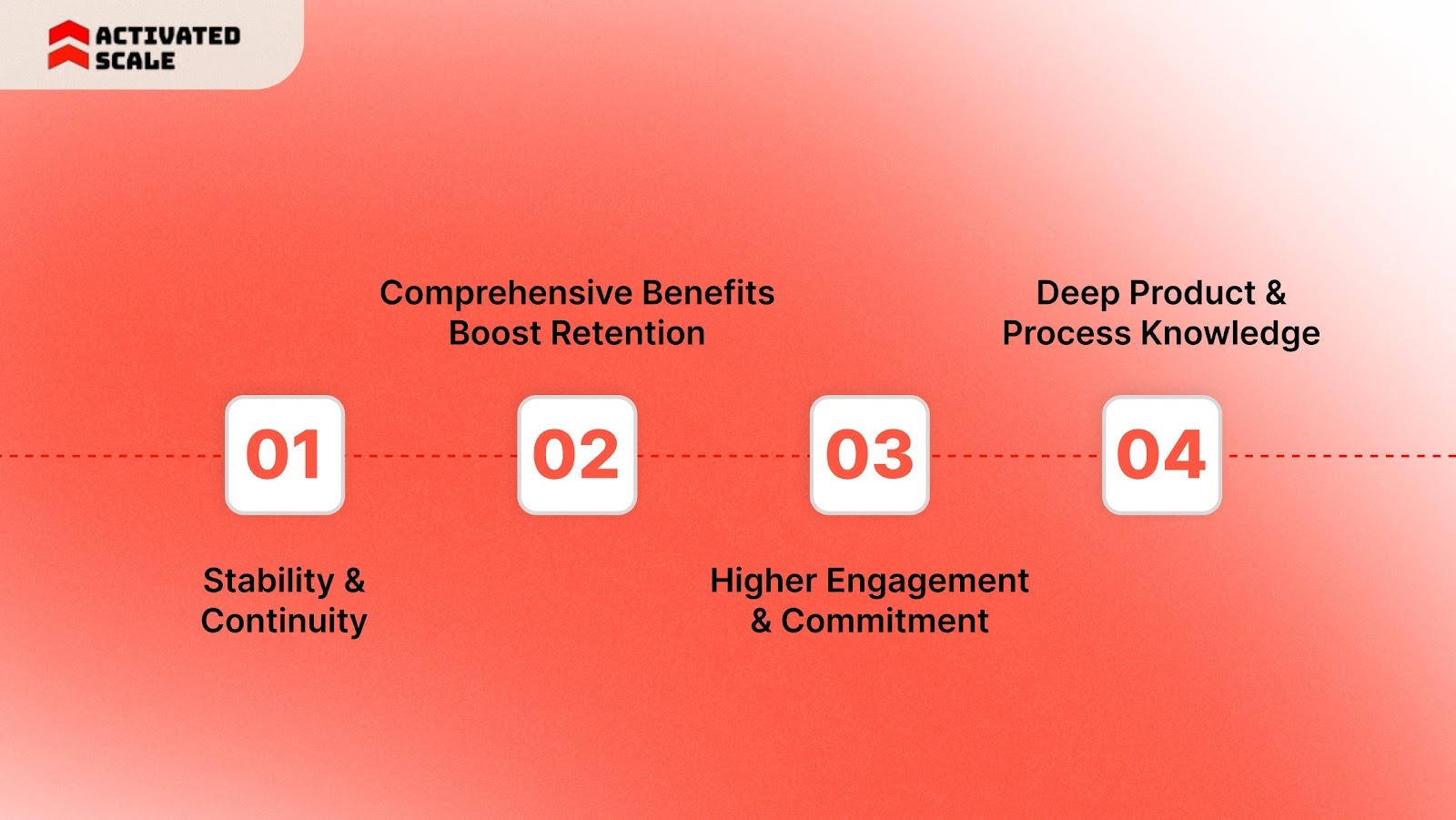
- Stability and Continuity: Full-time staff provide reliable coverage year-round. They build client relationships and institutional knowledge that seasonal workers cannot replicate.
- Comprehensive Benefits Boost Retention: Offering healthcare, retirement, and paid time off increases loyalty. Full-time roles attract skilled candidates seeking security and long-term growth.
- Higher Engagement and Commitment: Full-time employees invest in the company’s success. Their ongoing presence reduces repeated training costs and improves quota consistency.
- Deep Product and Process Knowledge: Continuous exposure allows full-time team members to master complex sales motions and cross-team collaboration.
Drawbacks of Full-Time Employees (Cons)

- Higher Fixed Costs: Salaries, benefits, and payroll taxes continue even during slower months, creating financial risk if sales fluctuate.
- Harder to Adjust Headcount Quickly: Unlike seasonal hires, full-time roles cannot be scaled down easily during low-demand periods.
- Longer Ramp Time: New full-time employees need more extensive onboarding, which can temporarily impact productivity before they reach peak performance.
Having explored this category, we can now assess the specific advantages seasonal employees offer. Equally important are the inherent challenges this model presents.
Also Read: Hiring Fractional Sales Reps for Startup Success
Pros and Cons of Hiring a Seasonal Employee
Seasonal hires can be a smart lever for your pipeline surges or for extra bandwidth without committing to long-term payroll.
But like every staffing decision, the advantages come with trade-offs. Here’s what sales leaders should know before relying on seasonal talent.
Advantages of Seasonal Employees (Pros):
- Flexibility: Seasonal staffing lets you scale your team fast during peak periods. You decide when to hire, how many people you need, and for how long, without long-term commitments.
- Cost-Effectiveness: Around 55% of employees across the globe are struggling with financial stress. So, with these employees, you avoid paying year-round salaries and benefits for roles. This keeps payroll lean and protects margins.
- “Try Before You Buy” Opportunity: Seasonal roles double as trial periods. If someone performs well, you can offer a full-time role with confidence. It reduces hiring risk and helps you avoid costly mis-hires.
- Access to Short-Term Job Seekers: Students, retirees, and part-time workers often prefer temporary roles. Seasonal jobs attract people who want flexible hours, extra income, or quick experience without committing to a full-time sales career.
Drawbacks of Seasonal Employees (Cons)
- Limited Stability Reduces Candidate Pool: Seasonal workers don’t receive job security or benefits, which means some highly skilled candidates may not apply.
- Fast Training Required: Seasonal hires must ramp quickly, and that demands efficient onboarding. If your process isn’t tight, they can slow down the team instead of supporting it.
Need extra sales bandwidth without overcommitting payroll? Activated Scale’s Fractional Selling service lets you onboard U.S.-ready SDRs and AEs for a trial period. Test their skills during peak seasons before offering full-time roles.
Sales leaders who mismatch hires risk gaps in coverage, missed quotas, and budget inefficiency. Deciding between seasonal and full-time employees is about timing, workload, and team impact.
When to Hire Seasonal and When to Select Full-Time Employees?
Temporary staffing employment fell about 9% from Q4 2024 to Q1 2025, part of a longstanding seasonal pattern.
So, many companies are rethinking whether full‑time hires are worth the fixed costs compared with flexible staffing that better matches demand swings.
But the right answer depends on a nuanced mix of your market timing, revenue goals, and operational maturity. Knowing this helps you staff smarter, avoid unnecessary costs, and maintain steady sales output:
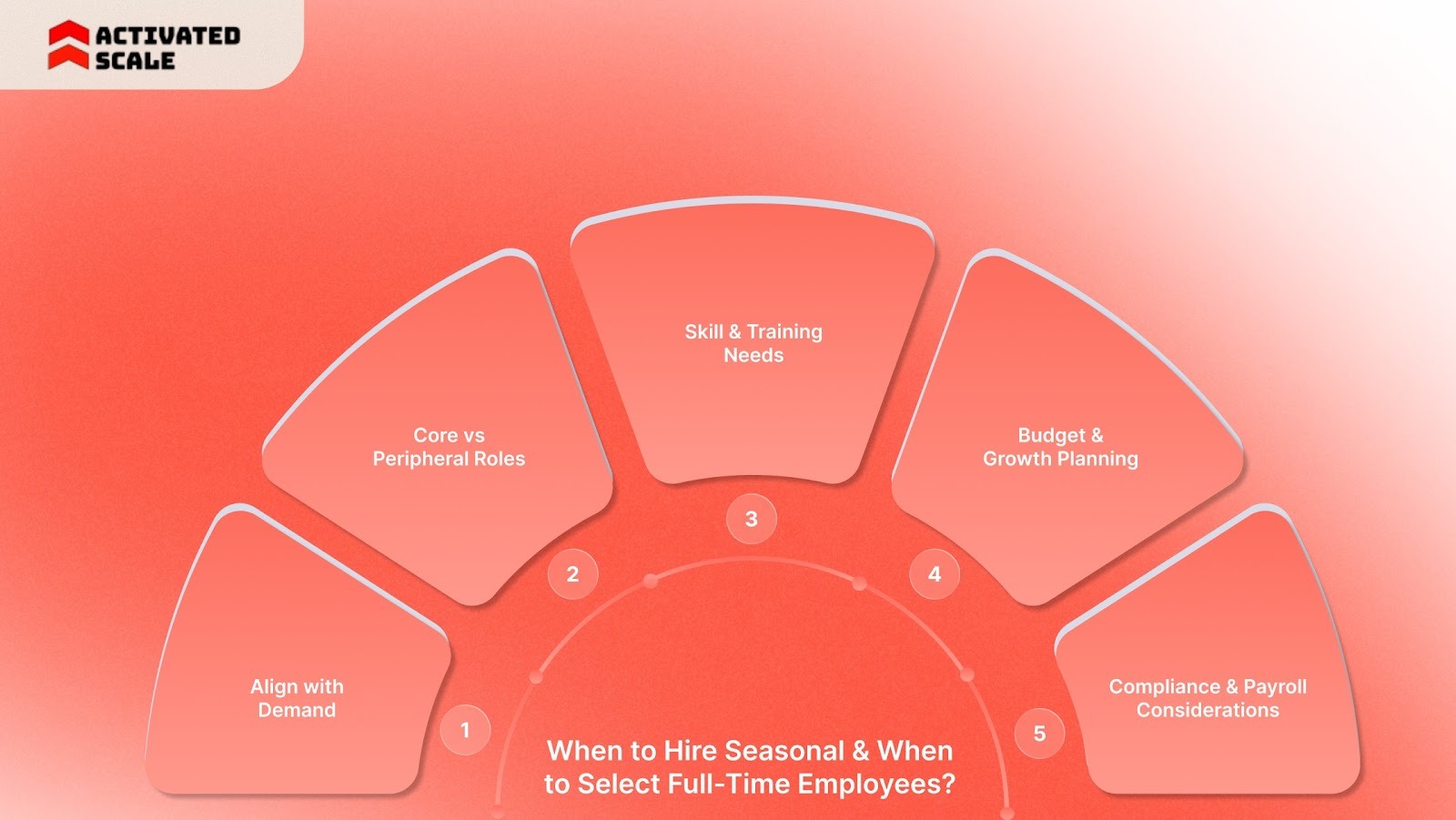
- Align with Demand
Seasonal hires work best for predictable peaks. Examples: Retailers ramping up for holiday sales or software teams staffing temporary event coverage.
Full-time employees handle a continuous workload and core account management. - Core vs Peripheral Roles
Use full-time staff for critical accounts, strategic sales projects, or roles requiring deep knowledge. Seasonal staff fill temporary or lower-skill needs, such as lead-generation spikes, event support, or short-term campaigns. - Skill and Training Needs
Complex roles requiring extensive training or deep product expertise suit full-time hires. Seasonal hires are ideal for repetitive or easily onboarded tasks. - Budget and Growth Planning
Full-time roles require ongoing investment, even during slower months. Seasonal hires give flexibility when budgets are tight, and demand fluctuates. - Compliance and Payroll Considerations
Both types must meet labor laws, but full-time employees trigger benefits and tax obligations. Seasonal workers can sometimes be sourced through staffing agencies to offload the administrative burden.
Start matching your hiring to your actual priorities: Margin, momentum, and market response.
Also Read: Sales Consultant Job Description and Duties
Conclusion
Stuck choosing between seasonal speed and full-time commitment? You don’t have to.
Use seasonal talent to handle surges without long-term cost. Use full-timers to own relationships and processes. Together, they create a sales engine that’s both resilient and ready to pivot.
So, no more dwelling on seasonal vs full-time hiring. Let's build a team with Activated Scale that fits your actual workload.
Ready to optimize your sales workforce? Book a Call to learn how to build a cost-effective, high-performing sales team today.
FAQs
1. Can seasonal staff be trained to perform at the same level as full-time employees?
Yes. With structured onboarding and clear role expectations, seasonal workers can quickly become productive in short-term roles.
2. How do benefits and legal obligations differ for seasonal versus full-time hires?
Full-time employees typically receive year-round benefits. Seasonal workers often have limited or no benefits, depending on local labor laws.
3. What tools can help optimize the mix of seasonal and full-time hires?
Workforce planning software, demand forecasting tools, and HR analytics platforms can guide staffing decisions based on workload and historical trends.
4. How do seasonal hires affect team morale and culture?
While seasonal staff can fill gaps, it’s important to integrate them properly to maintain team cohesion and prevent disruption to workplace culture.
The Ultimate Guide to Hiring a Salesperson!
Get the step-by-step guide to hiring, onboarding, and ensuring success!