_edi.png)

If you’re here, chances are you’ve already explored outsourcing, but things haven’t gone as planned. Maybe teams are falling apart, goals are getting missed, and you’re struggling to make the right call on what to outsource first.
You’ve tried different methods, but none seem to stick, and it's leading to confusion, frustration, and inefficiencies. This is a common experience for sales leaders.
Now, 60% of companies have increased their outsourcing budgets. So, what is the first step in managing outsourcing in sales?
In this blog, we talk exactly about that, along with what benefits and challenges you might face. Don't worry, we will also help you tackle those challenges.
Quick Glance
- Roughly 60% of organizations report an increase in their outsourcing budgets.
- 70% of organizations report poor vendor management, highlighting the risks of inadequate oversight in outsourcing partnerships.
- Founders who partner with Activated Scale see up to 4x growth in deal sizes within months by utilizing our personalized sales strategies.
- 71% of employees experience overwhelming feelings during major transitions, emphasizing the need for proper planning and management during outsourcing integrations.
Where to Begin in Outsourcing?
Many businesses fail to properly assess which tasks to delegate from the start. Non-core functions are necessary but don’t directly contribute to your business’s main objectives, and are the best candidates for outsourcing.
However, many companies make the mistake of outsourcing tasks that are too close to their core operations, or worse, they delegate the wrong functions entirely.
When this happens, you risk losing control over critical business processes, which can cause more chaos instead of easing it. So start asking yourself:
- Are admin tasks still swallowing hours you should spend on strategy?
- Is data entry slowing down your daily workflow?
- Are your sales reps getting stuck in follow-ups instead of closing deals?
- Is customer support drowning in routine queries?
- Are you missing deadlines because your internal team is overloaded?
- Are repetitive operations tasks stopping you from experimenting or innovating?
- Is recruitment or onboarding taking too long for your in-house team to manage alone?
- Are you spending more time fixing small problems than steering the business forward?
- Are your inside sales reps driving revenue enough?
With the 'why' and 'when' clearly established, the next logical question is: How do you steer this new external team to success? The answer lies in a disciplined management approach.
Also Read: Understanding Outsourced Sales Development
6 Steps in Managing Outsourced Teams for Sales Leaders
The promise of our blog was simple. To help you offload the pressure of managing outsourced sales reps. Founders have seen missed targets, cultural misunderstandings, and a feeling of lost control in outsourcing.
But what if we could flip the script for you? Follow these six steps to convert your outsourced sales function from a gamble to your most predictable growth carrier:
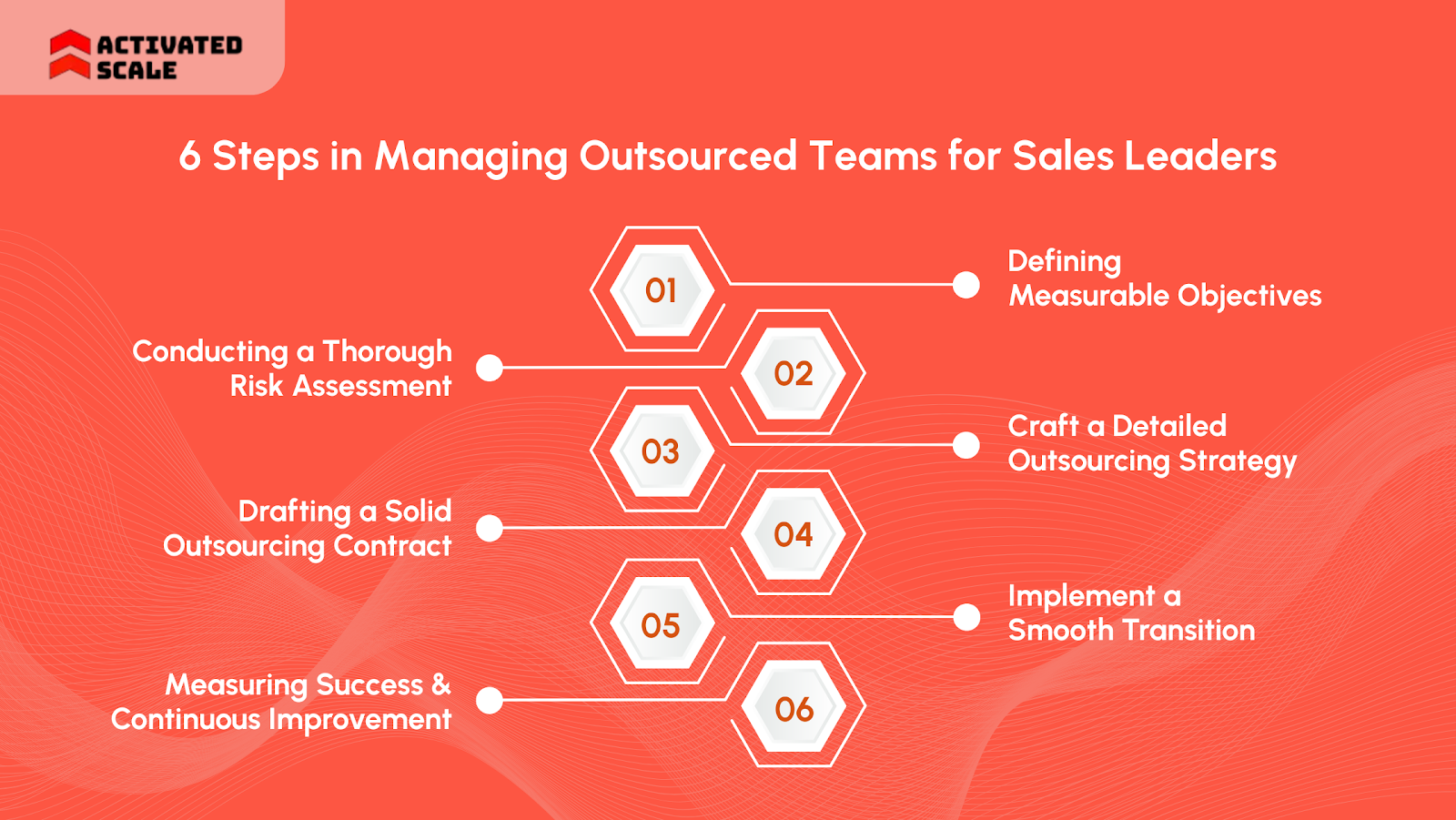
Step 1: Defining Measurable Objectives
So, what is the first step in managing outsourcing? This is often where sales leaders get stuck, as without concrete goals, it’s easy to fall short of expectations.
Start by thinking about your organization’s top priorities. If your primary goal is to reduce costs, then your outsourcing objectives should reflect cost reduction targets.
Alternatively, if scaling your operations quickly is key, focus on objectives related to improving efficiency and turnaround times.
Once you've identified your goals, it’s important to set key metrics for outsourced sales data analysis to evaluate progress.
Step 2: Conducting a Thorough Risk Assessment
Risk management is an often-overlooked but critical step in outsourcing. Outsourcing comes with risks, whether it’s loss of control, security concerns, or vendor dependency.
Without proactively addressing these risks, your business could face significant challenges down the line.
Types of Risks to Consider:
- Vendor Dependency: Relying too heavily on one vendor can be risky if the relationship goes sour or the vendor fails to deliver as expected. In fact, 70% organizations confirmed that they have poor vendor office management.
Solution: Choose a vendor based on their case studies and previous work experience with your peers.
- Loss of Control: Outsourcing often means losing control over operations, leading to potential inconsistencies or delays.
Solution: Set clear KPIs and performance metrics from the start, and hold regular reviews to ensure alignment.
- Security and Confidentiality Risks: Sharing sensitive data with external partners increases the risk of breaches.
Solution: Work with vendors that prioritize data protection and include confidentiality clauses in SLAs.
- Communication Skill Barriers: Time zone differences and language barriers can cause delays and miscommunication.
Solution: Set up clear communication schedules and use collaborative tools to stay aligned.
Step 3: Craft a Detailed Outsourcing Strategy
A strategy provides a roadmap, helping you avoid common pitfalls by aligning expectations, timelines, and desired outcomes. Your strategy should cover key areas of sales, choosing the right vendors, and budgeting considerations.
Key Components of an Outsourcing Strategy:
- Choosing Vendors/Partners: Evaluate potential partners based on their expertise, scalability, reliability, and cultural alignment with your organization.
For example, when successful founders choose Activated Scale, they manage to get 4x of their previous deal size within a few months.
- Budgeting Considerations: We also ensure the financials align with your outsourcing goals. Because we offer various fractional hiring solutions, these will help you to hire an expert without a full-time commitment.
Here are our services from which you can hire:
- Contract-to-Hire Sales Recruiting: Deploy top-tier sales talent immediately on a contract basis, with a clear pathway to a permanent offer based on measurable performance.
- Fractional Selling: Access a flexible bench of sales experts. Perfect for executing targeted projects, covering open roles, or injecting specialized skills into your sales cycle on demand.
- Fractional Sales Leadership: Book an expert sales leader to architect and oversee your revenue engine. They define your strategy, build the playbook, and equip your team for sustainable growth.
A well-crafted strategy is crucial for success. So, book a call with Activated Scale to hire reps who can provide customized support that aligns with your unique business goals.
Step 4: Drafting a Solid Outsourcing Contract
A solid, comprehensive contract is one of the most important tools to protect your interests and set clear expectations.
Contract Essentials:
- Scope of Work: Clearly define the tasks and responsibilities of both parties.
- Service Level Agreements (SLAs): Establish measurable service levels and response times for tasks.
- Exit Clauses and Transition Plans: Include provisions for ending the relationship and managing transitions if things don’t work out.
- Legal Considerations: Include confidentiality agreements and data protection clauses to safeguard your sensitive information.
It ensures that both you and your outsourcing partner are aligned on the scope of work and performance expectations.
Step 5: Implement a Smooth Transition
The transition phase is often the most difficult but critical phase in the outsourcing process. A smooth handover of responsibilities ensures that your outsourced team integrates smoothly and starts delivering results right away.
Transition Plan Components:
- Timeline for Responsibilities: Create a timeline for transferring tasks to the outsourced partner.
- Key Personnel: Identify who will manage the transition internally and externally.
- Communication Strategies: Ensure that there is constant communication between your team and the outsourcing partner to address any issues quickly.
- Technology and Process Integration: Align processes and systems between internal and outsourced teams to minimize disruptions.
71% of employees experience overwhelming feelings due to major changes. So during the transition phase, it is critical to plan properly.
Experienced reps from Activated Scale’s Fractional Sales Leadership service can guide your team through this crucial phase. They can also ensure your outsourced team starts delivering results immediately.
Step 6: Measuring Success and Continuous Improvement
Outsourcing doesn’t end once the partner is onboard and tasks are delegated. Continuous monitoring and feedback are essential to keep things on track and ensure that your objectives are met.
How to Measure Success:
- Define KPIs: Establish key performance indicators aligned with your business goals (e.g., cost savings, time savings, customer satisfaction).
- Regular Reviews: Conduct quarterly reviews with your outsourcing partner to assess progress.
- Adjust Strategies: Use data from these reviews to adjust your outsourcing strategy, whether it's fine-tuning the workflow or scaling operations.
Involve your outsourcing partner in the continuous improvement process by encouraging open communication and collaboration.
Also Read: Top Sales Outsourcing Companies in 2024
Why Managing Reps is Critical to Business Success?
Well-managed reps can deliver consistent results, improve customer relationships, and create scalability for your organization. Conversely, poorly managed outsourced teams often lead to inefficiencies and lackluster performance.
So, here's a list of advantages you can expect while outsourcing in sales:
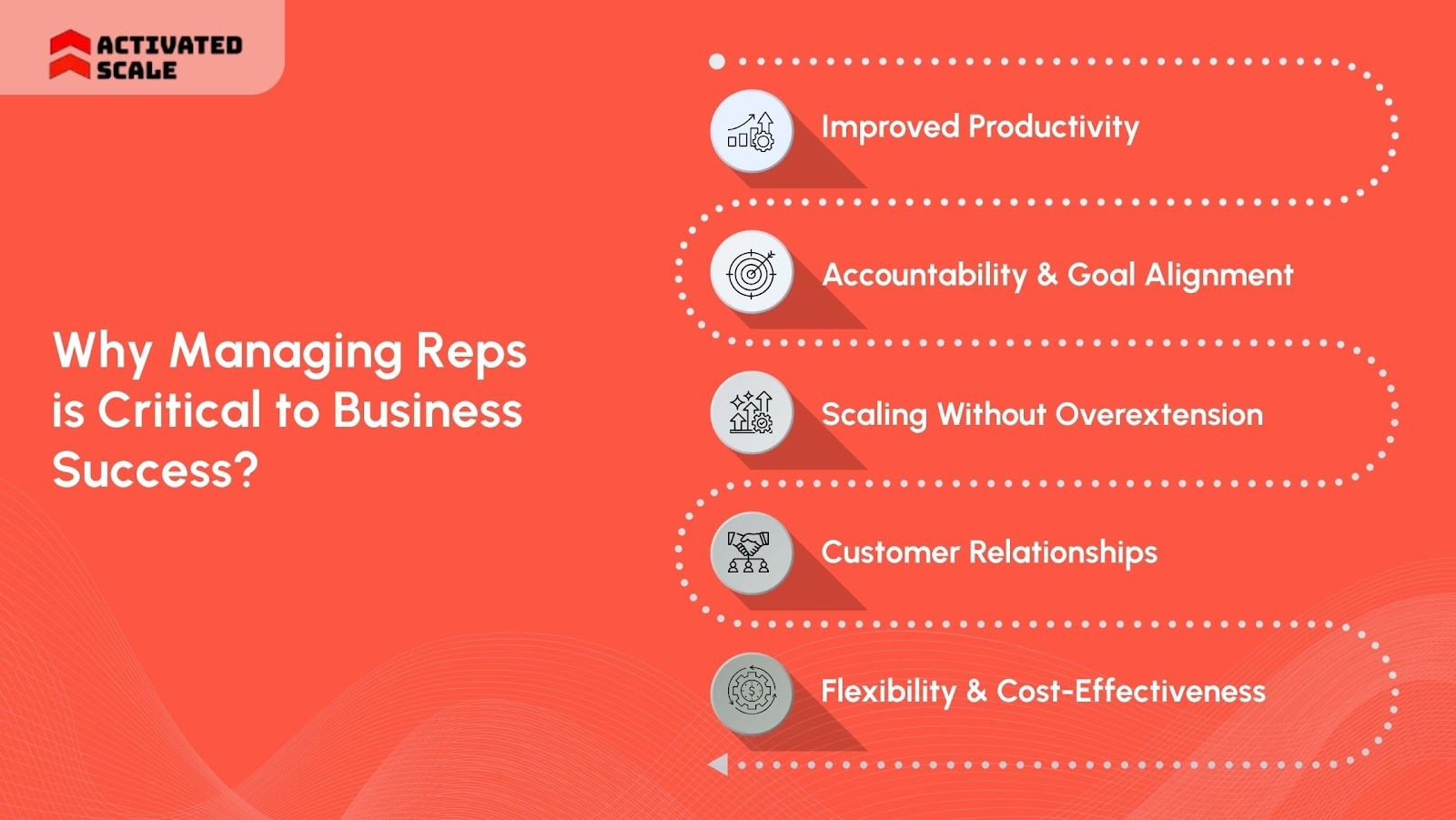
- Improved Productivity and Focus on Core Goals: Managing outsourced reps properly allows leads to higher sales conversion rates.
- Accountability and Goal Alignment: Sales reps thrive when there is a clear structure in place. This alignment makes sure your sales efforts support the larger goals of the business, improving overall efficiency.
- Scaling Without Overextension: Clear performance expectations and well-defined workflows help teams stay synchronized, ensuring smooth operations across multiple channels.
- Strengthening Customer Relationships: A well-coordinated and well-supported team ensures reps engage with customers in a meaningful way, building loyalty. These relationships become the foundation for repeat business and customer referrals.
- Flexibility and Cost-Effectiveness: Once you start managing reps well, you can fill gaps during peak seasons or specific sales campaigns. This flexibility lets you manage costs while maintaining a high level of service.
If you’re struggling with managing your sales teams, reps from the Activated Scale’s Fractional Selling service can help you get the most out of your sales reps.
Also Read: How to Implement Predictive Sales Analytics for Forecasting
Take Charge of Your Outsourcing Journey
Outsourcing doesn’t have to be overwhelming or risky. Once you understand the key steps, you can get its true potential. The success of managing an outsourced team relies on strategic planning, constant communication, and the right leadership.
If you're ready to optimize your sales operations, mitigate risks, and scale with confidence, it's time to take action. We’ll help you build a customized outsourcing strategy that aligns with your goals and ensures sustainable growth. In this way, you don't need to dwell on the question: What is the first step in managing outsourcing?
Let Activated Scale guide you through the process with expert recruiting services. Book a meeting with us today and start transforming your sales operations.
FAQs
1. How do I know if outsourcing is right for my business?
Outsourcing works best for non-core tasks that are time-consuming or require specialized skills. If these tasks are taking away from your sales team's focus on growth and revenue, outsourcing may be a smart move.
2. What should I look for when selecting an outsourcing partner?
Look for expertise in your specific industry, strong communication practices, proven reliability, and scalability. Ensure they align with your business culture and have robust security protocols.
3. How do I measure the success of my outsourced team?
Set clear KPIs from the start, such as sales conversions, lead response time, or customer satisfaction rates. Regular performance reviews will help you adjust strategies and ensure alignment with your objectives.
4. Can I outsource sales leadership?
Yes! Fractional Sales Leadership from Activated Scale allows you to access experienced sales leaders on a flexible, trial basis.
This helps you develop go-to-market strategies, optimize your sales team, and scale without the commitment of a full-time hire.
The Ultimate Guide to Hiring a Salesperson!
Get the step-by-step guide to hiring, onboarding, and ensuring success!