_edi.png)

Sales leaders face a constant challenge of motivating a team to perform at the highest level, even after multiple rejections. You need a strategic edge. Creative sales incentive ideas provide that edge. They drive specific behaviors and boost performance.
The right program can increase productivity significantly. It also improves retention across your organization. In fact, 70% of employees say rewards are a motivating factor at work.
But which types of rewards are the most beneficial for your team? This blog offers you a fresh perspective. We move beyond generic bonus plans and provide a curated list of actionable sales incentive ideas. These ideas come from proven strategies used by top sales teams.
Key Takeaways
- A well-designed sales incentive plan drives focus, with 70% of employees citing rewards as a key motivator at work.
- Cash incentives can increase performance by up to 44% when tied to clear, escalating targets.
- Profit-sharing programs deliver 18% stronger results in unionized organizations.
- 65% of gift card recipients remember exactly what they purchased, linking the positive memory back to the company that rewarded them.
- President’s Club trips remain highly valued, with 93% of top-performing companies offering incentive travel to motivate and retain key talent.
- Effective sales incentives go beyond money, incorporating personalization, fairness, and well-being to sustain long-term team motivation.
What is a Sales Incentive Plan?
A targeted sales incentive plan is a structured program for rewarding specific achievements. This tool directly guides your team’s focus and energy.
Without it, you risk effort spreading across unimportant tasks. You might miss key quarterly objectives. A well-designed plan channels activity toward your most critical business goals.
First, it motivates reps to push past their comfort zone. Second, it guides behavior toward a specific target. That target could be launching a new product.
It might be landing logos in a new vertical. Third, it aligns daily sales activities with company-wide objectives.
Every effective plan is built on four pillars. Missing one can cause the entire structure to fail.
- Clear Goals: The objective must be specific and measurable. Is it revenue, profit margin, or new customer acquisition? For pipeline building, it could be qualified demos booked. Vague goals like "sell more" do not work.
- Eligible Participants: Define who is performing what. Is this for individual Account Executives? Is it for the entire Sales Development Representative (SDR) team?
Could it be a cross-functional squad? Clear eligibility prevents confusion and builds fair competition. - Reward Structure: This is the "what" and "how." What is the reward: a cash bonus, a trip, or public recognition? How is it earned: A flat bonus for hitting the target, or a tiered commission for overachievement?
- Timeframe: Set a definitive start and end date. Is this a monthly spiff, a quarterly contest, or an annual President's Club? A clear deadline creates urgency and allows for clean measurement.
Getting these components right turns a generic bonus into a powerful business tool. Now comes the exciting part: Choosing the incentive model. The structure you pick will shape how your team collaborates, competes, and hits targets.
Also Read: The Ultimate Guide to Hiring Sales Talent: How to Find and Attract Top Performers
4 Types of Sales Incentive Plans
Picking the wrong plan type can fracture your team's culture. You might accidentally fuel cutthroat competition when you need collaboration.
Or you could stall your top performers by only rewarding the team. 60% of organizations are currently using retention bonuses to keep key employees from leaving.
In this section, you will learn which one aligns with your current sales stage and strategic goal.
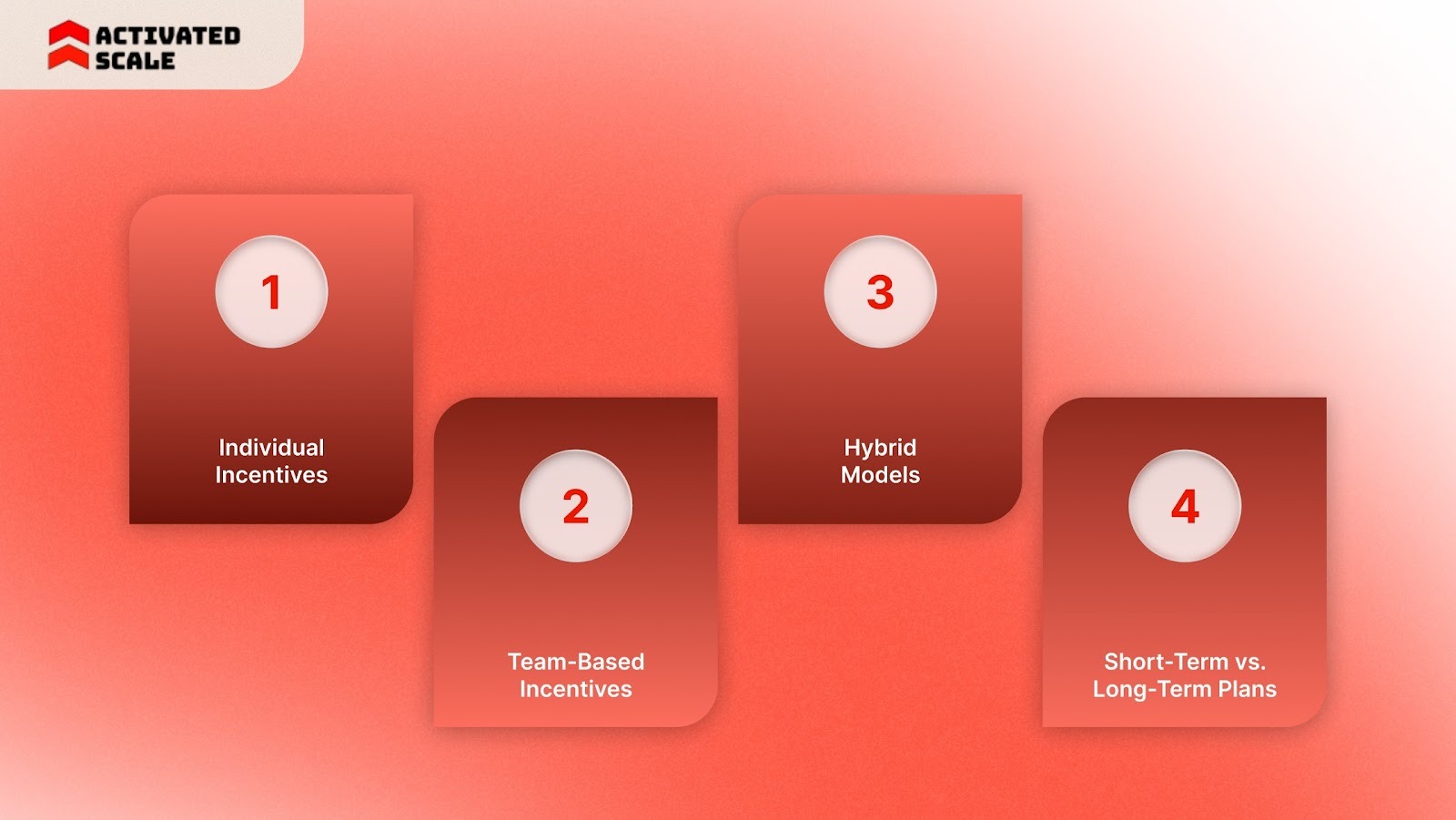
- Individual Incentives reward personal performance. They are best for motivating self-starters. They recognize and retain top talent. Use them to drive specific outcomes from single contributors. A common format is a tiered commission.
For example, pay 8% on deals up to quota. Pay 12% on all revenue beyond that. This model fuels healthy competition. - Team-Based Incentives reward group or departmental goals. They foster essential collaboration. This is critical in complex B2B sales. Use them when closing a deal requires multiple roles.
- Hybrid Models combine individual and team components. They balance personal drive with collective success. A rep might earn a base bonus for their own quota attainment. They could then earn a multiplier based on team performance.
This encourages reps to help each other. It aligns personal gain with group achievement. This model is powerful but can be complex to administer. - Short-Term vs. Long-Term Plans address different time horizons. Short-term Sales Performance Incentive Fund (SPIFFS) creates immediate energy. Run a one-week contest for the most demos booked. This can boost activity quickly.
You've chosen your plan type. Now, you need the right rewards to make it work.
Our Fractional Selling service at Activated Scale provides access to experienced sales professionals. They can help you pilot and manage effective incentive programs.
You know the structure, and you know the models. The last and most influential piece is the reward itself, because no incentive plan can succeed if it doesn’t motivate your team.
15 Creative Sales Incentive Ideas
Relying on a basic cash bonus is a common misstep; it rarely taps into what your team actually values. Here, we outline 15 well-defined sales incentive ideas, along with the logic and implementation tips for each.
Overlooking this can lead to ineffective, generic rewards that waste budget and weaken motivation. Below is a menu of proven sales incentive ideas, categorized for strategic selection.
1. Tiered Cash Bonuses
This is cash paid for hitting specific performance plateaus. For example, offer $1,000 for 100% quota attainment. Offer $2,500 for 125%. This creates clear, escalating targets.
Cash incentives can boost performance by up to 44% when tied to clear, escalating goals. It is straightforward and universally valued.
2. High-Value Gift Cards
Provide gift cards from premium retailers or a flexible platform that offers winners a choice. It feels more like a reward than a regular paycheck. It is effective for spot bonuses or smaller contest wins.
In fact, 65% of recipients remember exactly what they purchased with a gift card. Many link that positive memory back to the company that rewarded them.
3. Profit-Sharing Bonus
Calculate a bonus based on the profit margin of deals closed, not just revenue. This incentivizes reps to protect pricing and sell value.
Profit-sharing programs deliver stronger results in unionized organizations, where effectiveness rises by about 18%. It aligns individual effort directly with the company's financial health. It requires transparent tracking.
4. President's Club Trip
An all-expenses-paid trip for top performers and a guest. This is the pinnacle of sales recognition. It builds immense loyalty and a long-term goal. 93% of top-performing companies now offer incentive travel.
It is a major investment best reserved for annual, top-tier achievement.
Designing a high-impact annual incentive like a President's Club requires strategic alignment. Our vetted reps from Activated Scale's Fractional Sales Leadership service can help you plan your entire program and governance model.
5. Adventure Experience Day
Reward a winner with a curated experience. This could be a hot air balloon ride, a guided fishing trip, or a race car driving lesson. It creates a powerful, memorable reward that cash cannot replicate.
6. Major Event Tickets
Give tickets to a sold-out sports championship, concert, or theater premiere. This offers a premium, aspirational experience. It works well for motivating a senior rep who values exclusive access.
7. Public Trophy & Award
A physical trophy, plaque, or "traveling" award for the top performer of the month or quarter. This satisfies the desire for public recognition and legacy. It is a low-cost, high-impact motivator when presented in front of peers.
8. Company-Wide Feature
Profile the winner in the company newsletter, on the internal Slack channel, or on social media. Highlight their specific achievement and strategy. This provides social validation and professional visibility.
Systematic recognition is key to culture. Need help embedding these practices? Contract-to-Hire Sales Recruiting service at Activated Scale's hired reps can bring you managers who excel at building motivated teams.
9. Executive Mentorship Session
Reward a top performer with a dedicated one-on-one session with the Chief Executive Officer (CEO) or VP of Sales. This offers career advice, networking, and exclusive insight. It is highly valued by ambitious reps focused on growth. It costs little but signifies high potential.
10. Funded Conference Pass
Pay for registration, travel, and lodging for a relevant industry conference like SaaStr Annual or Dreamforce. This invests in the rep's professional development and network. It helps them bring new ideas back to the team.
11. Paid Professional Certification
Cover the cost and study materials for a certification like CSP (Certified Sales Professional). This enhances their skills and resume. It demonstrates investment in their long-term career path.
12. Leadership Training
Sponsor attendance at a specialized sales leadership course or workshop. This prepares high-performing individual contributors for future management roles. It is a strategic incentive for your potential future leaders.
13. Extra PTO Days
Grant additional paid days off, separate from standard vacation. This could be a "Friday off" bonus or a block of days. It directly combats burnout and rewards hard work with the most valuable currency: Time.
14. Home Office Stipend
Provide a budget for ergonomic chairs, standing desks, monitors, or other home office upgrades. This improves daily work life and shows investment in their productivity. It is a practical, highly-appreciated reward for remote or hybrid teams.
15. Wellness Package
Offer a subscription to a meditation app (e.g., Calm), a monthly massage credit, or a gym membership. This supports mental and physical health. It signals that you care about the rep's well-being beyond their sales output.
Implementing a balanced incentive portfolio takes focus. Free up your time by taking help from reps from Activated Scale's Fractional Selling service, who can manage specialized sales roles for you.
You now have a powerful list of incentives to use as tools. However, tools alone do not build happiness or loyalty. The application of those incentives defines your team's morale and culture.
How Do You Keep Your Sales Team Happy?
Happiness is not a bonus check. It is the outcome of feeling valued, supported, and fairly treated. Money is a baseline expectation for sales professionals.
True motivation comes from factors that money alone cannot buy. You must use your sales incentive ideas strategically to address these deeper thoughts.
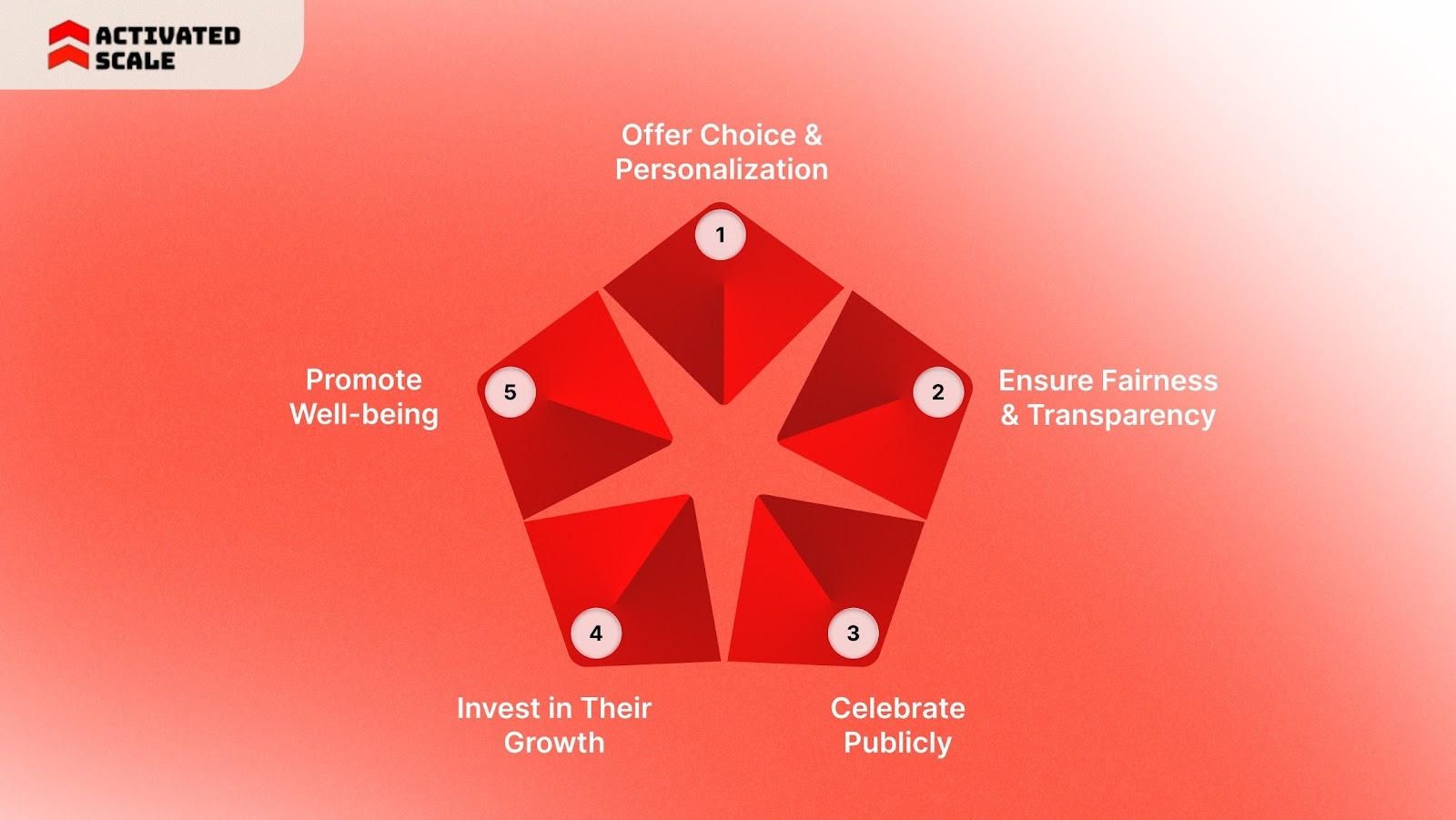
- Offer Choice & Personalization: A forced reward can be a demotivator. Not everyone wants the same thing. Your top performer may want public acclaim.
A new parent might value extra time off over cash, gifts, or experiences. This simple act shows you see them as individuals. - Ensure Fairness & Transparency: Nothing kills morale faster than a perception of unfairness. Your incentive rules must be crystal clear from day one.
Most importantly, you must level the playing field. Consider territory differences, account maturity, and product segments. - Celebrate Publicly: Recognition is a powerful currency. Celebrate wins loudly and regularly. This applies to big quarterly closures and small activity milestones.
- Invest in Their Growth: Show you care about their future, not just their current quota. Use incentives to fund professional development. Reward top performers with paid industry conference passes or executive mentorship sessions.
- Promote Well-being: Burnout is a silent killer of sales performance and happiness. Directly combat it with incentives that promote rest and health. Extra PTO days, wellness stipends, or mandatory "recharge" days after big wins show you care about the whole person.
Happiness stems from a supportive culture. That culture is shaped by your daily leadership decisions. You need to select the right incentive plan, as a mismatched plan can undermine the very culture you are trying to build.
Read Also: Steps to Build and Train a Successful SDR Team
How to Choose the Right Plan for Your Team?
You might choose a complex tiered commission when your team needs simple, clear spiffs. It will help you match the plan to your precise business objective and team structure.
Ignore these steps, and you risk launching a program that nobody understands or cares about.
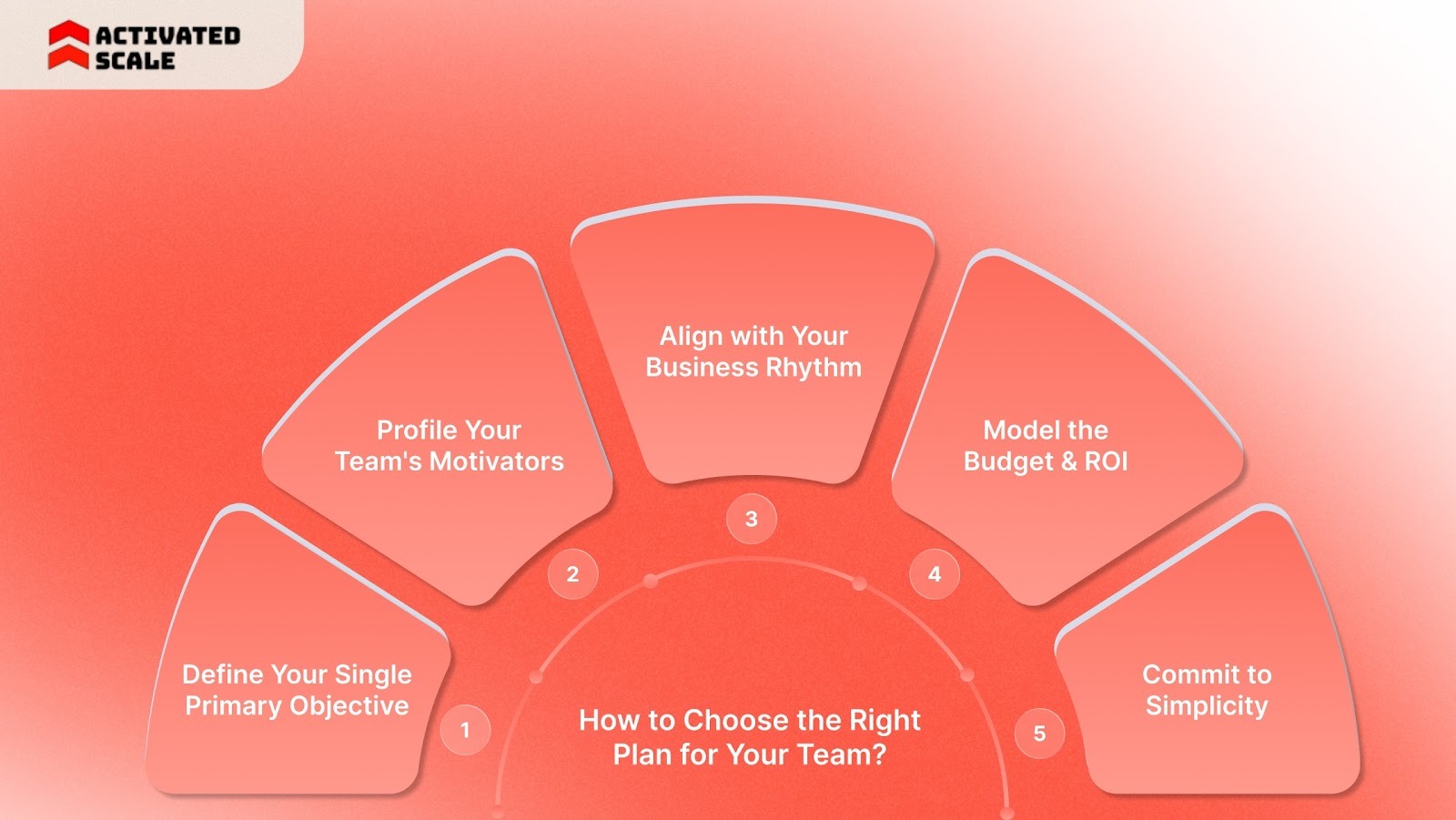
Step 1: Define Your Single Primary Objective
Be brutally specific. Is this to accelerate a new product launch? Is it to improve deal margins by 15%?
Or is it to increase qualified demos by the SDR team? A plan with multiple, competing goals dilutes focus. Write down the one key result you need.
Step 2: Profile Your Team's Motivators
A plan for tenured AEs differs from a plan for new SDRs. Consider tenure, career stage, and personal drivers. Survey your team. Ask what rewards they value most.
A younger team might rally around an experiential trip. Senior reps may value extra PTO or stock options. Your choice of reward must resonate with the participants.
Step 3: Align with Your Business Rhythm
Match the plan's timeframe to your operational cycles. Use a short-term spiff (1-4 weeks) for a quarterly push or to clear inventory.
Use a long-term plan (quarterly or annual) for strategic goals like market penetration or Annual Recurring Revenue (ARR).
Step 4: Model the Budget and ROI
Incentives are an investment. Calculate the maximum total cost. Weigh it against the expected revenue lift or other target metric.
Ensure the return justifies the spend. A simple rule: The potential reward should feel significant to the rep but remain a smart financial decision for the company.
Step 5: Commit to Simplicity
If a rep cannot calculate their potential earnings on a napkin, the plan is too complex. Avoid over-engineering with too many tiers, clauses, or conditions. Complexity breeds confusion.
If you want to ensure your strategy drives the right results without distracting from core sales leadership, Activated Scale's Fractional Sales Leadership service can help. Our vetted reps from this service can help you achieve your target.
Conclusion
Effective sales incentives are a blend of strategy and psychology. They are fueled by creative, personalized rewards that go beyond cash.
Remember, the ultimate aim is to build a motivated, high-performing team aligned with your company's vision. This requires continuous attention and refinement. Start by applying one idea from this guide to your next quarterly planning session.
Our vetted reps at Activated Scale can help you build custom incentive frameworks, choose the right tools, and implement programs that motivate and retain top talent. Talk to us about building your program.
FAQs
1. What's the difference between a sales commission and a sales incentive?
Commission is standard, expected pay for closed deals (base compensation). An incentive is an extra reward for achieving specific, often exceptional, goals beyond baseline expectations.
2. How much should we budget for sales incentives?
There's no universal percentage. Budget based on the value of the goal. The reward must be meaningful enough to drive extra effort while providing a clear return on investment (ROI) for the company. Always model the cost against expected revenue lift.
3. How do we prevent incentives from creating unhealthy competition?
Use a mix of individual and team-based goals. Publicly celebrate collaborative wins and knowledge sharing. Design plans where helping others does not penalize a rep's own earnings. Culture dictates how competition is perceived.
4. What if an incentive plan isn't working?
Be prepared to adapt. If metrics show no engagement or impact, communicate with the team. Gather feedback. It is better to adjust a plan mid-cycle with transparency than to run a failing program to its end.
The Ultimate Guide to Hiring a Salesperson!
Get the step-by-step guide to hiring, onboarding, and ensuring success!