_edi.png)
Your sales team is crushing its targets, and the pipeline is overflowing. Yet, you keep hitting the same invisible wall. You can't price that transformative, enterprise deal correctly.
The board questions your cash runway every quarter. If you're facing this, you most likely have a financial leadership gap. The truth is, top-line revenue can mask critical vulnerabilities in your business model, and a strategic Chief Financial Officer (CFO) fixes this.
Suppose your CFOs can justify how much to spend on which section of the business. 66% of CFOs said they plan to allocate more funds to marketing to expand brand reach and better engage customers.
However, hiring a CFO is not easy. Most importantly, in a crowd of experts on every other hiring platform, it may cloud your decision. In this guide, we provide a sales leader's playbook to find a CFO who fuels your go-to-market engine.
At a Glance
- Nearly 66% of CFOs plan to allocate more funds to marketing, proving finance leaders now directly influence revenue outcomes.
- Fractional CFOs usually work on monthly retainers or hourly rates, often stacking to well over $500,000 per year, depending on workload and complexity.
- A full-time CFO is the costliest model, with average salaries around $350,000 annually, plus 50%–59% in bonuses and benefits, making it a long-term financial commitment.
- These costs reflect the strategic weight CFOs carry, pricing decisions, investor confidence, and long-term financial models that shape your entire go-to-market motion.
- The platform you choose decides the quality of CFO talent you attract, and picking the wrong one can delay your search by months.
Who is a CFO?
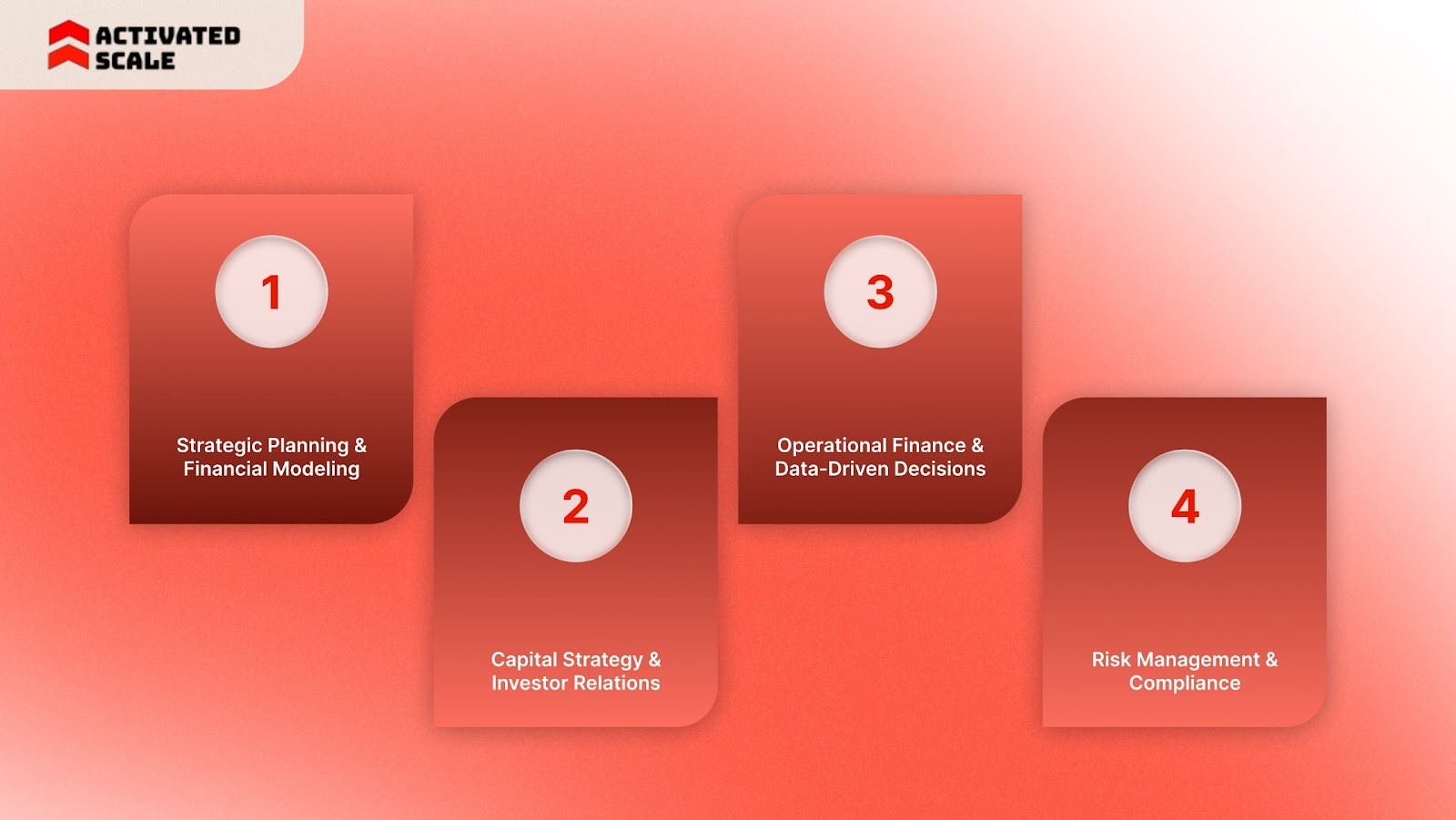
A Chief Financial Officer (CFO) fills this void, ensuring company growth is strategic, sustainable, and scalable. Their work directly impacts your ability to win deals and scale. They are not a senior accountant, but are a core executive.
A CFO moves the company from reactive to proactive. For a sales leader, they are the ultimate partner. Core responsibilities of a modern CFO:
1. Strategic Planning & Financial Modeling
A CFO creates the models that answer critical questions. These models guide your sales strategy and company investments.
- Sales Impact: They model different pricing strategies. They show how a shift to usage-based pricing affects revenue and cash flow. They determine the true cost and payoff of expanding your sales team.
- Key Output: This tool predicts cash needs. It shows how hitting sales targets impacts the bottom line. It provides the data to secure funding for growth.
2. Fundraising, Capital Strategy & Investor Relations
A CFO owns the company's relationship with capital. They secure the funds needed to execute the sales and product roadmap.
- Sales Impact: They ensure you have the cash to invest in the tools and headcount your team needs. They build the narrative that makes investors confident in funding your growth.
- Key Output: A compelling investor deck and financial package. They manage the entire fundraising process.
3. Operational Finance & Data-Driven Decision Making
This is about building a high-functioning engine. A CFO implements the systems and metrics that run the business.
- Sales Impact: They define and track the metrics that matter for sales efficiency. This includes Customer Acquisition Cost (CAC), CAC Payback Period, and Customer Lifetime Value (LTV). They ensure your Customer Relationship Management (CRM) and financial systems connect.
- Key Output: Clear dashboards with actionable Key Performance Indicators (KPIs). They provide a real-time view of sales performance and business health.
4. Risk Management & Compliance
A CFO protects the company. They safeguard the value your sales team creates.
- Sales Impact: They structure complex deals to minimize financial and legal risk. They ensure revenue is recognized correctly. This prevents nasty surprises during an audit or due diligence.
- Key Output: A controlled, secure financial environment. This builds trust with customers, partners, and investors. It protects the company's reputation and valuation.
A CFO integrates these responsibilities. They connect the work of your sales team to the company's overall financial health. This creates a foundation for disciplined, confident scaling.
We have shown you why a CFO is essential and what they do. This reveals the real challenge. Hiring the wrong type is expensive. It can slow you down at the moment you need speed most.
Also Read: What is Lead Generation: Sales or Marketing?
Differentiating Between CFO Engagement Models
You need to find a CFO model that fits your current reality, not an aspirational future. Should you hire a full-time executive? Is a part-time expert smarter?
The answer depends entirely on your specific phase, pain points, and budget. The following breakdown will help you match your most urgent needs with the right solution:
At Activated Scale, we specialize in building your sales leadership, the engine that your CFO will fuel. While we don't place CFOs, our Fractional Sales Leadership service is the perfect complement. Reps from our service help you design the build playbooks, and create the revenue machine that a strategic CFO will scale and fund.
The platform you choose signals the caliber of professional you seek. Using the wrong source can waste months. This section reveals the proven channels to find a CFO who can handle your specific challenges.
Top 5 Platforms to Hire a CFO in 2026
Using a generic job board for a C-suite search often leads to wasted time and mediocre results. So, where should you go to find a top-tier CFO? The answer depends heavily on whether you are looking for a full-time executive or a fractional/interim leader.
Based on comprehensive reviews for 2025, here are the top five platforms and firms to use, categorized by the type of search you need:
Before you engage a firm, you must have absolute clarity on three things: Your company’s specific financial pain points, the exact outcomes you expect, and your budget for the search.
Also Read: 5 Mistakes You Are Making When Hiring a Salesperson For Your Startup
You now know where to look. The next step is learning how to find a CFO using a process that guarantees results. Having a list of top firms is only the beginning. A poor hiring process can derail everything.
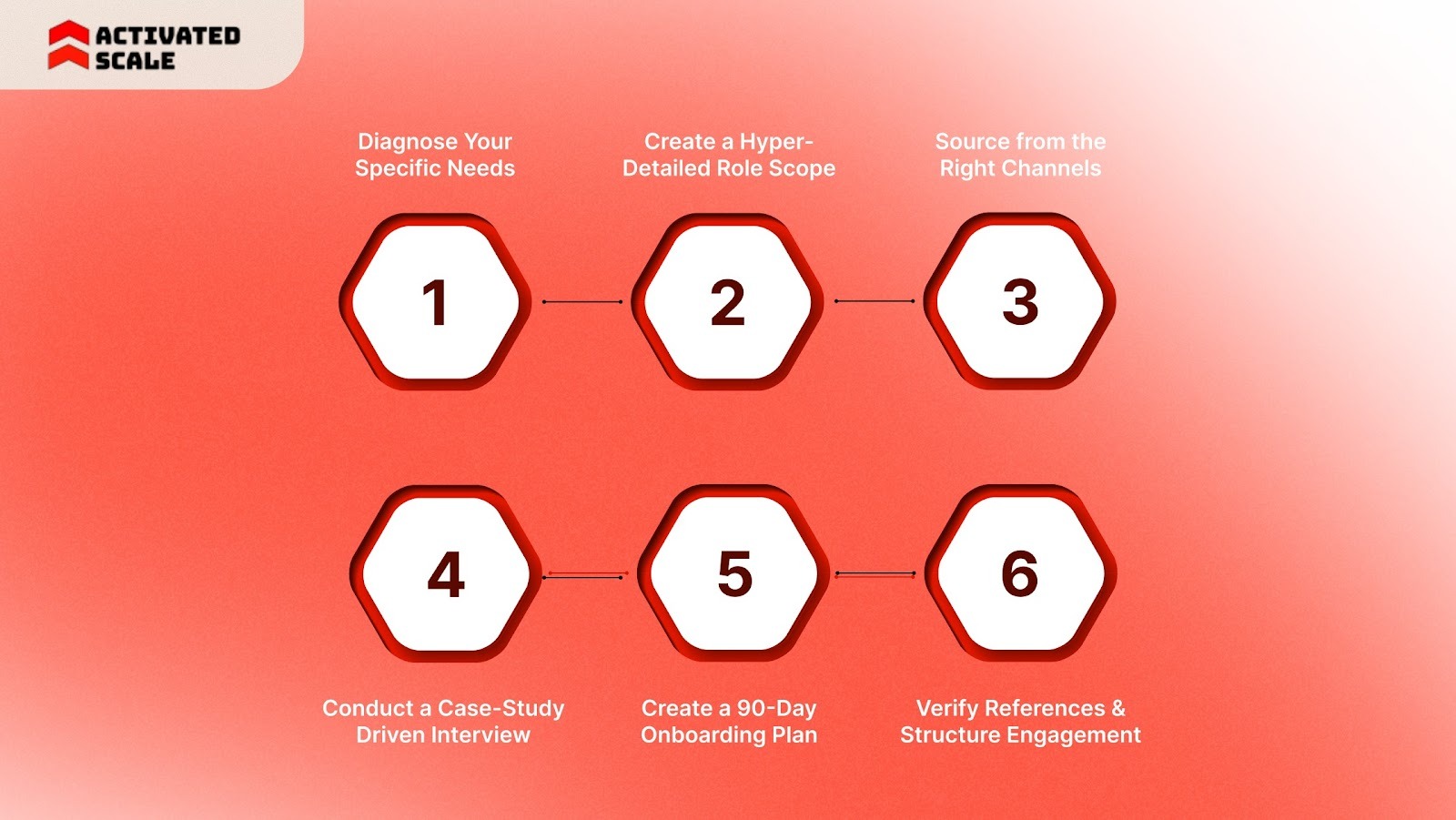
The 6-Step Hiring Process for a Fractional CFO
A rigorous, step-by-step method separates a great hire from a costly misstep. You need a framework designed specifically for today's flexible, strategic finance leaders. This section provides that exact strategy.
Step 1: Diagnose Your Specific Needs
Start with brutal honesty. Why do you need a CFO right now? Go beyond "we need better finances." Define the exact pain.
- Is cash flow too tight to approve new sales hires?
- Are you losing deals because you can't structure complex pricing?
- Is the board questioning your forecasts before a fundraise?
Document these specific challenges. They become your hiring mission statement. This clarity attracts candidates who solve real problems.
Step 2: Create a Hyper-Detailed Role Scope
Translate your "why" into a precise "what." Write a scope of work, not a job description.
- Responsibility: "Build a 13-week rolling cash flow model integrated with our sales pipeline."
- Success Metric (KPI): "Achieve 95% forecast accuracy and extend runway by 90 days."
- Responsibility: "Lead the financial due diligence for our Series B round."
- Success Metric (KPI): "Deliver an investor data room that closes the round within 60 days."
This specificity sets expectations. It creates a clear scorecard for performance from day one.
Step 3: Source from the Right Channels
Use channels that match your chosen engagement model. Generic job boards fail for this talent. Engage specialized executive search firms. Their networks reach passive, top-tier candidates you cannot find on your own.
Step 4: Conduct a Case-Study Driven Interview
Move past resume reviews and theoretical questions. Test strategic thinking with real scenarios.
- Screening Call (30 mins): Confirm basic fit and experience. Ask, "Walk me through a time you helped a company improve gross margin. What was your specific analysis and recommendation?"
- Interview (60 mins): Present a mini case study. Use anonymized data from your own business. Ask, "Here's our last three months of P&L and sales pipeline.
What two opportunities and one major risk do you see? How would you advise the sales leader?" - Culture & Collaboration Check (45 mins): Involve your key stakeholders. Have the candidate explain a complex financial concept to your head of sales. Assess how they communicate and collaborate.
Step 5: Design a Structured 90-Day Onboarding Plan
A part-time executive must deliver value fast. A formal plan is non-negotiable.
- Weeks 1-2: Foundation. Grant full system access. Map all key stakeholders. Conduct a full financial process audit.
- Weeks 3-4: KPI & Dashboard Alignment. Co-define the 5 most critical metrics for your business. Implement a real-time executive dashboard.
- Weeks 5-12: Process Integration. Establish a tight monthly close cadence. Implement the 13-week cash flow forecast. Prepare for the next board meeting together.
Step 6: Check References & Structure the Engagement
The final step seals the deal. Do not skip reference checks. Speak directly to 2-3 former CEO clients.
- Ask: "What was the single biggest impact they had on your strategy?" and "How did they handle a disagreement with the sales team?"
- Structure the Offer: Clearly define the scope, monthly hours, communication protocol (e.g., weekly 1:1), and a 90-day performance review. Get this in a written service agreement.
This process is disciplined. It treats the hire like the critical business decision it is. It moves you from a vague need to a high-impact partnership in a matter of weeks.
Activated Scale specializes in building elite sales teams. If your next step is strengthening your sales foundation, our Fractional Selling service can help. Let's talk to our expert team to hire the sales rep who can assist a CFO properly.
Why do smart hires go wrong? The pitfalls are predictable. They often come from unclear goals, rushed processes, or misplaced priorities.
4 Key Mistakes to Avoid When Hiring a CFO

You have the plan. You know the steps. But a plan only works if you avoid the hidden traps. Many companies find a CFO, only to discover a costly mismatch months later.
The real cost is not just the fee or salary. It is lost time, stalled strategy, and missed opportunities.
1.Hiring a Full-Time CFO Too Early
This is the most expensive misstep. A full-time CFO commands a high salary, significant equity, and benefits.
For a startup or Small-to-Medium Business (SMB), this fixed cost can strain cash runway. The candidate may also lack enough strategic work, leading to frustration.
The Fix: Start with a fractional or interim model. It provides top-tier expertise for specific projects like fundraising or system building. You can scale into a full-time role as complexity grows.
2. Vague Objectives and Success Metrics
Defining the role as "managing our finances" guarantees failure. Without clear outcomes, you cannot measure success or hold anyone accountable.
The Fix: Use Steps 1 and 2 from the hiring process. Define the "why" with specific pain points. Create a scope with measurable KPIs like "improve gross margin by 5 points" or "lead the Series A close by Q4."
3. Over-Indexing on Big-Company Pedigree
A candidate from a Fortune 500 finance department may seem impressive. However, they might be used to large support teams and established processes.
They may struggle in a resource-constrained environment where they must build systems from scratch.
The Fix: Prioritize candidates with proven experience at your company's stage. Ask for specific examples of how they built processes, managed limited resources, and operated with ambiguity.
4. Skipping Rigorous Reference Checks
References are your final and most critical due diligence. Speaking only to provided contacts offers a limited view.
The Fix: Conduct thorough reference checks (Step 6). Ask former CEOs and colleagues not just if they were good, but how they were good.
Ask: "What was their single biggest strategic contribution?" and "How did they handle a crisis or a disagreement with another department?"
Are you currently facing any of these potential pitfalls in your search? Identifying them early is the key to a successful outcome.
Read Also: Elevate Sales Team Performance with Strategic One-on-Ones
The Bottom Line
You now have a complete guide. You have a list of top platforms and a rigorous 6-step hiring process to find a CFO. Most importantly, you know the common mistakes that could undermine your search.
The decision to hire a CFO is a signal. It signals that you are moving from opportunistic growth to disciplined execution. It shows your team, your board, and your market that you are building a company meant to last.
At Activated Scale, we partner with companies to build that foundation. We specialize in building the elite sales team that a great CFO needs to succeed. Our Fractional service is designed for this exact purpose.
Ready to strengthen your sales leadership first? Talk to our team at Activated Scale about our services.
Frequently Asked Questions (FAQs)
1. What's the real difference between a Fractional CFO and a bookkeeper or controller?
A bookkeeper records transactions. A controller manages accounting and compliance. A Fractional CFO provides a forward-looking strategy.
They use financial data to guide fundraising, pricing, cash flow management, and high-level business decisions. They are a strategic executive, not an accounting manager.
2. When is the right time for a startup to hire its first CFO?
The trigger is rarely a revenue number. It's about strategic complexity. Key signs include: Preparing for a major fundraise (Series A/B), needing to price complex enterprise deals, or when the founder spends over 20% of their time on financial issues instead of strategy.
3. How long does a typical Fractional CFO engagement last?
Engagements are flexible. Many start with a 6-month minimum for a specific project, like leading a fundraiser or fixing cash flow.
The engagement often extends as the company grows, scaling up or down in hours as strategic needs grow.
4. What's the single most important question to ask when interviewing a CFO candidate?
Present a real, anonymized business challenge you face. Ask, "Walk me through how you would analyze this situation and what your first two recommendations would be."
This tests their strategic thinking, problem-solving approach, and ability to communicate complex ideas, all in one answer.
The Ultimate Guide to Hiring a Salesperson!
Get the step-by-step guide to hiring, onboarding, and ensuring success!