_edi.png)
Contracts tend to feel simple until something breaks. A sales engagement ends early. Deliverables stop midway. Payment timelines stretch without explanation. When an independent contractor breaches a contract, founders and contractors are left balancing legal rights with business pressures, closing deals, meeting targets, or protecting cash flow.
These situations are common in U.S. startups that rely on flexible talent, yet few know what actually holds up in a dispute. This article breaks down how contract breaches work, what legal remedies exist, and how to respond without letting the issue drain time, money, or momentum.
Key Takeaways
- Contract enforcement depends on clear independent contractor agreements, including payment terms, scope, IP ownership, and termination clauses.
- Common breaches include non-payment, early termination, scope changes, IP misuse, and exclusivity violations, which can disrupt business and revenue.
- Independent contractors’ legal rights are largely contract-based, with limited protections compared to employees, and vary slightly by state.
- Dispute resolution ranges from direct negotiation and mediation to arbitration or litigation, with each option having different costs, timelines, and enforceability.
- Preventive measures such as clear scopes, milestone payments, exit clauses, and IP protections reduce risk, while timely documentation and professional guidance strengthen claims.
How Independent Contractor Status Affects Contract Disputes
Independent contractor status shapes how a breach is handled. Courts rely on the contract itself, not informal work arrangements. Payment terms, scope, and termination clauses define what can be enforced, since contractors don’t have the same legal protections as employees.
Issues arise when the working relationship starts to look like employment. This can weaken a breach claim and shift attention toward worker classification.
Common misclassification warning signs
- Fixed hours or required availability
- Close control over how work is done
- Long-term or exclusive arrangements
- Responsibilities similar to a full-time role
Contractor disputes focus on contract terms and damages. Employment disputes follow labor laws and often take longer to resolve. Clear status keeps enforcement simple.
Recommended: 7 Essential Steps for Successful Outsourcing Strategies.
Common Independent Contractor Breach Scenarios
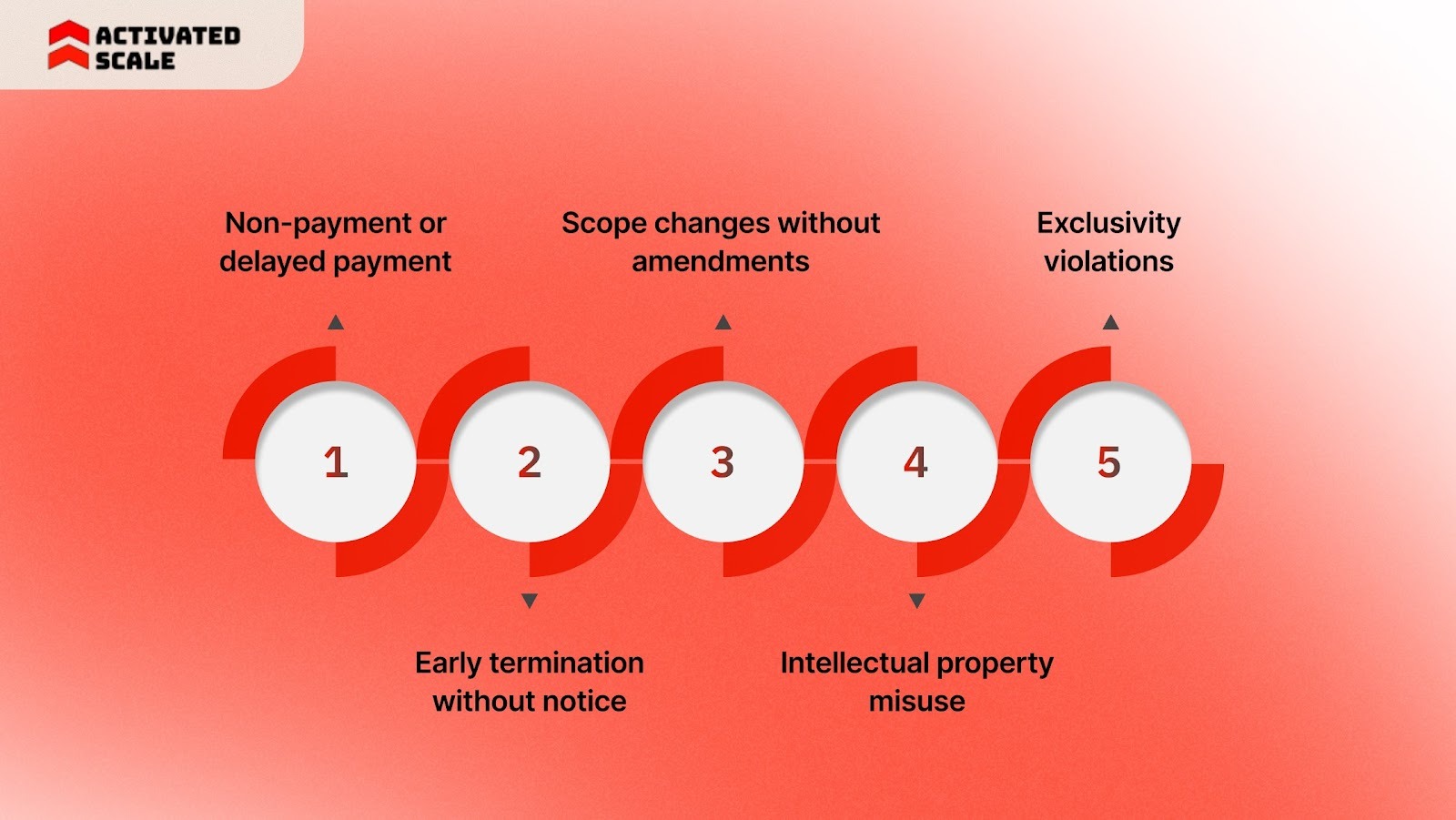
Most disputes begin with missed obligations that go unaddressed. Identifying a breach early helps limit revenue loss, delays, and ownership risks.
- Non-payment or delayed payment: Invoices go unpaid, or milestones are ignored, often due to cash-flow issues or unclear terms.
- Early termination without notice: Contracts end abruptly, skipping agreed notice or completion terms, creating potential claims for damages.
- Scope changes without amendments: Work expands beyond the original agreement, leading to unpaid labor and missed deadlines.
- Intellectual property misuse: Deliverables are reused or shared outside agreed terms, triggering ownership disputes.
- Exclusivity violations: Contractors or clients act outside agreed restrictions, straining business relationships.
The next step is to understand what legal rights the contract actually confers.
Also Read: How to Outsource Marketing Services for Business Growth.
Legal Rights of Independent Contractors
Independent contractors enforce their rights through the contract, not employment laws. Payment terms, scope definitions, termination clauses, and IP ownership determine what courts can uphold in a dispute.
Key contract-based rights include
- Timely payment as defined in the agreement
- Enforcement of agreed scope and deliverables
- Protection of ownership or usage rights for work produced
- Termination rights and notice requirements
State laws influence how contracts are enforced, but they don’t replace the contract itself.
What varies by state
- Rules on notice and cure periods
- Limits on recoverable damages
- Venue and filing requirements
Those rights matter only when a violation meets the legal standard of a breach, which depends on how the contract defines obligations and consequences.
Also Check: What is Payroll Outsourcing and How It Works.
What Legally Counts as a Breach of Contract
A breach happens when one party fails to meet obligations clearly stated in the contract. However, the impact of that failure matters just as much as the failure itself. Courts look at severity, intent, and how the issue affects the overall agreement.
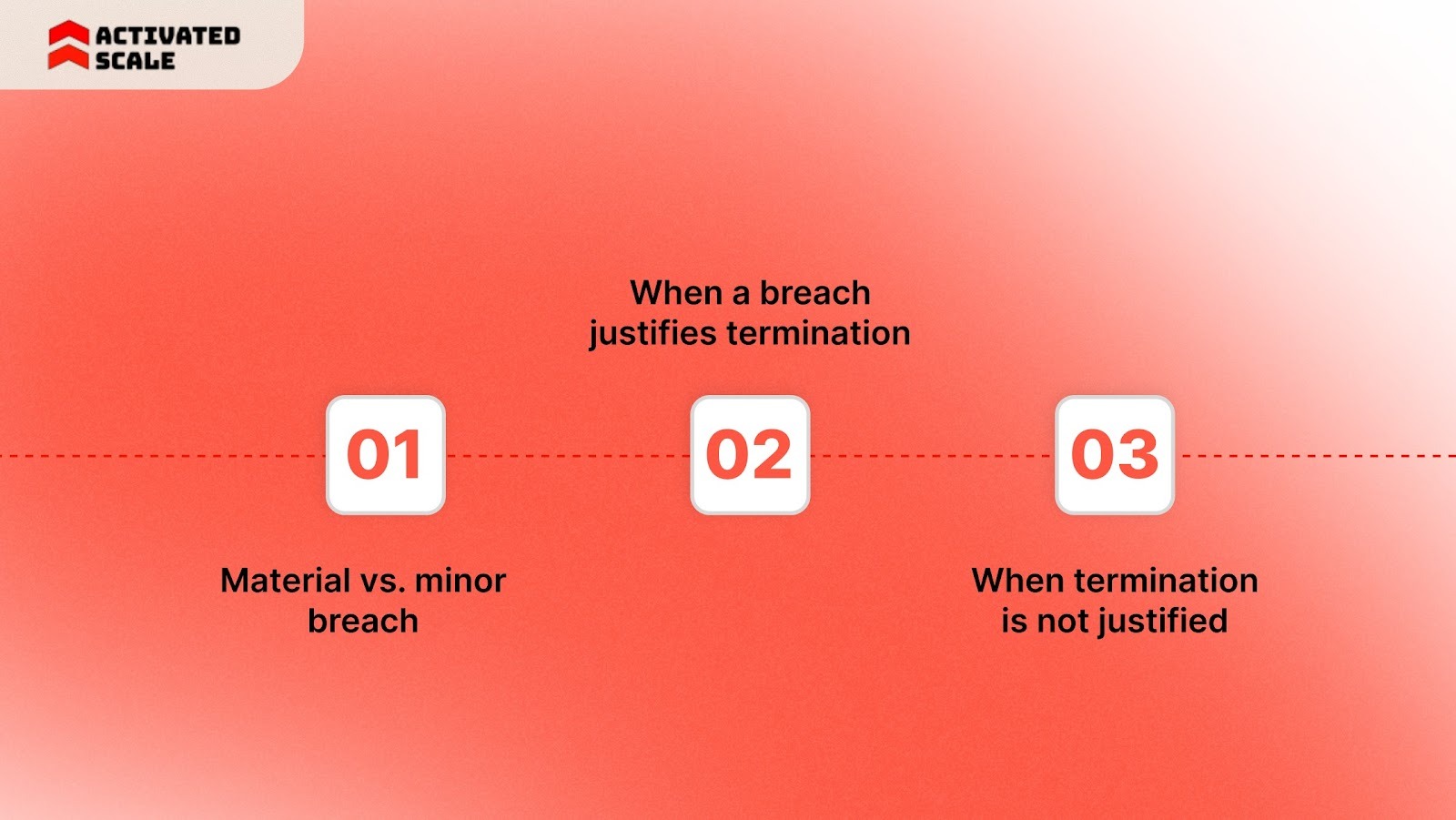
1.Material vs. minor breach
Not all breaches justify the same response. The difference lies in whether the issue undermines the contract’s main purpose.
- A material breach affects core obligations, such as non-payment or failure to deliver key work, and often supports termination and damages.
- A minor breach involves limited or temporary issues, like small delays or partial performance, and usually requires correction rather than termination.
2.When a breach justifies termination
Termination is appropriate when the breach makes the contract impossible or unreasonable to continue.
- Repeated or unresolved non-payment
- Failure to perform essential duties
- Violations of agreed notice or termination terms
3.When termination is not justified
Some breaches require resolution, not escalation.
- Issues covered by a cure period
- Minor delays without financial or business impact
Once a breach is clear, the next step is deciding how to respond and what remedies the contract actually allows.
Recommended Read: Complete Guide to Outsourced Sales Leadership For Startups.
Legal Remedies for Breach of Contract
Legal remedies aim to restore what was lost or limit further damage. The right option depends on the contract terms, the severity of the breach, and the cost of enforcement.
- Monetary damages: The most common remedy; covers direct losses like unpaid invoices, missed milestones, or completed work, not projected revenue.
- Specific performance: Ordered when money can’t fix the harm, such as unfinished work that can’t be replaced; courts apply this sparingly and only with clear contract terms.
- Termination rights: Contracts may permit termination upon material breach or after a cure period; following the agreed process is essential to avoid liability.
- Recovery of legal fees: Only possible if the contract includes a fee-shifting clause; otherwise, each party typically pays their own legal costs.
Knowing the available remedies helps, but timing and order matter just as much. The first steps you take can shape how the dispute plays out.
First Steps to Take After a Contract Breach
The first response often determines how quickly a dispute is resolved—and how much leverage you retain. Acting in the right order helps protect rights without escalating the situation too early.
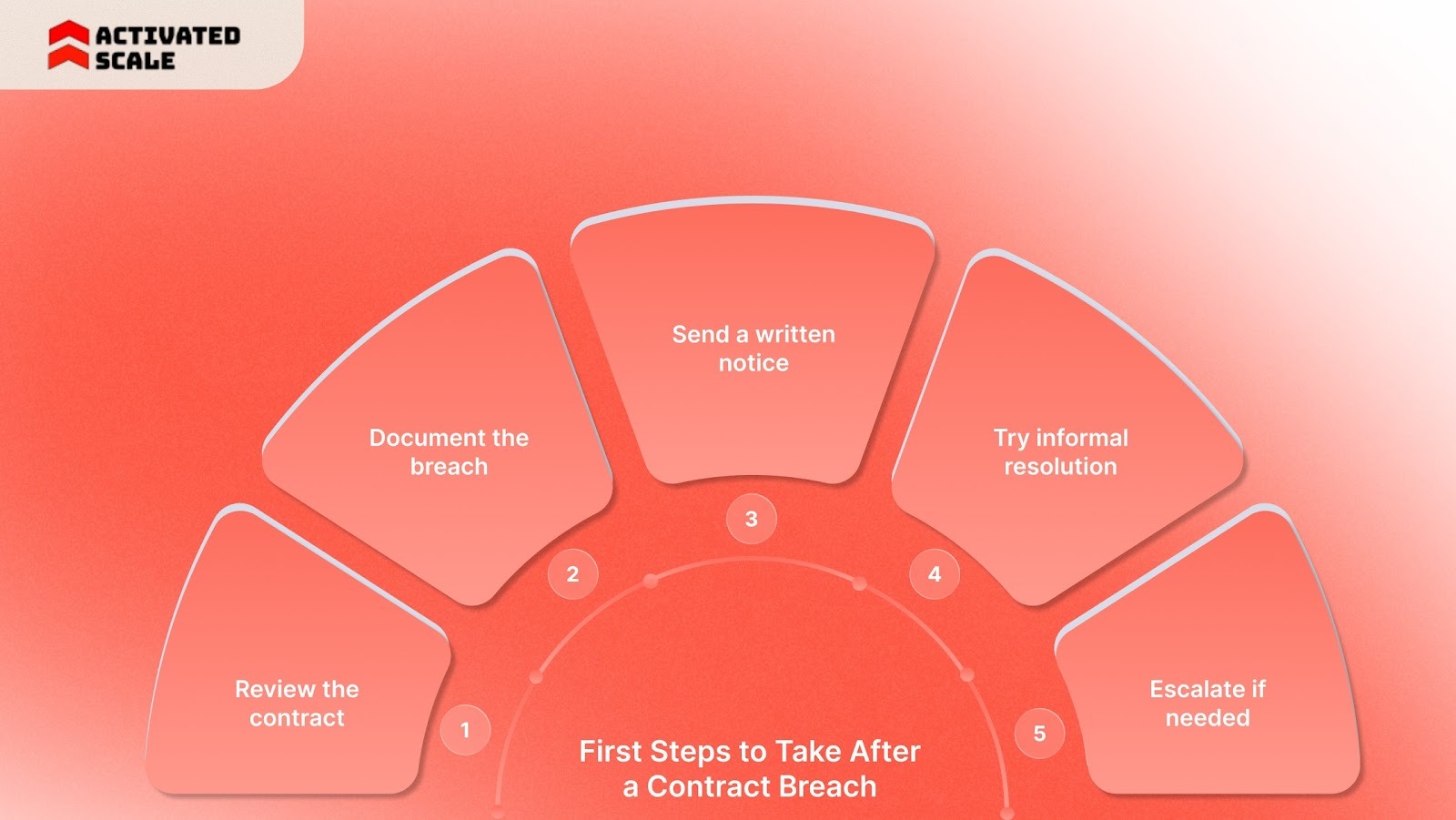
- Review the contract: Start with payment terms, scope, notice requirements, and cure periods. These clauses define what actions are allowed and when.
- Document the breach: Collect invoices, emails, messages, and work records that show what was agreed and what failed to happen.
- Send a written notice: Flag the issue in writing and reference the relevant contract terms. This creates a record and often triggers cure periods.
- Try informal resolution: Many breaches are resolved through direct discussion once terms are clearly restated.
- Escalate if needed: If the breach continues, move to mediation, arbitration, or legal counsel based on the contract’s dispute clause.
Each step becomes far easier when the right records are in place, which is why documentation plays such a central role in contract disputes.
Read: How to Hire and Manage Remote Employees Successfully.
Documentation and Evidence Gathering
When a contract is breached, having the right records can make enforcement much simpler.
What documents actually matter
These records provide clear proof of the agreement and its execution.
- Signed contracts and amendments
- Invoices, receipts, and payment records
- Emails, messages, or notes confirming scope, deadlines, or approvals
- Deliverables or work products tied to the agreement
What doesn’t help legally
Some records may feel important but hold little weight in court.
- Verbal promises not backed by written confirmation
- Personal opinions or hearsay about intentions
- Informal notes or casual messages unrelated to contractual obligations
Mistakes that weaken claims
Even strong documents can lose value if handled incorrectly.
- Waiting too long to record breaches or gather evidence
- Mixing personal disputes with contractual facts
- Overstating losses or including unverified claims
With the right records ready, the next step is deciding how to resolve the dispute.
Dispute Resolution Options
When a contract breach can’t be resolved internally, the way you pursue resolution matters. Different options come with varying costs, timelines, and levels of enforceability, making the choice just as important as the claim itself.
Even with the right dispute resolution approach, the best way to avoid costly breaches is to start with reliable, experienced contractors. Platforms like Activated Scale connect startups with pre-vetted, U.S.-based sales professionals, helping ensure clear agreements, smooth execution, and fewer disputes before they arise.
When to Consult a Lawyer
Not every breach requires a lawyer, but certain situations signal that professional guidance is essential.
Red flags that require legal counsel
These signs indicate the breach may have serious financial or legal consequences:
- Large unpaid invoices or repeated payment failures
- Breach affecting intellectual property or proprietary work
- Disputes over termination clauses or contract interpretation
Situations where DIY resolution is risky
Trying to handle a dispute alone can backfire when:
- The other party refuses to cooperate or negotiate
- There is a threat of litigation or arbitration
- The breach involves complex or multi-state legal issues
After resolving the dispute, the next step is to reduce the chances of facing the same situation again.
Also Check: Outsource Inside Sales: Comparison, Pros, and Selection Guide.
Preventive Measures to Avoid Contract Breaches
Preventing disputes is easier than resolving them. Clear contracts, structured payments, and defined responsibilities reduce risk and protect both parties.
Key best practices
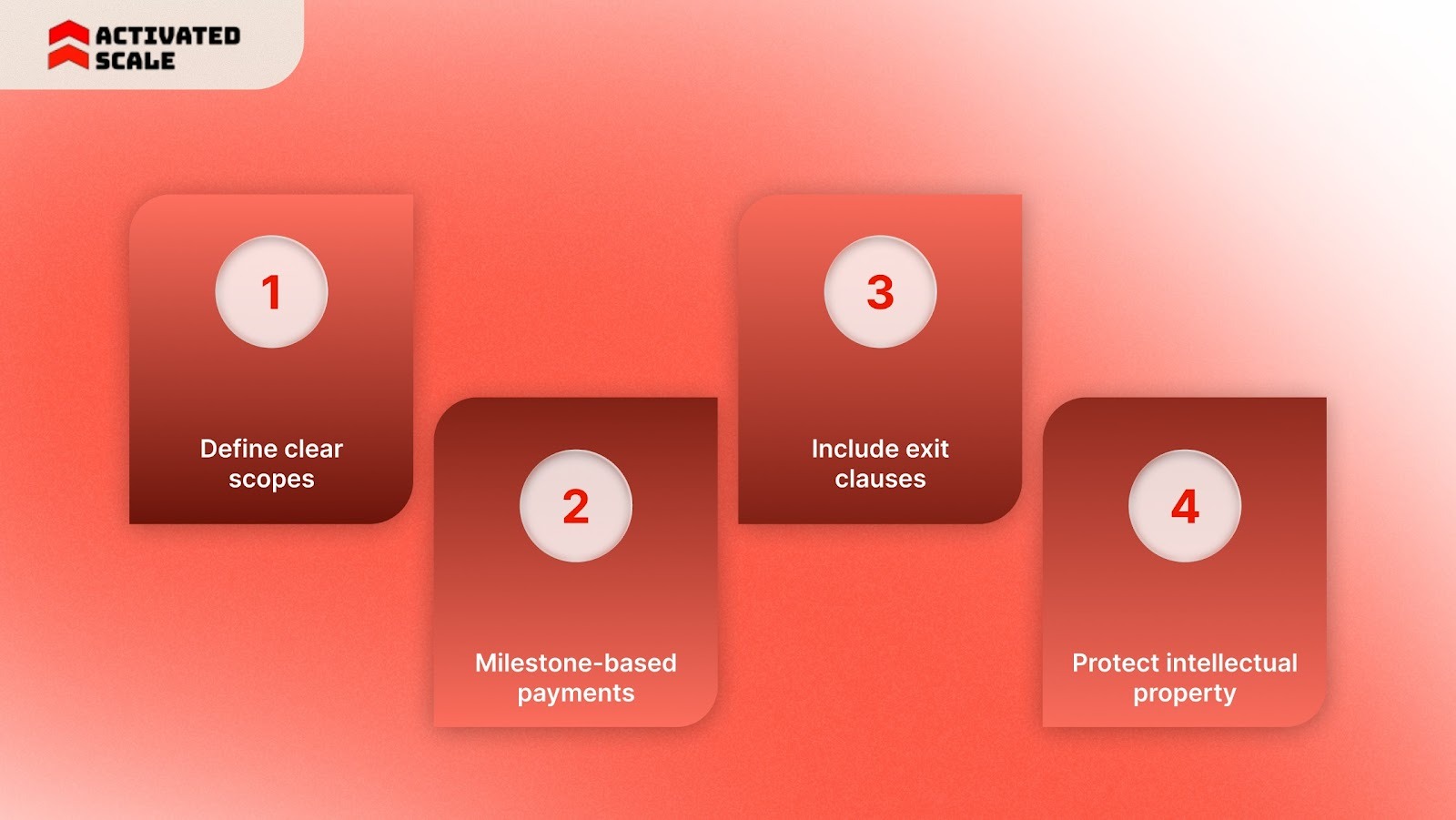
- Define clear scopes: Specify deliverables, deadlines, and responsibilities to avoid misunderstandings.
- Milestone-based payments: Link payments to completed work to ensure accountability and reduce non-payment risk.
- Include exit clauses: Outline notice periods, termination rights, and conditions for ending the contract early.
- Protect intellectual property: Clarify ownership and usage rights for all work products to prevent misuse or disputes.
Using pre-vetted contractors, like those available through Activated Scale, reduces the chance of contract breaches and ensures smoother collaborations from day one.
Final Thoughts
Contract issues with independent contractors usually trace back to unclear agreements or rushed hiring decisions. Strong contracts, early action, and the right resolution path reduce disruption when things go wrong. Just as importantly, many disputes can be avoided by working with experienced, well-vetted professionals from the start.
Activated Scale helps companies do exactly that, connecting them with U.S.-based sales talent built for clear scopes and accountable execution. Its contract-to-hire and fractional model gives teams a structured way to define expectations, test fit, and reduce hiring risk before making long-term commitments.
Don’t let a contract dispute slow growth. Connect with our team to see how we can help you hire with confidence!
FAQs
1. What if there is no written contract with an independent contractor?
A written contract is ideal, but agreements can still exist through emails, invoices, and accepted work. Enforcement becomes harder, and remedies are more limited without clear written terms.
2. How long do companies have to file a breach of contract claim?
The time limit depends on state law and whether the contract is written or oral. In most U.S. states, written contracts allow a longer filing window.
3. Can an independent contractor stop work immediately after a breach?
Not always. If the breach is minor or covered by a cure period, stopping work may create additional risk. Contract terms should guide this decision.
4. Does hiring a contractor through a platform change legal responsibility?
The contract still governs the relationship. Platforms may streamline vetting, but enforcement and obligations remain between the contracting parties.
5. What happens if the contractor or client is located outside the U.S.?
Jurisdiction, enforcement, and remedies become more complex. Contracts should clearly specify governing law and dispute resolution to avoid uncertainty.
The Ultimate Guide to Hiring a Salesperson!
Get the step-by-step guide to hiring, onboarding, and ensuring success!