_edi.png)

If you’re building a startup right now, you’ve probably felt the pressure to decide what should stay in-house and what’s better handed to an external expert.
You’re not alone.
Deloitte’s 2024 Global Outsourcing Survey shows an interesting split: 80% of executives plan to maintain or increase their investment in third-party outsourcing, yet 70% have also selectively brought some previously outsourced work back inside their teams.
Both approaches clearly create value, but in different ways.
This guide breaks down those differences, where each model works best, and how founders can decide which mix supports their stage, GTM goals, and urgency to execute.
At a glance:
- Insourcing works best when the work shapes long-term strategy, demands deep context, or connects directly to your product and customers.
- Outsourcing gives you speed, flexibility, and access to specialized talent, making it ideal when you need quick execution or want to stay lean.
- Each model carries trade-offs across cost, control, ramp time, expertise, and risk. Your choice depends on what matters most at your current stage.
- Most startups benefit from a hybrid approach, insourcing strategic roles while outsourcing execution-heavy or specialized work.
- Activated Scale bridges the gap between the two, offering vetted U.S.-based SDRs, AEs, and fractional sales leaders who bring speed and expertise without long-term hiring risk.
Insourcing vs Outsourcing: Which Model Works Best?
Most founders are balancing the same questions:
- How fast can we move?
- What can we afford?
- What requires internal ownership, and what doesn’t?
This side-by-side view gives you a quick read on where each model fits and the trade-offs that come with it.
Not sure whether to insource or outsource your sales function yet? Activated Scale lets you work with experienced sales reps on flexible terms, so you can move forward without locking in early.
What Is Insourcing?
Insourcing is the decision to keep a function or project within your internal team rather than handing it off to an outside provider. The work happens inside your company, led by people who already understand your product, customers, and priorities. For many founders, this feels safer because execution remains close to the core of the business.
Startups usually insource work that directly affects long-term strategy or relies heavily on internal context.
You’ll see teams choose insourcing when they’re:
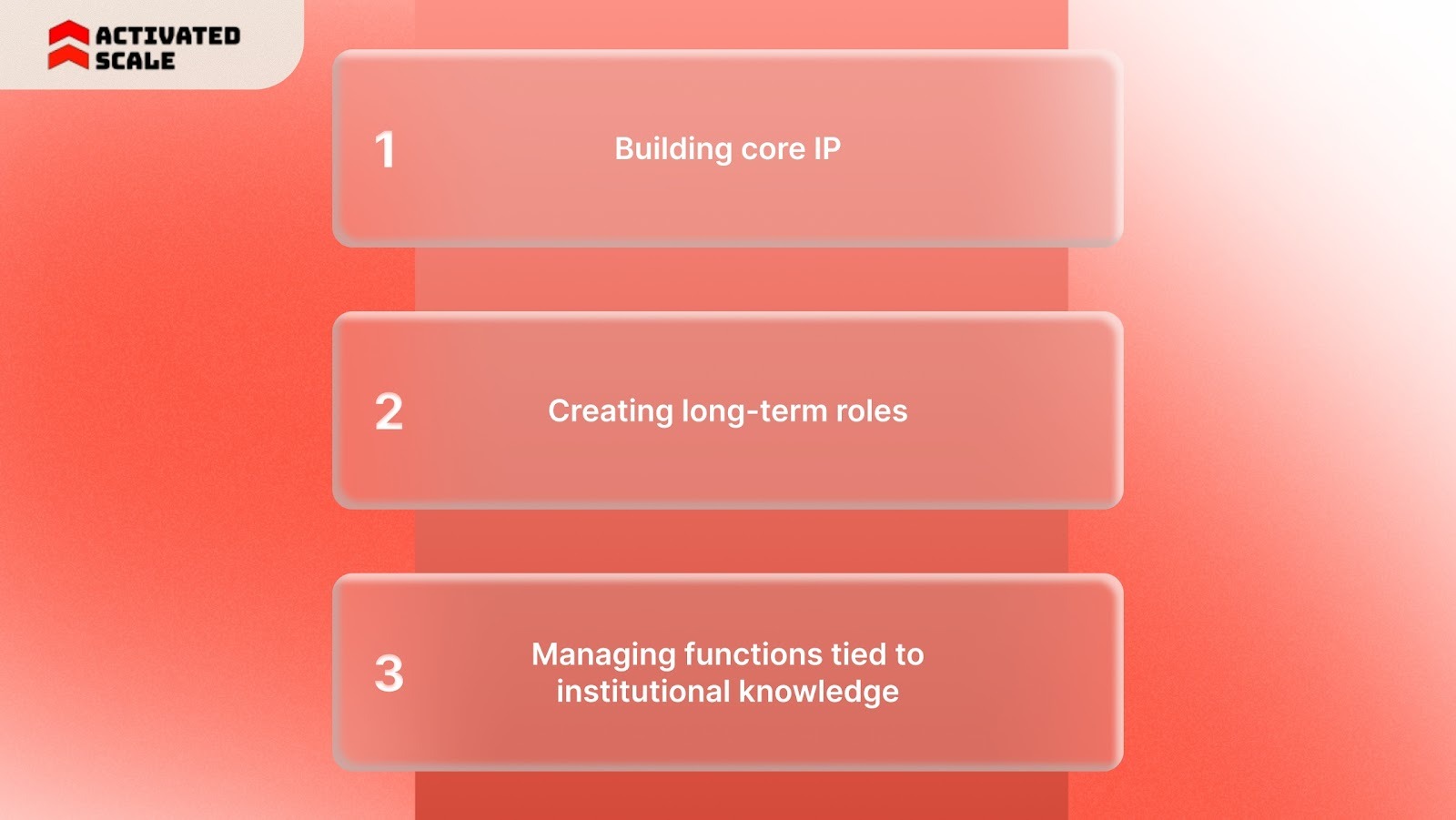
- Building core IP that gives the product its competitive edge and needs to stay confidential.
- Creating long-term roles that the company expects to rely on as it scales.
- Managing functions tied to institutional knowledge, where decisions depend on customer insights, product nuances, and cross-team alignment.
Ultimately, startups insource when the work shapes the company’s long-term trajectory and is too important to hand off.
Pros and Cons of Insourcing
Insourcing gives you tight control and deeper alignment, but it also introduces cost and hiring challenges that can slow a young company down. Understanding both sides helps you decide when owning the work internally creates real value and when it might limit your momentum.
Advantages of Insourcing
These strengths explain why many founders prefer to keep certain roles or functions in-house:
- Full control over execution: When your team owns the work, you control the pace, quality, and priorities. You can shift direction instantly without negotiating scope or waiting on a vendor timeline.
- Better cultural alignment: Internal teams operate with shared context: your mission, your customers, your product constraints. That alignment leads to faster decision-making and more consistent output.
- Easier cross-functional collaboration: Because the team sits inside your workflows, it is simpler to collaborate with product, marketing, engineering, or leadership. Knowledge moves faster, and decisions feel more informed.
- Stronger long-term knowledge retention: When work stays inside the company, you build institutional memory that compounds over time and supports better decisions as you scale.
- Greater ownership and accountability: Internal teams typically feel more responsible for outcomes, which leads to deeper commitment and closer attention to detail.
Disadvantages of Insourcing
These challenges become more noticeable in the early stage, when speed and flexibility matter most:
- Slow hiring cycles: Recruiting, interviewing, and onboarding take time, often more than early founders expect. Those delays can push out GTM milestones or slow down product delivery.
- Higher payroll and overhead: Full-time employees create fixed costs, benefits obligations, and long-term commitments. That structure does not always match a startup’s need to stay flexible.
- Greater risk of early-stage mis-hires: A single mis-hire at a small company can stall progress for months. It is a costly setback when the runway is tight, and every hire shapes the culture.
- Limited flexibility as priorities shift: If you pivot or scale down, internal teams cannot be adjusted as easily as external partners. You carry the cost even when the need changes.
- More managerial overhead for founders: Insourced roles require training, oversight, coaching, and performance management. This can pull founders away from product, sales, or fundraising.
But insourcing is only one side of the equation. To move faster or stay flexible, startups often rely on outsourcing as a complementary approach.
What Is Outsourcing?
Outsourcing is the practice of handing specific tasks or functions to an external provider instead of relying on your internal team. The work is completed by outside experts who bring specialized skills, established processes, and faster execution.
For startups, outsourcing often becomes a way to move quickly without expanding headcount or taking on long-term commitments.
Founders typically turn to outsourcing when they need immediate expertise, short-term support, or execution capacity that an internal team cannot provide yet. The most common routes include:
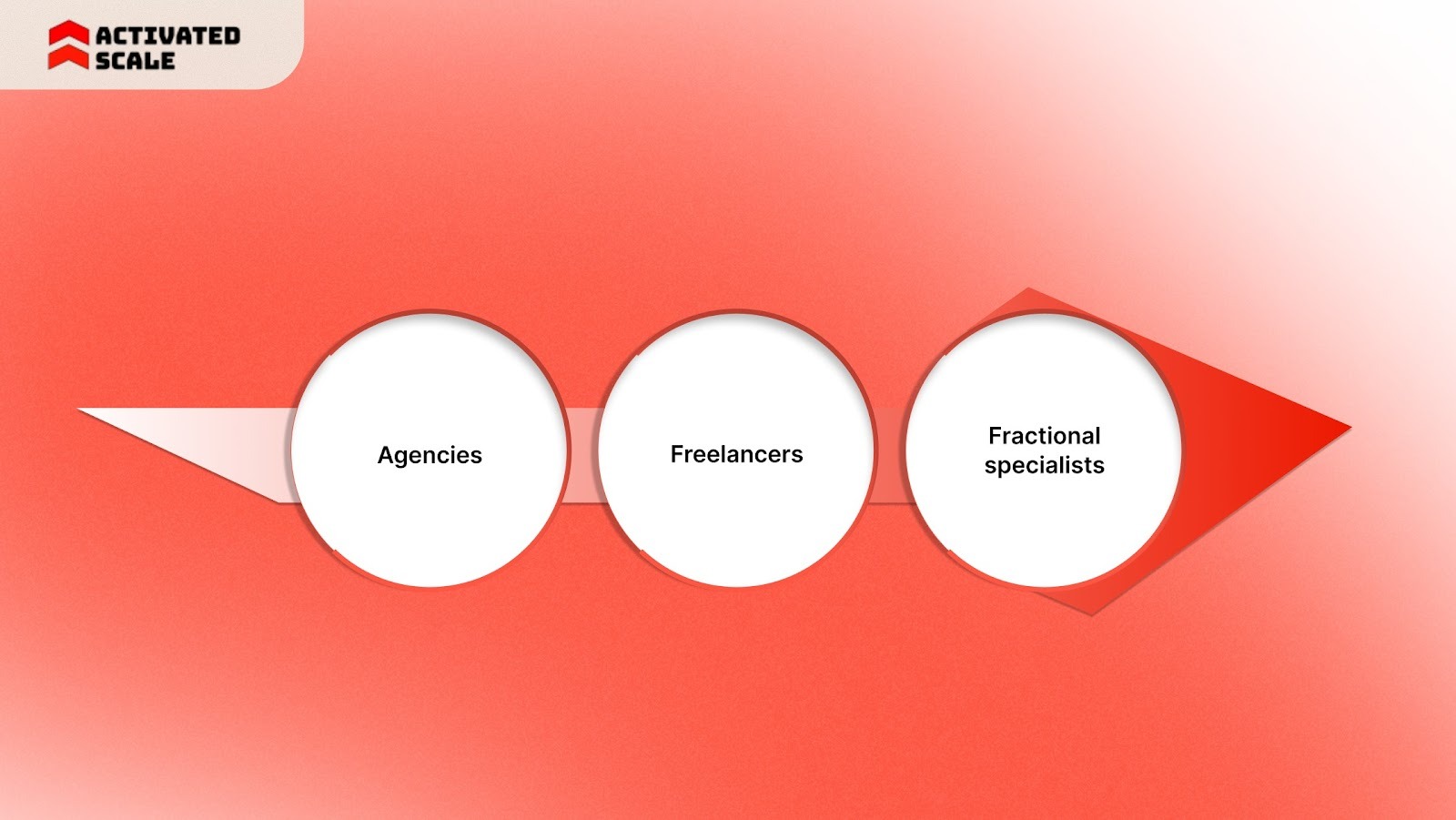
- Agencies: Teams that handle broader functions such as marketing, design, engineering, customer support, or sales development. Agencies usually offer a mix of strategy and execution.
- Freelancers: Individual specialists hired for project-based work. Freelancers are often used for content, design, engineering tasks, outbound campaigns, or one-off operational needs.
- Fractional specialists: Experienced professionals who work with you part-time. This can include fractional SDRs, AEs, or sales leaders who plug into your team and start delivering quickly without the cost or ramp time of a full-time hire.
Outsourcing gives startups access to the skills they need right away, without waiting for recruiting cycles or carrying full-time payroll.
Also read: B2B Sales Outsourcing: Definition, Benefits, Top Companies
Pros and Cons of Outsourcing
Outsourcing can accelerate execution and give you access to expertise you do not have in-house. It also comes with trade-offs that matter when you are building a lean team and trying to protect quality. Understanding both sides helps you choose when external support will move you forward and when it may introduce friction.
Advantages of Outsourcing
These strengths explain why so many early-stage teams rely on external partners:
- Immediate access to expertise: You can tap into skills you do not currently have, whether that is sales, design, engineering, or operations. This is especially valuable when you need someone who can start delivering right away.
- Lower cost and no long-term commitments: Outsourcing allows you to pay for exactly what you need. You avoid the payroll, benefits, and overhead that come with full-time employees.
- Faster ramp and execution: External specialists often come with established processes and prior experience, which lets them execute quickly without heavy onboarding.
- Flexible capacity as needs change: Outsourcing makes it easier to scale capacity up or down without restructuring your internal team. This flexibility matters when priorities shift quickly.
- Access to tools and infrastructure you may not have in-house: Many external partners bring their own systems, technology, and playbooks, reducing the need for early investment.
Disadvantages of Outsourcing
These limitations matter when quality, context, or coordination play a big role in the work:
- Less direct control over execution: Because the work sits outside your team, it can be harder to manage priorities, quality, or day-to-day decisions.
- Variable quality across providers: Not every agency, freelancer, or fractional specialist operates at the same standard. This variability can introduce risk, especially when the work impacts customers or revenue.
- Potential misalignment with startup context: External partners do not always understand your product, your buyers, or the nuances of your GTM motion. That gap can slow things down or require extra oversight.
- Dependency on external providers: Relying heavily on a vendor’s processes or availability can create long-term dependency. If the relationship changes or quality drops, switching partners can disrupt momentum.
- More coordination and communication overhead: External teams operate outside your internal systems, so keeping them aligned often requires more structured check-ins, documentation, and oversight than many early-stage founders expect.
Once you know what each model offers, the real question becomes how to choose the right approach for your stage of growth.
How to Choose Between Insourcing and Outsourcing
There’s no single “right” model for every startup. The better question is what your company needs most right now: speed, control, flexibility, or depth of expertise. Use the considerations below to evaluate which approach fits your stage and goals.
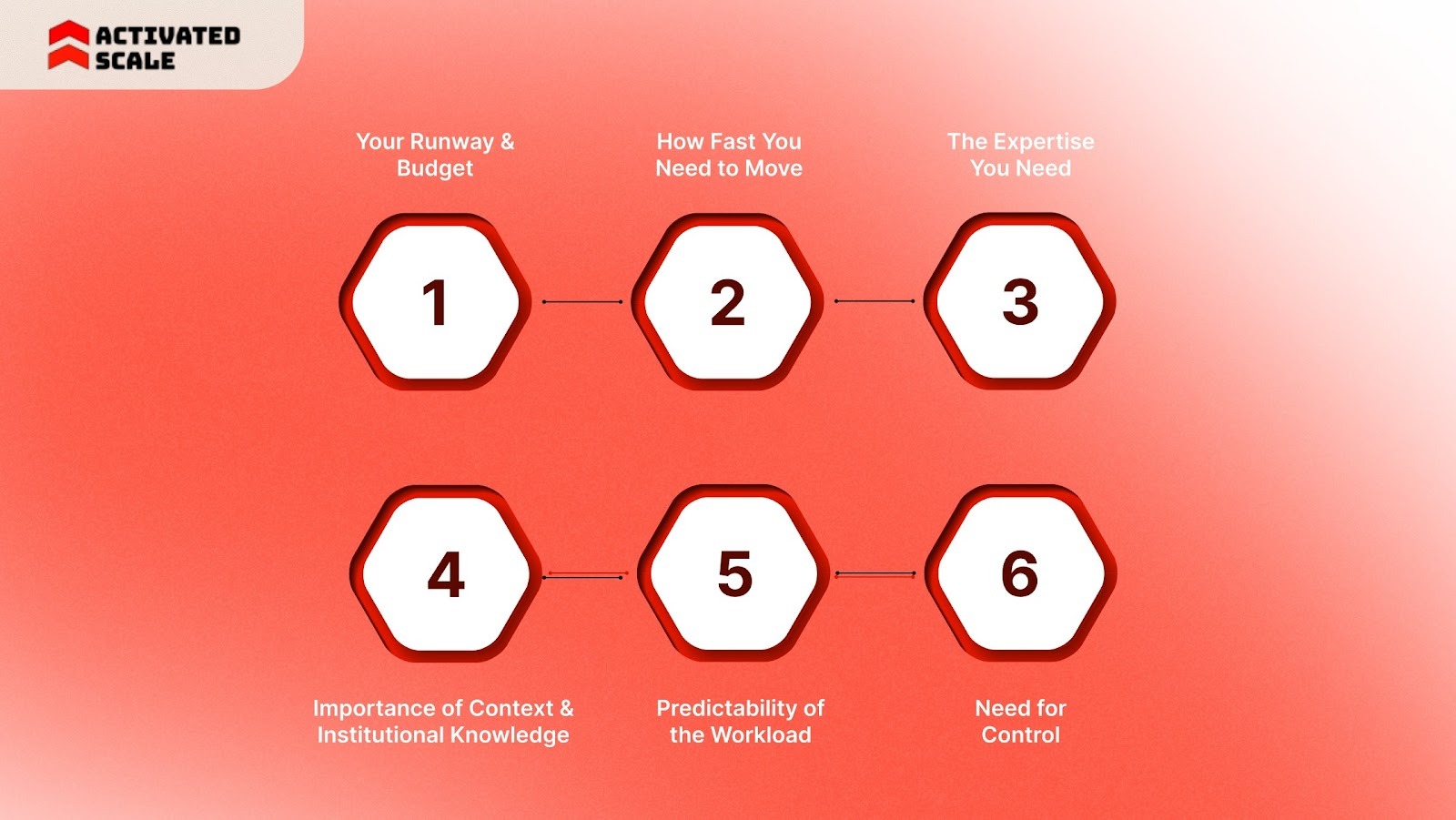
1. Your Runway and Budget
If you’re working with a limited runway or uncertain revenue, outsourcing gives you flexibility without long-term commitments. Insourcing makes more sense when you have the budget to support stable, ongoing roles.
2. How Fast You Need to Move
Outsourcing is typically the faster option when you need execution immediately. Insourcing works when you have time to hire, onboard, and train without slowing down key milestones.
3. The Expertise You Need
If the work requires specialized skills you do not have in-house, outsourcing can close the gap quickly. If the function is foundational to your product or strategy, building the expertise internally pays off in the long run.
4. Importance of Context and Institutional Knowledge
Choose insourcing when the work depends heavily on product nuances, customer insights, or cross-functional alignment. Outsourcing is better when success depends more on execution than on deep internal context.
5. Predictability of the Workload
If the workload fluctuates, outsourcing offers more flexibility. If the work is steady and contributes to long-term growth, insourcing is often the better fit.
6. Need for Control
If quality, brand consistency, or strategic decision-making are critical, insourcing gives you more direct oversight. Outsourcing works well when you care more about outcomes than day-to-day control.
A useful rule of thumb:
- Outsource when you need speed, specialized skills, or elasticity.
- Insource when the work shapes your product, strategy, or cultural foundation.
If you map these considerations to your current stage, you will quickly see where each model fits. The real challenge is the gray area in between, where you need fast execution but cannot justify a full-time hire.
That middle ground is where many early-stage teams get stuck.
Where the Activated Scale Fits Into Your Decision
For many startups, the hardest part of choosing between insourcing and outsourcing sits in the middle. You need results quickly, but you also need reps who understand your product, your buyers, and your goals. Traditional agencies feel too disconnected. Full-time hires feel too risky, too early.
This is where Activated Scale fits.
Activated Scale helps startups strengthen their sales motion through three flexible service models, designed to match different stages of growth:
- Contract-to-Hire Sales Recruiting: Work with vetted, U.S.-based sales reps on a trial basis before committing to a full-time hire. This reduces mis-hire risk and shortens the time it takes to see real impact.
- Fractional Selling: Plug in experienced SDRs and AEs who can build pipeline, run deals, and close revenue without the cost or ramp time of a full-time team.
- Fractional Sales Leadership: Bring in Fractional VPs of Sales to design your GTM strategy, build playbooks, improve closing execution, and scale what’s working.
Founders use Activated Scale when they need to build pipeline fast, validate a new ICP, improve close rates, or level up their sales process without slowing down on hiring. It gives you speed, expertise, and accountability, without locking you into early full-time decisions.
It gives you a way to move fast without taking on the risk, cost, or inflexibility of early full-time hires.
Also read: Integrate Fractional Sales Leaders for Team Growth
Wrapping Up
Choosing between insourcing and outsourcing comes down to what your startup needs most at this moment: control, speed, flexibility, or deeper expertise. Insourcing works when the function shapes your long-term strategy. Outsourcing helps when you need results quickly or want to avoid the cost and risk of early full-time hires. Most teams end up using a mix of both as they grow.
If you are weighing how to resource your sales function, Activated Scale gives you a faster, lower-risk path. You can access pre-vetted, U.S.-based SDRs, AEs, and fractional sales leaders who start contributing quickly and fit your stage.
See how Activated Scale can help you build momentum without long hiring cycles.
FAQs
1. What is an example of insourcing?
An example of insourcing is when a startup hires an internal product engineer instead of using an external development agency. The work stays in-house because it directly shapes the product, requires context, and benefits from long-term ownership.
2. What’s the difference between sourcing and outsourcing?
Sourcing is the process of finding and selecting the right people or vendors for a role or project. Outsourcing is the act of handing that work to an external provider once they’re selected. Think of sourcing as choosing the partner, and outsourcing as letting them execute.
3. What are the three types of outsourcing?
The three types of outsourcing are onshore outsourcing, where the provider is based in the same country; nearshore outsourcing, where the partner operates from a nearby or neighboring country; and offshore outsourcing, where work is sent to a distant region, often to reduce costs or access specialized talent.
4. What are the benefits of insourcing?
The main benefits include stronger control over execution, better cultural and strategic alignment, more effective cross-functional collaboration, and deeper long-term knowledge retention within the company.
The Ultimate Guide to Hiring a Salesperson!
Get the step-by-step guide to hiring, onboarding, and ensuring success!