_edi.png)

Marketing teams reach buyers through many channels, including search, ads, email, content, webinars, demos, and sales conversations. Yet many organizations still rely on single-touch attribution models that credit just one interaction, even though buying decisions rarely happen after a single touchpoint.
This visibility gap makes it difficult for leaders to understand which channels truly influence revenue. In fact, a Gartner survey found that only 52% of senior marketing leaders can clearly demonstrate marketing’s contribution to business outcomes, underscoring how difficult attribution and measurement remain for many teams.
Multi-touch attribution helps close that gap by assigning conversion credit across multiple interactions instead of a single click. This approach gives revenue teams a clearer view of how marketing and sales activities work together to drive the pipeline.
In this guide, you’ll learn what multi-touch attribution is, the most common attribution models, and the best practices companies use to implement it effectively.
Key Takeaways
- Multi-touch attribution shows the full buyer journey. It distributes conversion credit across multiple marketing and sales interactions rather than relying on a single click.
- Different models answer different funnel questions. Linear, time decay, U-shaped, and W-shaped models help measure awareness, lead generation, and opportunity creation.
- Reliable attribution requires connected systems. CRM, campaign tracking, and analytics tools must capture every key interaction in the journey.
- Attribution reveals which channels create a real pipeline. This helps revenue teams invest in campaigns that consistently generate qualified opportunities.
- Insights should drive GTM execution. Companies can align sales outreach and hiring decisions with the channels that produce demand.
What Is Multi-Touch Attribution and Why Marketers Use It
Marketing journeys are fragmented across channels, devices, and interactions. A buyer might discover a product through a search result, return to it via a retargeting ad, download a whitepaper, attend a webinar, and later book a sales demo. Traditional attribution models struggle to capture this complexity.
In fact, research shows that B2B buyers interact with an average of 27 touchpoints before making a purchase decision, often across multiple channels and time periods.
This fragmented path makes it difficult to identify which marketing activities influence revenue. Multi-touch attribution addresses this challenge by assigning partial credit to each interaction that contributes to a conversion.
Instead of focusing on a single click, teams analyze the full journey and identify the channels that consistently move buyers forward.
What Multi-Touch Attribution Means
Multi-touch attribution is a measurement approach that distributes conversion credit across several interactions in the buyer journey. Each marketing or sales touchpoint receives a portion of the credit based on its influence on the final outcome.
This approach allows revenue teams to measure the contribution of different channels such as organic search, paid ads, email campaigns, webinars, and sales outreach.
A typical SaaS buyer journey often includes multiple marketing interactions before a conversion occurs.
Each step influences the buyer's decision. Multi-touch attribution captures the contribution of every interaction rather than ignoring earlier marketing efforts.
Single Touch vs Multi Touch Attribution
Single-touch models attribute the entire conversion to one interaction. Multi-touch attribution distributes credit across several steps in the journey.
Single-touch attribution often distorts performance insights. For example, a demo booking might appear to come from a paid ad even though earlier SEO content and email campaigns influenced the buyer’s decision.
Also Read: What is Lead Generation Sales or Marketing
Which Multi-Touch Attribution Models Do Companies Use?
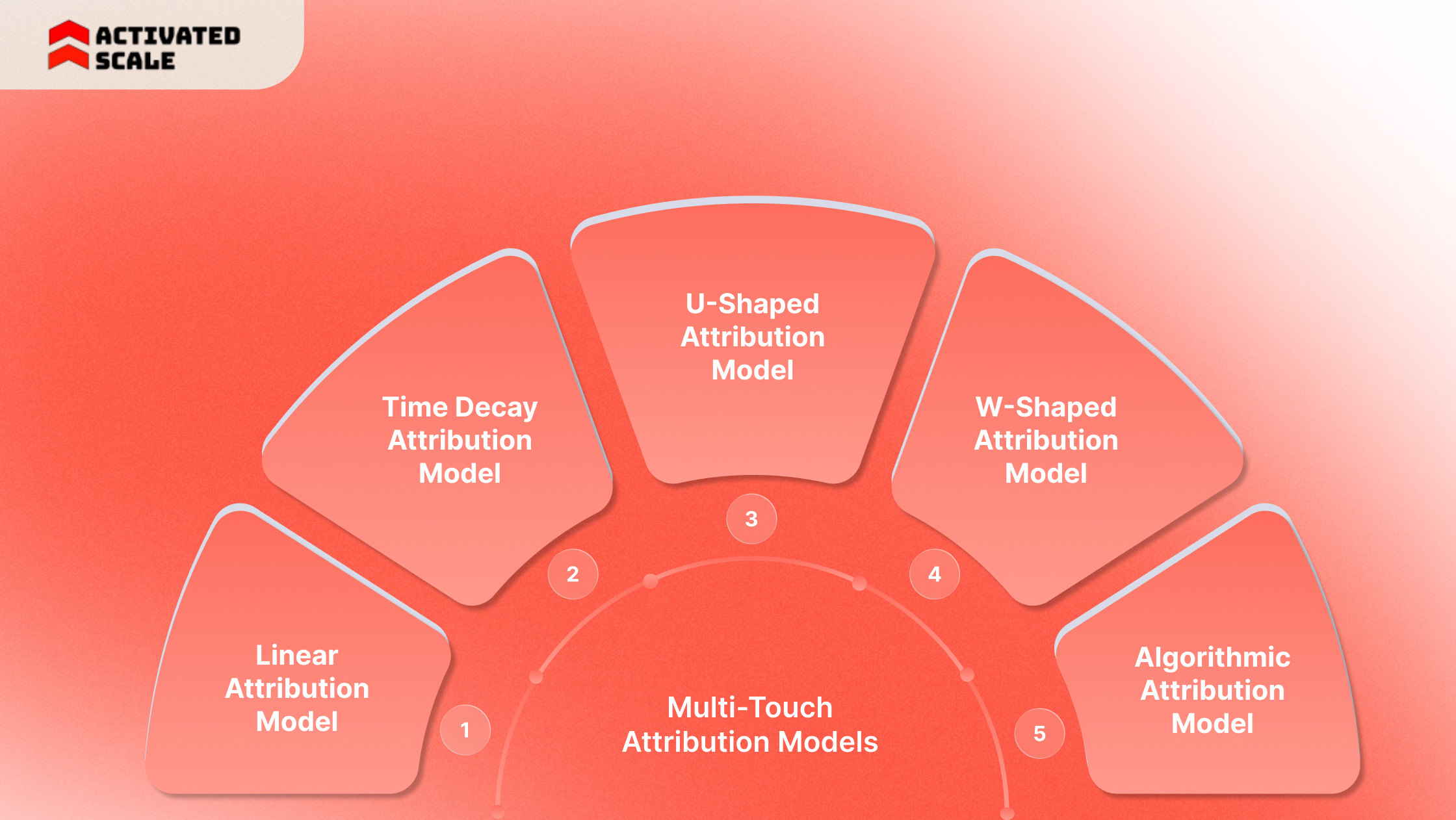
Different attribution models distribute credit across touchpoints in different ways. The choice depends on the sales cycle length, marketing channels, and available data.
1. Linear Attribution Model
The linear model assigns equal credit to every interaction that occurs before a conversion.
This approach works well when marketing teams want a neutral view of channel influence across the entire journey.
Example:
A buyer interacts with four touchpoints:
- SEO blog
- LinkedIn ad
- Webinar
- Product demo
Each touchpoint receives 25 percent attribution credit.
Linear attribution helps teams identify channels that consistently appear in conversion paths.
2. Time Decay Attribution Model
Time decay attribution increases the credit assigned to interactions that occur closer to the conversion.
This model works well in shorter sales cycles where late-stage engagement plays a stronger role in purchase decisions.
Example
A buyer attends a webinar one week before purchase and reads a blog article two months earlier. The webinar receives more attribution credit since it occurred closer to the conversion event.
3. U- Shaped Attribution Model
The U-shaped model emphasizes two critical moments in the buying journey.
- First interaction that introduces the brand
- An interaction that generates the lead
These two steps usually receive the majority of the credit, while the remaining touchpoints share the rest. This model is common in B2B marketing, where the initial discovery and lead creation stages strongly influence pipeline generation.
4. W-Shaped Attribution Model
The W- shaped model focuses on three milestone interactions.
Each stage receives significant credit, while the remaining attribution is shared among other interactions. This model helps revenue teams understand how marketing activities contribute across the early, middle, and pipeline stages.
5. Algorithmic or Data-Driven Attribution
Advanced attribution platforms use statistical models and machine learning to assign credit dynamically across marketing touchpoints. Instead of assuming that a single channel drives the outcome, algorithmic attribution analyzes patterns across content engagement, advertising exposure, and sales interactions to determine how different channels influence conversions.
Adoption of attribution modelling continues to grow as marketing teams try to measure increasingly complex buying journeys.
Salesforce research shows that 88% of marketers now use analytics and measurement tools to track marketing performance, reflecting a growing reliance on data-driven attribution and marketing analytics to guide budget allocation and campaign strategy.
When attribution data shows where qualified opportunities originate, teams often need experienced reps to convert that demand into a pipeline. Activated Scale helps startups and SaaS companies access vetted U.S.-based SDRs and Account Executives who can support pipeline generation without committing to full-time hires
Also Read: Steps to Create a Successful B2B Sales Strategy
How Multi-Touch Attribution Changes Marketing Decisions
Multi-touch attribution produces insights that influence budget allocation, campaign design, and sales strategy.
Budget Allocation Becomes Clearer
Marketing leaders often struggle to decide which channels deserve more investment. Attribution data shows which touchpoints repeatedly appear in successful conversion paths.
Example:
An attribution analysis may show that deals frequently follow this pattern:
- Organic search content
- LinkedIn ad retargeting
- Webinar attendance
- Sales demo
In this scenario, reducing content investment could weaken the entire funnel even if the final conversion occurs through a demo request.
Hidden Revenue Channels Become Visible
Many marketing channels assist conversions without receiving credit under last-click models.
Common examples include:
- Educational blog content
- Product comparison pages
- Webinars
- Analyst reports
Forrester research shows that 74 per cent of business buyers conduct more than half of their research online before making a purchase, indicating that many influential touchpoints occur before direct sales interactions.
Attribution models reveal these early-stage interactions that often shape buyer preferences.
Campaign Performance Becomes Measurable
Campaign evaluation becomes more accurate when teams analyze the full conversion path rather than isolated clicks.
Example:
A LinkedIn campaign might not generate many direct conversions, but it may appear frequently in journeys that lead to demo bookings later.
Multi-touch attribution identifies these assist roles and prevents teams from prematurely stopping valuable campaigns.
Marketing and Sales Alignment Improves
Revenue teams often struggle with conflicting interpretations of pipeline performance. Marketing may report high lead generation, while sales reports weak pipeline quality.
Attribution data links marketing interactions to downstream outcomes, such as opportunities and closed deals.
This alignment helps revenue leaders answer questions such as:
- Which channels produce the highest quality pipeline
- Which campaigns accelerate deal velocity
- Which marketing interactions influence late-stage conversions
With this visibility, marketing and sales teams can coordinate campaigns, content strategy, and outbound efforts around a shared set of revenue signals.
Also Read: Revenue Operations vs Sales Operations Difference
How to Implement Multi-Touch Attribution in Your Revenue Stack
Multi-touch attribution works only when marketing and sales data can be connected across the entire buyer journey. Many companies struggle with attribution because interactions occur across multiple tools such as CRM systems, ad platforms, website analytics, and sales conversations.
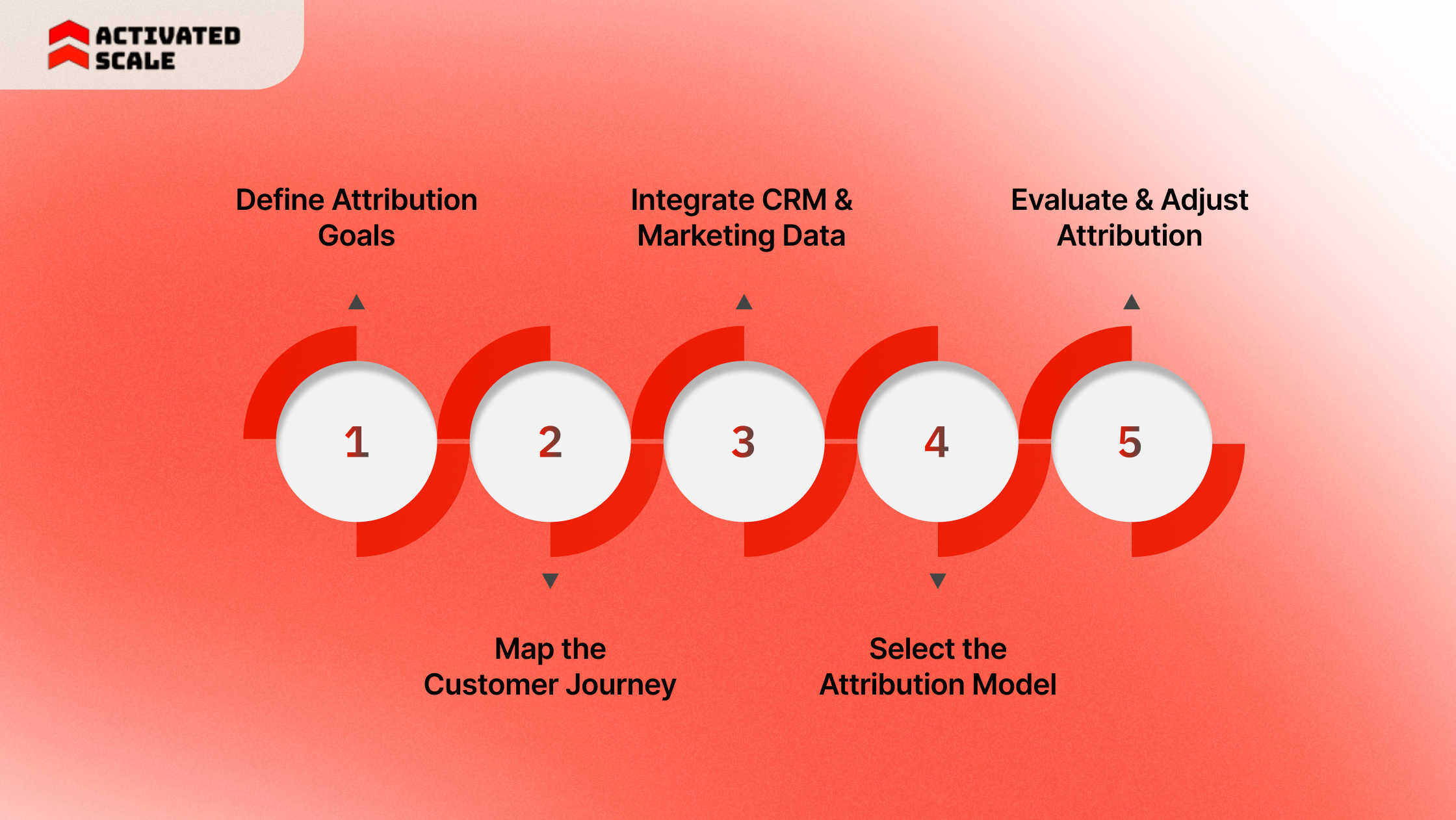
A structured implementation process helps connect these signals and allows revenue teams to analyze how different interactions contribute to conversions.
Step 1: Define Attribution Goals
Attribution systems should answer specific revenue questions rather than simply generating reports. Clear goals determine which data must be collected and which attribution model will produce useful insights.
Common attribution objectives include:
- Identifying which channels generate pipeline
- Understanding which campaigns influence qualified leads
- Measuring which marketing activities contribute to closed deals
- Determining where the marketing budget should increase or decrease
Example:
A SaaS company investing heavily in paid acquisition may want attribution insights to determine whether SEO content, LinkedIn campaigns, or webinars contribute more frequently to opportunity creation.
Clear objectives help teams avoid analyzing metrics that do not influence revenue decisions.
Step 2: Map the Entire Customer Journey
Attribution depends on capturing every meaningful interaction between a buyer and a brand. Customer journeys often span multiple digital and offline touchpoints.
Typical touchpoints include:
Mapping these interactions reveals how buyers move from discovery to conversion. Without a clear journey map, attribution models assign credit based on incomplete data.
Step 3: Integrate CRM and Marketing Data
Attribution accuracy depends on unified data. Marketing and sales interactions often live in separate systems such as CRM platforms, advertising dashboards, website analytics tools, and marketing automation software.
A reliable attribution stack connects:
- CRM records and opportunity data
- Website analytics and conversion events
- Email marketing engagement
- Advertising platforms
- Product usage or trial activity
When data is centralized, teams can link marketing interactions with pipeline creation and revenue outcomes. Without integration, attribution models miss key interactions and distort channel performance.
Step 4: Select the Right Attribution Model
Different attribution models distribute credit across touchpoints in different ways. The right model depends on the sales cycle's complexity and the available data.
Organizations with longer B2B sales cycles often combine models to analyze early-stage engagement, lead generation, and opportunity creation separately.
Step 5: Continuously Evaluate and Adjust
Attribution models require ongoing monitoring. Marketing channels, buying behavior, and campaign strategies change frequently.
Revenue teams typically review attribution data to:
- Identify channels influencing high-value deals
- Adjust marketing spend across campaigns
- Improve lead quality by focusing on effective touchpoints
- Remove channels that generate low quality pipeline
Regular analysis ensures attribution models reflect actual buying behavior rather than outdated assumptions.
Why Attribution Data Fails in Many Companies
Even companies that implement attribution systems often struggle to generate reliable insights. The problem usually stems from incomplete data and inconsistent tracking across marketing channels.
Fragmented Marketing Data
Marketing interactions occur across many platforms, including search engines, advertising networks, social media, email platforms, and websites. When these systems are not integrated, attribution models cannot connect the full customer journey.
Fragmented data creates blind spots and prevents teams from understanding the sequence of interactions that lead to a conversion.
Misaligned CRM Tracking
Attribution systems rely on CRM records to connect marketing activity with revenue outcomes. In many companies, CRM data is inconsistent.
Common issues include:
- Missing campaign source data
- Incomplete opportunity records
- Manual data entry errors
When CRM records do not accurately capture marketing interactions, attribution reports produce misleading results.
Overreliance on Last Click Analytics
Many analytics platforms default to last click attribution because it is easier to measure. This model credits the final interaction before conversion while ignoring earlier marketing influence.
Last-click models often overvalue bottom-of-funnel activities, such as branded search ads or direct traffic, while undervaluing awareness channels, such as content marketing and webinars.
Ignoring Offline Sales Interactions
Not all buyer interactions occur online. Events, conferences, sales calls, and referrals often influence purchase decisions.
When attribution systems track only digital interactions, they miss these offline signals.
Examples of offline touchpoints include:
- Industry events and trade shows
- Partner referrals
- Direct sales conversations
- Customer recommendations
Ignoring these interactions produces incomplete attribution data and inaccurate channel performance analysis.
How Multi-Touch Attribution Influences Sales Hiring and GTM Strategy
Most attribution discussions focus on marketing performance. The larger impact appears when attribution insights influence revenue strategy and team structure.
When attribution data reveals which channels consistently generate opportunities, companies can align sales capacity with those demand signals.
Identifying Which Channels Require Human Follow-Up
Certain touchpoints signal high purchase intent and require direct sales engagement.
Examples include:
- Demo requests from product pages
- Webinar attendees asking product questions
- High-value inbound leads from comparison pages
- Outbound responses from cold outreach campaigns
Attribution analysis helps revenue teams identify which interactions require immediate follow-up from sales representatives.
Deciding Where SDRs and AEs Should Focus
Attribution insights reveal which channels produce qualified opportunities rather than just website traffic.
Example:
If attribution analysis shows this pattern:
Revenue teams may prioritize SDR outreach to webinar attendees or webinar registrants rather than focusing solely on cold outbound campaigns.
Scaling Sales Capacity Without Overhiring
Attribution insights often reveal gaps between marketing demand and sales capacity.
For example:
- Content marketing generates strong inbound leads
- Webinars produce qualified prospects
- Outbound campaigns generate meeting requests
If the sales team cannot follow up quickly, pipeline opportunities may be lost.
Platforms such as Activated Scale give startups access to experienced U.S. SDRs, AEs, and fractional sales leaders who can support pipeline generation and execute focused go-to-market initiatives without immediate full-time hiring.
Tools That Help Track Multi-Touch Attribution
Several tools help companies track multi-channel customer journeys and connect marketing activity to revenue outcomes.
These platforms combine marketing engagement data with CRM records to build a complete view of how interactions influence conversions.
Best Practices for Accurate Multi-Touch Attribution
Attribution accuracy depends on disciplined data management and consistent tracking across channels.
Track Every Marketing Touchpoint
Attribution models require visibility into every interaction that influences a buyer.
Teams should track:
- Website visits and content engagement
- Email clicks and campaign responses
- Advertising impressions and conversions
- Product trial usage
- Sales meetings and demos
Tracking more interactions improves the accuracy of attribution insights.
Connect Marketing and Sales Data
Revenue outcomes occur in the CRM, while marketing engagement occurs in advertising platforms and marketing automation tools.
Connecting these systems allows teams to analyze how marketing activity influences pipeline and revenue.
Use Attribution Models That Match Sales Cycles
Short buying cycles may benefit from time-decay models, while complex B2B sales cycles often require W-shaped or algorithmic models that account for multiple milestone interactions.
Choosing the wrong model can distort performance insights.
Review Attribution Quarterly
Attribution models should evolve as marketing strategies change.
Regular reviews help teams:
- Identify new high-performing channels
- Adjust marketing investment
- Improve lead qualification processes
- Align marketing campaigns with pipeline results
Continuous evaluation keeps attribution models aligned with current buying behavior.
Turning Attribution Insights Into Revenue Execution
Attribution data often reveals where demand originates, but companies still need the right sales capacity to act on those signals. When specific channels consistently drive qualified leads, revenue teams must ensure outreach, follow-ups, and demos happen quickly.
Platforms like Activated Scale help startups convert attribution insights into pipeline growth by providing on-demand U.S. sales talent.
Key capabilities include:
- Contract to hire recruiting – Hire vetted SDRs or Account Executives on a trial basis before committing full-time.
- Fractional selling support – Access experienced SDRs and AEs to generate pipeline and manage deal cycles.
- Fractional sales leadership – Bring in Fractional VPs of Sales to build go-to-market strategy, playbooks, and revenue processes.
Conclusion
Multi-touch attribution gives revenue teams visibility into how buyers move from first interaction to closed deal. These insights help leaders prioritize channels that generate qualified opportunities and identify where sales engagement is needed earlier in the journey. For startups, the next challenge is turning those signals into a consistent pipeline.
That often means finding experienced sales professionals quickly, building a repeatable and data-driven sales process, and reducing ramp time for new hires without committing to full-time headcount too early.
Explore how Activated Scale connects startups with vetted U.S. sales professionals who can support GTM execution while keeping hiring aligned with growth and fundraising milestones.
FAQs
Q: How long does it take to implement multi-touch attribution in a company?
A: Implementation timelines depend on data maturity and system integration. Companies with structured CRM and marketing automation setups can begin attribution analysis within weeks. Organizations with fragmented data may require longer setup to align tracking, campaign tagging, and revenue reporting systems.
Q: Does multi-touch attribution work for long B2B sales cycles?
A: Yes. Multi-touch attribution is particularly useful for complex B2B buying journeys where prospects interact with multiple pieces of content and sales touchpoints before purchasing. It helps revenue teams understand which interactions influence opportunity creation and deal progression.
Q: Can attribution models measure the impact of sales outreach?
A: Attribution frameworks can include sales activities such as demo calls, email conversations, and outbound outreach. When these interactions are logged in CRM systems, attribution analysis can connect them with earlier marketing engagement to understand how sales actions influence conversions.
Q: What role does revenue operations play in attribution strategy?
A: Revenue operations teams typically manage attribution frameworks because they oversee both marketing and sales data. They maintain data consistency across CRM platforms, campaign tracking systems, and reporting dashboards that feed attribution analysis.
Q: How often should attribution models be reviewed or adjusted?
A: Attribution models should be reviewed regularly as marketing channels, campaign strategies, and buyer behavior change. Periodic evaluation helps revenue teams refine models so that attribution insights continue reflecting the current sales funnel and pipeline dynamics.
The Ultimate Guide to Hiring a Salesperson!
Get the step-by-step guide to hiring, onboarding, and ensuring success!