_edi.png)
Did you notice a few deals entering the pipeline but taking too long to close? Forecasts are active on paper but weaker in real execution. This means your revenue plan can look solid and still break under pressure.
So the growth slows, deal cycles stretch, and leadership starts asking tougher questions. One reason is that sales reps now spend 60% of their time on non-selling work, which shows how easily hidden execution gaps drain revenue.
Those gaps rarely show up clearly in a forecast review. A gap analysis helps you measure the distance between current performance and growth goals.
In this blog, you will see where execution breaks and how gap analysis can help you act before small problems turn into revenue loss.
Quick Takeaways:
- 73% of CSOs prioritize growth from existing customers in 2025, so fixing sales-motion gaps has a direct impact on revenue.
- More than half of B2B purchases above $1 million will move through digital self-serve channels in 2025. That raises the cost of missed buyer friction.
- A strong analysis compares the current state, the desired state, and the actions needed to close the gap.
- Sales reps spend 60% of their time on non-selling tasks, which makes hidden execution gaps harder to absorb.
- The best time to run an analysis is after missed targets, process slowdowns, team changes, or before a growth push.
What is Gap Analysis?
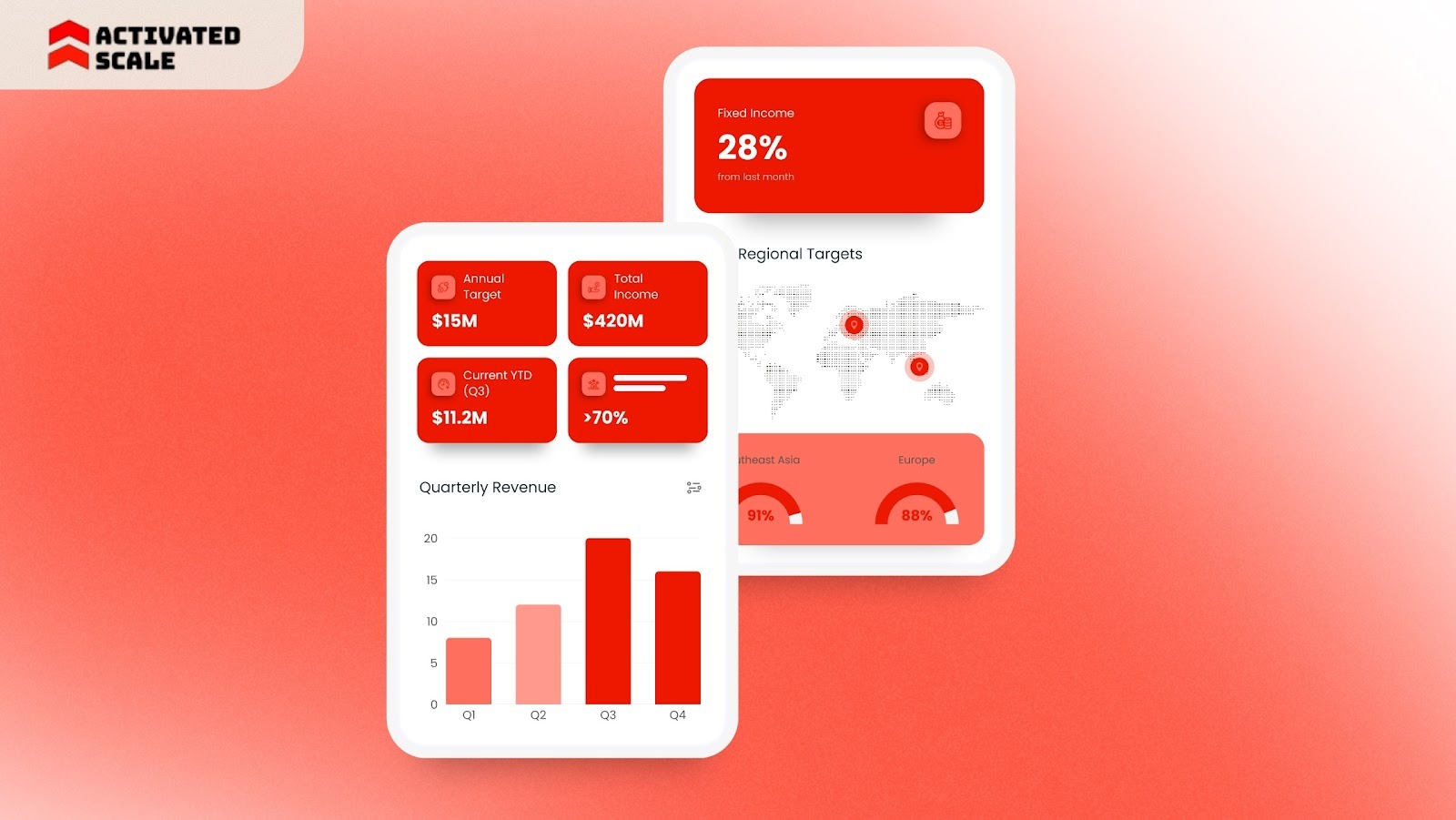
Gap analysis is a simple way to compare where your sales team stands now and where it needs to be. It maps the current state, the desired state, and the distance between them.
In sales, that gap often shows up in win rates, deal velocity, ramp time, or pipeline quality. To drive revenue, 73% of CSOs are prioritizing growth within their existing customer base, which raises the cost of missed process gaps across the full revenue motion.
A useful gap analysis strategy helps you:
- Spot underperforming stages, roles, or metrics
- Rank the issues that hurt revenue most
- Put time and budget where they matter most
- Convert assumptions into measurable fixes
- Track progress over time against a clear target
In this way, sales leaders have a practical way to focus on growth decisions. But what is the right time for your organization to conduct a gap analysis audit?
Read Also: Revenue Growth Management in Business Consulting
When Should You Use a Gap Analysis?
Using analysis at the wrong moment can make small issues expensive fast. Sales teams still lose time to hidden friction. That leaves less room for bad assumptions and slow fixes.
Here are the clearest moments to run a gap analysis:
- Missed targets: Revenue, quota attainment, or conversion goals fall short.
- Process inefficiency: Deals move slowly, handoffs break down, or rep time gets wasted.
- Product underperformance: A product sells below expectations despite market demand.
- Compliance review: Sales processes need review against policy, legal, or reporting standards.
- Organizational change: New leaders, team structures, territories, or compensation plans create disruption.
- Growth Strategy: Leadership wants to scale, but the current sales motion cannot support the next stage.
- Pre-project planning: A new launch, market push, or Go-to-Market (GTM) shift needs a realistic baseline first.
If missed targets, slow execution, or team changes are starting to affect revenue, do not wait for the next quarter to confirm the damage. Bring experienced sales talent through Activated Scale's Fractional Selling service to close sales gaps before they grow.
The right time also depends on the kind of gap you are dealing with, since the wrong diagnosis leads to the wrong fix.
7 Types of Gap Analysis You Will Need
Not every growth problem comes from the same source. A hiring issue, a process issue, and a market issue need different responses. That shift raises the cost of misreading where the real gap sits.
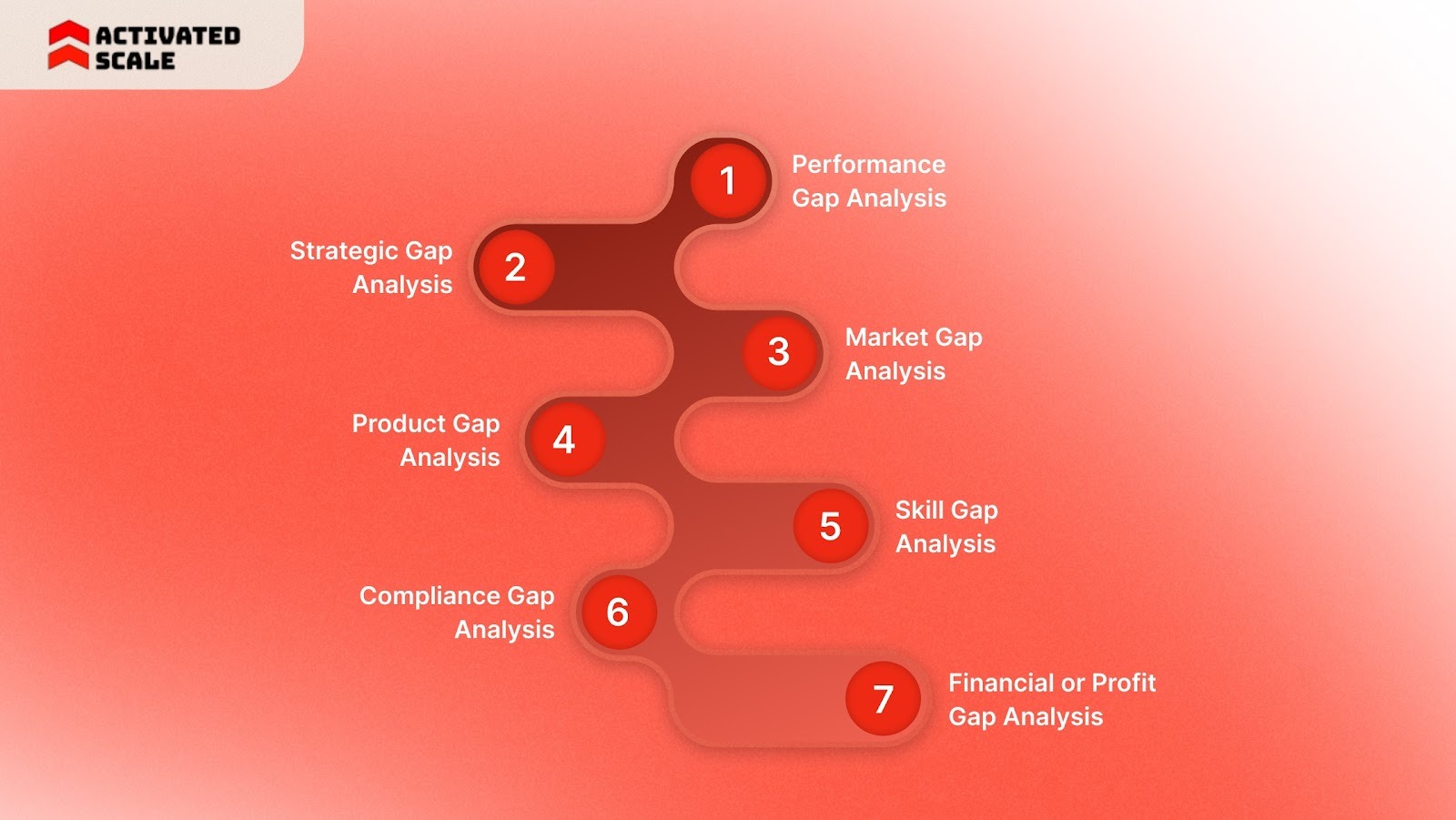
Here are the main types of gap analysis that sales leaders should know:
- Performance Gap Analysis: This compares actual results against expected results.
Example: Your team closes 18% of deals against a 25% target. - Strategic Gap Analysis: This compares your current direction against long-term business goals.
Example: Your sales motion supports short-term wins but not enterprise expansion. - Market Gap Analysis: This looks for unmet customer demand or missed market opportunities.
Example: Buyers want self-serve options, but your GTM strategy still depends on rep-led selling. - Product Gap Analysis: This compares product capabilities against customer expectations.
Example: Prospects want reporting depth, but your product lacks key analytics features. - Skill Gap Analysis: This identifies missing team capabilities that block performance.
Example: Reps can book meetings, but they struggle with multi-threaded deals. - Compliance Gap Analysis: This compares current practices against legal, policy, or regulatory standards.
Example: Your sales documentation process fails new audit requirements. - Financial or Profit Gap Analysis: This compares revenue, margin, or cost performance against targets.
Example: Revenue grows, but customer acquisition cost cuts into margin.
Identification is just the first setup. But when you try to tackle the harder challenge: Finding where revenue actually starts slipping and how to stop this.
Also Read: Market Development Representative vs Other Sales Roles
How to Do a Gap Analysis Step by Step?
A strong gap analysis forces the team to move from surface symptoms to verified causes. You are not asking, “Why did we miss?” You are asking, “Where did the motion fail, what evidence proves it, and which fix changes the result fastest?"
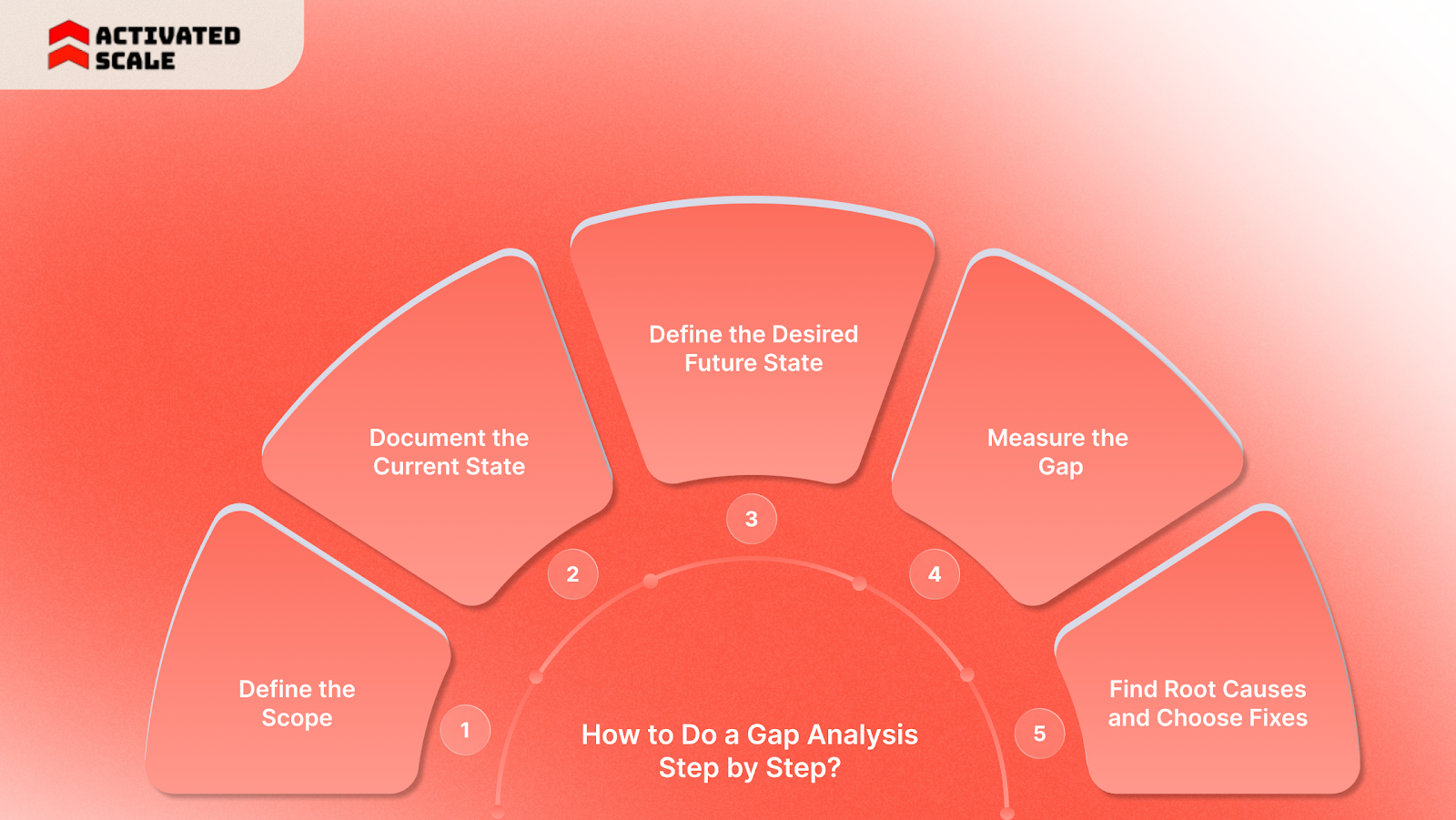
Here's how you can conduct a gap analysis and fix th above issues:
Step 1: Define the Scope
Pick one area that connects directly to revenue. Focus on one process, one segment, one team, or one target metric. You can then compare like-for-like data and spot patterns faster.
A good scope answers three questions:
- What business area are we reviewing?
- What revenue outcome is under pressure?
- What time period are we measuring?
Strong examples:
- Pipeline conversion for mid-market inbound leads
- Sales Development Representative (SDR) to an Account Executive (AE) handoff quality in outbound
- Enterprise win rates in late-stage deals
- Ramp time for reps hired in the last two quarters
Weak scope:
- “We need to improve sales performance.”
Step 2: Document the Current State
Now capture what is happening today, not what the team thinks is happening. This is where many reviews fail. Leaders rely on instinct, rep feedback, or a one-dashboard view.
That can point you in the right direction, though it cannot prove the problem. An analysis needs a grounded baseline. That baseline should show current performance, current workflow, and the friction inside the system.
Pull both numbers and context: Metrics reveal where performance drops, while workflow details, such as task sequences, communication flows, and challenges, explain how those drops occur. Document the current state across these layers:
1. Core Performance Metrics
Look at the numbers tied to the issue:
- Win rate: The percentage of qualified opportunities that turn into closed deals.
- Lead-to-opportunity conversion: The percentage of leads that move into a real sales opportunity.
- Average sales cycle length: The average time it takes to move a deal from first contact to close.
- Quota attainment: The percentage of a sales target that a rep or team achieves in a set period.
- Pipeline coverage: The value of the active pipeline compared to the revenue target for that period.
- Stage-by-stage drop-off: The percentage of deals lost or stalled between one sales stage and the next.
2. Team Input
Ask managers and reps what slows them down:
- Which stage feels hardest to move?
- Where do deals lose momentum?
- What common objections keep repeating?
- Which tasks absorb selling time?
This step should end with a clean snapshot of the current reality. A real picture of how the sales motion performs today.
Step 3: Define the Desired Future State
Next, decide what success should look like. This is where weak teams stay vague. They say they want better execution, more efficiency, or stronger growth. None of those targets helps a leader act.
Your target should answer:
- What number needs to improve?
- How much improvement is required?
- In what timeframe?
- Why does this target matter to growth?
Strong examples:
- Raise enterprise win rate from 18% to 24% in two quarters
- Cut the average sales cycle from 75 days to 55 days by Q3
- Increase lead-to-opportunity conversion by 15% in one segment
- Reduce rep ramp time from six months to four months
This step matters more than it seems. If the target stays unclear, the rest of the review becomes subjective. Teams start debating effort, not outcomes.
If your team is missing targets and you need faster answers, connect to Activated Scale and bring in proven sales talent through our Fractional Sales Leadership service.
Step 4: Measure the Gap
Now compare the current state against the desired state. This is the point where the problem becomes visible. You are no longer discussing a general slowdown.
You are quantifying the exact distance between performance now and performance needed. Analysis measures the gap in the unit that matters most:
- Percentage points
- Revenue dollars
- Days
- Volume
- Margin
- Headcount productivity
Examples:
- Win rate is 6 points below target
- The sales cycle runs 20 days too long
- Pipeline coverage sits at 1.8x instead of 3x
- Ramp time extends two months beyond the plan
- Expansion revenue trails target by $400,000
Do not measure only the final output. Measure where the gap widens across the motion.
Step 5: Find Root Causes and Choose Fixes
A metric gap is only a symptom. The job now is to identify what creates it. If win rates drop, the cause may be weak qualification, product friction, pricing delays, or manager inconsistency. The same number can come from very different failures.
The right solution is the one that addresses the cause with the clearest business impact.
Possible fixes:
- Change ownership rules
- Add targeted hiring support
- Adjust tooling where workflow breaks
Then pressure-test each fix:
- Will this solve the cause or only reduce the symptom?
- How fast can the team implement it?
- What revenue impact can it create?
If your sales motion has gaps that are slowing growth, talk to Activated Scale about the Contract-to-Hire Sales Recruitment service. Then hire the top sales talent who can help you diagnose the problem and build a stronger path to revenue.
Once you know where the gap sits, you've moved from the 'where' to the 'how.' So, you need a strategic decision on which tool to use to examine it, ensuring you don't squander your momentum with inefficient analysis.
7 Most-Known Tools and Frameworks for Gap Analysis
A weak tool can blur a clear problem. Teams often collect more data, hold more review calls, and still miss the real issue. Digital self-service will account for the majority of B2B deals valued at $1 million or more.
Some tools help you diagnose the business, others help you decide what to fix first. Here's a table of well-known tools that help you in gap analysis:
Also Read: Scale Your Sales Team Without the Burden of Full-Time Hires
The Bottom Line
Sales problems rarely start with a visible collapse. They start with small misses that look harmless at first. Most importantly, the real risk is not missing one target. The real risk is letting the same gap keep draining revenue quarter after quarter.
Because the longer that gap stays unchecked, the lower the return on your sales effort, headcount, and pipeline investment. So, in 2026, sales leaders need clarity on gap analysis, as it helps them distinguish what needs attention now from what can wait.
If your team is pushing hard but results are not moving fast enough, book a call with Activated Scale. Our service helps you identify the right sales talent to make more confident revenue decisions.
FAQs
1. How often should a sales leader run this review?
Run this review at least once per quarter. Start sooner after missed targets, weak win rates, team changes, or a major GTM shift. Quarterly checks help catch small execution issues before they turn into forecast risk.
2. Who should be involved in the process?
Bring in sales leadership, frontline managers, and the team closest to the workflow under review. Pull in rev ops, marketing, or product teams when the issue crosses functions. That gives you a stronger context and fewer blind spots.
3. Can this process help with hiring decisions?
Yes. This kind of review can show if the problem comes from headcount, skill depth, manager capacity, or weak role design. That helps sales leaders avoid hiring too early or hiring for the wrong need.
4. How long should a proper review take?
A focused review can take a few days for one issue. A broader one can take two to four weeks. The timeline depends on scope, data access, and the number of teams involved.
5. What causes this kind of review to fail?
Most failed reviews start too broadly, use weak data, or jump to solutions too fast. Teams often treat symptoms as causes. That leads to more activity, more spending, and the same problem.
The Ultimate Guide to Hiring a Salesperson!
Get the step-by-step guide to hiring, onboarding, and ensuring success!