_edi.png)
In 2025, about 22% of the U.S. workforce, over 32 million Americans, are working remotely, up significantly from pre-pandemic levels and showing the continued shift toward flexible work models.
Yet even as remote work becomes more common, many professionals still don’t understand where remote closing fits in today’s sales environment.
If you’re trying to break into high-value sales from home or transition into a location-independent role, it’s frustrating when clear information is hard to find.
If you’ve searched for what remote closing is or wondered whether becoming a remote closer is worth your time, you’re not alone. This guide explains how remote closing sales work and what remote closers actually do.
Key Takeaways
- Remote closing is a sales role focused on closing deals through phone or video calls with pre-qualified prospects.
- Remote closers don’t prospect; they step in after interest is confirmed and guide decision-making conversations.
- Success requires strong communication, objection handling, and comfort with performance-based compensation.
- Common tools include video conferencing software, CRMs, scheduling tools, and call recordings.
- Legitimate remote closing roles are tied to real products, clear expectations, and measurable outcomes, not hype.
What Is Remote Closing?
Remote closing is a sales role that focuses on closing deals through phone or video calls, rather than in-person meetings. A remote closer speaks with pre-qualified prospects, understands their needs, addresses concerns, and helps them make a final buying decision, entirely online.
In most setups, remote closers don’t find leads themselves. The prospect is already interested and has booked a call, often via marketing systems or an SDR (Sales Development Representative). This is a sales role responsible for qualifying leads and booking calls, not closing deals.
The closer steps in once real buying intent exists, guiding the decision-making conversation. This model is common for higher-value offers, where trust and clarity matter more than speed.
Remote closing is widely used in B2B (business-to-business) sales, where products or services are sold to companies with larger budgets and longer decision cycles, making remote, trust-based conversations particularly effective.
Key characteristics of remote closing include:
- Sales calls handled fully online (phone or video)
- Focus on closing, not prospecting
- Common in B2B and high-ticket service sales
- Performance is measured by closed revenue, not activity, emphasizing results over effort and encouraging closers to focus on quality conversations that lead to actual sales.
This structure is what separates real remote closing roles from vague “sales-from-home” job listings.
Let's look at how remote closing sales actually work in practice.
Also Read: How to Grow Sales Teams with Limited Resources: Essential Strategies
How Remote Closing Sales Work
Remote closing sales follow a clear, repeatable process. While everything happens online, each step is intentional and structured.
When this process works, it’s because each role is clearly defined and handled by experienced people.
For growing startups, building this structure internally can be slow and risky. Activated Scale helps companies hire pre-vetted, U.S.-based SDRs and remote closers who already understand how modern remote closing works, so teams can scale revenue without long hiring cycles.
Once you understand the process, the next question is practical. Running these conversations remotely requires the right setup, even if the tech itself is simple.
What Tools Do You Need for Remote Closing?
Remote closing relies on a simple but reliable tool stack that supports clear conversations and consistent follow-up. The goal isn’t automation, it’s clarity and organization.
Most remote closers use:
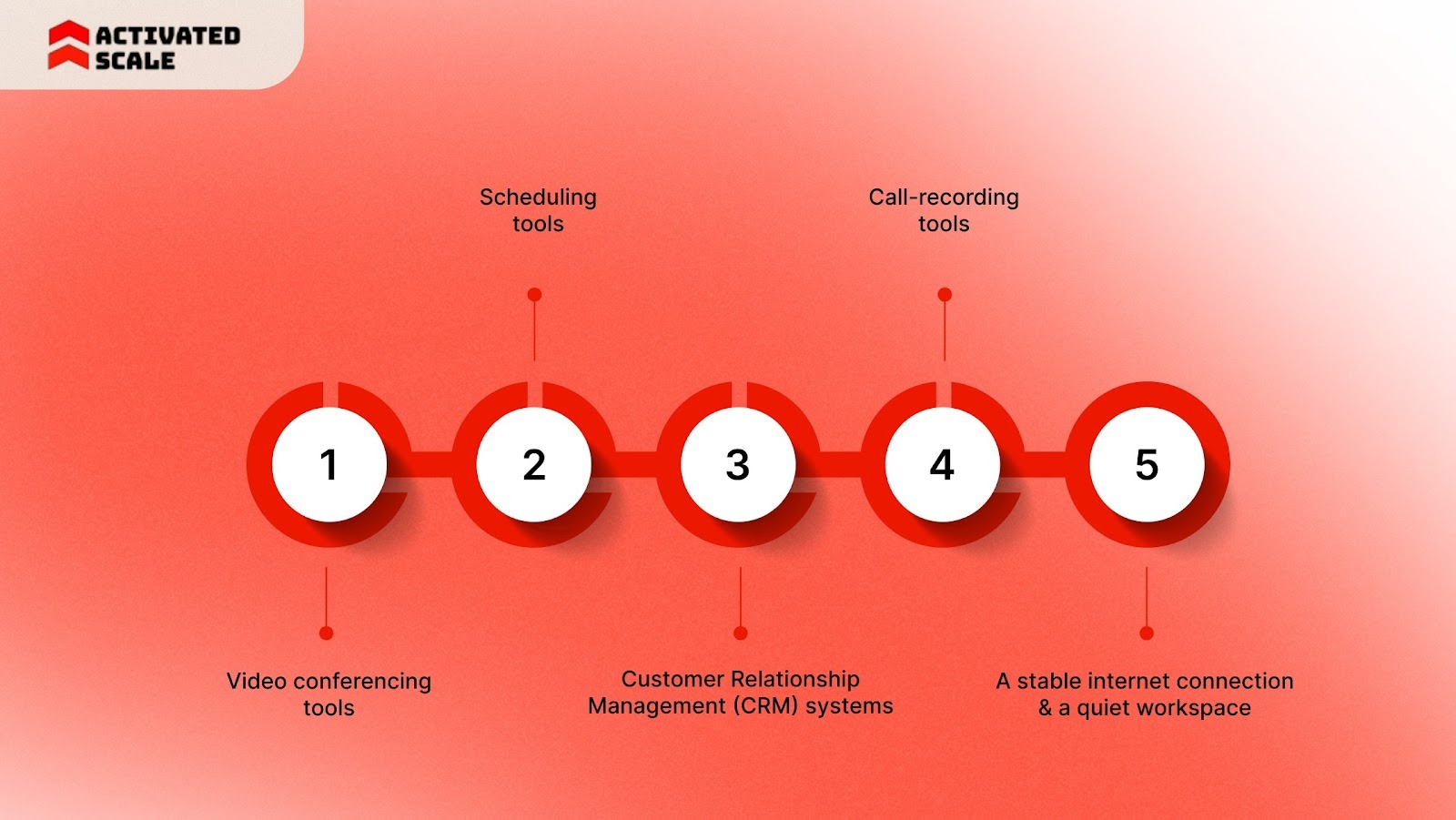
- Video conferencing tools (like Zoom or Google Meet) to run sales calls
- Scheduling tools to manage booked calls efficiently
- Customer Relationship Management (CRM) systems to track conversations, notes, and deal status
- Call-recording tools to review performance and improve over time
- A stable internet connection and a quiet workspace to avoid distractions
Tools support the process, but they don’t close deals on their own. That responsibility falls on the person leading the conversation, the remote closer.
What Is a Remote Closer?
A remote closer is the sales professional responsible for converting qualified interest into closed deals. Their role sits at the end of the sales pipeline, where decisions are made, and revenue is generated.
Remote closers are evaluated on outcomes, not activity. When a prospect reaches them, the groundwork has already been done. Their responsibility is to assess fit, clearly explain the offer, and guide the buyer toward a confident decision.
Remote closers usually work alongside marketers and SDRs. This division of labor allows sales teams to scale efficiently, especially in B2B and high-ticket environments where buying decisions require trust and clarity.
Now that you know what a remote closer is and where the role fits within a sales team, the next step is to understand what the job actually looks like in practice.
Remote Closer Job Description
A remote closer’s job is to run high-quality sales conversations and close qualified deals. The role is outcome-driven, not activity-driven, which means expectations are clear and performance is measurable.
Typical responsibilities include:
- Running scheduled sales calls with qualified prospects
- Asking discovery questions to understand needs and decision criteria
- Explaining the offer clearly, including pricing and next steps
- Addressing objections around cost, timing, or fit
- Closing deals or disqualifying prospects when it’s not a match
- Updating notes in a CRM and coordinating follow-ups when needed
Beyond tasks, companies hiring remote closers look for specific traits.
Common skills and requirements:
- Strong communication and active listening
- Confidence in leading conversations without scripts
- Ability to handle objections calmly and logically
- Comfort working remotely with minimal supervision
Most remote closer roles are commission-based, especially in B2B or high-ticket sales. Compensation is tied to closed revenue, not hours worked or calls made. This creates upside but also pressure to perform consistently.
Roles like remote closers only work when expectations are clear, and experience is real. That’s why many startups struggle when hiring on their own.
Activated Scale connects companies with pre-vetted, U.S.-based sales professionals who are already trained to operate in outcome-driven remote roles.
What Skills Do Remote Closers Need to Be Successful?
Successful remote closers need strong communication, active listening, objection handling, and emotional control. Because the role is fully remote, self-discipline and confidence in leading calls are equally important.
Key skills include:
- Active listening
- Clear, concise communication
- Objection handling rooted in logic and empathy
- Confidence without pressure
- Emotional control during high-stakes conversations
- Strong self-discipline
These skills matter more than scripts or sales tricks.
Once you understand the skills required, the next logical step is figuring out how to build them and position yourself for real opportunities.
If you’re looking to restart or accelerate your sales career, explore open remote and fractional sales roles on Job Services at Activated Scale and get matched with high-growth companies looking for closers like you.
Understanding the 5 C’s of Sales
The 5 C’s of Sales are especially important in remote closing, where building trust without in-person interaction requires honesty, reliability, deep customer understanding, clear communication, and steady performance.
- Character – Building trust through honesty and consistency
- Commitment – Showing reliability and follow-through
- Customer – Understanding the buyer’s real needs and constraints
- Communication – Explaining ideas clearly and listening actively
- Consistency – Maintaining steady performance and process
For remote closers, these principles matter even more because trust must be built without face-to-face interaction.
5 Ways to Become a Remote Closer
Becoming a remote closer isn’t about following a rigid career path. It’s about developing the right skills and understanding how modern sales teams operate.
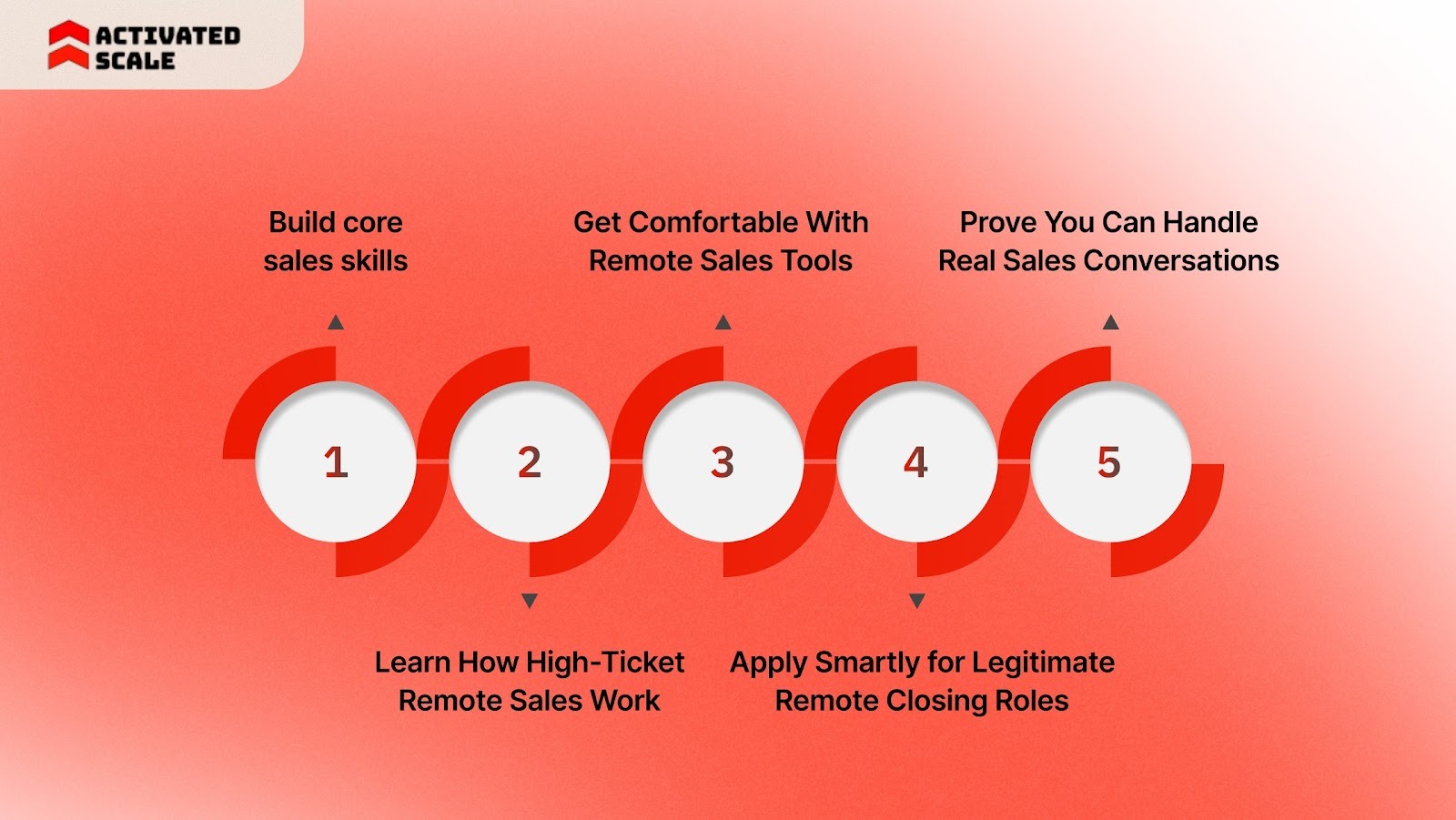
1.Build core sales skills
You don’t need formal sales experience, but you do need transferable skills. Many successful remote closers come from customer service, recruiting, consulting, or account management roles.
What matters most is your ability to communicate clearly, ask thoughtful questions, and stay composed during decision-focused conversations.
If you’ve handled objections, explained complex ideas, or guided people toward decisions before, you already have a foundation.
2.Learn How High-Ticket Remote Sales Work
Most remote closing roles involve higher-priced offers, especially in B2B or service-based businesses. These sales aren’t rushed.
Prospects expect thoughtful conversations, clear explanations, and honesty about fit.
Understanding how high-ticket sales work, longer calls, deeper discovery, and fewer but more meaningful conversations is essential before applying for roles.
3.Get Comfortable With Remote Sales Tools
Remote closers work entirely online, so basic tools are part of the job. You don’t need technical expertise, but you should be comfortable using:
- Video conferencing tools like Zoom
- Calendars for scheduling calls
- CRMs to track conversations and outcomes
Being organized and reliable matters just as much as sales ability.
4.Apply Strategically for Legitimate Remote Closing Roles
Not all job listings labeled “remote closing” are legitimate. Real roles clearly explain expectations, compensation structure, and performance metrics. They focus on skills, not hype.
Be cautious of listings that promise fast money, avoid discussing responsibilities, or require upfront payments.
Strong companies care about how you think and communicate, not just your confidence.
5.Prove You Can Handle Real Sales Conversations
Ultimately, companies hire remote closers based on performance. Being able to lead a clear, honest sales conversation matters more than certificates or titles.
If you can demonstrate good judgment, strong communication, and the ability to guide decisions without pressure, you’ll stand out quickly.
Once you understand the role and how to enter it, performance comes down to habits and execution.
Also Read: The New Rules for Recruiting Salespeople for 2026
10 Proven Strategies to Become an Excellent Remote Closer
Becoming a strong remote closer isn’t about aggressive tactics or clever scripts. It’s about consistency, judgment, and how you show up on every call.
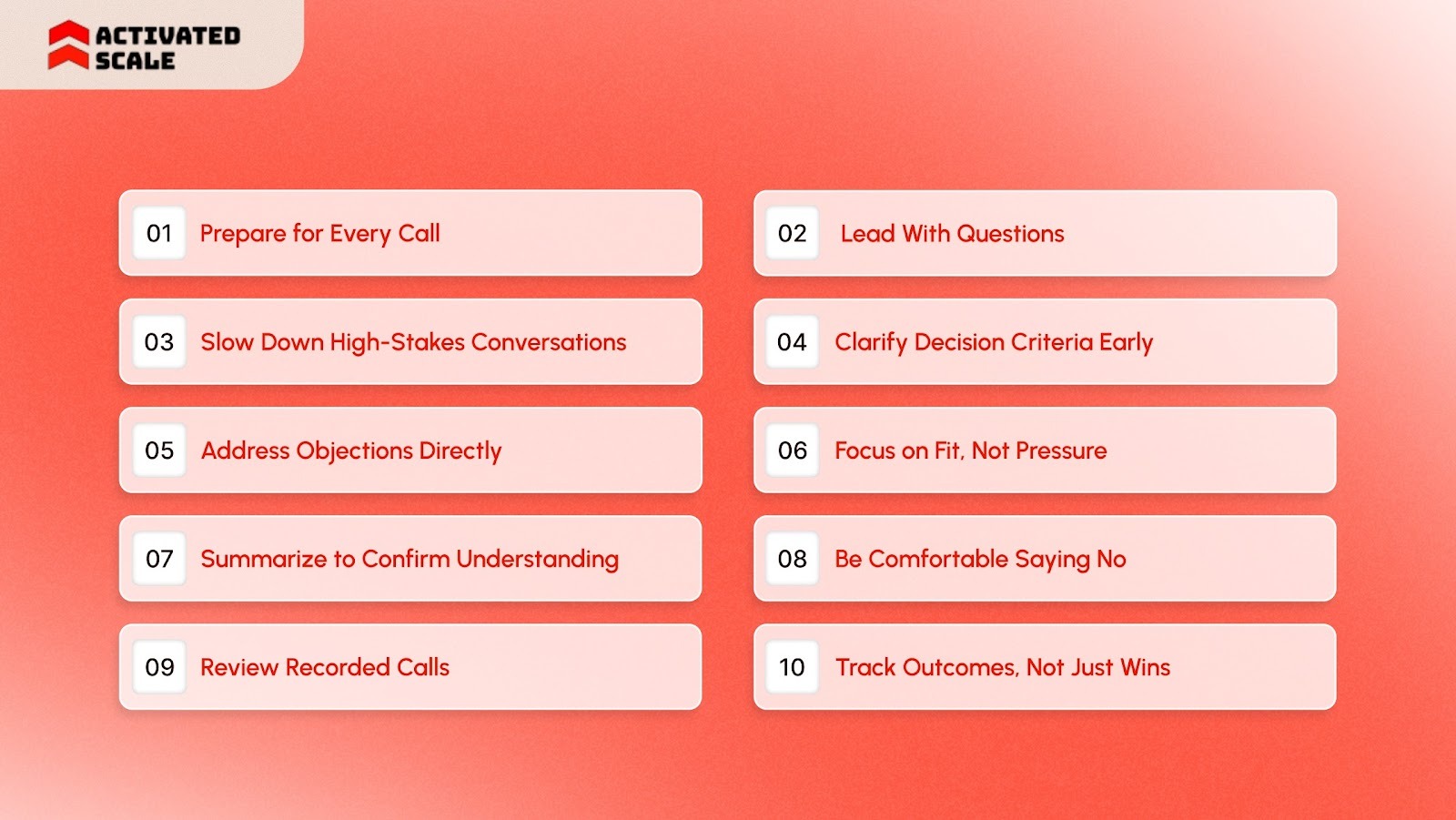
1. Prepare for Every Call
Even when leads are qualified, preparation matters, review notes, understand the offer, and be clear on the conversation's goal. Preparation helps you stay present instead of reacting on the fly.
2. Lead With Questions
Great remote closers talk less than they listen. Asking thoughtful questions uncovers real needs, decision factors, and concerns that aren’t always stated upfront.
3. Slow Down High-Stakes Conversations
When price or commitment increases, rushing creates resistance. Slowing the pace shows confidence and gives prospects space to think through their decision.
4. Clarify Decision Criteria Early
Don’t wait until the end to find out how someone decides. Ask early what matters most: budget, timing, authority, or outcomes, so there are no surprises later.
5. Address Objections Directly
Avoiding objections only delays them. Strong closers acknowledge concerns calmly, explore them honestly, and respond with clarity rather than defensiveness.
6. Focus on Fit, Not Pressure
Not every prospect should buy. When you prioritize fit over forcing a close, conversations feel more natural, and close rates often improve.
7. Summarize to Confirm Understanding
Repeating key points back to the prospect builds trust and prevents misalignment. It shows you’re listening and ensures both sides are on the same page.
8. Be Comfortable Saying No
Disqualifying the wrong prospects protects your time and the company’s reputation. Saying no when it’s not a fit is a sign of professionalism, not weakness.
9. Review Recorded Calls
Call recordings reveal patterns you won’t notice in real time. Reviewing wins and losses helps you refine your questions, pacing, and responses.
10. Track Outcomes, Not Just Wins
Look beyond closed deals. Track conversion rates, common objections, and drop-off points to understand what’s working and what needs adjustment.
Even with strong skills, remote closing isn’t a universal fit. Before committing fully, it’s worth weighing the advantages and trade-offs honestly.
Pros and Cons of Remote Closing
Remote closing has clear advantages, but it also comes with trade-offs. The table below breaks them down side by side.
Remote closing works best for people who value autonomy, can handle variable income, and are comfortable being evaluated on results. If you prefer stability, fixed routines, or minimal performance pressure, the role may feel challenging.
Because income and performance are closely tied, skepticism around remote closing is common. That makes it important to separate legitimate roles from misleading ones.
Also Read: Who is a Sales Development Engineer and How to Become One
Is Remote Closing Legit or a Scam?
Remote closing is legitimate, but it’s often misunderstood because some opportunities are poorly marketed or exaggerated.
Vague job posts and unrealistic promises cause people to assume the entire field is a scam, when in reality, remote closing is simply sales conversations conducted online instead of in person.
The issue isn’t the role itself; it’s how certain opportunities are presented.
Legitimate remote closing roles:
- Clearly explain responsibilities and expectations
- Are tied to real products or services
- Measure performance by closed deals, not hype
- Don’t promise guaranteed or “easy” income
On the other hand, warning signs include:
- Promises of fast money with little effort
- Lack of clarity about what’s being sold
- Pressure to pay upfront fees without transparency
- No real company, product, or sales process behind the role
One reason reputable companies avoid these issues is by working with vetted talent marketplaces.
Activated Scale screens sales professionals for real experience and proven performance, which helps teams avoid misleading roles and costly mis-hires.
Understanding this distinction helps you evaluate opportunities and avoid wasting time on roles that don’t align. Explore curated sales roles on Activated Scale’s Job Services and apply to positions built for your experience level.
Conclusion
Remote closing is a structured sales role focused on clear conversations and qualified prospects, not just a trendy term. It’s a structured sales role built around clear conversations, qualified prospects, and informed decisions, all done remotely.
For the right people, remote closing offers flexibility, responsibility, and real career upside. For companies, it creates a scalable way to close deals without relying on outdated, in-person sales models.
The key is alignment. When expectations are clear and the right people are in place, remote closing works.
When roles are vague or poorly defined, it doesn’t. Whether you’re considering the role yourself or building a sales team around it, clarity is what separates real opportunities from noise.
If remote closing is part of your growth strategy, the next step is making sure the right people are in place. Explore how Activated Scale connects startups with pre-vetted, U.S.-based SDRs and remote closers, so you can build a sales team that performs without the risk of traditional hiring.
FAQs
1.Is remote closing hard to learn?
Remote closing isn’t easy, but it’s learnable. The difficulty depends on your communication skills, comfort leading conversations, and ability to handle objections calmly. People with backgrounds in customer-facing roles often adapt faster.
2.How long does it take to become a remote closer?
There’s no fixed timeline. Some people transition within a few months, while others take longer to build confidence and experience. Progress depends more on practice and feedback than on formal credentials.
3.Can beginners succeed in remote closing?
Yes, beginners can succeed, but expectations matter. Entry-level remote closers need time to develop judgment, listening skills, and sales confidence. Roles that promise instant success without experience should be approached carefully.
4.Is remote closing only commission-based?
Many remote closing roles are commission-based, especially in B2B and high-ticket sales. Some companies offer base pay plus commission, but performance-based compensation is common because results are easy to measure.
5.What industries commonly use remote closing?
Remote closing is most common in B2B services, SaaS, coaching, agencies, and professional services. These industries rely on longer sales conversations rather than quick, transactional purchases.
6.Do remote closers work full-time or part-time?
Both options exist. Some remote closers work full-time with one company, while others operate contractually or part-time. The structure depends on the business model and sales volume.
The Ultimate Guide to Hiring a Salesperson!
Get the step-by-step guide to hiring, onboarding, and ensuring success!