_edi.png)
.jpg)
Traffic and pipeline growth do not guarantee revenue growth. Many SaaS startups generate demo requests and inbound leads but struggle to convert them into qualified opportunities and closed customers. The problem is rarely the lead volume. It is conversion efficiency across the sales funnel.
Sales conversion optimization helps startups identify where deals stall, why prospects drop off, and what needs to change to improve outcomes. Instead of relying on assumptions, teams can use data, structured testing, and focused execution to increase win rates and pipeline velocity.
This guide explains how sales conversion optimization works, where to focus first, and how startups can turn conversion improvements into predictable revenue.
Core Insights
- Sales conversion optimization improves revenue without increasing lead volume: It focuses on converting more existing leads into qualified opportunities and customers by improving follow-up, qualification, and deal progression.
- Conversion gaps usually occur in follow-up, qualification, and pipeline management: Slow response times, inconsistent outreach, and unclear qualification criteria are common reasons why leads fail to convert.
- A structured audit and measurement framework helps identify and fix funnel leakage: Tracking lead conversion rate, SQL rate, and win rate gives startups clear visibility into where revenue is lost.
- Prioritized tests and dashboards turn conversion into a repeatable, scalable process: Using structured experiments, CRM dashboards, and defined ownership helps teams improve conversion consistently.
- Execution is critical to turning optimization insights into revenue growth: Activated Scale helps startups deploy vetted U.S.-based SDRs, AEs, and sales leaders who improve follow-up, pipeline coverage, and conversion performance.
What Sales Conversion Optimization Actually Means For SaaS Founders
Sales conversion optimization is the systematic process of improving how prospects move from initial lead to closed revenue. It focuses on increasing the percentage of leads that become qualified opportunities and customers.
This includes optimizing qualification criteria, response speed, follow-up consistency, and deal progression. Instead of generating more leads, the goal is to convert the existing pipeline into revenue more efficiently and predictably.
For SaaS startups, sales conversion optimization works differently from ecommerce conversion rate optimization. Ecommerce conversions typically happen in one session, where a visitor makes an immediate purchase. SaaS conversions happen across multiple stages and over longer periods.
Typical SaaS conversion stages include:
- Lead submits a demo request or signs up for a trial
- Sales team qualifies the lead and schedules conversations
- Opportunity moves through the evaluation and decision stages
- Deal closes and becomes recurring revenue
Because this process involves human interaction and longer decision cycles, sales execution plays a major role in conversion outcomes.
Sales conversion optimization becomes a priority between Seed and Series B, when the pipeline grows, but efficiency does not improve at the same pace.
Common signals include:
- Customer acquisition cost is increasing without proportional revenue growth
- Leads entering the funnel but not converting into opportunities
- Deals are taking longer to close than expected
- Revenue forecasts are becoming less reliable
These issues indicate conversion gaps inside the funnel. Optimizing sales conversion helps founders improve win rates, increase pipeline efficiency, and generate more revenue from the demand they already have.
Sales Conversion Optimization Vs Conversion Rate Optimization
Sales conversion optimization and conversion rate optimization operate at different points in the revenue engine. Both aim to improve conversion performance, but they influence revenue predictability in very different ways.
In short, CRO determines how effectively traffic becomes pipeline, while sales conversion optimization determines how effectively pipeline becomes revenue.
For startups focused on predictable growth, improving downstream sales conversion often has a more immediate impact on forecasting accuracy.
Also Read: How to Find a CFO for Your Company in 2026?
6 Audit Pillars of Sales Conversion Optimization
Sales conversion optimization begins with a structured audit. This ensures decisions are based on measurable gaps, not assumptions.

These six pillars help SaaS startups identify where conversion breaks and what to fix first:
Tracking And Attribution Integrity
Conversion optimization is only as accurate as the tracking behind it. Missing or misaligned data hides real funnel problems and leads to poor decisions.
Key checkpoints:
- Confirm GA4 events track demo requests, trial signups, and key conversion actions
- Ensure CRM records the original lead source and lifecycle stage correctly
- Verify server-side tracking or integrations do not duplicate or miss conversions
- Align marketing and sales attribution to measure full funnel performance
Example event map structure:
This creates a reliable foundation for conversion analysis.
Offer And Messaging Fit
Even strong traffic will not convert if the offer or messaging is unclear.
Audit checklist:
- Is the demo or trial value clearly explained?
- Are CTAs specific and action-focused?
- Does messaging align with the target customer’s problem?
- Do landing pages match ad or outbound messaging?
Misaligned messaging reduces lead quality and conversion rates.
Funnel Conversion And Leakage Analysis
This step identifies where prospects drop off between stages.
Example funnel table:
This view highlights where improvements will have the greatest revenue impact.
Lead Quality And Sales Handoff
Conversion often breaks between marketing and sales. Delays or poor qualifications reduce opportunity creation.
Key checkpoints:
- Measure MQL to SQL conversion rate
- Track average response time to new leads
- Ensure clear ownership for every inbound lead
- Confirm that qualification criteria are consistently applied
Faster, structured handoffs improve conversion efficiency.
Nurture And SDR Execution
Many qualified leads require follow-up before converting. Weak follow-up processes result in lost opportunities.
Audit checklist:
- Review SDR outreach cadence and timing
- Confirm email sequences are active and relevant
- Check follow-up frequency and consistency
- Ensure inactive leads are re-engaged periodically
Consistent follow-up increases pipeline conversion without increasing lead volume.
Prioritized Experiments And Decision Rules
The final step is identifying which improvements to implement first. Prioritization ensures resources focus on high-impact changes.
Common prioritization framework:
ICE scoring example:
Focus first on improvements with the highest revenue impact and fastest execution.
These six audit pillars connect technical tracking, funnel analysis, and sales execution. Together, they provide a complete view of where conversion breaks and what startups must fix to turn pipeline into revenue.
Must read: What Affects Sales Training Costs and How To Plan
The 4-Week Sales Conversion Audit Playbook
A sales conversion optimization audit delivers the most value when it follows a fixed timeline with clear owners and outputs.
This four-week playbook gives startups a practical structure to identify conversion gaps, quantify impact, and prepare for execution.
Audit Timeline, Owners, And Deliverables:
Each phase builds on the previous one. By the end of Week 4, startups have both diagnostic insight and a clear plan to improve conversion performance.
Week 1: Tracking Validation
The first priority is ensuring conversion data is accurate.
Key outputs:
- Event map showing demo requests, trial signups, SQL creation, and closed deals
- List of missing, duplicated, or misaligned events
- Alignment between the analytics platform and CRM stages
This ensures conversion rates reflect reality.
Week 2: Funnel Metrics Analysis
Next, RevOps teams quantify where conversion breaks.
Core formulas:
Lead conversion rate
lead_rate = leads/visitors
SQL conversion rate
sql_rate = sql / leads
These metrics identify where pipeline efficiency drops.
Sample SQL pseudocode:
SELECT
COUNT(leads) / COUNT(visitors) AS lead_rate
FROM funnel_data;
SELECT
COUNT(sql) / COUNT(leads) AS sql_rate
FROM funnel_data;
MRR churn rate
mrr_churn = churned_mrr / total_mrr
SQL example:
SELECT
SUM(churned_mrr) / SUM(total_mrr) AS mrr_churn
FROM revenue_data;
These queries help teams measure revenue risk and conversion efficiency.
Week 3: Root-Cause Tests And Quick Wins
Growth and product teams identify fixes based on funnel gaps.
Typical prioritized tests include:
- Improving lead response speed
- Simplifying demo request forms
- Fixing qualification criteria
- Improving follow-up sequences
Each test is scored using ICE:
Impact, Confidence, Ease
This ensures teams focus on high-impact changes first.
Week 4: Execution Plan And Handoff
The final step prepares teams to implement improvements.
Key outputs:
- 30-day quick wins execution plan
- 60-day structural improvements roadmap
- 90-day conversion optimization plan
Sales leadership assigns ownership and tracks progress.
This structured audit playbook turns sales conversion optimization into a measurable, repeatable process. Instead of relying on assumptions, startups gain clear visibility into funnel performance and a practical roadmap to improve conversion and revenue predictability.
Many SaaS companies use platforms like Activated Scale to access vetted, U.S.-based fractional SDRs, AEs, and sales leaders who can execute the follow-up, qualification, and pipeline management improvements identified during a conversion audit while leadership stays focused on scaling revenue and growth.
Learn more about: How to Hire Overseas Contractors Compliantly in 2026
Downloadable Assets Sales Conversion Optimization Audit Should Include
A sales conversion optimization audit becomes far more effective when teams can work from standardized templates and datasets. Downloadable measurement assets allow startups to move faster, maintain consistency, and avoid rebuilding dashboards or tracking structures from scratch.
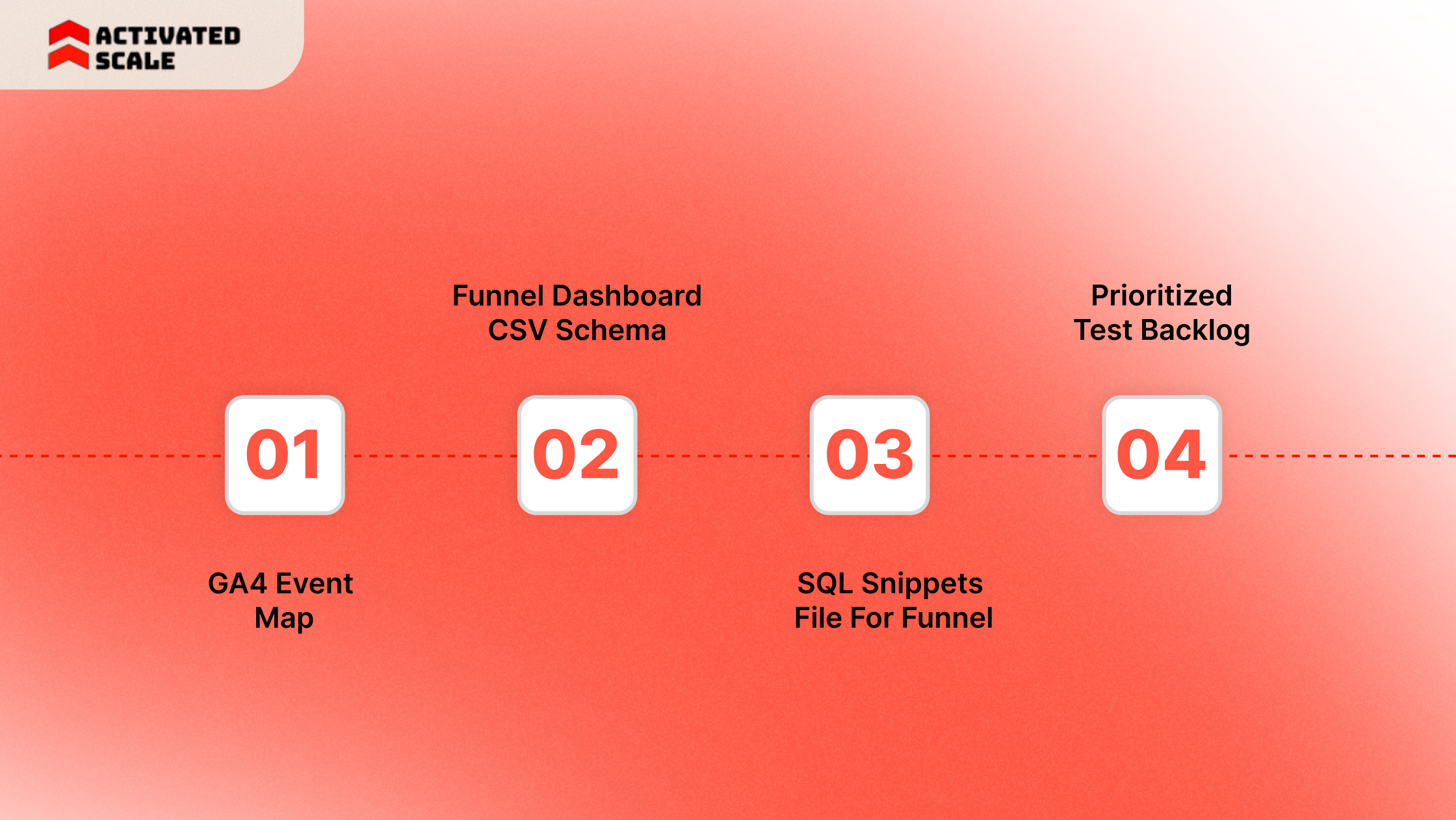
These resources also ensure marketing, RevOps, and sales teams work from the same definitions and data.
GA4 Event Map (CSV Format With Example Row)
An event map defines the exact conversion actions tracked across the funnel. It ensures analytics tools and CRM systems measure the same milestones, preventing reporting conflicts.
A simple event map structure might include:
event_name, event_category, platform, description
Example rows:
- demo_request, conversion, GA4, User submits demo form
- trial_signup, conversion, Product, User creates free trial
- sql_created, conversion, CRM, Lead becomes sales qualified
- deal_closed, conversion, CRM, Opportunity converts to customer
This file helps teams:
- Identify missing or duplicate conversion tracking
- Align marketing and sales funnel stages
- Build accurate and consistent funnel dashboards
Funnel Dashboard CSV Schema (With Example Rows)
A funnel dashboard schema defines how performance data is structured for reporting. It allows teams to track how traffic turns into revenue over time.
Example structure:
date, lead_source, visitors, leads, sql, opportunities, closed_won, revenue
Example rows:
- 2026-01-01, Google Ads, 1200, 72, 30, 12, 3, 45000
- 2026-01-01, Organic Search, 950, 58, 22, 9, 2, 30000
This structure allows teams to:
- Monitor conversion trends across stages
- Compare performance by channel
- Track how the pipeline contributes to revenue
Funnel And Revenue Analysis Templates
Instead of building reports manually each time, teams can create reusable templates inside their CRM or BI tool. These templates track:
- Lead to SQL progression
- Opportunity stage distribution
- Closed-won revenue over time
- Conversion drop-off between stages
Having standardized templates ensures everyone reviews the same metrics during pipeline and forecast meetings.
Prioritized Test Backlog (CSV With ICE Or RICE Scoring)
A test backlog organizes and prioritizes conversion improvement initiatives. It helps teams focus on the highest-impact changes first instead of testing randomly.
Example structure:
test_name, impact, confidence, ease, priority_score, owner, status
Example rows:
- Improve response speed, 9, 8, 9, 26, Sales, Planned
- Shorten demo form, 8, 7, 8, 23, Marketing, Testing
- Revise qualification criteria, 7, 7, 6, 20, RevOps, Planned
This approach helps startups:
- Prioritize improvements based on impact
- Assign clear ownership
- Track progress consistently
Together, these measurement assets turn sales conversion optimization into a structured system. Instead of relying on assumptions, teams can track performance consistently, identify bottlenecks early, and build a repeatable foundation for predictable revenue growth.
How To Calculate Sales Conversion Rates?
Sales conversion rates measure how efficiently deals progress through the pipeline and convert into revenue. Unlike top-of-funnel metrics, these calculations focus on opportunity movement and revenue outcomes. Tracking them consistently improves forecasting accuracy and highlights where pipeline performance weakens.
At its core, a sales conversion rate measures the percentage of records that move from one stage to the next.
Stage-To-Stage Conversion Formula

For example, if 120 opportunities enter the demo stage and 60 move to proposal:
(60/120) × 100 = 50%
This means demo-to-proposal conversion is 50%.
Tracking stage-level conversion helps identify friction points inside the funnel rather than relying only on the overall win rate.
Common SaaS Funnel Calculations
Below are the most important sales conversion calculations for SaaS companies:
Lead To SQL Conversion
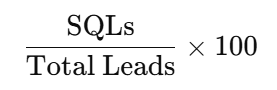
Measures lead quality and qualification effectiveness.
SQL To Opportunity Conversion
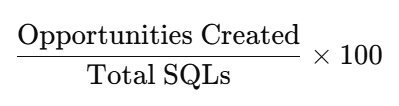
Reflects discovery strength and buyer intent validation.
Opportunity To Closed-Won Conversion (Win Rate)
.png)
Measures overall sales effectiveness and directly impacts forecast reliability.
Revenue-Based Conversion Impact
Conversion rates also influence revenue projections. Expected revenue can be estimated using:
Projected Revenue = Pipeline Value × Win Rate
For example, if a qualified pipeline is $2M and the win rate is 25%, the projected revenue is:
2,000,000×0.25=500,000
This calculation connects pipeline quality directly to forecasting accuracy.
When startups calculate conversion rates at each stage instead of relying on aggregate metrics alone, they gain visibility into where deals slow down, where qualification may be too loose, and where sales execution needs refinement. This level of insight enables RevOps teams to improve predictability without simply increasing lead volume.
Common SaaS Conversion Benchmarks
Conversion benchmarks vary by pricing model, target segment, sales cycle length, and acquisition channel. However, the ranges below provide directional guidance for B2B SaaS startups.
- Lead → SQL (20–40%): Higher for strong inbound funnels; lower for outbound-driven models.
- SQL → Opportunity (50–70%): Indicates qualification accuracy and discovery effectiveness.
- Opportunity → Proposal (40–60%): Mid-funnel health metric; lower rates may signal weak qualification.
- Proposal → Closed Won (25–40%): Strong indicator of pricing alignment and deal positioning.
- Overall Win Rate (20–30%): Early-stage startups often see lower rates due to loose qualification; mature SaaS companies may trend higher.
Enterprise sales cycles typically show lower early-stage conversion but stronger late-stage close rates due to stricter qualification and higher deal intent.
Benchmarks should not be treated as universal targets. The most important metric is historical consistency. Improving conversion relative to your own baseline is more impactful than chasing industry averages.
8 High-ROI Tests And How To Run Them
Sales conversion optimization improves fastest when startups prioritize tests that directly affect lead qualification, follow-up speed, and buying intent. The tests below focus on common SaaS funnel friction points.
Each includes expected impact, execution ownership, and measurement guardrails so teams can implement them with confidence.
1. Reduce Lead Response Time
Test: Reduce first response time from several hours to under 5 minutes.
- Expected impact: 20–40% increase in SQL conversion rate
- Activation play: SDR team implements instant routing and response workflows
- Measurement metric: SQL conversion rate, meeting booked rate
- Sample size guardrail: Minimum 100 inbound leads per variation
- Next step if successful: Make fast response routing permanent and expand coverage hours
2. Shorten Demo Request Form
Test: Reduce required form fields from 6–8 fields to 3–4 fields.
- Expected impact: 10–25% increase in lead conversion rate
- Activation play: Marketing team updates form and CRM enrichment process
- Measurement metric: Lead conversion rate, SQL quality
- Sample size guardrail: At least 500 visitors per variation
- Next step if successful: Apply shorter forms across all high-intent pages
3. Test Trial Without Credit Card Requirement
Test: Compare free trial with and without credit card requirement.
- Expected impact: 15–30% increase in trial signup rate
- Activation play: Growth and product teams configure trial access rules
- Measurement metric: Trial-to-SQL conversion rate
- Sample size guardrail: Minimum 200 trial users per variation
- Next step if successful: Adopt the model that produces higher revenue conversion
4. Improve Call-To-Action Messaging
Test: Replace generic CTAs like “Submit” with outcome-focused CTAs such as “Book Your Demo.”
- Expected impact: 5–15% increase in lead conversion
- Activation play: Marketing team updates landing pages
- Measurement metric: Form submission rate
- Sample size guardrail: At least 1,000 visitors per variation
- Next step if successful: Roll out across all acquisition channels
5. Add SDR Follow-Up Sequence Within First 24 Hours
Test: Introduce structured SDR email and call follow-up sequence.
- Expected impact: 15–35% increase in opportunity creation
- Activation play: SDR team implements new cadence
- Measurement metric: Opportunity conversion rate
- Sample size guardrail: Minimum 100 qualified leads
- Next step if successful: Standardize follow-up sequence across team
6. Introduce Calendar Scheduling On Confirmation Page
Test: Add direct meeting scheduling immediately after form submission.
- Expected impact: 10–20% increase in booked meetings
- Activation play: RevOps integrates scheduling tools with funnel
- Measurement metric: Meeting booking rate
- Sample size guardrail: 150+ form submissions
- Next step if successful: Implement across all conversion points
7. Prioritize High-Intent Leads For Immediate Sales Follow-Up
Test: Route enterprise or ICP-matched leads to the fastest response queue.
- Expected impact: 20–30% increase in win rate for high-value deals
- Activation play: RevOps defines lead routing rules
- Measurement metric: Opportunity win rate
- Sample size guardrail: 50+ high-intent leads
- Next step if successful: Expand prioritization model
8. Improve Qualification Criteria To Focus On High-Fit Accounts
Test: Refine qualification requirements based on past successful customers.
- Expected impact: Higher SQL quality and win rate
- Activation play: Sales leadership updates qualification framework
- Measurement metric: Win rate, sales cycle length
- Sample size guardrail: One full sales cycle
- Next step if successful: Apply updated qualification across pipeline
These tests help startups improve conversion using measurable, repeatable actions. By focusing on follow-up speed, qualification accuracy, and funnel efficiency, SaaS companies can increase revenue without increasing lead volume.
Turning Tests Into Revenue: Execution Options in 2026
Sales conversion optimization creates value only when test insights are implemented consistently. Many startups identify conversion gaps but struggle to execute fixes quickly due to limited bandwidth or hiring delays. Choosing the right execution model helps teams convert optimization insights into measurable pipeline and revenue growth.

Below are the primary execution paths SaaS startups use, depending on stage, urgency, and internal resources:
In-House A/B Testing And Product Experiments
Startups with established growth and RevOps teams often execute conversion improvements internally. This works best when the company already has dedicated ownership and technical support.
Typical use cases:
- Updating demo flows and landing pages
- Testing pricing or trial onboarding changes
- Improving funnel tracking and dashboards
Expected timeline and outcomes:
- Timeline: 4–8 weeks to implement and measure test results
- Outcome: 10–20% improvement in lead conversion or trial activation rates
- Best fit: Series A and later startups with internal growth teams
This model offers maximum control but requires dedicated resources.
Contract-To-Hire Execution Support
When startups identify conversion gaps but lack immediate hiring capacity, contract-to-hire provides a lower-risk way to deploy sales talent quickly. This allows companies to validate impact before making full-time hiring decisions.
Typical execution support includes:
- Improving inbound lead follow-up
- Increasing qualification consistency
- Strengthening pipeline progression
Expected timeline and outcomes:
- Timeline: 2–4 weeks to deploy talent
- Outcome: 15–30% improvement in opportunity creation
- Conviction path: Convert to full-time hire once performance is proven
Activated Scale helps startups access pre-vetted U.S.-based SDRs and AEs through flexible contract-to-hire models, reducing hiring risk while improving conversion execution.
Fractional SDRs And AEs For Follow-Up And Conversion
Fractional sales talent allows startups to improve conversion performance without committing to full-time headcount immediately. This is especially useful when lead volume grows faster than the existing team can handle.
Fractional execution supports:
- Faster response times to inbound leads
- Consistent follow-up sequences
- Improved opportunity qualification
Expected timeline and outcomes:
- Timeline: 1–3 weeks to begin execution
- Outcome: 20–40% increase in SQL conversion rate and pipeline coverage
- Best fit: Seed to Series A startups scaling inbound or outbound efforts
Activated Scale connects startups with experienced fractional SDRs and AEs who help convert funnel improvements into qualified pipelines.
Fractional Sales Leadership For Funnel Optimization
In some cases, conversion gaps stem from structural issues such as unclear qualification criteria, weak pipeline management, or poor forecasting alignment. Fractional sales leadership helps address these strategic issues.
Typical leadership improvements include:
- Defining qualification standards
- Improving pipeline visibility and forecasting
- Aligning marketing and sales conversion goals
Expected timeline and outcomes:
- Timeline: 30–60 days to implement structural improvements
- Outcome: Improved win rates, shorter sales cycles, and stronger forecast accuracy
- Best fit: Startups preparing for rapid growth or scaling revenue teams
Activated Scale provides access to experienced fractional sales leaders who help startups align execution with conversion optimization goals.
Sales conversion optimization reveals where conversion improves. Execution determines how quickly those improvements translate into revenue. By combining structured testing with flexible access to proven sales talent, startups can accelerate conversion gains and build a predictable, scalable revenue engine.
Monitoring Cadence And Operational Rhythm
Sales conversion optimization requires ongoing monitoring, not one-time analysis. Each level of cadence serves a specific purpose.
Daily monitoring:
- Check for sudden drops in lead flow or conversion rates
- Identify missed follow-ups or routing issues
- Trigger alerts when pipeline activity declines
Weekly reviews:
- Analyze lead-to-SQL and opportunity conversion rates
- Review follow-up performance and pipeline coverage
- Identify early conversion improvement or decline trends
Monthly forecasting reconciliation:
- Compare forecasted vs actual revenue
- Identify structural funnel issues affecting predictability
- Adjust conversion assumptions based on real performance
This structured monitoring ensures startups maintain conversion efficiency and detect risks early. By connecting optimization efforts directly to revenue metrics, leadership can make confident decisions and scale pipeline growth predictably.
Common Mistakes And How To Avoid Them
Sales conversion optimization often fails not because teams lack effort, but because they focus on the wrong problems or delay execution. Avoiding these common mistakes helps startups improve conversion faster and prevent wasted pipeline.
Tracking The Wrong Metrics
Many startups track top-of-funnel metrics like traffic and lead volume, but ignore conversion efficiency deeper in the funnel.
How to avoid it:
- Prioritize SQL conversion rate, win rate, and sales cycle length
- Align CRM stages with the actual buying progression
- Review conversion metrics weekly, not just monthly
This ensures decisions focus on revenue impact, not activity volume.
Optimizing The Wrong Funnel Stage
Teams often try to increase lead volume when the real issue is poor qualification or weak follow-up.
How to avoid it:
- Analyze stage-by-stage conversion rates before making changes
- Identify where the largest percentage drop occurs
- Fix the stage with the greatest leakage first
Improving the right stage delivers faster revenue gains.
Delaying Sales Hiring Too Long
When the pipeline grows, but sales capacity does not, conversion suffers due to slow follow-up and missed opportunities.
How to avoid it:
- Monitor lead response times and pipeline coverage
- Add sales capacity when follow-up delays increase
- Use flexible hiring models to scale execution faster
This ensures leads receive timely attention.
Ignoring Lead Follow-Up Speed
Slow follow-up significantly reduces conversion, even with high-quality leads.
How to avoid it:
- Track average response time for inbound leads
- Set clear response time targets
- Assign ownership immediately when leads enter the funnel
Fast response improves qualification and opportunity creation.
Over-Testing Low-Impact Changes
Testing small design changes without addressing structural funnel issues wastes time and resources.
How to avoid it:
- Prioritize tests affecting qualification, follow-up, and pipeline progression
- Use prioritization frameworks like ICE or RICE
- Focus first on changes that directly impact revenue conversion
This ensures optimization efforts produce meaningful results.
Avoiding these mistakes helps startups focus on the changes that improve conversion efficiency and accelerate revenue growth.
How Activated Scale Helps Startups Execute Sales Conversion Optimization
Sales conversion optimization identifies where pipeline efficiency breaks, but execution is what improves conversion rates. Most startups uncover gaps in lead response speed, qualification consistency, or deal follow-up during optimization.
These gaps directly affect opportunity creation, win rates, and revenue predictability. Without the right sales capacity, conversion improvements remain delayed or unrealized.
Activated Scale helps startups act on conversion insights by providing vetted, U.S.-based SDRs, AEs, and sales leaders who strengthen funnel execution. Instead of waiting through long hiring cycles, companies can deploy experienced sales professionals who improve follow-up, pipeline coverage, and deal progression immediately.
Activated Scale supports sales conversion optimization through flexible hiring models:
1. Contract-to-Hire Recruiting: Startups can deploy experienced SDRs or AEs to improve lead qualification, follow-up, and opportunity creation. This allows companies to validate conversion impact before transitioning the role to full-time.
2. Fractional SDRs and AEs: Fractional sales professionals help startups execute consistent follow-up and maintain pipeline momentum. This ensures optimized funnels translate into real sales conversations and opportunities.
They directly support:
- Faster response times to inbound leads
- Higher SQL conversion rates
- More consistent pipeline creation
3. Fractional Sales Leadership: Activated Scale also provides experienced sales leaders who help startups improve funnel structure, refine qualification frameworks, and strengthen forecast accuracy. This ensures conversion improvements align with long-term revenue growth.
Activated Scale helps startups execute what sales conversion optimization reveals. By providing flexible access to proven sales talent, Activated Scale enables companies to convert more pipeline into revenue and scale growth with confidence.
Conclusion
Sales conversion optimization brings structure to how leads turn into revenue. Done right, it improves qualification, strengthens follow-up, and increases the percentage of opportunities that close. Instead of relying on more traffic or lead volume, startups can generate more revenue from the pipeline they already have and improve forecast reliability.
Activated Scale helps startups execute these conversion improvements by connecting them with vetted, U.S.-based SDRs, AEs, and sales leaders who improve response speed, pipeline coverage, and deal progression. Through contract-to-hire and fractional models, companies can strengthen sales execution and conversion performance without committing to full-time hires too early.
Connect with Activated Scale to explore how flexible, proven sales talent can help you turn sales conversion optimization into a predictable pipeline and revenue growth.
FAQs
1. What is the first step in sales conversion optimization?
The first step is reviewing your funnel to see where leads stop progressing. This helps identify whether the issue is qualification, follow-up, or deal management. Once the gap is clear, teams can prioritize the right fixes.
2. How often should startups review their sales conversion performance?
Startups should review conversion performance regularly to catch issues early. Weekly reviews help monitor pipeline movement, while monthly reviews help assess overall conversion trends and forecast accuracy.
3. Does sales conversion optimization require new tools?
Not always. Many startups can improve conversion by using their existing CRM and tracking systems more effectively. The key is ensuring data is accurate, and workflows are clearly defined.
4. Can early-stage startups benefit from sales conversion optimization?
Yes. Early-stage startups benefit by building efficient sales processes from the beginning. This helps prevent conversion problems as pipeline and lead volume grow.
5. What is the biggest operational challenge in improving sales conversion?
Execution is often the biggest challenge. Startups may identify gaps but lack the time or sales capacity to fix them. Addressing follow-up, qualification, and ownership quickly makes the biggest difference.
The Ultimate Guide to Hiring a Salesperson!
Get the step-by-step guide to hiring, onboarding, and ensuring success!