_edi.png)

Attracting the right talent is one thing; acquiring it quickly and predictably is another. Companies with structured talent acquisition strategies fill roles twice as fast as those without them, accelerating team growth and competitive advantage.
A strong talent acquisition strategy isn’t just about posting jobs or attending career fairs. It’s about understanding where your best candidates are, how they make decisions, and how you can design your hiring process to consistently bring in the right people at the right time.
For revenue-driven teams and scaling ventures, the stakes are higher: hiring delays or mis-hires translate directly into slower growth and missed market opportunities. This guide breaks down practical, high-impact strategies that organizations use to make talent acquisition both efficient and effective.
In a nutshell:
- Companies with structured talent acquisition strategies hire up to 2× faster, reduce mis-hires, and align hiring directly with long-term business and revenue goals.
- Effective strategies focus on role clarity, future workforce planning, and reducing ramp time, especially for revenue-critical and scaling teams.
- Branding, referrals, and social sourcing work best when supported by clear processes, data-driven decisions, and consistent candidate experience.
- Using hiring analytics, ATS tools, and performance tracking helps teams forecast talent needs, shorten time-to-hire, and avoid costly hiring mistakes.
- Fractional and contract-to-hire talent allows companies to validate performance, scale faster, and avoid premature long-term headcount commitments, especially in sales roles.
What Is Talent Acquisition?
Talent acquisition is a forward-looking approach to hiring. Instead of reacting to open roles, it focuses on identifying, attracting, and securing skilled professionals who can support the company’s goals over time.
Unlike traditional recruitment, which is often transactional and short-term, talent acquisition looks deeper. It connects hiring decisions to business priorities, growth plans, and future skill requirements. This means building strong employer positioning, nurturing talent pipelines, and reducing time-to-hire and ramp time when critical roles open up.
For growing companies, talent acquisition helps avoid rushed hires, lowers long-term hiring risk, and ensures the right people are in place when the business needs to scale.
What Is a Talent Acquisition Strategy?
A talent acquisition strategy is a structured plan that defines how an organization attracts, hires, and retains talent in a way that supports long-term success.
It typically includes:
- Workforce planning to identify current and future skill gaps
- Employer branding to attract the right candidates
- Hiring models and sourcing channels that align with business goals
- Candidate experience design to improve acceptance and retention
A strong talent acquisition strategy goes beyond filling roles. It ensures hiring decisions are intentional, repeatable, and aligned with where the business is headed, not just where it is today.
The ultimate goal is simple: secure the right talent at the right time, without slowing execution or growth.
Talent Acquisition vs. Recruitment: Why Strategy Matters More Than Speed
Recruitment and talent acquisition are often used interchangeably, but they serve very different purposes, especially for startups and scaling teams.
Recruitment is reactive by nature. It focuses on filling open roles as quickly as possible to meet an immediate need. The priority is speed and availability, not long-term fit.
Talent acquisition, in contrast, is a strategic, forward-looking approach. It focuses on:
- Anticipating future hiring needs
- Building relationships with potential candidates before roles open
- Aligning hiring decisions with business growth and revenue plans
- Strengthening employer brand over time
For growing companies, talent acquisition strategies create resilience. Instead of scrambling to hire under pressure, teams build a repeatable system that supports expansion, reduces bad hires, and protects business continuity.
Put simply: recruitment fills roles, while a talent acquisition strategy builds a workforce that can scale. Recruitment remains an important execution lever, but only when it’s guided by a broader, long-term talent acquisition plan.
At Activated Scale, talent acquisition is treated as a revenue strategy, not a hiring task. Instead of reacting to open roles, teams use Activated Scale’s fractional and contract-to-hire sales talent to plan ahead, test execution in real market conditions, and scale go-to-market teams only once performance is proven.
Learn more about: The New Rules for Recruiting Salespeople for 2026
Proven Talent Acquisition Strategies That Actually Drive Hiring Success
Organizations approach talent acquisition in different ways, but the most effective talent acquisition strategy is rarely built on a single tactic. Results come from combining multiple, well-aligned approaches based on business goals, hiring urgency, and talent availability.
Rather than adopting every strategy available, high-performing teams focus on the ones that directly improve candidate quality, speed to hire, and long-term retention. Below are some of the most widely used and consistently effective talent acquisition strategies businesses rely on today.
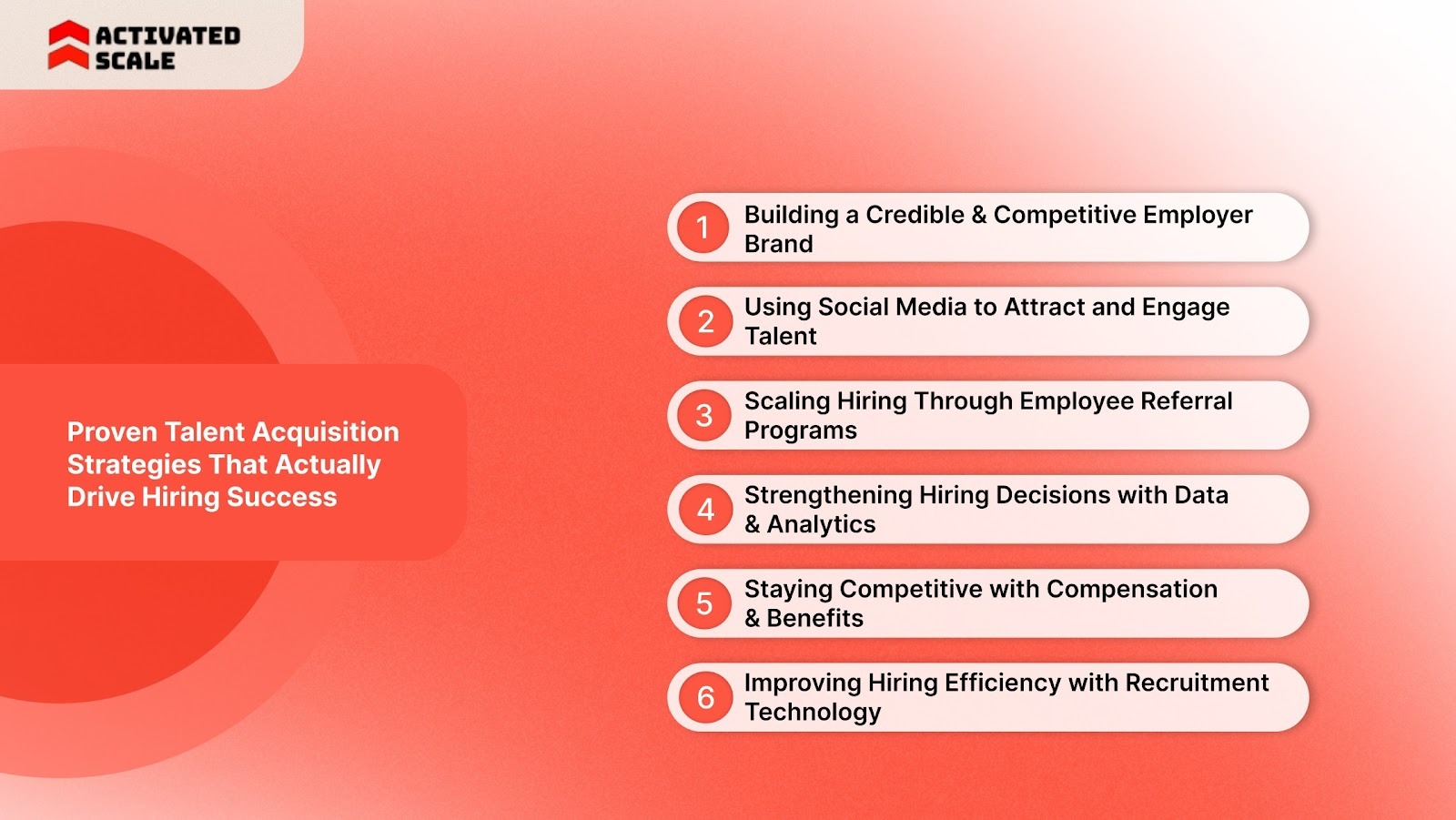
1. Building a Credible and Competitive Employer Brand
Employer branding goes beyond marketing slogans; it reflects how candidates genuinely perceive your organization as a workplace. A strong employer brand clearly communicates what employees gain by joining your company, whether that’s growth opportunities, flexibility, autonomy, or exposure to meaningful work.
Companies that invest in employer branding tend to attract better-fit candidates because expectations are set early and transparently. Sharing real employee experiences, showcasing leadership values, and being consistent across job listings, career pages, and review platforms all contribute to a more trustworthy hiring presence.
2. Using Social Media to Attract and Engage Talent
Social platforms have become essential channels within modern talent acquisition strategies. They allow businesses to move beyond static job postings and actively engage potential candidates through culture-led content, industry insights, and hiring updates.
LinkedIn supports professional credibility and targeted outreach, while platforms like Instagram offer a behind-the-scenes look at team culture. When used consistently, social media helps build familiarity with your brand long before a candidate applies, making hiring conversations warmer and more effective.
3. Scaling Hiring Through Employee Referral Programs
Employee referrals remain one of the most reliable sources of quality hires. Existing employees understand both the role requirements and the company culture, making them well-positioned to recommend candidates who are more likely to succeed.
A structured referral program not only accelerates hiring timelines but often improves retention rates. Candidates referred internally typically onboard faster, align better with team expectations, and show higher long-term engagement.
4. Strengthening Hiring Decisions with Data and Analytics
Data-driven recruitment has become a critical part of any scalable talent acquisition strategy. By analyzing metrics such as time-to-hire, source effectiveness, candidate drop-off points, and workforce demand trends, businesses gain visibility into what’s working and what isn’t.
Applicant tracking systems and recruitment analytics tools enable hiring teams to optimize budgets, forecast talent needs, and make more informed decisions instead of relying on assumptions or outdated processes.
5. Staying Competitive with Compensation and Benefits
Compensation remains a decisive factor in attracting top talent, but competitiveness is not just about salary. Benefits such as flexible work arrangements, healthcare coverage, learning opportunities, and well-being initiatives increasingly influence candidate decisions.
Successful organizations regularly benchmark their compensation packages against market standards and adapt offerings as workforce expectations evolve, particularly as younger generations prioritize flexibility and career development over traditional perks.
6. Improving Hiring Efficiency with Recruitment Technology
Recruitment technology plays a key role in creating a smoother experience for both candidates and hiring teams. Tools that automate application management, streamline communication, and support virtual interviews reduce administrative friction and shorten hiring cycles.
When implemented correctly, recruitment technology improves consistency, enhances collaboration among stakeholders, and allows recruiters to focus on candidate quality rather than manual processes.
Execution is often where talent acquisition breaks down, especially for sales roles. Activated Scale bridges that gap through Fractional Sales Leadership, helping teams deploy proven SDRs, AEs, and sales leaders exactly when growth demands it, without long-term hiring risk.
Also read: How to Hire and Manage Remote Employees Successfully
Why a Strong Talent Acquisition Strategy Matters for Long-Term Growth
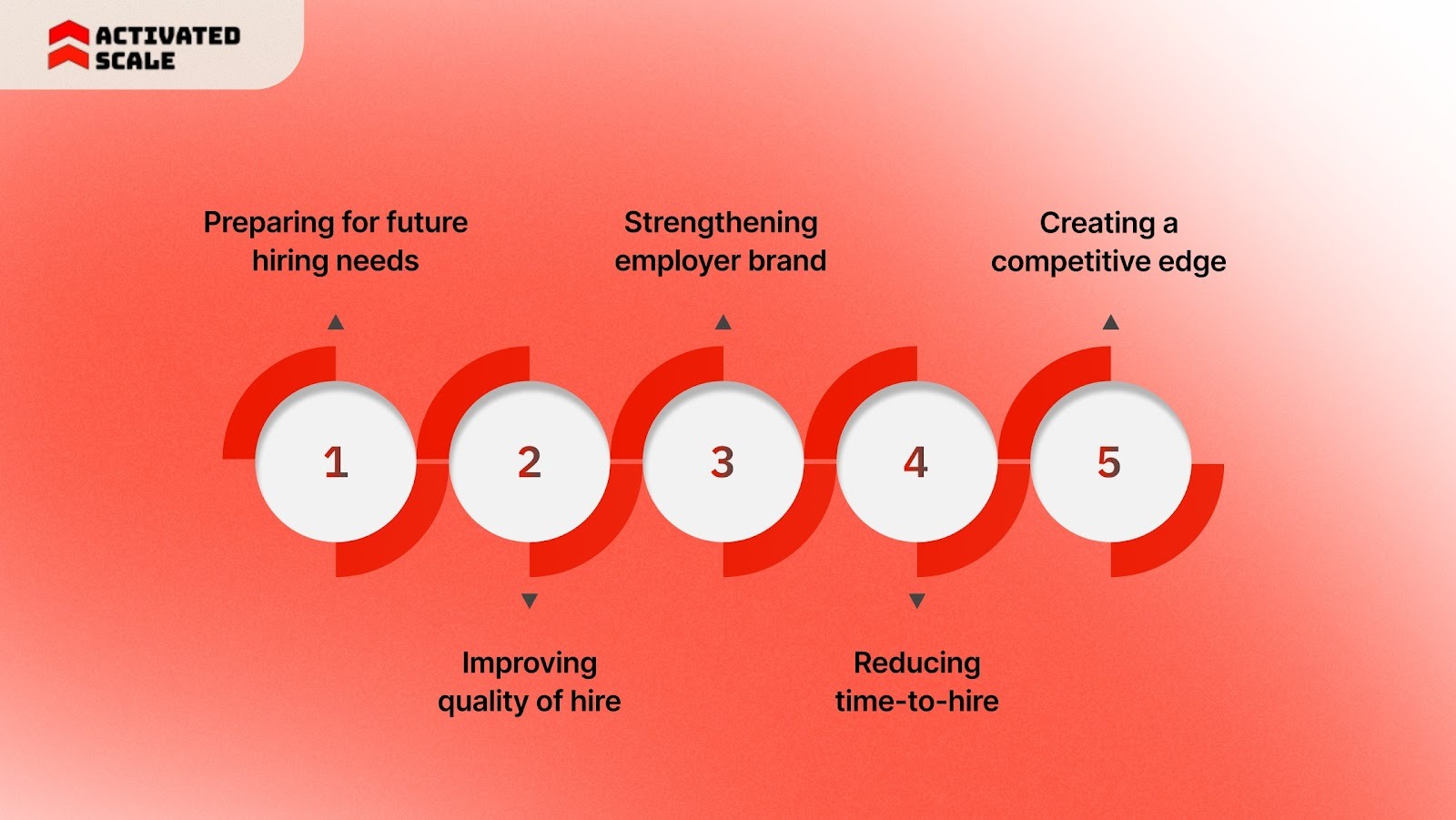
A well-defined talent acquisition strategy directly impacts how a company grows, competes, and adapts. It’s not just about filling open roles, it’s about building the workforce your business will need tomorrow.
1. Preparing for future hiring needs
A proactive talent acquisition strategy helps teams anticipate upcoming gaps before they become urgent. By planning ahead, companies avoid last-minute hiring that often leads to rushed decisions and misaligned hires.
2. Improving quality of hire
Targeted sourcing and structured evaluation raise the overall quality of candidates. When hiring is intentional and well-vetted, new hires contribute faster and stay aligned with business goals.
3. Strengthening employer brand
Every hiring interaction shapes how the market perceives your company. A thoughtful talent acquisition approach builds credibility, not only with successful candidates, but also with those who don’t get the role and may reapply, refer others, or remain customers.
4. Reducing time-to-hire
Maintaining an active talent pipeline shortens hiring cycles. Faster hiring keeps teams productive, supports business continuity, and reduces the cost of vacant roles.
5. Creating a competitive edge
Talent is often the biggest differentiator between companies in the same market. A strong talent acquisition strategy ensures you have the right people in place to innovate, scale, and outperform competitors.
How Activated Scale Strengthens Sales Talent Acquisition
Hiring sales talent through traditional channels is slow, expensive, and often misaligned with early-stage growth needs. Activated Scale addresses this gap by giving companies fast access to pre-vetted, U.S.-based sales professionals who can be engaged flexibly, fractional, contract-to-hire, or full-time, based on business stage and revenue goals.
This model supports a more practical talent acquisition strategy by removing common friction points:
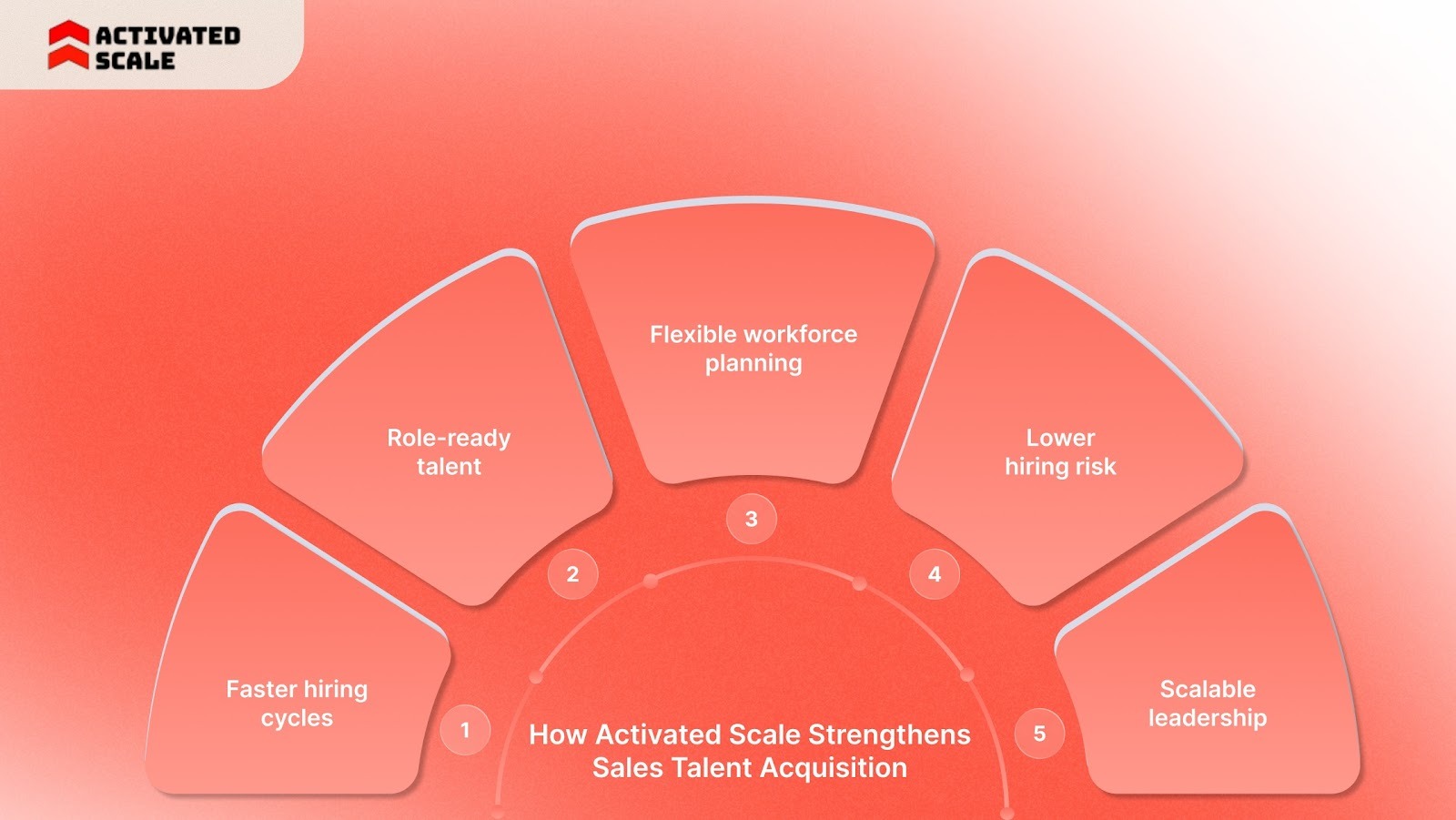
- Faster hiring cycles: Companies can connect with vetted sales talent in days, not months, cutting sourcing and screening time significantly.
- Role-ready talent: Sellers are matched based on prior experience with similar deal sizes, ICPs, and GTM motions, reducing ramp-up time.
- Flexible workforce planning: Fractional SDRs, AEs, and sales leaders allow teams to build a pipeline or close deals without committing to permanent headcount too early.
- Lower hiring risk: Pre-validation and trial-based engagements help avoid costly mis-hires in revenue-critical roles.
- Scalable leadership: Fractional sales leaders support GTM planning, playbook creation, and team structure when full-time leadership isn’t yet required.
For organizations refining their talent acquisition strategy, Activated Scale offers a focused, execution-driven alternative to traditional hiring, one built around speed, fit, and revenue impact rather than volume recruiting.
Conclusion
An effective talent acquisition strategy isn’t about doing more; it’s about doing what actually works for your stage, goals, and hiring urgency. Companies that win talent today focus on speed, role clarity, and fit, rather than volume-based recruiting or one-size-fits-all approaches.
If you’re building early teams or scaling revenue-critical roles, the right strategy reduces hiring risk, shortens time-to-hire, and improves long-term retention. This is where modern, flexible hiring models make a real difference.
Activated Scale helps companies execute smarter talent acquisition by connecting them with vetted, role-ready sales talent, fractional, contract-to-hire, or full-time, without the delays and overhead of traditional hiring.
If hiring speed and quality matter to your growth, connect with Activated Scale to build your team with confidence.
FAQs
1. What is a talent acquisition strategy?
A talent acquisition strategy is a structured approach to sourcing, evaluating, and hiring talent aligned with long-term business goals, not just immediate vacancies.
2. How is talent acquisition different from recruitment?
Recruitment focuses on filling roles quickly, while talent acquisition is broader, covering workforce planning, employer branding, and future hiring needs.
3. Why is flexibility important in talent acquisition today?
Markets and revenue goals change quickly. Flexible hiring models allow companies to scale teams without overcommitting too early.
4. How can companies reduce hiring risk?
Using pre-vetted talent, trial-based engagements, and data-backed hiring decisions significantly lowers the risk of mis-hires.
5. When should a company consider fractional or contract-to-hire talent?
When testing new markets, building pipeline fast, or needing leadership without full-time headcount, fractional talent is often the smartest first step.
The Ultimate Guide to Hiring a Salesperson!
Get the step-by-step guide to hiring, onboarding, and ensuring success!