_edi.png)
As sales teams head into 2026, productivity is no longer about working harder; it's about removing operational drag. According to Salesforce's State of Sales report, sales reps spend only 28% of their time actually selling, with the rest lost to manual data entry, tool switching, and administrative work.
This gap is exactly where sales operations tools are meant to deliver ROI. When implemented correctly, they reduce non-selling work, improve data reliability, and help revenue leaders make faster, better decisions. When implemented poorly, they add cost and complexity.
This guide breaks down how to evaluate, build, and optimize a sales ops tool stack in 2026, focusing on ROI, adoption, and execution, not just features.
Key takeaways
- Sales ops tools should amplify execution, not create complexity. ROI comes from aligning tools with revenue processes, not from feature checklists.
- Start with a clear diagnosis of bottlenecks. Identify the largest operational constraint before evaluating any tools.
- Evaluate tools through an ROI lens: Can they integrate cleanly, reduce manual work, and improve measurable KPIs such as CAC, win rate, or forecast accuracy?
- Focus on adoption and usability. Tools deliver value only when the team uses them consistently within existing workflows.
- Common pitfalls include tool overload, siloed data, and a lack of governance. Avoid buying before optimizing the process and ownership.
- The most impactful categories in 2026 include CRM & revenue intelligence, sales enablement, pipeline and forecast management, automation/workflow, and reporting/analytics.
- Execution ownership matters. Pairing tools with experienced operators, including flexible models like those offered by Activated Scale, helps ensure adoption and measurable ROI.
What Sales Operations Tools Actually Do
Sales operations tools are systems built to keep revenue execution running cleanly and efficiently. They support the day-to-day work of sales teams by reducing manual effort, improving visibility into the pipeline, and ensuring decisions are based on reliable data.
Instead of relying on spreadsheets, ad hoc processes, or disconnected tools, sales ops software centralizes deal tracking, forecast building, and performance measurement. This allows sales leaders to spot issues early, enables reps to spend more time selling, and helps teams align activities with revenue goals.
At their best, these tools don't just increase activity. They improve revenue efficiency, which is where real ROI comes from.
Why Sales Ops Tools Matter More for ROI in 2026
In 2026, sales teams face tighter budgets, longer buying cycles, and higher pressure to prove impact. Sales ops tools matter because they directly influence how efficiently revenue is generated, not just how busy teams look.
Here's why their ROI impact is more critical now:
- Rising acquisition costs mean wasted effort shows up faster in CAC and margins.
- More complex sales motions break manual workflows and slow deal execution.
- Limited headcount growth forces teams to improve output without adding reps.
- Unreliable pipeline visibility leads to late decisions and costly course corrections.
- Execution gaps between sales, ops, and leadership inflate the cost per deal.
The right sales ops tools reduce friction across the revenue process. They help teams focus on deal quality, move faster with consistency, and catch issues before they affect forecasts.
In 2026, ROI won't come from more tools. It will come from sales ops systems that simplify, clarify, and scale revenue execution.
What to Look for in High-ROI Sales Operations Tools
Sales operations tools only deliver ROI when they remove friction from execution. The features that matter most are the ones that reduce manual effort, improve decision quality, and scale cleanly as your sales motion evolves.
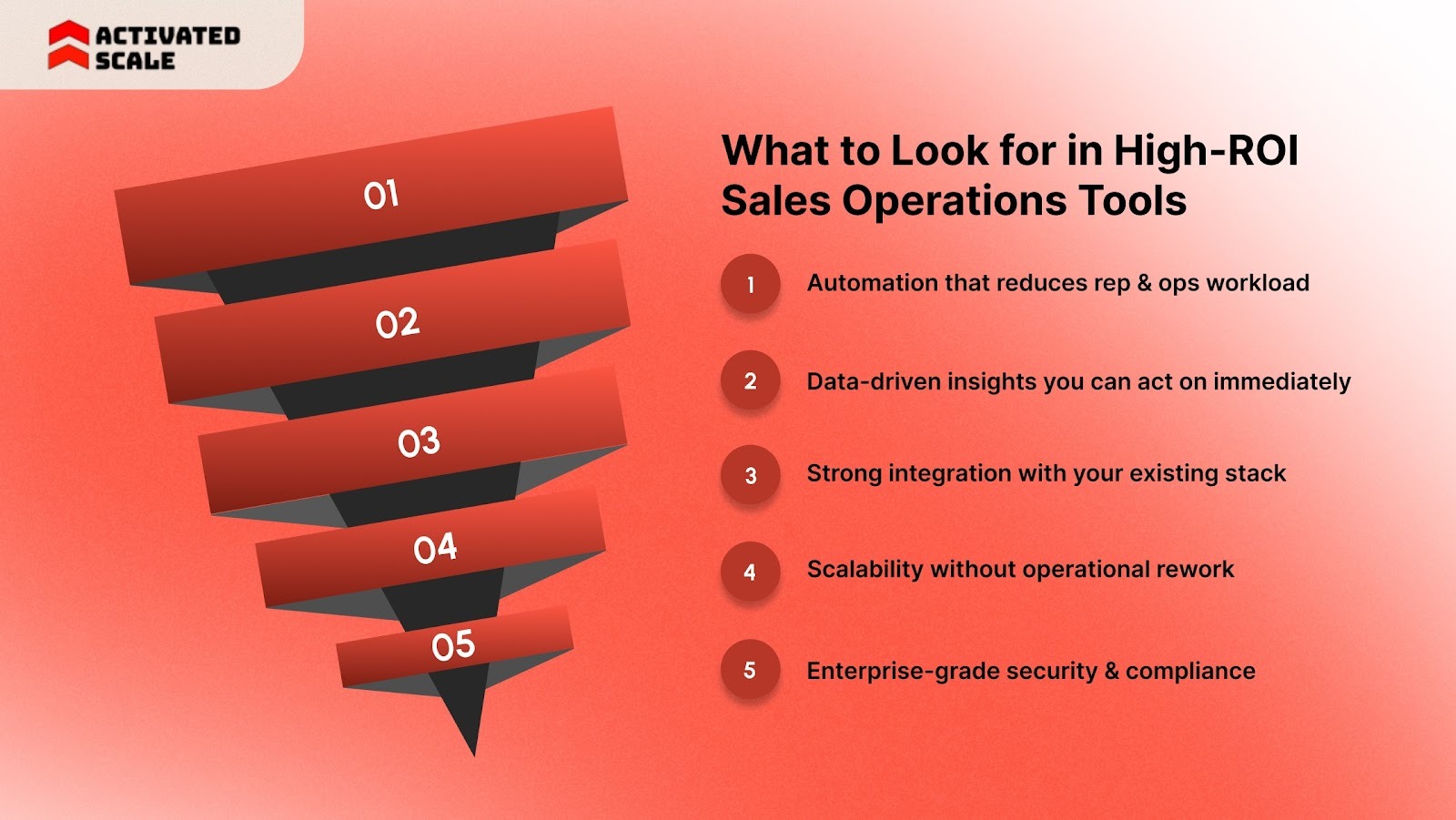
- Automation that reduces rep and ops workload: The best tools automate repetitive tasks like data entry, deal updates, routing, and approvals. This isn't about convenience, it's about protecting selling time and reducing operational drag that quietly lowers productivity.
- Data-driven insights you can act on immediately: Tools should surface real-time pipeline health and conversion trends and deal with risk without manual reporting. If insights require cleanup or interpretation before decisions can be made, ROI drops fast.
- Strong integration with your existing stack: Sales ops tools must integrate cleanly with your CRM and core GTM systems. Poor integrations create data gaps, duplicate work, and reporting conflicts that undermine trust in the numbers.
- Scalability without operational rework: As deal volume and team size grow, tools should support added workflows, users, and complexity without forcing a rebuild. ROI comes from tools that grow with your process, not against it.
- Enterprise-grade security and compliance: Sales teams handle sensitive customer and revenue data. Tools should meet data protection standards and support access controls so growth doesn't introduce risk.
Sales ops tools that deliver ROI don't just add features; they make execution easier, decisions faster, and growth more controlled.
Learn more about: Top 10 Online B2B Sales Courses to Boost Team's Spirit in 2026
Sales Ops Solutions That Drive ROI and Productivity in 2026
Sales ops ROI doesn't come from piling on tools. It comes from choosing the right mix of execution support, systems of record, intelligence layers, and automation, and ensuring they work together.
Below is a structured view of sales ops solutions that actually improve productivity and measurable ROI.
Execution & Revenue Ownership Layer
Activated Scale
Sales ops ROI often breaks down before tools even matter. Dashboards exist, CRMs are configured, but execution ownership is fragmented. Activated Scale sits at this execution layer, supporting sales operations by providing experienced, U.S.-based sales professionals who can step into revenue-critical roles quickly.
Rather than acting as a staffing agency or consultancy, Activated Scale operates as a sales talent marketplace. Sales leaders can access vetted SDRs, AEs, and senior sales leaders on flexible terms, aligning headcount with execution needs instead of long-term assumptions.
Core offerings and how they impact ROI:
- Contract-to-Hire Sales Recruiting allows teams to validate performance against real metrics, pipeline quality, win rate, and forecast accuracy, before making a full-time hire.
- Fractional Selling (SDRs and AEs) maintains prospecting cadence, follow-up discipline, and deal execution while sales ops processes and tooling mature.
- Fractional Sales Leadership provides senior ownership over pipeline reviews, forecasting discipline, and GTM execution when internal leadership bandwidth is limited.
Operational impact (reported metrics):
- Under 7 days to connect and hire a salesperson, sometimes the same day.
- 20+ hours saved per sales hire in interview time.
- 80% of customers retain Activated Scale sales talent for more than 8 months.
- 200+ companies have used Activated Scale to support sales execution.
Activated Scale fits best where sales ops tooling exists, but execution and accountability are inconsistent, making ROI difficult to realize.
Data Capture & CRM Hygiene
Add to CRM
Add to CRM focuses on a single but costly sales ops problem: manual data entry. It operates as a Chrome extension that works directly within Gmail, Outlook, and professional networking sites, allowing reps to create CRM records without leaving their workflow.
The tool's core value isn't just speed; it's data consistency at the top of the funnel, where poor hygiene creates downstream issues in reporting and forecasting.
How it works in practice:
- Reps create leads or contacts with one click from a profile or inbox.
- The tool supports 27+ CRM platforms, making it usable across varied stacks.
- Before creating a record, Add to CRM checks for duplicates to prevent CRM clutter and data conflicts.
Data enrichment capabilities:
- Automatically appends 31 data points, including role, seniority, company size, industry, and revenue.
- Pulls verified contact data from a database of 220M+ professionals.
- Offers ~96% real-time email verification accuracy, improving deliverability and reducing bounce rates.
Sales ops relevance:
- Reduces time lost to copy-paste work.
- Improves early-stage qualification context.
- Enforces cleaner CRM data without rep friction.
- Supports custom field mapping to maintain schema consistency.
With transparent, credit-based pricing and a usable free tier, Add to CRM is best suited for teams looking to improve prospecting efficiency and CRM hygiene without introducing operational complexity.
Core CRM & Revenue System of Record
Salesforce – Sales Cloud
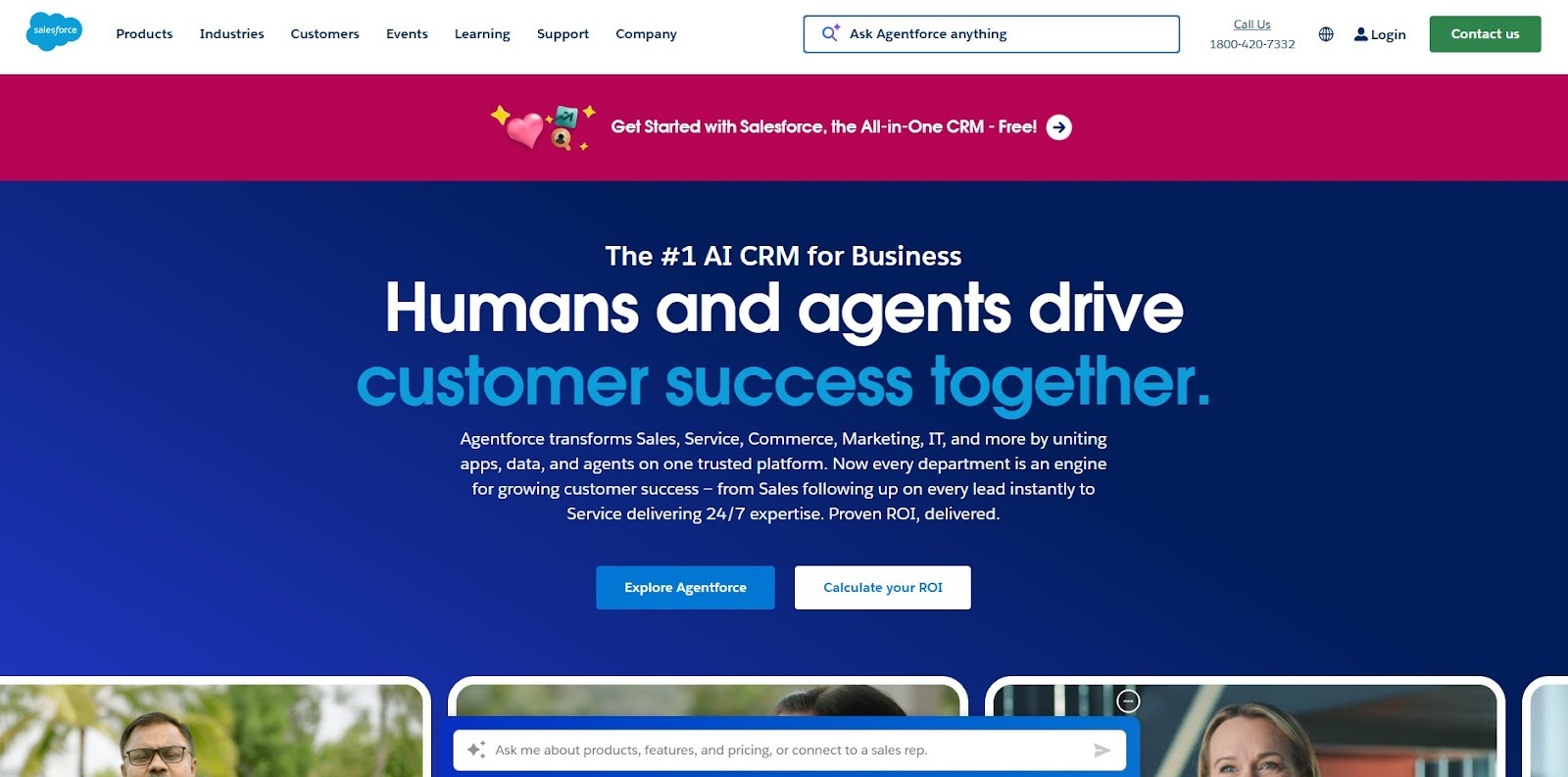
Salesforce Sales Cloud functions as the central system of record for many mature sales operations teams. It goes beyond contact and opportunity tracking, enabling deep control over pipeline structure, forecasting logic, approvals, and governance at scale.
Its strength lies in customization and extensibility. Sales ops teams can enforce business rules using automation tools such as Flow and Process Builder, ensuring that data entry, stage transitions, and approvals follow defined logic.
Key sales ops capabilities:
- Highly configurable pipeline stages and forecasting categories.
- Automated workflows for approvals, deal progression, and validation.
- Native add-ons such as Revenue Cloud (CPQ + billing) to manage complex quote-to-cash processes.
- A massive AppExchange ecosystem that allows integration with enrichment, engagement, and analytics tools.
Operational considerations:
- Salesforce is rarely "out of the box." Most ROI comes after thoughtful configuration.
- Admin expertise is required to manage schema, permissions, and automation.
- The platform scales effectively across large, distributed sales teams.
Pricing and implementation reality:
- Entry pricing begins low, but meaningful sales ops functionality typically requires Enterprise or Unlimited tiers.
- Implementation is often handled by certified consultants.
- Long-term ROI depends on governance, not feature adoption alone.
Salesforce is best suited for organizations that need deep control, scale, and extensibility and are prepared to invest in operational discipline to realize ROI.
Core CRM & Revenue Systems (Mid-Market and Ecosystem-First)
HubSpot – Sales Hub
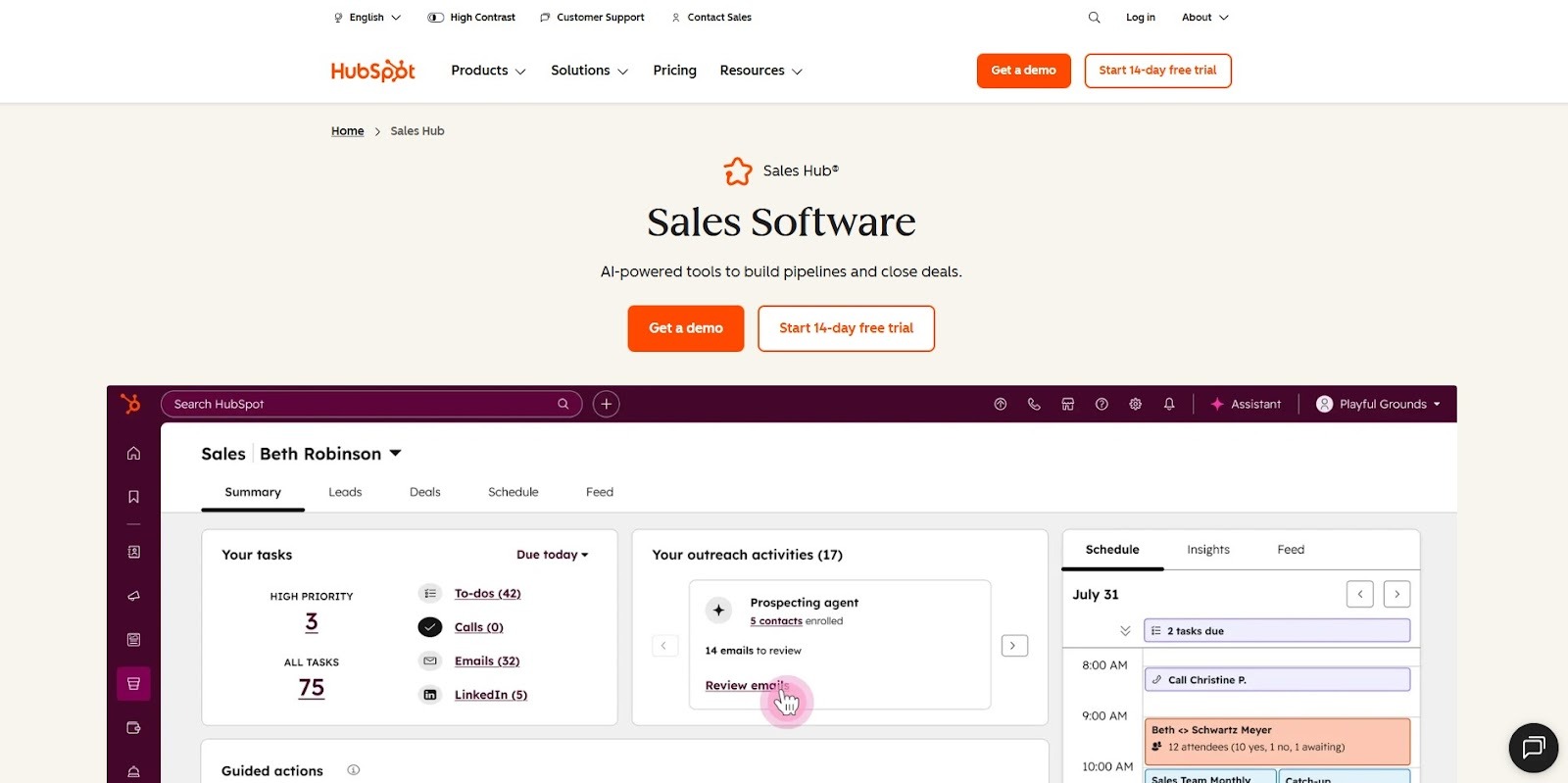
HubSpot Sales Hub is designed for teams that want fast adoption and low operational friction without sacrificing core sales ops functionality. Unlike heavier CRMs, HubSpot emphasizes usability, allowing sales and ops teams to manage pipelines, automation, and reporting without deep administrative expertise.
Its biggest strength is how tightly sales execution connects with marketing and service data. For sales ops, this means fewer handoff breakdowns and less time spent reconciling systems.
Sales ops–relevant capabilities:
- Sales automation and sequences that allow reps to run structured outreach without relying on third-party tools.
- Forecasting and pipeline reporting with customizable dashboards that sales ops teams can maintain internally.
- Conversation intelligence, enabling call recording, transcription, and insight generation for coaching and deal review.
- Native integration across Marketing, Sales, and Service Hubs, providing a unified lifecycle view.
Operational considerations:
- HubSpot reduces tool sprawl by consolidating multiple functions into a single platform.
- Governance is simpler but less granular than enterprise CRMs.
- Advanced permissions, forecasting logic, and process enforcement are available only with higher-tier plans.
Pricing and implementation reality:
- A free tier allows teams to test basic workflows.
- Professional and enterprise tiers unlock automation and reporting needed for sales ops.
- Implementation is typically faster and can often be handled in-house using HubSpot documentation and training.
HubSpot is best suited for SMB and mid-market teams that prioritize speed, adoption, and time-to-value over deep customization.
Microsoft – Dynamics 365 Sales
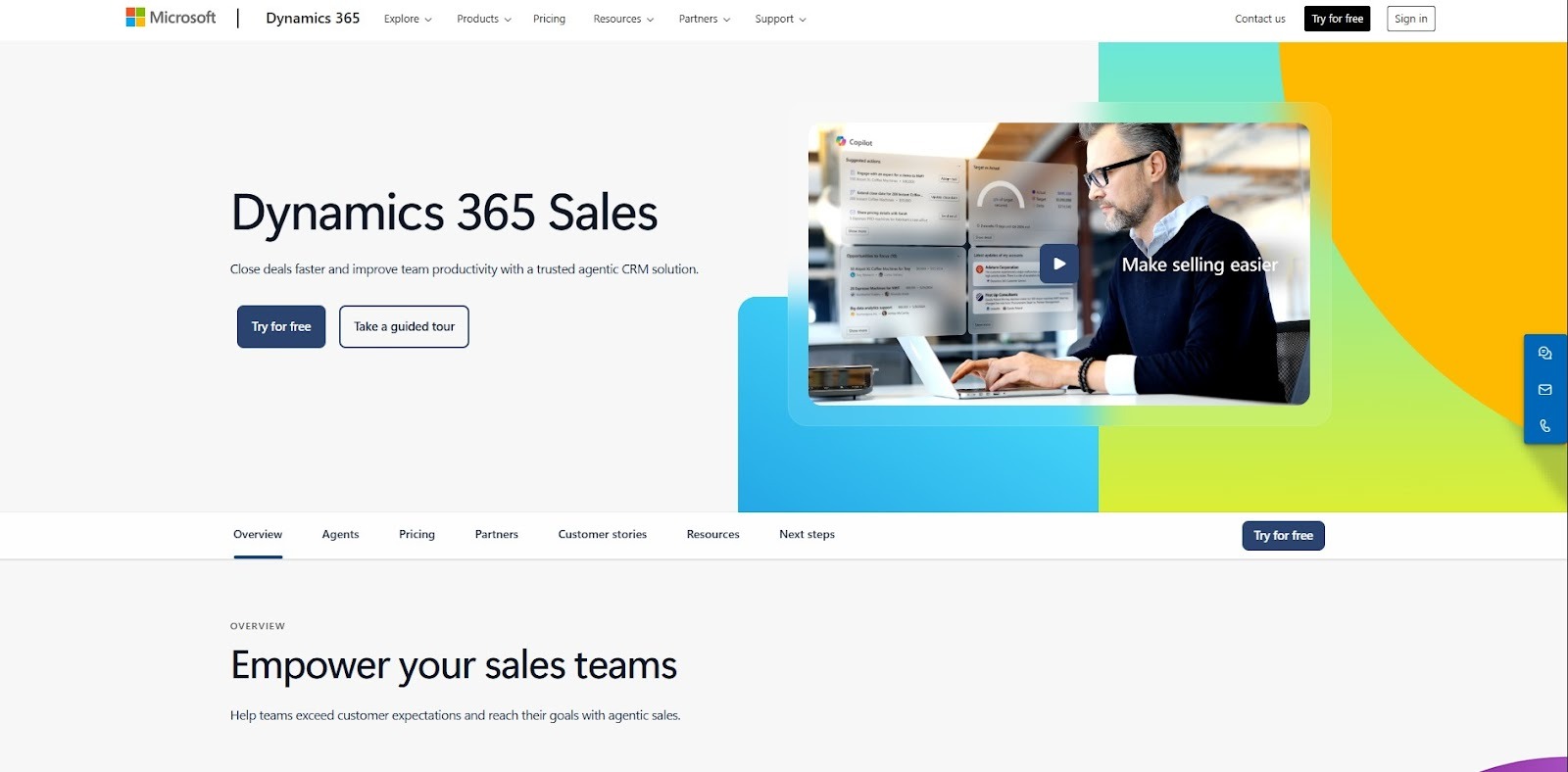
Microsoft Dynamics 365 Sales is built for organizations deeply integrated into the Microsoft ecosystem. Its strength is not just CRM functionality but also its seamless integration with Outlook, Teams, and Microsoft 365, reducing context switching for reps.
For sales ops teams, this familiarity often translates into higher adoption and cleaner activity data, which directly impacts reporting and forecasting accuracy.
Sales ops–focused capabilities:
- Core Salesforce automation (SFA) for managing leads, accounts, and opportunities.
- Embedded Copilot AI, providing activity summaries, deal insights, and predictive forecasting.
- Native Outlook and Teams integration, allowing deal updates and collaboration inside communication tools.
- Professional network data integrations (via bundled offerings) for enriched relationship insights.
Operational considerations:
- Customization is possible but often requires Microsoft partners.
- AI features are powerful but depend on data quality and user engagement.
- The ecosystem is narrower than Salesforce but tightly integrated.
Pricing and implementation reality:
- Mid-range per-user pricing compared to enterprise CRMs.
- Advanced bundles and integrations increase total cost.
- Basic deployments are straightforward; complex rollouts typically involve partners.
Dynamics 365 Sales is best suited for Microsoft-centric organizations seeking CRM adoption through familiarity rather than heavy customization.
Sales Engagement & Execution Platforms
Find the following website -
Outreach
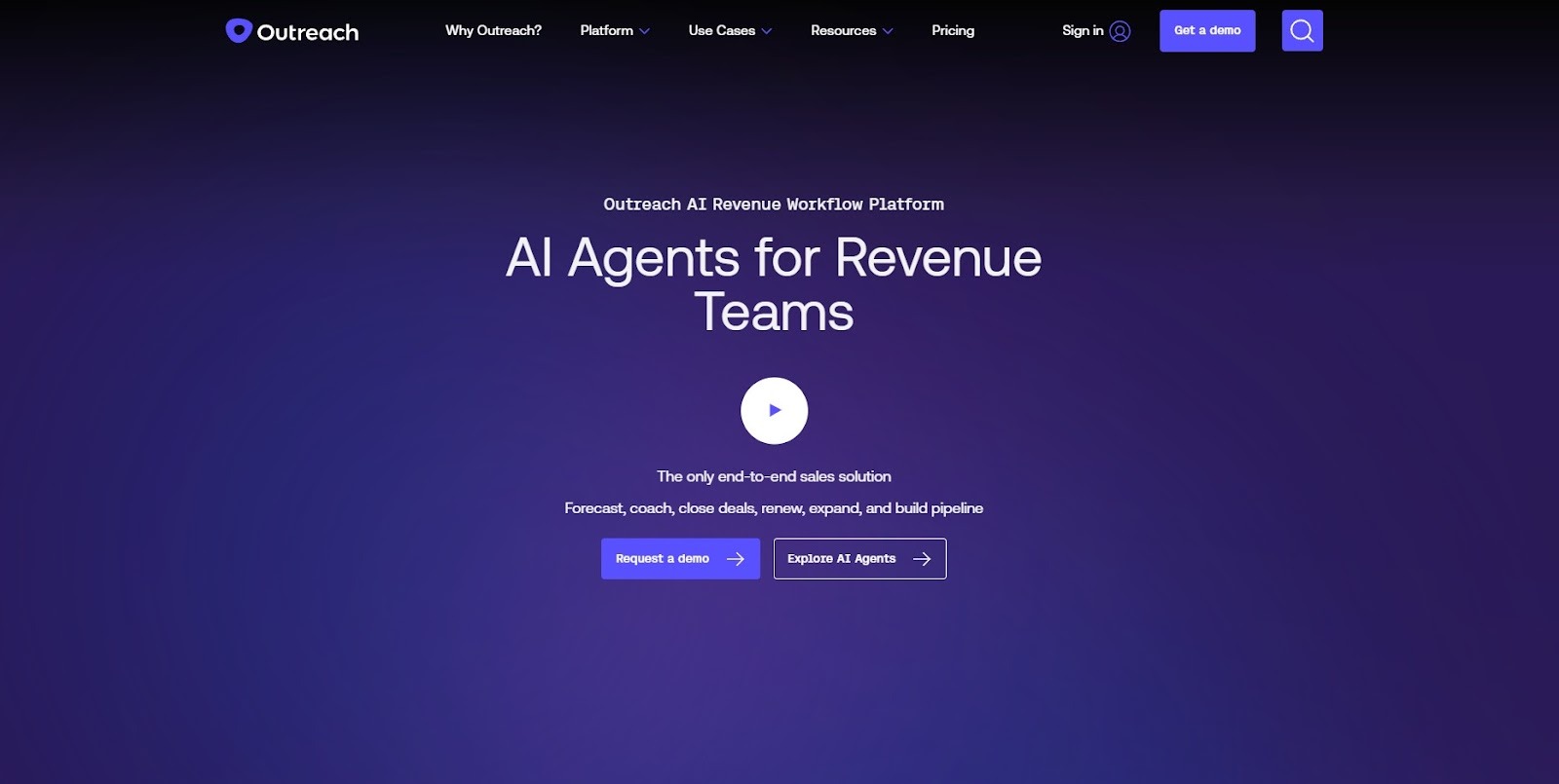
Outreach has evolved beyond a sequencing tool into a sales execution platform that centralizes prospecting, deal management, and forecasting in one workspace. For sales ops teams, its value lies in standardizing seller behavior while capturing execution data across the entire sales motion.
By consolidating workflows, Outreach reduces the need for reps to jump between multiple tools, improving consistency and visibility.
Sales ops–relevant capabilities:
- Multi-channel engagement sequences with AI-assisted messaging to enforce consistent prospecting.
- Deal management tools, including deal health indicators and mutual action plans.
- Conversation intelligence, enabling call analysis and insight extraction.
- Forecasting and pipeline analytics that sit closer to seller activity than CRM reports alone.
Operational considerations:
- Outreach acts as a primary workspace layered on top of the CRM.
- Strong enforcement of playbooks improves execution consistency.
- Requires thoughtful integration and governance to avoid overlap with other tools.
Pricing and implementation reality:
- Quote-based pricing with bundled modules.
- The total cost of ownership can be significant as features are added.
- Implementation involves CRM integration and process alignment.
Outreach is best suited for organizations scaling outbound or full-cycle sales motions that need structured execution and behavior-level insight.
Forecasting, Pipeline & Revenue Intelligence
Clari
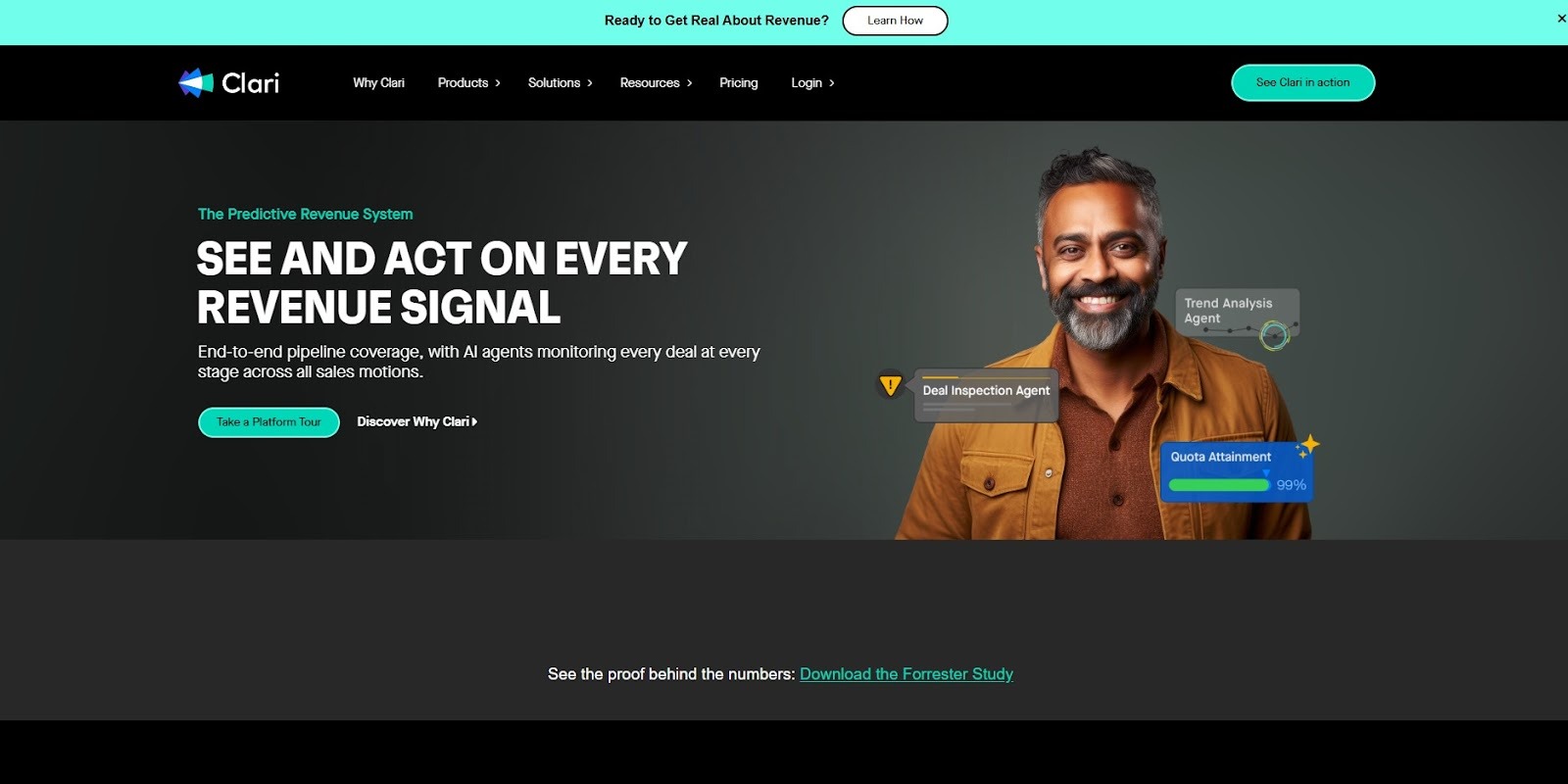
Clari is designed to bring discipline and predictability to revenue forecasting. While CRMs store pipeline data, Clari analyzes how that data changes over time, helping sales ops teams understand deal momentum, risk, and forecast reliability.
Its core value is replacing subjective forecast calls and spreadsheet rollups with data-backed inspection and governance.
Sales ops–relevant capabilities:
- AI-assisted forecasting (RevAI) that evaluates historical patterns and current deal activity.
- Pipeline inspection and time-series tracking, showing how deals progress or regress across a quarter.
- Deal risk and engagement signals pulled from emails, calendars, and activity data.
- Standardized forecast calls align leadership discussions around a single source of truth.
Operational considerations:
- Requires clean CRM data and consistent stage usage.
- Introduces strong accountability, which may require cultural adjustment.
- Best used as a governance layer, not a reporting add-on.
Pricing and implementation reality:
- Quote-based pricing is typically positioned for mid-market and enterprise teams.
- Implementation is guided and closely managed by Clari's services team.
- ROI is strongest when forecast accuracy and planning confidence are critical.
Clari fits organizations where forecast reliability and pipeline transparency directly impact hiring, spending, and board-level decisions.
Conversation & Deal Intelligence
Gong
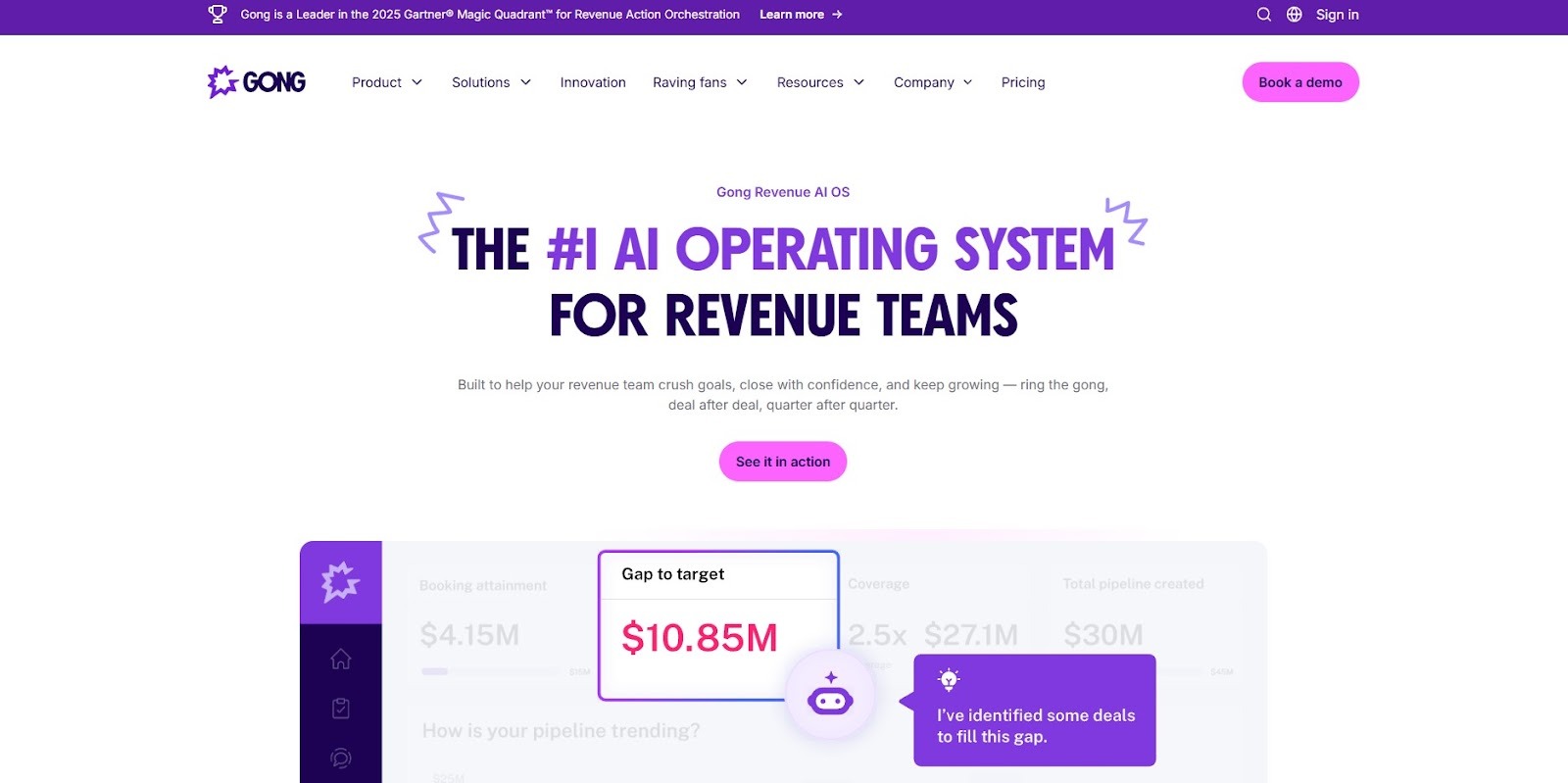
Gong captures and analyzes customer conversations to create what it calls the "customer reality." For sales ops, this moves performance analysis from anecdotal feedback to objective behavioral data.
Instead of guessing why deals win or stall, teams can trace outcomes back to language, behaviors, and buyer signals.
Sales ops–relevant capabilities:
- Conversation intelligence, including call recording, transcription, and topic detection.
- Deal intelligence aggregates all interactions to flag risk or momentum shifts.
- People intelligence, surfacing performance trends for coaching and enablement.
- Market intelligence, capturing competitor mentions and buyer objections in real time.
Operational considerations:
- Value depends heavily on full rep adoption.
- Insights are most powerful when tied to pipeline and outcome data.
- Enables data-backed coaching and playbook refinement.
Pricing and implementation reality:
- Enterprise-focused, quote-based pricing with platform and per-user fees.
- Requires onboarding services and change management.
- ROI compounds over time as conversation data accumulates.
Gong is best suited for organizations that prioritize coaching quality, deal insights, and behavioral optimization.
Data, Targeting & GTM Intelligence
ZoomInfo – SalesOS
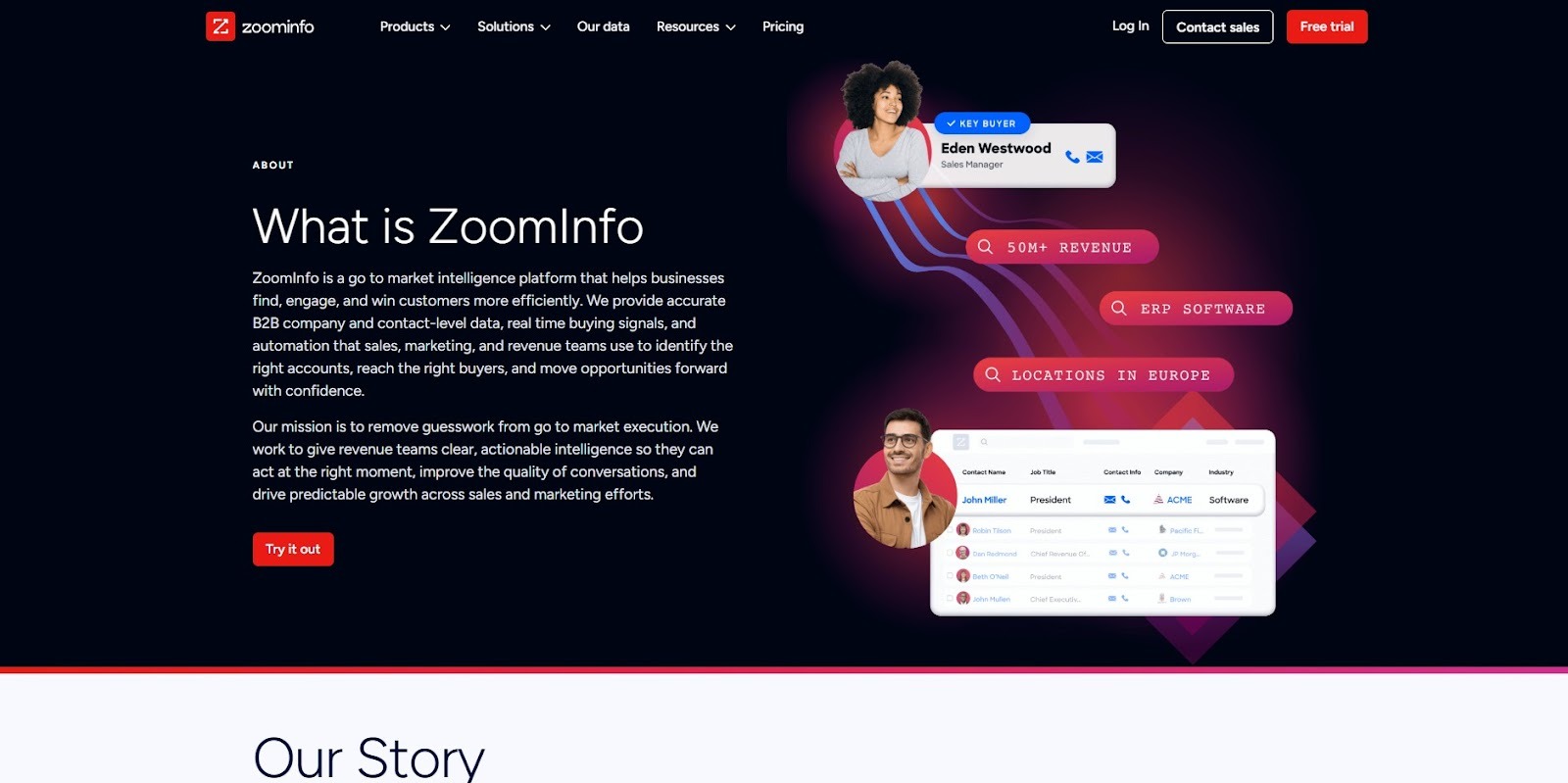
ZoomInfo SalesOS provides the data foundation for many sales ops processes. It supplies contact, company, technographic, and intent data used for targeting, routing, and prioritization.
Beyond enrichment, its value lies in enabling orchestrated GTM workflows driven by buying signals.
Sales ops–relevant capabilities:
- Real-time data enrichment for inbound leads.
- Advanced list building using firmographic, technographic, and intent filters.
- Intent-based workflow triggers, enabling specialized routing or outreach.
- Native CRM and marketing automation integrations to maintain data hygiene.
Operational considerations:
- Data quality and fit vary by ICP and region.
- Requires governance to manage credit usage and enrichment rules.
- Most effective when paired with routing and engagement tools.
Pricing and implementation reality:
- Quote-based, annual contracts with configurable bundles.
- Enterprise pricing is common; ROI depends on usage discipline.
- Implementation focuses on CRM integration and workflow setup.
ZoomInfo is best for teams that need precision targeting and data-driven orchestration to improve pipeline quality.
Lead Routing, Assignment & GTM Orchestration
LeanData
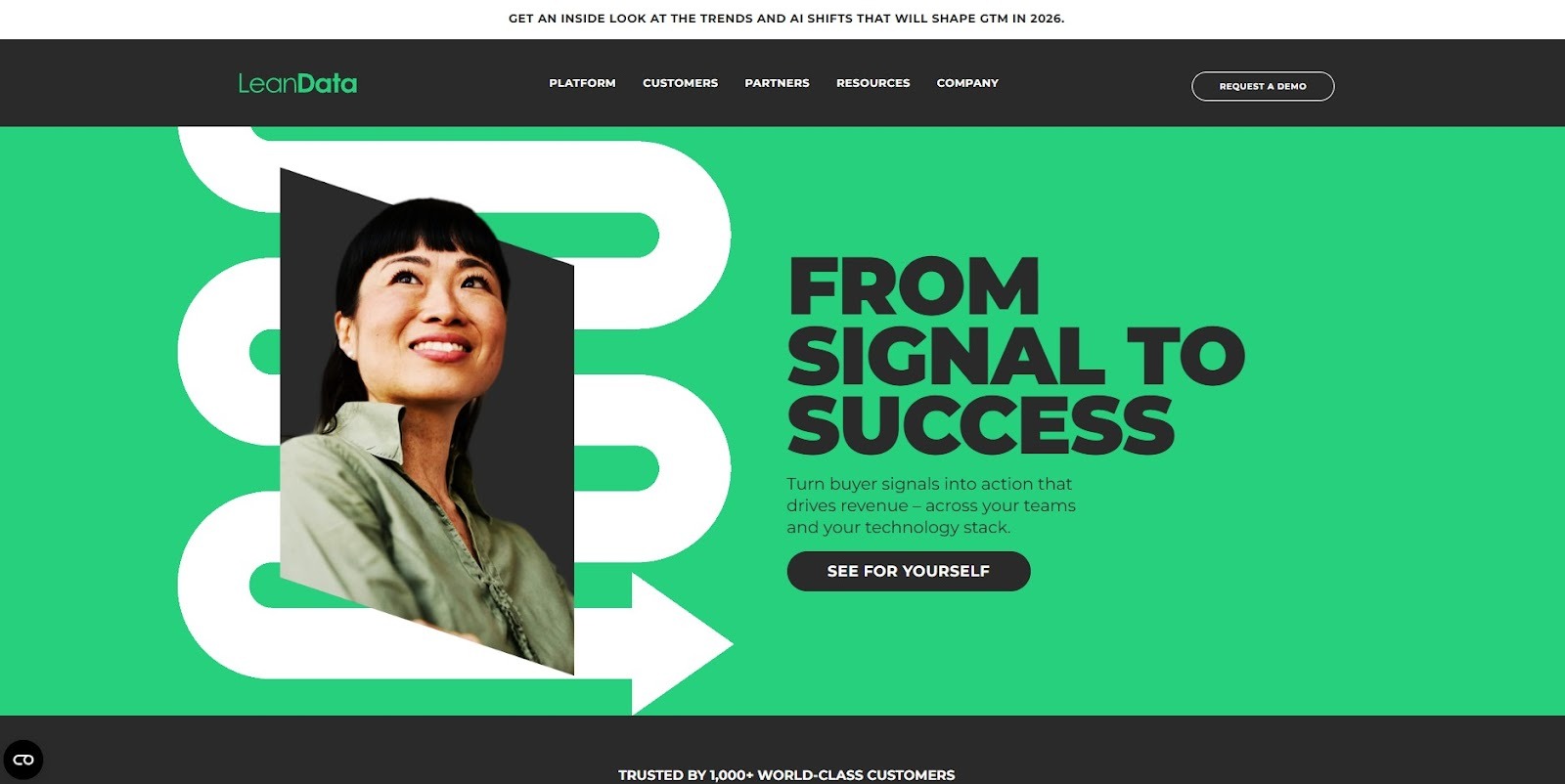
LeanData is a Salesforce-native platform built to solve one of the most operationally expensive sales ops problems: incorrect or delayed lead routing. It replaces static assignment rules with a flexible orchestration layer that allows sales ops teams to control how leads, contacts, and accounts flow through the organization.
Its strength lies in enforcing ownership clarity and speed-to-lead, two factors that directly affect conversion rates and pipeline efficiency.
Sales ops–relevant capabilities:
- Lead-to-account matching using fuzzy logic to associate inbound leads with existing accounts.
- Visual FlowBuilder is a drag-and-drop interface for designing complex routing logic without code.
- Time-based and round-robin routing, factoring in rep availability, territories, or workload.
- Campaign-based routing, ensuring leads from priority campaigns reach the right teams instantly.
Operational considerations:
- Eliminates manual reassignment and lead leakage.
- Makes routing logic transparent and auditable.
- Requires careful design to avoid overly complex flows.
Pricing and implementation reality:
- Quote-based pricing with no public tiers.
- Professional services are often used to configure initial routing graphs.
- ROI is strongest for Salesforce teams with high inbound volume and complex ownership rules.
LeanData is best suited for organizations where routing accuracy and response speed materially impact revenue outcomes.
Pricing, Quoting & Revenue Governance
Conga – CPQ
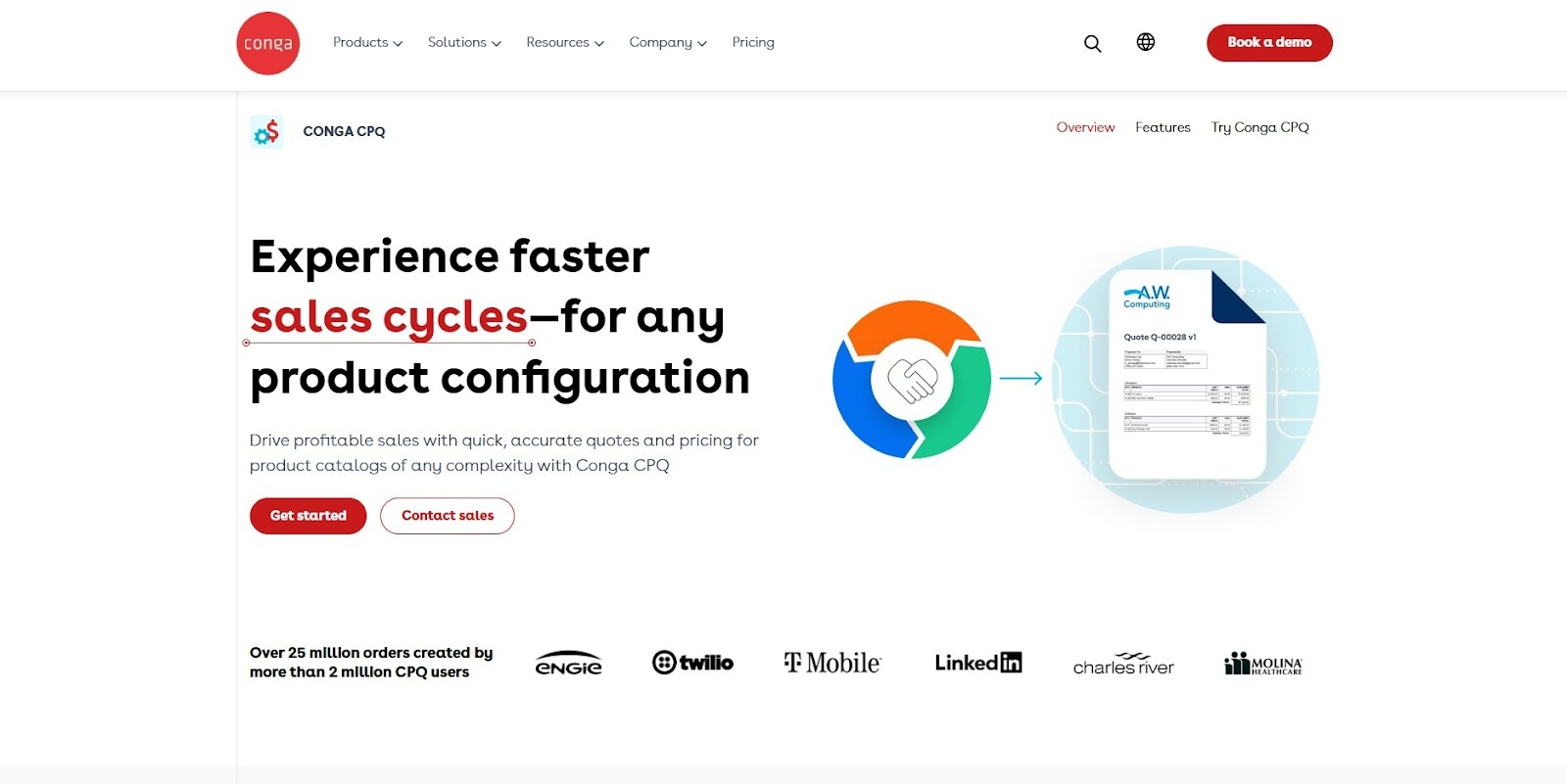
Conga CPQ is designed for sales organizations with complex pricing models, subscriptions, and approval structures. It governs the entire quote-to-cash process, ensuring pricing accuracy, margin protection, and consistent deal execution.
For sales ops teams, Conga CPQ reduces revenue leakage from manual quoting, inconsistent discounts, and approval delays.
Sales ops–relevant capabilities:
- Advanced pricing and guided selling, enforcing pricing rules and discount thresholds.
- Complex product catalog management, supporting bundles, SKUs, and nested configurations.
- Automated approval workflows, triggered by deal size, discount levels, or product type.
- Subscription and renewal lifecycle support is critical for recurring revenue models.
Operational considerations:
- Enforces commercial policy at scale.
- Reduces manual errors and approval bottlenecks.
- Can be excessive for simple pricing environments.
Pricing and implementation reality:
- Fully quote-based pricing tailored to user count and complexity.
- Implementation is a major project that often spans months.
- The best ROI comes when pricing governance and margin control are business-critical.
Conga CPQ is well-suited for mature sales organizations where pricing discipline and revenue integrity directly affect profitability.
Across all these tools, one pattern holds: ROI is not driven by tool count but by alignment.
Execution ownership (people), process clarity, and disciplined usage determine whether these platforms amplify productivity or quietly add cost.
Must read: Top 10 Recruiting Firms in the US 2026
Turning Sales Ops Analysis Into a Practical Stack
Building a sales ops stack that actually improves ROI starts with discipline, not demos. The goal is to remove friction, not add more software.
Start with the real bottleneck.
Look at where revenue slows down today. Is time being lost on manual data entry? Are leads sitting unworked because routing is inconsistent? Are forecasts stitched together from spreadsheets no one fully trusts? Identify the single constraint that, if fixed, would have the biggest revenue impact. That's where your stack should start.
Treat integrations as non-negotiable.
Any sales ops tool that doesn't integrate cleanly with your CRM will create more problems than it solves. Strong, bidirectional integrations keep data centralized, reduce manual fixes, and prevent reporting gaps. If a tool can't fit into your existing workflows, it shouldn't be in your stack.
Optimize for adoption, not features.
ROI comes from usage. Tools that require extensive training or disrupt reps' work rarely stick. Involve SDRs and AEs early, test usability in real workflows, and prioritize tools that feel intuitive from day one.
This is also where execution matters. Even the right stack fails without experienced ownership. Many teams pair their tooling decisions with hands-on operators from Activated Scale, using seasoned sales leaders or reps to validate workflows, enforce adoption, and ensure tools are tied to measurable outcomes, not shelfware.
The result is a stack built to solve real problems, adopted by the team, and aligned with revenue impact, not just best-in-class features.
Conclusion
In 2026, sales ops tools alone won't drive ROI. What makes a sales stack powerful is its connection to disciplined execution, clear ownership, and trusted data across teams.
The best tools reduce manual effort, unify revenue signals, and help teams move consistently toward shared outcomes. But those benefits only materialize when tools are chosen after diagnosing real bottlenecks, integrated thoughtfully, and adopted naturally by teams.
Efficiency comes not from having more software but from having the right software aligned with how your teams actually operate. When execution is stronger, CAC drops, forecast accuracy improves, win rates climb, and productivity rises.
For SaaS teams that want both execution discipline and measurable ROI, pairing your tools with experienced execution support can make all the difference. Visit the Activated Scale website to explore how seasoned sales operators help teams ensure tools deliver value, not just complexity.
FAQs
1. What is the real difference between sales ops tools and RevOps tools?
Sales ops tools focus primarily on sales execution, pipeline, processes, forecasting, and enablement. RevOps tools cover broader alignment across marketing, sales, and customer success. Many modern platforms overlap both functions, but the key is how they support end-to-end revenue execution.
2. How should I evaluate ROI before buying a tool?
Start with a problem diagnosis. Define the operational constraint you want to solve, decide which KPI it impacts (e.g., CAC, win rate, cycle length), and estimate how a tool will measurably move that number before purchase.
3. Can too many tools reduce productivity?
Yes. Tool overload creates fragmentation, manual work, data inconsistency, and higher maintenance costs. A lean stack aligned with process and governance consistently delivers better ROI than a large tool stack.
4. What's the biggest mistake teams make when adopting sales ops tools?
Buying tools before standardizing process and ownership. Without clear ways of working and metric definitions, even advanced platforms can fail to drive meaningful adoption or outcomes.
5. How do experienced operators improve tool ROI?
Experienced operators tie tools to measurable execution. They help with process design, governance, adoption incentives, KPI alignment, and troubleshooting performance gaps, turning tools into execution products, not shelfware.
The Ultimate Guide to Hiring a Salesperson!
Get the step-by-step guide to hiring, onboarding, and ensuring success!