_edi.png)

International sales roles have changed significantly over the past few years. According to Salesforce’s State of Sales report, 77% of sales teams say selling has become more complex, driven largely by global buyers, longer decision cycles, and multi-stakeholder deals.
For international sales reps, this complexity creates both pressure and opportunity. Reps are expected to access cultural differences, remote selling, compliance requirements, and evolving GTM strategies, all while delivering revenue. As a result, career progression in international sales now depends less on tenure and more on adaptability, execution, and exposure to diverse markets.
This guide breaks down how international sales reps can grow their careers intentionally, what skills matter, how roles evolve, and where modern sales platforms fit into long-term progression.
Before we dive in:
- International sales careers grow fastest when reps gain exposure to multiple markets, buyer types, and sales motions, not just longer tenure in one role.
- Early-career reps build leverage by mastering cross-border communication, remote selling, and structured discovery across different regions.
- Mid-level international sales reps progress by owning more complex deals, navigating multi-stakeholder buying groups, and adapting messaging to local market realities.
- Senior and leadership roles demand strategic thinking—forecasting across regions, coaching distributed teams, and aligning GTM strategy with global growth goals.
- Modern sales platforms and flexible engagement models allow reps to prove performance in real selling environments, accelerating readiness for senior and leadership positions.
What Is an International Sales Representative?
An international sales representative helps companies grow beyond their home market. As businesses expand into new regions, these reps become responsible for building early traction, finding customers, opening conversations, and turning unfamiliar markets into reliable revenue streams.
They act as the company’s on-the-ground presence in global markets, representing the brand, understanding local buyer needs, and adapting sales approaches to different cultures and business environments. This role goes far beyond selling a product. It involves relationship-building, market education, and long-term trust.
For many prospects, the international sales rep is their first real interaction with the company. That makes the role critical, not just for closing deals, but for shaping how the brand is perceived in new markets and laying the foundation for future growth.
What Does an International Sales Rep Do, and Why Do They Matter?
To grow and remain profitable, businesses must either expand existing customer relationships or win new ones. For many companies, the strongest growth opportunities lie in overseas markets, making international sales representatives essential.
International sales reps focus on finding and engaging customers in global markets. They promote the company’s products, build relationships with new accounts, and act as a link between customers and internal teams. Working closely with international sales managers and sales engineers, they help negotiate contracts, coordinate deliveries, and support ongoing accounts.
Their responsibilities also include researching potential clients, staying informed about customer needs and industry changes, preparing reports, and resolving service issues. In competitive global markets, skilled international sales reps often play a decisive role in a company’s international success.
Is a Degree Required for International Sales Representative Jobs?
A college degree isn’t always mandatory to become an international sales rep, but in competitive global markets, it often helps. While sales success still depends on persuasion, resilience, and relationship-building, many employers prefer candidates with a four-year degree because it signals foundational business knowledge and readiness to work across regions.
Degrees are most commonly preferred in:
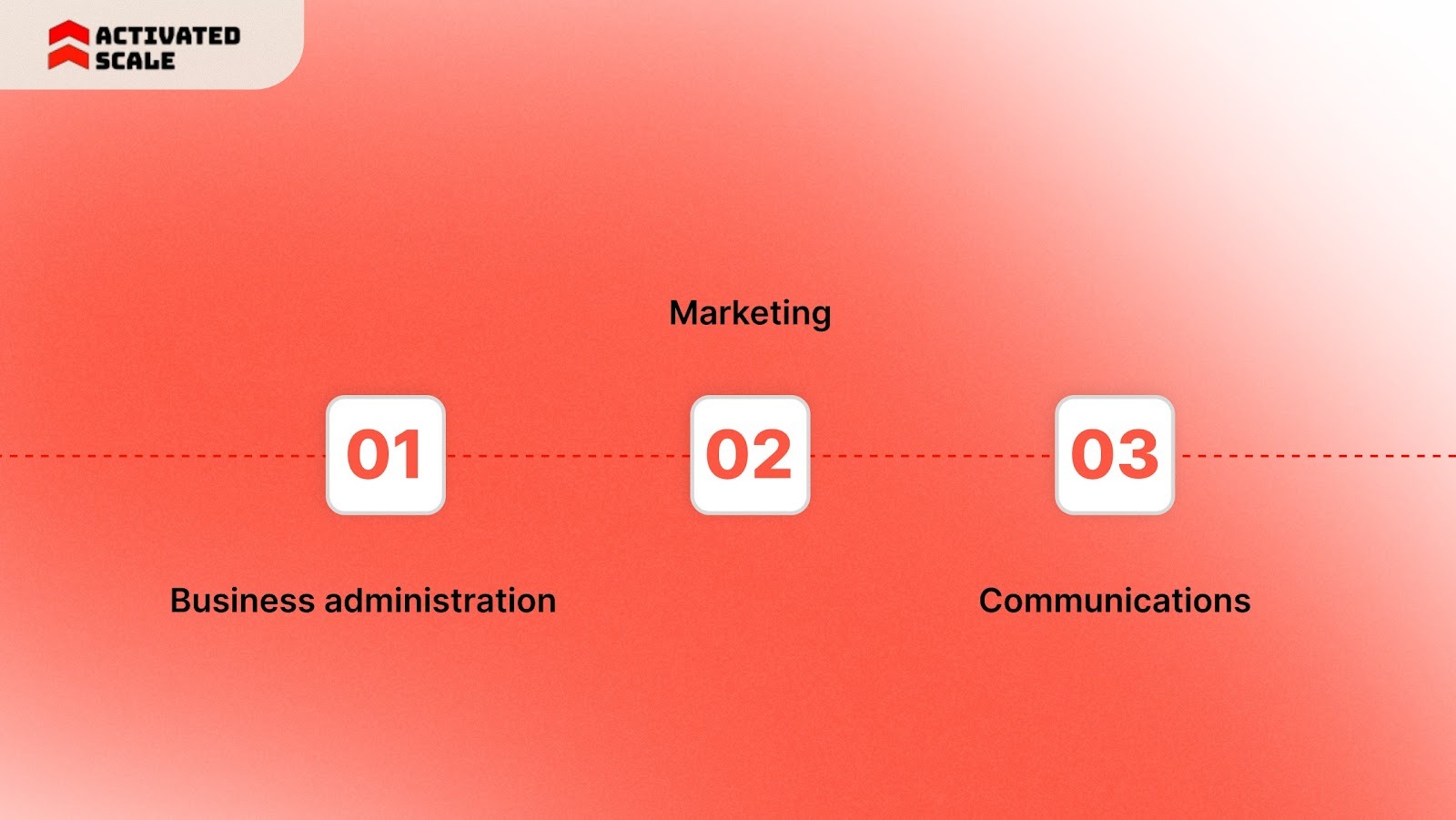
- Business administration
- Marketing
- Communications
These programs develop skills that translate directly to international sales, such as negotiation, customer engagement, and market analysis. Some also include coursework in international business, which helps prepare candidates for cross-border selling.
That said, education alone doesn’t define success. Many international sales professionals:
- Start in entry-level sales roles
- Build hands-on experience in global accounts
- Progress based on performance rather than credentials
In some cases, employers may even support further education once you’re hired. Ultimately, a degree can improve access to international sales opportunities, but long-term growth depends far more on experience, adaptability, and results.
In international sales, degrees help, but experience opens doors faster. What hiring managers really look for is whether someone has worked with global buyers, handled cross-border conversations, and operated in real sales environments.
That’s where Activated Scale fits in quietly. It gives sales reps a chance to work with US-based teams, learn how international sales actually function, and build credibility through real output, not titles or credentials.
For many international sales reps, that kind of exposure ends up mattering more than formal education on paper.
Skills and Career Progression in International Sales
An international sales representative needs more than core sales ability. Most employers look for foreign language skills, overseas experience, or deep familiarity with a specific market or industry. Building cultural awareness and regional expertise is often what sets strong candidates apart.
Language and cultural fluency are usually developed through first-hand exposure. Spending time in the regions you want to work with, through travel, internships, or exchange programs, helps build the practical understanding employers value most.
Beyond standard sales skills like drive and self-reliance, international sales roles require:
- Strong judgment and decision-making
- Clear, confident communication, often across multiple languages
- The ability to work effectively across cultures
- Negotiation and persuasion skills
- Critical thinking and creative problem-solving
As experience grows, international sales reps can move into roles such as sales engineer, international sales and marketing manager, or international sales director. In some cases, advancement is supported by additional work experience or an advanced degree.
Breaking Into Sales: How to Land Your First Sales Role
Getting started in sales is less about having prior experience and more about choosing the right entry point. Because sales roles exist across nearly every industry, narrowing your focus to technology, healthcare, manufacturing, or retail helps you target opportunities that match your interests.
Many first-time sales reps begin in internships, part-time roles, or customer-facing positions. These roles build practical skills like communication, objection handling, and relationship management, which translate directly into sales.
Networking plays a big role at this stage. An active LinkedIn profile, industry meetups, and referrals often open doors faster than online applications alone. Preparation matters too; strong resumes, clear career intent, and practice with common sales interview questions can make a noticeable difference.
For candidates without a sales background, entry-level sales training programs offer a structured way to learn the fundamentals and step confidently into a first sales role.
Also read: 10 Steps to a Stronger International Recruitment Process
Sales Representative Salary Outlook for 2026: What You Can Expect
Sales continues to be a high-earning career, but compensation varies widely based on industry, specialization, and pay structure.
As of the most recent benchmarks:
- Sales reps in wholesale and manufacturing earn a median annual salary of around $65,000.
- Those selling technical or scientific products earn significantly more, with median pay close to $100,000.
- Field sales roles, which often emphasize volume and territory coverage, tend to average lower base pay, around $48,000, with upside tied to performance.
Where sales really stand out is variable compensation. Commissions and bonuses often make up a meaningful portion of total earnings, especially for high performers. Reps who pair sales experience with broader business knowledge frequently move into management roles, where total compensation can reach six figures.
Common Commission Structures in Sales
Most sales roles combine base pay with incentives. Common models include:
- Base salary + commission for stability and performance upside
- Tiered commissions that increase as targets are exceeded
- Profit-based commissions tied to deal margins
- Draws against commission to smooth income early on
The takeaway is simple: base salary matters, but commission structure determines long-term earning potential. Understanding how you’re paid and how performance is rewarded is critical for maximizing income and career growth in sales.
Career Progression Paths for Sales Representatives
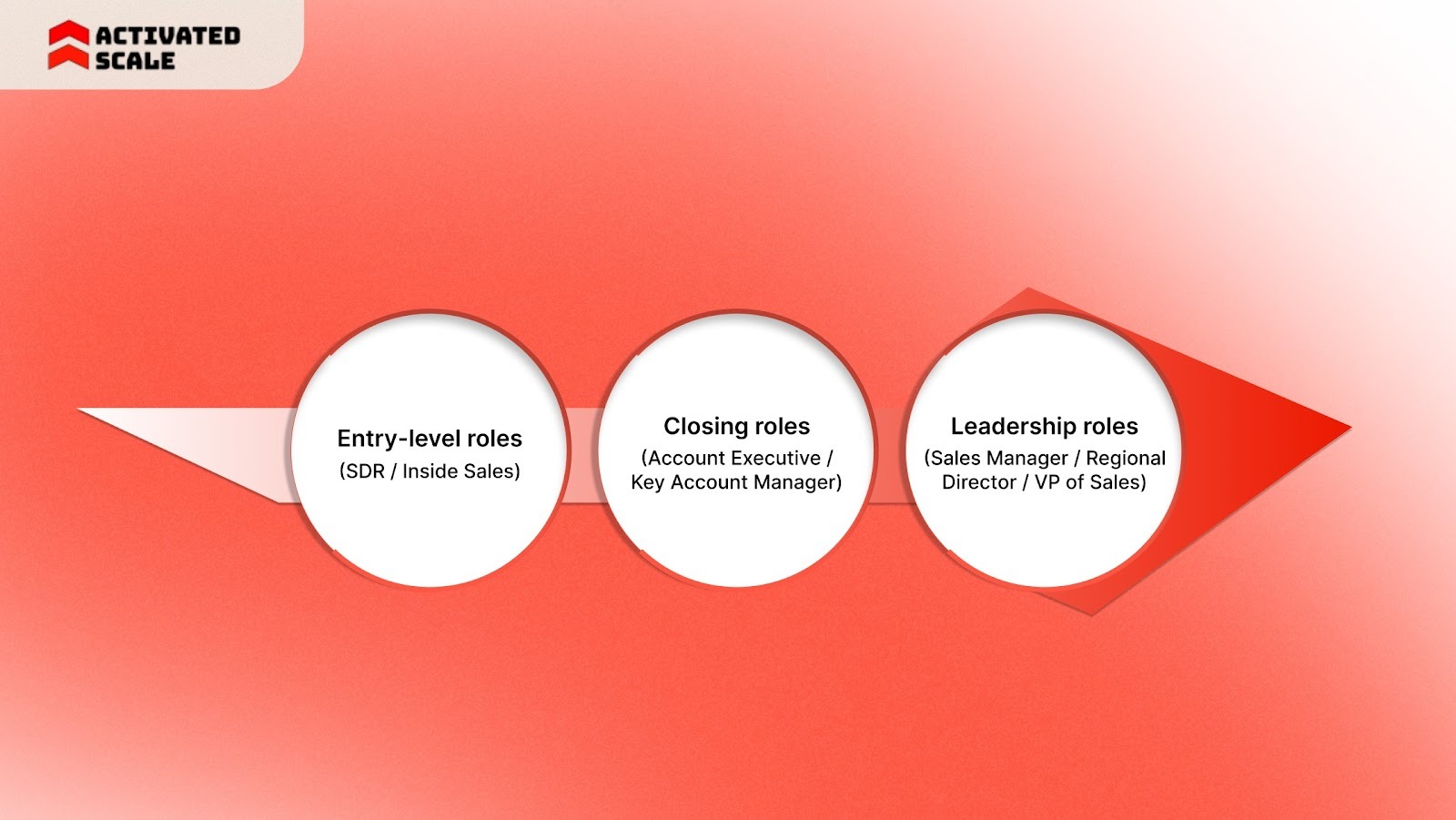
Sales careers are structured around clear performance milestones, making progression more predictable than in many other functions. Most professionals move through a series of roles that expand both responsibility and business impact.
Typical growth paths include:
- Entry-level roles (SDR / Inside Sales)
Focus on prospecting, lead qualification, and learning how buyers engage. This stage builds resilience, communication skills, and process discipline.
- Closing roles (Account Executive / Key Account Manager)
Take ownership of deals end-to-end, manage customer relationships, and drive revenue outcomes. Success here depends on negotiation, discovery, and deal management skills.
- Leadership roles (Sales Manager / Regional Director / VP of Sales)
Shift from individual performance to team results. Responsibilities expand to coaching, forecasting, territory planning, and sales strategy.
Beyond role changes, many sales professionals broaden their impact by developing business and financial fluency, which strengthens pricing conversations, contract negotiations, and long-term account planning.
Over time, experienced sales professionals often transition into:
- Revenue leadership and strategy roles
- Consulting or advisory positions
- Sales enablement or training functions
- Entrepreneurship or independent ventures
As sales professionals progress, exposure to different sales motions, markets, and team structures becomes a key accelerator. Activated Scale enables this by offering flexible opportunities across SDR, AE, and leadership roles in varied business environments.
This kind of hands-on exposure helps sales talent sharpen judgment, adapt faster, and build experience that supports long-term career growth, without waiting years for traditional promotions.
Learn more about: How SDR Marketing Drives Success for Your Business in 2026
Common Challenges Sales Representatives Face in Their Careers
Sales can be highly rewarding, but they also demand consistency, adaptability, and resilience. Regardless of industry or geography, most sales representatives encounter a similar set of challenges as they grow in their roles.
- One of the biggest pressures comes from meeting sales targets. Quotas and performance expectations can create stress, particularly in commission-driven environments where results directly affect income.
- Rejection is another constant. Successful sales reps learn to handle objections and setbacks without losing momentum, using feedback to refine their approach rather than taking it personally.
- Sales roles also require staying current with changing market trends. Buyer behavior, pricing expectations, and competitive landscapes shift quickly, making continuous learning a necessity rather than a choice.
- Beyond selling, reps often struggle to balance administrative responsibilities, from CRM updates to follow-ups and reporting, which can eat into selling time.
Finally, factors like product availability or supply chain delays can disrupt deals, even when demand exists. Learning to manage expectations and communicate clearly during these situations is key to maintaining trust and long-term success.
Ethical Standards Every Sales Representative Should Follow
Ethics in sales isn’t about rules on paper; it’s about how trust is built and maintained over time. A strong sales representative understands that credibility is as important as closing a deal.
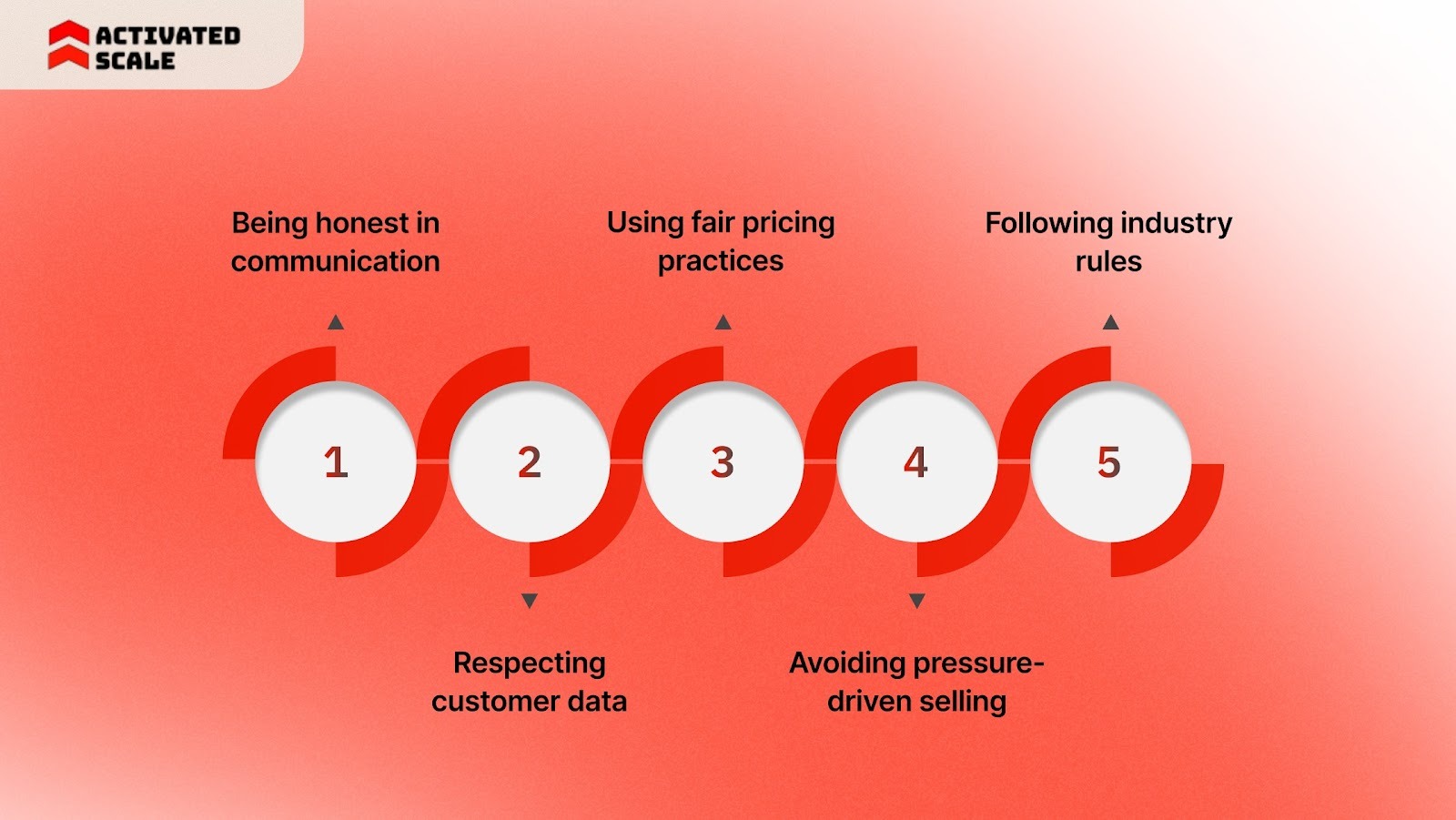
At a minimum, ethical sales behavior includes:
- Being honest in communication: Represent products and outcomes accurately, without exaggeration or half-truths.
- Respecting customer data: Handle personal and business information responsibly and in line with privacy regulations.
- Using fair pricing practices: Present pricing clearly and avoid tactics that mislead or create artificial urgency.
- Avoiding pressure-driven selling: Give buyers space to make informed decisions rather than forcing a close.
- Following industry rules: Stay compliant with advertising standards and fair competition guidelines.
Ethical sales professionals know how to persuade without crossing lines. Understanding buyer psychology helps strike that balance, guiding decisions with clarity and integrity instead of manipulation.
How Activated Scale Supports Modern Sales Careers
Traditional sales hiring doesn’t always suit how sales careers evolve today, especially for reps working across markets, products, or growth stages. Activated Scale operates as a U.S.-based sales talent marketplace that connects experienced sales professionals with startups and scale-ups through fractional, contract-to-hire, and full-time roles.
Instead of static job placements, sales professionals are matched based on proven selling experience, such as outbound prospecting, full-cycle closing, or early GTM execution. This allows reps to work with different teams and sales motions, build measurable results, and progress toward senior or leadership roles with real performance data.
For companies, the model reduces hiring risk by validating fit in live sales environments before long-term commitments. For sales professionals, it offers career growth through exposure, responsibility, and execution, not just titles.
Final Thoughts
A successful international sales career isn’t built by chasing titles; it’s built by consistently delivering results across different markets, products, and sales motions. As global selling becomes more complex, sales reps who can adapt, communicate clearly, and execute in real-world conditions stand out faster.
Modern sales careers are also becoming more flexible. Instead of following a single linear path, many reps now grow by gaining exposure to multiple GTM environments, proving performance, and stepping into leadership with evidence, not assumptions.
This is where Activated Scale fits naturally. By connecting experienced sales professionals with startups and scale-ups through flexible, execution-first roles, Activated Scale enables sales reps to build measurable impact while accelerating their career progression.
Connect with Activated Scale to explore flexible sales opportunities that move your career forward.
FAQs
1. What does an international sales rep career path typically look like?
It often starts with territory or regional sales roles and progresses toward senior AE, sales manager, or global sales leadership positions.
2. What skills matter most for career growth in international sales?
Cross-cultural communication, consultative selling, adaptability, and the ability to sell remotely across markets.
3. Is international sales experience valuable for leadership roles?
Yes. Global selling experience is often a strong indicator of readiness for senior sales and revenue leadership roles.
4. Do international sales reps need industry specialization to grow?
Specialization helps, but exposure to different products and markets can accelerate learning and long-term progression.
5. How does Activated Scale support sales career growth?
Activated Scale allows sales professionals to work in flexible, execution-first roles, gain exposure to different GTM environments, and build a track record based on real performance.
The Ultimate Guide to Hiring a Salesperson!
Get the step-by-step guide to hiring, onboarding, and ensuring success!