_edi.png)
Payroll is one of the most time-consuming and error-prone administrative functions in any business.
In 2025, over 60% of companies were expected to outsource payroll functions, underscoring how common this strategy has become as businesses seek efficiency and risk reduction.
As payroll rules grow more complex across states and jurisdictions, many companies are rethinking whether managing payroll internally still makes sense. This is where outsourcing payroll shifts from a cost decision to a risk and efficiency decision.
Core takeaways
- Payroll errors are common and costly, with U.S. businesses facing significant tax penalties each year.
- Outsourcing payroll improves compliance by shifting responsibility to specialists who track regulatory changes.
- Businesses save internal time by removing repetitive calculations, filings, and corrections.
- The right provider offers scalability without locking you into rigid contracts.
- Payroll outsourcing works best when treated as a risk-management decision, not just a cost-cutting move.
Payroll Outsourcing Explained: What It Means in Practice
Payroll outsourcing means hiring a specialized third-party provider to manage employee payments on your behalf. Instead of running payroll internally, you rely on external experts to calculate wages, withhold taxes, and process payments accurately and on time.
Outsourced providers bring established payroll systems, compliance knowledge, and dedicated support that many internal teams lack. This reduces manual work and limits errors that often arise from complex tax and wage rules.
Some organizations still manage payroll in-house through HR teams and payroll software. That approach offers direct control but also demands ongoing attention to compliance, system updates, and internal capacity.
Choosing between in-house and outsourced payroll affects cost, accuracy, and operational focus. The right option depends on team size, regulatory complexity, and how much time your business can afford to spend on payroll management.
Learn more about: 6 Essential Closing Skills for Startup Sales Teams in 2026
Key Benefits of Payroll Outsourcing for Growing Businesses
Outsourcing payroll is not about giving up control. It is about removing friction from a function that demands accuracy, speed, and constant regulatory awareness.
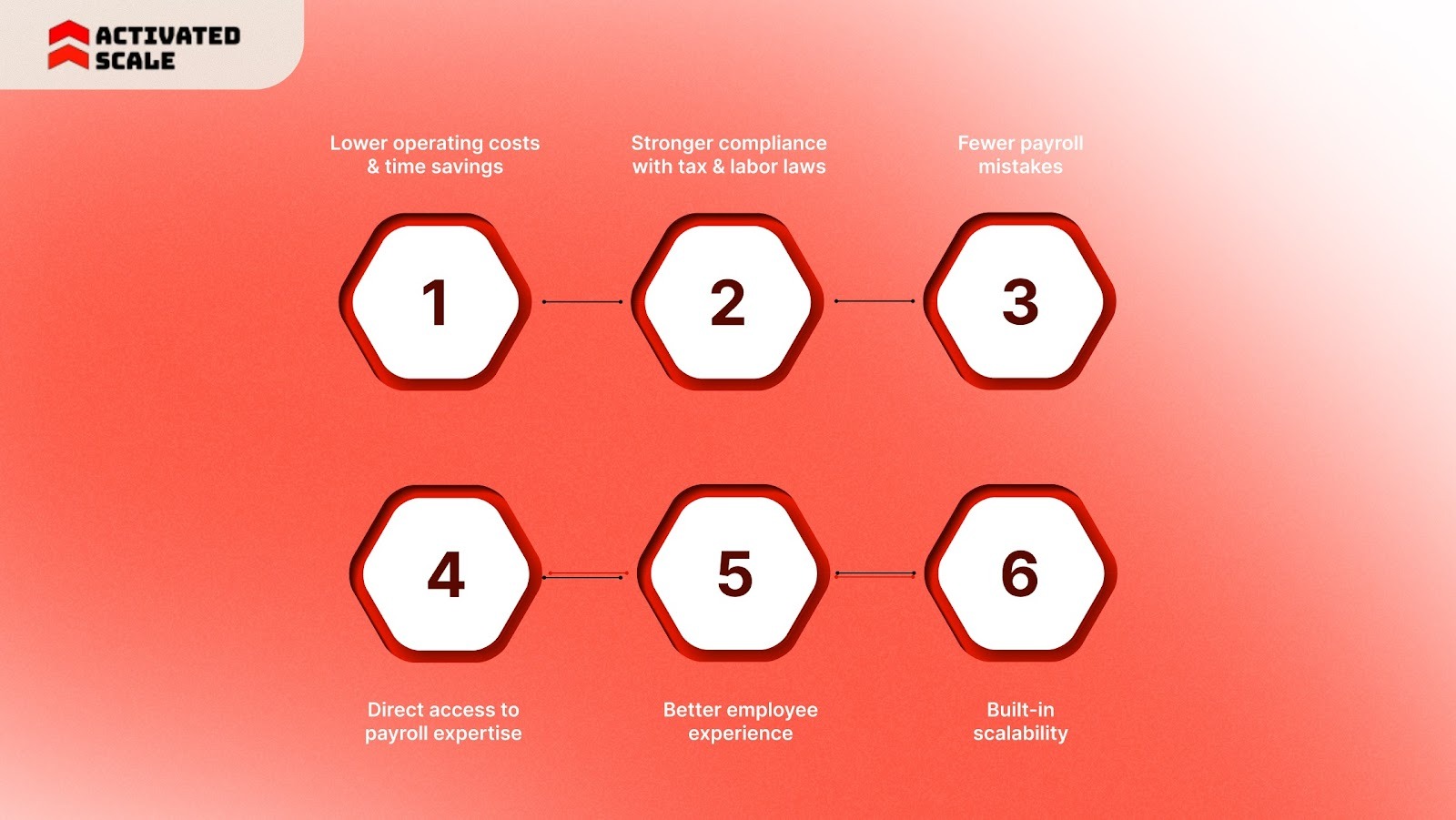
1. Lower operating costs and time savings
Managing payroll internally requires staff time, software licenses, training, and error correction. Outsourcing replaces those fixed costs with a predictable fee and faster processing. Internal teams can redirect time toward finance planning, hiring, and growth priorities instead of recurring payroll tasks.
2. Stronger compliance with tax and labor laws
Payroll rules change frequently at the federal, state, and local levels. Outsourcing providers track these changes continuously and apply them automatically. This reduces exposure to penalties, late filings, and classification errors that often surface during audits.
3. Fewer payroll mistakes
Payroll errors affect trust, morale, and compliance. External providers use specialized systems and review controls that reduce miscalculations, missed deductions, and payment delays. Accuracy improves because payroll is their sole focus, not one task among many.
4. Direct access to payroll expertise
Outsourcing gives businesses access to professionals who handle payroll at scale. These teams understand edge cases, multi-state rules, benefits deductions, and reporting requirements that internal teams may face only occasionally.
5. Better employee experience
Accurate and on-time pay has a direct impact on employee confidence. Outsourced payroll ensures consistent payments and gives employees access to clear answers on taxes, deductions, and leave balances without burdening internal HR teams.
6. Built-in scalability
Payroll needs change as headcount grows, contracts fluctuate, or new states are added. Outsourced providers scale processing capacity without new hires, system upgrades, or workflow redesigns. Payroll stays stable even when the business is not.
Payroll outsourcing follows the same principle many companies now apply to hiring and revenue teams: reduce risk, stay flexible, and scale only when results justify it. That is why founders often pair operational outsourcing with models like Activated Scale, using contract-to-hire recruiting, fractional selling, or fractional sales leadership to test impact before committing long term.
Key Considerations Before Outsourcing Payroll
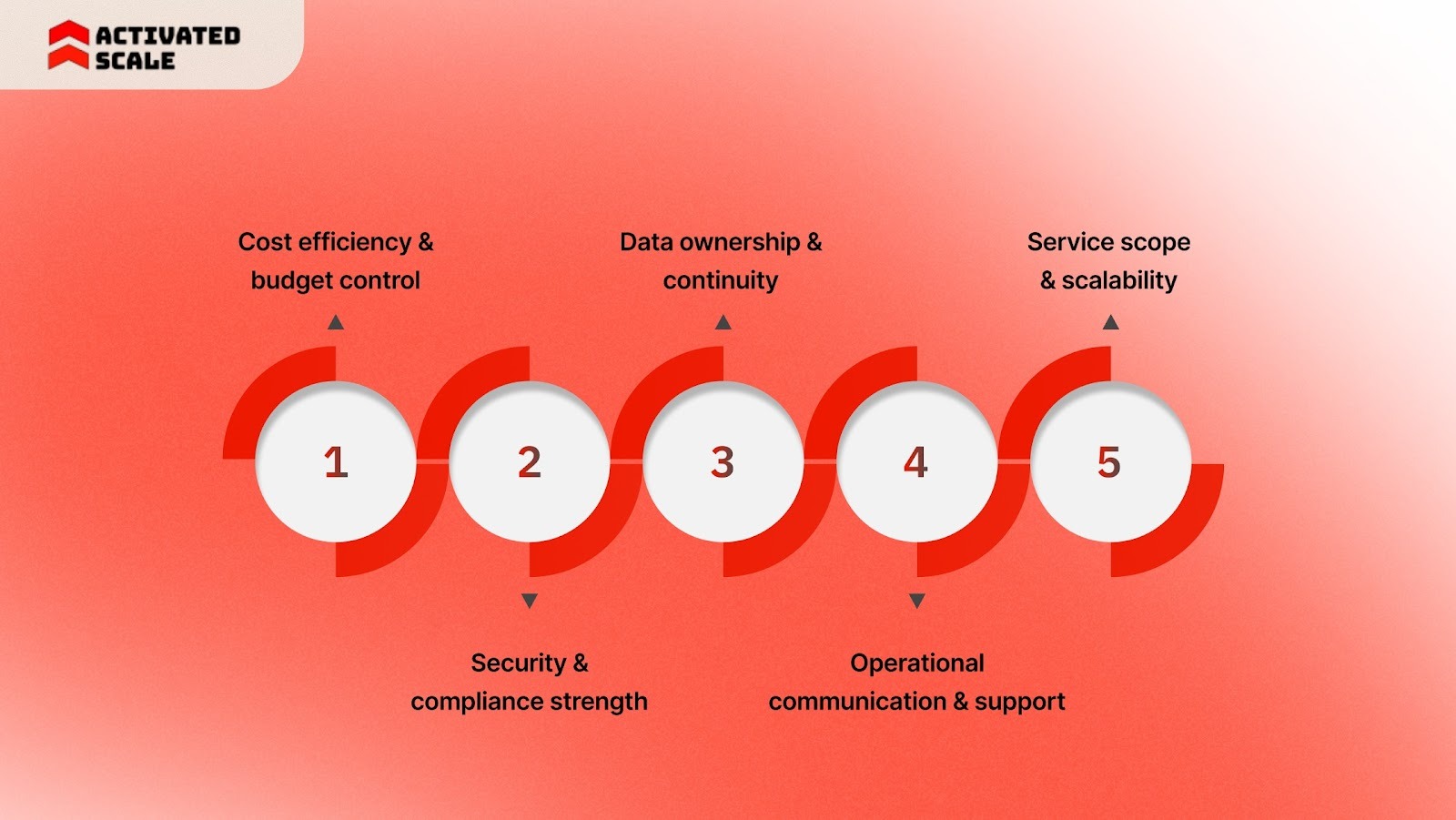
Payroll outsourcing can deliver operational and financial benefits, but only when the underlying trade-offs are clearly understood. Before committing, evaluate these benefit-linked considerations carefully to avoid friction later.
Cost efficiency and budget control
Outsourcing payroll can reduce internal workload and software spend, but pricing varies widely. Providers may charge setup fees, monthly subscriptions, or per-employee rates. The real benefit comes from comparing those costs against in-house payroll expenses, including staff time, compliance risk, and future system upgrades as headcount grows.
Security and compliance strength
Payroll data includes compensation, tax identifiers, and banking details. A provider’s value lies in how well they protect that data. Look for documented security controls, audit readiness, and compliance with federal and state payroll regulations. Weak security during implementation is one of the most common failure points.
Data ownership and continuity
Outsourcing should not mean losing control of critical records. Contracts must clearly define data ownership, access permissions, and retrieval processes. This protects business continuity if the relationship ends or systems change.
Operational communication and support
Payroll accuracy depends on timely information flow. Delays in responses or unclear escalation paths can quickly lead to missed payments or filing errors. The benefit of outsourcing only holds if the provider offers consistent, accountable support across every pay cycle.
Service scope and scalability
Payroll providers offer different service tiers. Some include tax filings and reporting; others do not. Review SLAs closely to ensure coverage matches your needs today and can scale as hiring increases or locations expand.
Many teams apply this same benefit-first lens across other outsourced functions. Instead of committing upfront, they validate partners through flexible models. That’s why founders often work with Activated Scale to test execution before making long-term decisions.
Also read: What are the Three Types of Outsourcing: Pros and Cons Explained!
How to Select a Payroll Outsourcing Partner That Delivers Real Benefits
Once you decide to outsource payroll, the value you gain depends heavily on the provider you choose. The right partner protects compliance, reduces errors, and scales with your business. The wrong one creates delays, support gaps, and long-term constraints. Use the steps below to make a practical, low-risk decision.
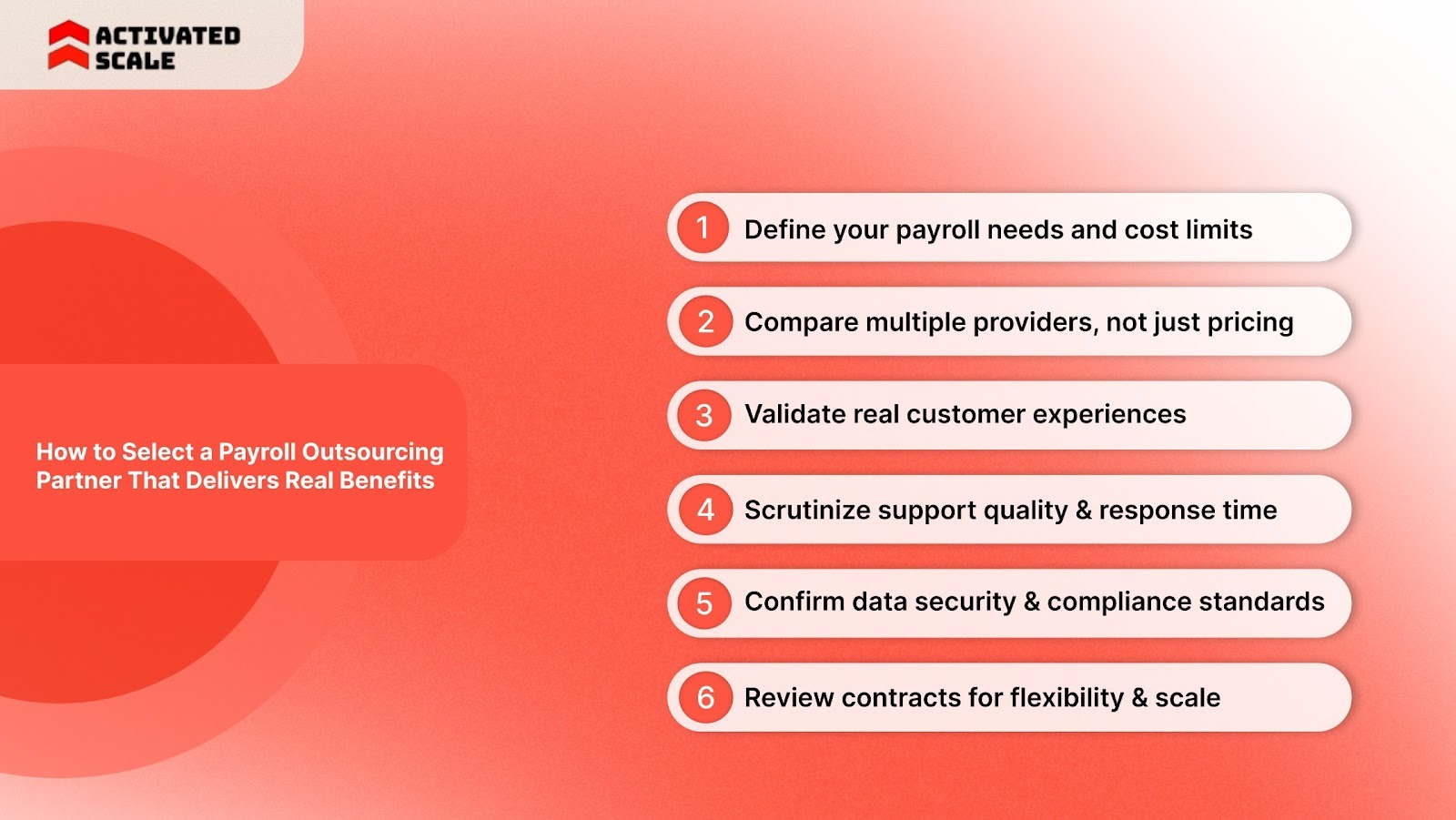
1. Define your payroll needs and cost limits
Be specific. Identify pay frequency, employee classifications, multi-state requirements, and compliance complexity. Set a budget that reflects reliability, not just baseline processing.
2. Compare multiple providers, not just pricing
Request proposals from several vendors. Compare tax handling, reporting depth, onboarding effort, and how issues are resolved when something goes wrong.
3. Validate real customer experiences
Rely on independent reviews. Look for patterns around missed filings, payroll corrections, and how problems are handled under pressure.
4. Scrutinize support quality and response time
Payroll issues are time-sensitive. Confirm support availability, escalation paths, and response expectations before signing.
5. Confirm data security and compliance standards
Review security policies carefully. Ask about encryption, access controls, audits, and breach response procedures.
6. Review contracts for flexibility and scale
Check SLAs, exit terms, and pricing as headcount changes. Avoid agreements that limit growth or lock you into rigid pricing structures.
The same thinking applies beyond payroll. Teams that avoid long-term commitments upfront tend to move faster and make fewer costly mistakes. Activated Scale operates on this principle by helping companies validate execution first, then scale only after results are clear.
Where Flexible Talent Models Reduce Hiring Risk
Many teams struggle not because they outsource, but because they commit too early. Long hiring cycles, unclear success metrics, and misaligned expectations often surface months after a decision is locked in. That risk is highest in roles tied directly to revenue, where performance shows up quickly and mistakes are expensive.
Activated Scale is built around reducing that risk. Instead of placing candidates and stepping away, the model emphasizes real execution before long-term commitment. Companies work with experienced, U.S.-based sales professionals who step into live pipelines, real quotas, and existing GTM motions. Performance is measured in actual outcomes, not resumes or interviews.
What stands out in their approach:
- Talent is vetted for stage and buyer fit, not just role titles
- Engagements start with clear expectations and short feedback loops
- Teams retain control while testing leadership, execution, and impact in-market
This mirrors how strong operators approach other critical functions like payroll or finance: validate reliability under real conditions, then scale with confidence. The result is fewer costly reversals and more informed hiring decisions.
Conclusion
Payroll outsourcing is not just for convenience; it allows you to focus on other priorities. When specialists handle compliance-heavy execution, internal teams spend less time fixing errors and more time running the business.
The same principle shows up across modern operations. Companies outsource non-core execution to stay lean while keeping strategic control in-house. That’s why many founders apply similar thinking to sales hiring, using platforms like Activated Scale to access vetted talent through contract-to-hire or fractional models before committing long-term.
If payroll is starting to slow you down or expose risk, it may be time to rethink how it’s handled.
If you’re re-evaluating how you outsource critical functions while staying flexible, explore how Activated Scale helps teams scale revenue roles with less hiring risk.
FAQs
1. When does outsourcing payroll make sense for a business?
It’s most effective when payroll complexity increases, there are multi-state employees, frequent tax updates, or limited internal finance bandwidth.
2. Does outsourcing payroll reduce compliance risk?
Yes. Payroll providers monitor federal, state, and local tax changes, lowering the chance of filing errors and penalties.
3. Is payroll outsourcing only for large companies?
No. Small and mid-sized businesses often benefit the most because they lack dedicated payroll specialists.
4. What should businesses evaluate before switching providers?
Data security standards, response time during payroll issues, contract flexibility, and support quality matter more than headline pricing.
5. How does payroll outsourcing affect internal teams?
It removes administrative workload, allowing HR and finance teams to focus on planning, hiring, and operational decisions.
The Ultimate Guide to Hiring a Salesperson!
Get the step-by-step guide to hiring, onboarding, and ensuring success!