_edi.png)

Revenue growth often becomes unpredictable as startups scale. Pipeline looks healthy one quarter and slows the next. Forecasts miss targets, and teams struggle to explain why. Sales, marketing, and customer success often work in silos, each using different data and processes.
This disconnect leads to missed opportunities and unreliable planning. Revenue Operations, or RevOps, solves this by aligning teams, data, and workflows around a single revenue goal. It creates visibility into what drives growth and where problems exist. In fact, by 2026, 75% of the highest-growth companies will adopt a RevOps model, up from less than 30% today.
This guide explains the most important RevOps best practices and how startups use them to improve conversion, forecasting, and revenue consistency.
Core Insights
- RevOps creates a single source of truth for revenue data: Centralized pipeline, revenue, and lifecycle data give leadership accurate visibility and improve forecasting confidence.
- RevOps aligns sales, marketing, and customer success around shared goals: This alignment improves handoffs, reduces revenue gaps, and ensures all teams work toward the same growth targets.
- Standardized processes improve conversion and operational efficiency: Clear workflows for qualification, pipeline management, forecasting, and renewals help teams execute consistently.
- Tracking core RevOps metrics helps startups predict and manage revenue growth: Metrics like pipeline coverage, win rate, and ARR growth help identify risks early and improve decision-making.
- Activated Scale helps startups execute RevOps with experienced sales talent: Vetted SDRs, AEs, and sales leaders strengthen pipeline management, forecasting accuracy, and revenue execution.
What Is Revenue Operations (RevOps) And Why It Matters Today
Revenue Operations, or RevOps, is the function that aligns sales, marketing, and customer success around a single revenue process. It connects teams, data, and tools so the entire customer journey works as one system. Instead of each team working separately, RevOps ensures everyone follows the same goals, definitions, and reporting.
RevOps became important as SaaS startups grew more complex. Teams added new tools, hired specialists, and created separate workflows. This often caused data gaps, slow handoffs, and unclear pipeline visibility. Leaders struggled to understand what was driving revenue or where deals were getting stuck.
RevOps introduces structure and visibility across the revenue process. It helps startups operate more efficiently and make better decisions.
RevOps improves revenue performance in several ways:
- Aligns teams: Sales, marketing, and customer success work toward shared revenue targets
- Improves forecasting: Leaders gain accurate visibility into the pipeline and expected revenue
- Strengthens conversion: Clear handoffs reduce delays and lost opportunities
- Improves efficiency: Teams spend less time fixing data issues and more time driving growth
Today, RevOps is a priority for many startups between Seed and Series B. At this stage, the pipeline grows quickly, and coordination becomes critical. Without RevOps, revenue becomes harder to predict and scale.
When Companies Actually Need RevOps
Many startups assume RevOps becomes necessary only at a certain revenue milestone. In reality, the need for RevOps is triggered by operational breakdowns, not company size.
Common stage triggers include:
- Pipeline chaos: Leadership reviews show conflicting pipeline numbers across dashboards. Deals remain in late stages without clear next steps, and close dates move repeatedly without justification. Reps follow inconsistent stage criteria, making pipeline reporting unreliable. When visibility into deal progression weakens, forecasting confidence declines.
- Forecast misses: Quarterly projections consistently fall short of actual results. This often stems from inflated deal confidence, unclear stage exit criteria, weak qualification standards, or inconsistent CRM usage. When forecasted revenue repeatedly diverges from actual revenue, it signals the need for standardized forecasting processes and stronger governance.
- Handoff confusion: Marketing generates leads that sales does not follow up on quickly. Sales closes deals without properly transferring context to customer success. Expansion opportunities are overlooked because no team formally owns them. These breakdowns reduce conversion efficiency and create friction across the customer lifecycle.
- Churn surprises: Leadership is caught off guard by non-renewals or contraction. Renewal dates may not be tracked consistently, customer health signals may be unclear, and expansion forecasting may lack structure. When churn becomes reactive instead of predictable, it indicates gaps in pipeline clarity beyond new logo acquisition.
When these patterns begin to surface, RevOps is no longer optional. It becomes essential for restoring clarity, accountability, and predictability across the revenue engine.
Audit Your Current Revenue Process Before Changing Anything
Before introducing new RevOps frameworks, tools, or hiring plans, startups should first audit their existing revenue process. Many forecasting inaccuracies and conversion problems are not caused by a missing strategy, but by breakdowns already embedded in the funnel.
Without identifying those gaps, adding new systems often increases complexity instead of improving performance. A structured revenue audit creates clarity and ensures RevOps changes address root causes rather than surface symptoms.
Funnel Leaks
Every startup should map its revenue funnel from lead to closed revenue and analyze conversion at each stage. Funnel leaks often appear where leads remain unqualified for too long, demos fail to advance to proposals, or late-stage deals stall without clear next steps.
In some cases, early-stage metrics look strong while late-stage conversion weakens due to pricing objections or unclear decision authority. These leaks quietly erode pipeline efficiency and distort revenue forecasts. Identifying them allows teams to tighten qualification criteria, improve follow-up discipline, and strengthen stage progression.
Reporting Conflicts
Forecasting becomes unreliable when teams rely on inconsistent data definitions or disconnected dashboards. Marketing may report strong lead volume while sales reports weak pipeline quality. Finance may project one revenue number while sales present another forecast.
These conflicts typically stem from unclear definitions of qualified leads, opportunity stages, or revenue attribution rules. When leadership cannot reconcile numbers across departments, confidence in the forecast declines. Auditing reporting alignment ensures all teams operate from the same definitions, metrics, and source of truth.
Ownership Gaps
Revenue slows when accountability is unclear. Leads may sit untouched because routing rules are undefined. Opportunities may stall because no one is responsible for driving the next action. After deals close, expansion and renewal efforts may lack structured ownership, limiting customer lifetime value.
A revenue audit should clearly define who owns each stage of the customer lifecycle and whether service-level expectations exist for follow-up and progression. Clear ownership reduces delays and prevents revenue from slipping through the cracks.
Conversion Drop Points
Instead of reviewing the overall win rate alone, startups should analyze the conversion stage by stage. A sharp decline between demo and proposal may signal weak qualification. Longer sales cycles in certain segments may indicate misalignment in targeting. Patterns across reps may highlight training gaps or process inconsistencies.
Identifying precise drop points helps RevOps prioritize targeted improvements rather than broad changes. This level of analysis improves both conversion efficiency and forecasting accuracy.
Also Read: How to Find a CFO for Your Company in 2026?
10 RevOps Best Practices High-Growth Startups Follow
High-growth startups usually follow a structured RevOps framework that focuses on data accuracy, pipeline discipline, and cross-team alignment. The most common best practices include:
- Define clear revenue pipeline stages
- Standardize key revenue metric definitions
- Establish data ownership and governance rules
- Conduct regular pipeline and forecast reviews
- Align hiring plans with pipeline growth
- Build a single source of truth for revenue data
- Align sales, marketing, and customer success teams
- Standardize processes across the customer lifecycle
- Build a RevOps tech stack that supports growth
- Track core RevOps metrics that drive revenue predictability
Each of these practices strengthens forecasting reliability and improves pipeline conversion.
1. Define Clear Revenue Stages
Clearly defined revenue stages are the foundation of predictable forecasting and consistent conversion. When stages are loosely defined or interpreted differently across reps, the pipeline becomes inflated, handoffs break down, and revenue projections lose credibility.
Strong RevOps discipline ensures that every stage reflects verified buyer progress, not internal optimism.
A well-structured pipeline typically includes:
1. Qualified: This stage should only include opportunities where fit is confirmed, and discovery has validated a real business problem.
Entry criteria should require identified pain, a defined use case, and engagement from a relevant stakeholder. If qualification standards are inconsistent, the early-stage pipeline expands artificially, and conversion weakens downstream.
2. Demo: This stage represents active evaluation. The solution has been presented, buyer interest is validated, and next steps are agreed upon. Movement into the demo should require more than calendar activity. It should indicate genuine buying intent. Clear criteria here protect demo-to-proposal conversion rates and improve mid-funnel visibility.
3. Proposal: The proposal should signal commercial seriousness. Pricing has been shared, decision-makers are involved, and procurement discussions are underway. Without strict controls, deals enter proposals prematurely and remain there too long. Time-in-stage targets and documented next steps are critical to prevent forecast inflation.
4. Closed Won: This stage reflects a signed agreement and confirmed onboarding timeline. It should also trigger immediate structured handoff to customer success to prevent post-sale friction.
Defining stages alone is not enough. Each stage must include measurable goals and formalized handoff expectations to maintain revenue discipline.
Key operational standards should include:
- Response Time Expectations: Marketing-qualified leads should receive outreach within a defined window, typically 24 hours. Inbound demo requests should receive a same-day or next-business-day follow-up. Delayed response reduces conversion and distorts early-stage metrics.
- Follow-Up Rules: Reps should follow a structured outreach cadence with a minimum number of touchpoints before marking a lead inactive. Every interaction must include documented next steps. This prevents silent deal stagnation and improves pipeline accuracy.
- Disqualification Criteria: Opportunities should exit the pipeline if they lack validated pain, budget alignment, buying authority, or responsiveness after structured outreach. Clear disqualification standards keep the pipeline realistic and protect forecasting integrity.
- Re-Engagement Process: Closed-lost or unresponsive opportunities should enter a structured re-engagement path rather than disappear. Scheduled follow-ups, nurture campaigns, and defined reactivation criteria ensure potential revenue is not permanently lost due to timing misalignment.
When revenue stages are defined with objective criteria, measurable goals, and documented SLAs, pipeline health becomes visible, and forecasting becomes more reliable. This structure transforms the pipeline from a static list of deals into a disciplined revenue system.
2. Use Standard Definitions for Key Metrics
Revenue alignment breaks down when teams use the same terms differently. Sales, marketing, and finance may all report “pipeline” or “revenue,” but calculate them in different ways. Without standardized definitions, dashboards conflict, and forecasts lose credibility.
RevOps ensures core revenue metrics are clearly defined, documented, and applied consistently across teams.
Key metrics that require strict standardization include:
- Qualified Leads: Define exactly what qualifies as a marketing qualified lead (MQL) or sales qualified lead (SQL), including fit, engagement level, and buying intent. Clear criteria prevent marketing from over-reporting volume and protect early-stage conversion quality.
- Pipeline Value: Establish when an opportunity is officially created, what qualifies it to enter the pipeline, and how deal value is calculated. Standard rules prevent inflated pipeline coverage and unrealistic forecasts.
- Win Rate: Agree on a single formula for calculating win rate, whether based on total opportunities created or only closed deals. Inconsistent formulas lead to misleading performance conclusions and forecasting errors.
- Revenue: Clarify whether revenue refers to bookings, annual recurring revenue (ARR), recognized revenue, or cash collected. Alignment with finance definitions ensures reporting consistency and stronger board-level credibility.
When metric definitions are standardized, reporting becomes consistent, and forecasting discussions become data-driven rather than subjective.
3. Set Data Ownership And Governance Rules
Strong RevOps execution depends on more than CRM usage. It requires clear data ownership and governance rules that protect revenue integrity as the company scales. As startups grow, multiple teams contribute to the revenue engine.
Marketing generates leads, sales manages opportunities, customer success drives renewals, and finance tracks recognized revenue. Without defined ownership and standardized governance, reporting conflicts increase, and forecasting becomes unreliable.
Data ownership ensures accountability. Every critical revenue data category should have a clearly defined owner responsible for accuracy and maintenance. For example:
- Marketing owns lead source attribution, campaign tagging, and qualification status.
- Sales owns opportunity stage accuracy, deal value, close dates, and forecast categories.
- Customer success owns renewal timelines, expansion pipeline, and churn classification.
- RevOps owns metric definitions, reporting logic, dashboards, and cross-functional alignment.
Clear ownership prevents data decay and ensures that when discrepancies arise, there is accountability to resolve them.
Governance also requires shared definitions across the revenue lifecycle. Inconsistent definitions are one of the primary causes of reporting conflicts. Startups should formally document:
- What qualifies as a marketing qualified lead (MQL)
- When an opportunity is officially created
- The criteria required to move between pipeline stages
- How forecast categories, such as commit or best case, are assigned
- How churn, contraction, and expansion of revenue are recorded
Documented definitions ensure every team operates from the same logic, improving trust in reporting and forecast discussions.
Finally, governance must include system controls and recurring audits. Discipline cannot rely solely on rep behavior; it must be supported by structure. Effective governance typically includes:
- Required CRM fields tied to stage advancement.
- Validation rules for deal values and expected close dates.
- Standardized closed-lost reason codes.
- Automated alerts for stale opportunities.
- Weekly pipeline hygiene reviews and periodic data audits.
When startups treat revenue data with the same rigor as financial reporting, forecasting becomes more predictable and decision-making improves. Clear ownership, documented definitions, and structured controls create a reliable foundation for RevOps to drive measurable revenue impact.
4. Review Pipeline And Forecasts Regularly
Consistent pipeline and forecast reviews help teams identify risks early and correct course before revenue is impacted. Without a structured review cadence, stalled deals remain unnoticed, forecast gaps widen, and accountability weakens.
A disciplined RevOps cadence typically includes:
- Weekly Pipeline Reviews: Focus on deal progression, stage accuracy, next steps, and time-in-stage. These sessions identify stalled opportunities, enforce CRM discipline, and ensure qualification standards are being applied consistently. Weekly reviews keep the pipeline clean and conversion-focused.
- Monthly Forecast Reviews: Evaluate projected revenue against targets. This includes reviewing commit deals, best-case opportunities, and pipeline coverage ratios. Monthly reviews help leadership assess whether hiring, spending, or pipeline generation adjustments are required.
- Quarterly Revenue Reviews: Analyze broader trends across conversion rates, sales cycle length, win rates, and churn patterns. Quarterly reviews assess whether stage definitions, qualification criteria, or segment strategy need refinement. This is where structural RevOps improvements are identified.
When conducted consistently, these reviews strengthen accountability, improve forecasting accuracy, and provide clear visibility into revenue performance at both tactical and strategic levels.
5. Align Hiring With Pipeline Growth
Revenue growth depends on sales capacity. Hiring too late slows pipeline conversion.
RevOps helps leadership decide:
- When to hire SDRs
- When to hire AEs
- When to add sales leadership
This ensures the pipeline converts efficiently.
These best practices help startups build a reliable revenue engine. The next step is ensuring the right team executes these processes consistently.
Also Read: Guide to Hiring the Right Salesperson for your Business
6. Build A Single Source Of Truth For Revenue Data
Revenue Operations begins with one clear goal: create a single source of truth for revenue data. This means all teams use the same numbers to track pipeline, performance, and revenue. Most startups struggle because data lives in different tools and reports.
Fragmented data creates serious problems:
- Conflicting reports: Sales and marketing report different pipeline numbers
- Poor forecasting: Leadership cannot trust revenue projections
- Lack of accountability: Teams cannot see where deals slow down or fail
A single source of truth solves this by centralizing key revenue metrics in one system, usually the CRM and reporting dashboard.
This centralized data typically includes:
- Leads
- Opportunities
- Pipeline value
- Revenue
- Customer lifecycle stage
Example revenue dashboard:
ARR represents the total annual subscription revenue from customers. This structure gives executive reporting clarity. into revenue performance. Teams can track progress, identify problems, and make better decisions faster.
Once data is aligned, the next step is aligning teams around shared revenue goals and processes.
Must read: What Affects Sales Training Costs and How To Plan
7. Align Sales, Marketing, and Customer Success
RevOps ensures sales, marketing, and customer success operate toward shared revenue outcomes. Without alignment, each team focuses on its own targets, which creates gaps in pipeline generation, conversion, and retention. Over time, this misalignment reduces forecasting accuracy and weakens overall revenue performance.
Shared revenue goals keep teams focused on measurable outcomes rather than isolated activities. The most important shared metrics typically include:
- Pipeline generation – The total value of new qualified opportunities created within a defined period.
- Conversion rate – The percentage of opportunities that progress to closed-won customers.
- Revenue growth – The increase in recurring revenue over time, including new business and expansion.
When these metrics are shared, teams evaluate performance collectively instead of optimizing for isolated targets.
RevOps also clarifies functional responsibilities so accountability remains visible across the customer lifecycle.
- Sales: Closes new customers and advances qualified opportunities through defined pipeline stages. Sales is accountable for deal progression, forecast accuracy, and revenue attainment.
- Marketing: Generates qualified leads aligned with the ideal customer profile and supports pipeline growth through targeted campaigns and attribution tracking.
- Customer Success: Retains existing customers, manages renewals, and drives expansion through upsells and cross-sells. Customer success ensures long-term revenue stability beyond initial acquisition.
RevOps connects these functions through structured handoffs, shared definitions, and coordinated reporting. When alignment is consistent, conversion improves, churn decreases, and pipeline clarity strengthens across the entire lifecycle.
Many SaaS companies use platforms like Activated Scale to access vetted, U.S.-based fractional SDRs, AEs, and sales leaders who can execute the follow-up, qualification, and pipeline management improvements.
Learn more about: How to Hire Overseas Contractors Compliantly in 2026
8. Standardize Revenue Processes Across The Customer Lifecycle
RevOps creates repeatable workflows that guide how leads move from first contact to long-term customer. Without standard processes, each team handles deals differently. This creates delays, missed follow-ups, and lost revenue.
Standardization ensures every opportunity follows the same path. This improves efficiency and makes revenue more predictable.
Core RevOps processes include:
- Lead Routing: Assign new leads to the appropriate sales representative based on territory, segment, product line, or account ownership rules. Routing should be automated where possible and governed by defined response time expectations. Clear routing prevents delays, improves speed-to-lead, and protects early-stage conversion rates.
- Qualification: Confirm that a lead aligns with the ideal customer profile and demonstrates real buying intent. Qualification should validate pain points, use case fit, stakeholder involvement, budget range, and timeline. Structured qualification criteria prevent low-quality opportunities from entering the pipeline and inflating forecasts.
- Pipeline Management: Track deal progression through defined stages with documented next steps and time-in-stage monitoring. This includes enforcing stage-entry criteria, identifying stalled opportunities, and ensuring close dates remain realistic. Strong pipeline management improves visibility into conversion risk and strengthens forecast accuracy.
- Forecasting: Estimate expected revenue based on stage probability, historical conversion rates, and deal confidence levels. Forecasting should distinguish between committed revenue and upside pipeline, and it should be reviewed on a recurring cadence. Consistent forecasting processes reduce surprises and support hiring and budgeting decisions.
- Renewals: Manage contract renewals, expansion opportunities, and churn risk with the same rigor applied to new business. This includes tracking renewal dates, monitoring customer health indicators, forecasting expansion pipeline, and defining clear ownership between sales and customer success. Structured renewal management stabilizes recurring revenue and improves long-term growth predictability.
These workflows create clear ownership across the customer lifecycle.
Example lifecycle structure:
This structure ensures smooth handoffs because responsibilities are clearly defined at each stage of the customer lifecycle. Marketing knows when a lead is ready for sales. Sales understands when an opportunity qualifies for commercial discussion. Customer success receives full context once a deal closes. Each team knows when to act and what outcome it owns.
Standardized processes improve conversion by removing ambiguity and delays. Leads are followed up within defined timelines, opportunities advance only when criteria are met, and stalled deals are surfaced early. This consistency reduces friction and increases progression through the pipeline.
For leadership, structured processes make revenue slowdowns visible. If conversion drops, time-in-stage increases, or renewals decline, the issue can be traced to a specific stage. This allows teams to correct problems early instead of reacting after targets are missed.
To support these processes effectively, startups need the right tools and systems.
Also Read: Best Outbound Sales Tools for Software Teams in 2026
9. Build A RevOps Tech Stack That Supports Growth
Once processes and data definitions are established, RevOps relies on technology systems to support them at scale. These tools help teams track the pipeline, manage customer interactions, and measure performance. Without the right tech stack, teams rely on manual updates and incomplete information.
Core RevOps tools include:
- CRM (Customer Relationship Management): Stores leads, opportunities, and customer data
- Marketing automation: Tracks campaigns and manages lead nurturing
- Sales engagement tools: Help reps manage outreach and follow-ups
- Reporting dashboards: Show pipeline, conversion, and revenue trends
These tools give leadership clear revenue visibility. Teams can see what drives growth and where problems exist.
RevOps tech stacks usually evolve as startups grow.
At the seed stage, startups focus primarily on tracking the pipeline. As they enter the growth stage, they invest in automation and analytics to improve efficiency and revenue visibility.
A strong tech stack improves forecasting accuracy and supports better decision-making. Leaders can act quickly based on real data instead of assumptions.
However, tools and processes only create value when performance is measured consistently.
10. Track The Core RevOps Metrics That Drive Predictable Revenue
RevOps improves forecasting by tracking the right revenue metrics. These metrics show how efficiently the pipeline converts into revenue. Without them, leaders rely on guesswork instead of clear performance data.
Here are the core RevOps metrics every startup should track:
Two key formulas help measure performance.
Win rate:
This shows how many opportunities convert into customers.

Pipeline coverage:
This shows whether the pipeline is sufficient to hit revenue targets.
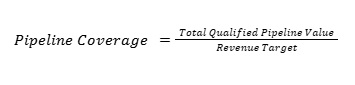
For example, a 3x pipeline coverage means the pipeline is three times the revenue target.
Tracking these metrics helps leadership identify risks early. Teams can see whether the pipeline is strong enough and whether conversion needs improvement. This leads to more accurate forecasting and better planning.
Metrics provide visibility, but execution determines whether revenue goals are achieved.
How Activated Scale Helps Startups Execute RevOps Successfully
RevOps improves forecasting and alignment, but results depend on execution. Many startups define metrics and processes, but lack the team to manage them consistently. Pipeline tracking falls behind, forecasts lose accuracy, and revenue gaps appear. These issues limit the impact of RevOps.
Activated Scale helps startups execute RevOps by providing vetted, U.S.-based SDRs, AEs, and sales leaders who strengthen pipeline management and pipeline clarity. Instead of waiting through long hiring cycles, companies can deploy experienced professionals who support structured revenue operations immediately.
Activated Scale supports RevOps execution through flexible hiring models:
1. Contract-to-Hire Recruiting: Startups can deploy experienced SDRs or AEs who follow defined qualification, pipeline, and forecasting processes. This helps improve pipeline visibility and allows companies to validate impact before hiring full-time.
2. Fractional SDRs and AEs: Fractional sales professionals help maintain consistent pipeline updates and follow-up. This ensures revenue data remains accurate and opportunities progress as expected.
3. Fractional Sales Leadership: Activated Scale also provides experienced sales leaders who help strengthen RevOps structure, improve forecasting discipline, and align teams around shared revenue goals.
Activated Scale helps startups execute their RevOps strategy. By providing flexible access to proven sales talent, Activated Scale enables companies to improve pipeline clarity, strengthen forecasting, and scale growth with confidence.
Conclusion
Revenue Operations brings structure to how the pipeline turns into predictable revenue. Done right, it aligns teams, improves forecasting accuracy, and creates clear visibility into what drives growth. Instead of relying on assumptions, startups can track performance, identify risks early, and make better revenue decisions.
Activated Scale helps startups execute RevOps by connecting them with vetted, U.S.-based SDRs, AEs, and sales leaders who improve pipeline management, forecasting discipline, and team alignment. Through contract-to-hire and fractional models, companies can strengthen revenue operations without committing to full-time hires too early.
Connect with Activated Scale to explore how experienced sales talent can help you execute RevOps effectively and build predictable revenue growth.
FAQs
1. How is RevOps different from sales operations?
Sales operations focus only on sales team performance and pipeline management. RevOps connects sales, marketing, and customer success into one revenue system. This creates better alignment and full visibility across the customer lifecycle.
2. Can startups implement RevOps without hiring a full-time RevOps manager?
Yes, many startups begin RevOps using existing sales leaders or founders. They define processes, track metrics, and align teams early. A dedicated RevOps hire usually comes later as revenue grows.
3. What is the biggest challenge when implementing RevOps?
The biggest challenge is ensuring teams follow the same processes consistently. Different workflows and definitions create reporting and forecasting issues. RevOps solves this by standardizing how teams operate.
4. How does RevOps help identify revenue risks early?
RevOps tracks pipeline movement, deal progress, and conversion trends. This helps leaders see where deals slow down or the pipeline weakens. Early visibility allows teams to take action before revenue is affected.
5. Does RevOps help after a deal is closed?
Yes, RevOps tracks customer renewals and expansion opportunities. This helps ensure long-term revenue growth from existing customers. It also improves visibility into overall customer value.
The Ultimate Guide to Hiring a Salesperson!
Get the step-by-step guide to hiring, onboarding, and ensuring success!