_edi.png)

For startups, every hire counts, and sales hires are no exception. A well-designed sales compensation plan doesn’t just pay your team; it drives behavior, fuels revenue growth, and helps retain top performers. Yet, many startups struggle to create plans that balance motivation, cash flow, and scalability.
According to HubSpot research, 40% of sales reps leave within the first year due to unclear or poorly structured compensation plans. For fast-growing startups, designing a transparent, performance-driven plan from the start can mean the difference between steady growth and missed targets.
In this guide, we’ll break down best practices, common pitfalls, and actionable tips to craft a compensation plan that aligns incentives with results, motivates your team, and supports sustainable growth.
Quick Snapshot:
- Clear, performance-driven plans directly influence sales behaviour, revenue quality, and retention; poorly designed plans are a key reason nearly 40% of sales reps leave within their first year.
- Early-stage startups benefit from draw-based or commission-heavy models to control fixed costs, while scaling teams need base-plus-variable structures to balance stability and upside.
- High-impact plans reward metrics like ARR, retention, deal quality, and multi-year contracts, ensuring sales effort supports sustainable growth rather than quick but low-value deals.
- Clear payout rules, achievable targets, onboarding incentives, and accelerators for overperformance keep reps engaged while encouraging top performers to exceed targets.
- Regular reviews, performance tracking, and expert guidance such as fractional sales leadership, help startups implement, test, and optimize compensation plans without costly hiring mistakes.
What Is a Sales Compensation Plan?
A sales compensation plan is a structured framework that defines how your sales team gets paid and motivates them to drive results. For startups, it’s not just about payroll; it’s about aligning sales behavior with business goals, like revenue growth, customer acquisition, and retention.
Key Components:
- Base Salary: Fixed pay to provide stability.
- Commissions: Variable pay tied directly to sales performance.
- Bonuses: Rewards for achieving specific milestones or KPIs.
- Equity or Stock Options: Long-term incentives often used by startups to retain key talent.
A good plan clearly maps how performance translates into pay, helping salespeople focus on the outcomes that matter most. A well-designed sales compensation plan ensures motivation, accountability, and alignment with your startup’s growth strategy.
Why a Well-Structured Sales Compensation Plan is Critical for Startups
Would you take a job without knowing what you’ll earn? That’s exactly what a sales rep faces if your compensation plan is unclear. For startups, having a transparent and fair sales compensation plan isn’t optional, it’s essential to attract, retain, and motivate top talent.
A strong plan does more than outline earnings:
- Sets clear expectations for performance and rewards
- Motivates your team toward individual and company goals
- Builds stability by aligning incentives with desired outcomes
- Creates a sense of value that drives retention and engagement
For startups, a well-designed plan is not just about money, it’s a strategic tool to fuel growth and scale revenue efficiently.
Strategic Goals Every Startup Sales Compensation Plan Must Achieve
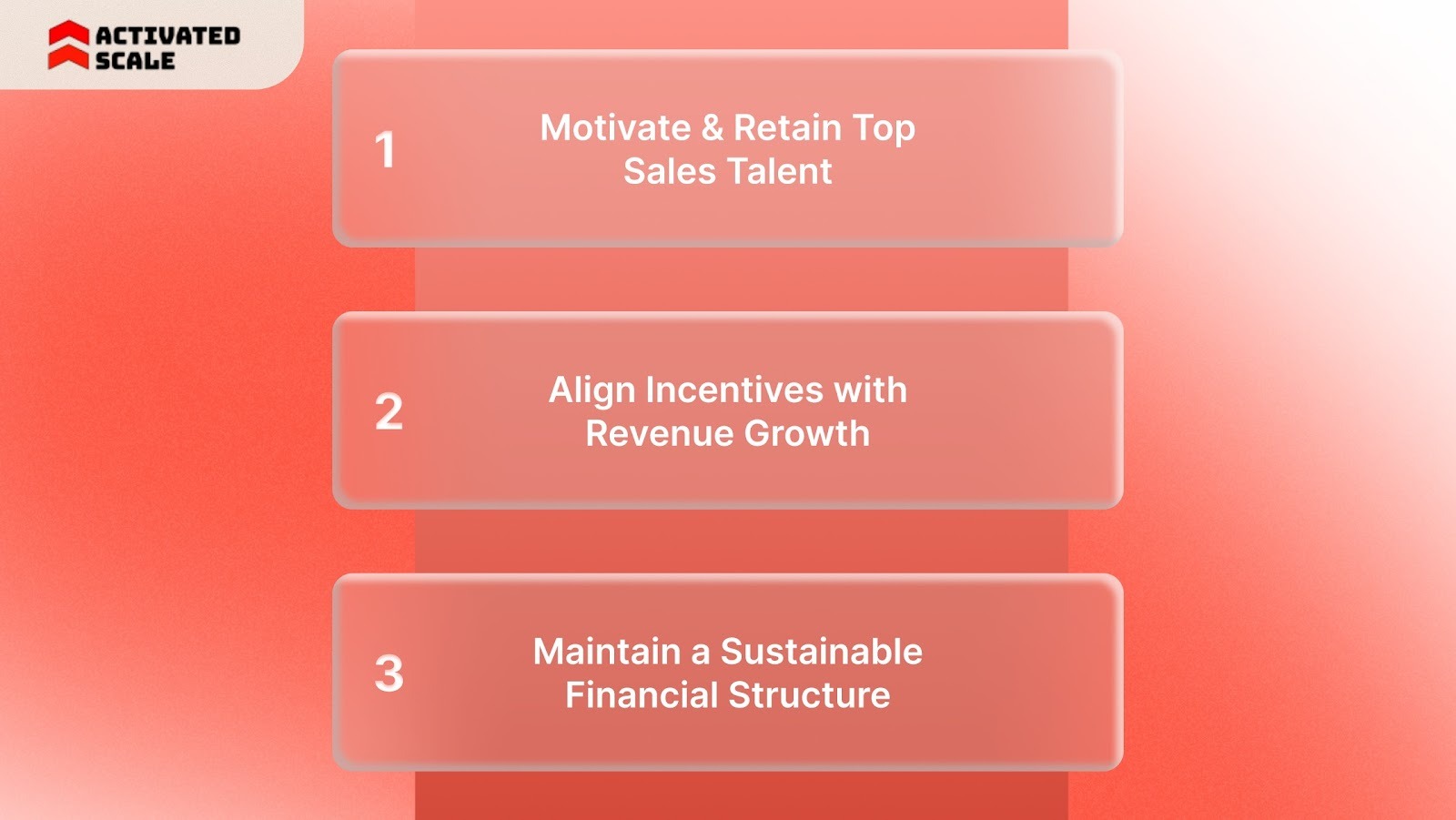
A sales compensation plan is more than just a pay structure, it’s a strategic lever that can drive growth, retain top talent, and protect your startup’s financial health. For early-stage companies with tight runways and ambitious targets, every element of a compensation plan should be intentional.
1. Motivate and Retain Top Sales Talent
Sales in startups is high-pressure, fast-moving, and unpredictable. Top performers often juggle multiple opportunities, including offers from established firms with stability and perks.
A well-structured comp plan:
- Rewards performance transparently and fairly
- Signals that the company values their contribution
- Provides a clear path for career and earnings growth
This combination helps keep high performers engaged, reduces turnover, and strengthens your team during critical growth phases.
Also read: Direct Sourcing Strategies to Recruit Top Talent
2. Align Incentives with Revenue Growth
A sales compensation plan should guide behavior, not just reward output. Align pay with your startup’s strategic priorities:
- Reward deals that improve long-term cash flow, like multi-year contracts
- Incentivize upselling or cross-selling if margin growth is a priority
- Tie variable pay to metrics that directly impact business outcomes, not just short-term wins
For example, a SaaS startup targeting a 50% ARR increase might structure incentives around customer lifetime value (LTV) rather than first-month revenue, encouraging reps to focus on high-quality, long-term deals.
3. Maintain a Sustainable Financial Structure
Compensation is often a startup’s largest controllable expense. Poorly designed plans can quickly strain cash flow, especially if commissions outpace revenue or headcount growth.
To ensure sustainability:
- Introduce draws against commissions to manage payouts
- Tie bonuses to retention or milestone achievements
- Cap variable pay until revenue targets are realistic
A thoughtful plan drives performance without jeopardizing your runway, balancing reward and financial responsibility.
For startups, designing a sales compensation plan that motivates, aligns, and stays financially sustainable is challenging, especially without experienced sales leadership.
Activated Scale bridges that gap by connecting you with sales professionals and fractional sales leaders who can design, implement, and optimize compensation plans aligned with your growth goals. This ensures you hire smarter, ramp faster, and avoid costly mis-hires, all while keeping your runway intact.
How to Build a High-Impact Sales Compensation Plan for Startups
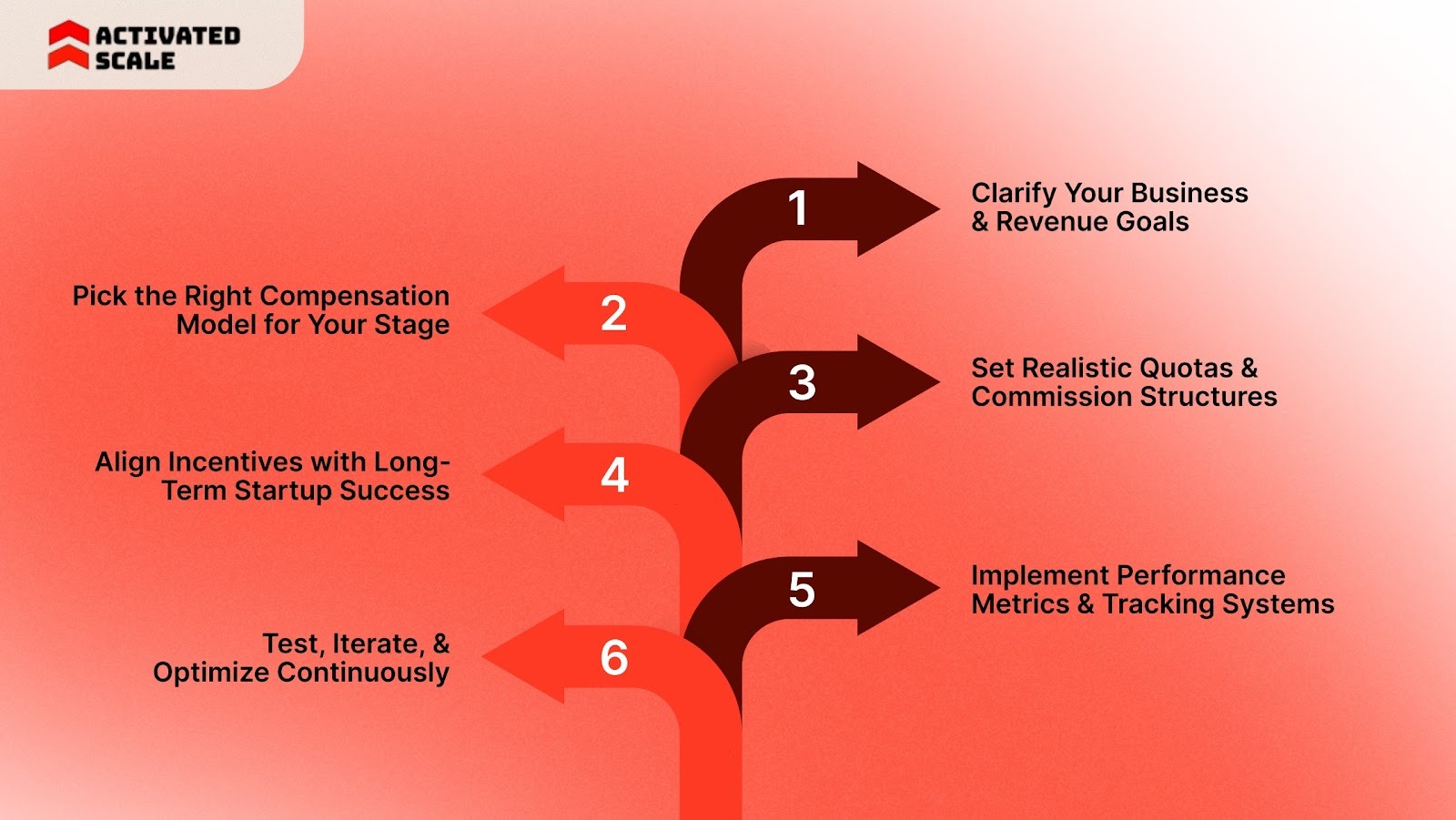
A well-crafted sales compensation plan does more than pay your team; it drives growth, aligns incentives, and sets your startup up for scalable success. Here’s a practical step-by-step guide to creating a plan that works.
Step 1: Clarify Your Business and Revenue Goals
Your compensation plan should reflect what your startup is actually trying to achieve. Misaligned incentives lead to wasted effort and stalled growth.
- Identify top priorities: ARR growth, new customer acquisition, retention
- Set measurable, realistic targets for each role
- Communicate expectations clearly to your sales team
Closing insight: When sales reps understand exactly what success looks like, their efforts focus on the metrics that matter most to your startup’s growth.
Step 2: Pick the Right Compensation Model for Your Stage
The structure of your pay plan can make or break motivation and cash flow. The right model depends on where your startup is in its journey.
- Early-stage: Draw against commission or commission-only models minimize fixed costs
- Scaling: Base + commission, tiered commissions, or hybrid models balance stability and upside
- Consider your startup’s budget and cash runway before finalizing
Closing insight: Matching the model to your stage ensures your team stays motivated without overextending your resources.
Step 3: Set Realistic Quotas and Commission Structures
Quotas need to be challenging yet achievable. Unrealistic expectations lead to burnout, high turnover, and lost momentum.
- Benchmark targets against industry norms and your growth stage
- Design commission structures that reward actual revenue impact
- Make expectations crystal-clear to avoid confusion
Closing insight: Clear, realistic quotas align effort with reward, turning motivation into measurable growth.
Step 4: Align Incentives with Long-Term Startup Success
Compensation should encourage behaviors that drive sustainable growth, not just quick wins.
- Tie incentives to MRR, retention, deal quality, or strategic objectives
- Reward multi-year deals, renewals, upsells, and high-value client acquisition
- Make sure every incentive drives alignment with your startup’s vision
Closing insight: When sales reps see a direct connection between their efforts and long-term success, they become partners in your startup’s journey, not just employees chasing short-term rewards.
Step 5: Implement Performance Metrics and Tracking Systems
Even the best plan fails without proper tracking. Data-driven insights keep reps accountable and your plan fair.
- Use tools like Everstage or CRM analytics to monitor performance
- Track key metrics such as closed deals, pipeline quality, and commission calculations
- Keep reporting transparent to maintain trust
Closing insight: Transparent metrics create confidence in the plan and motivate reps to focus on what drives actual business outcomes.
Step 6: Test, Iterate, and Optimize Continuously
A sales compensation plan isn’t static. Your startup evolves, so your plan should too.
- Conduct quarterly reviews to assess performance and effectiveness
- Gather direct feedback from your sales team
- Refine quotas, commission structures, and incentives based on real-world outcomes
Closing insight: A flexible, evolving plan keeps your team motivated and ensures your compensation strategy scales alongside your business.
Best Practices for Designing a Startup Sales Compensation Plan
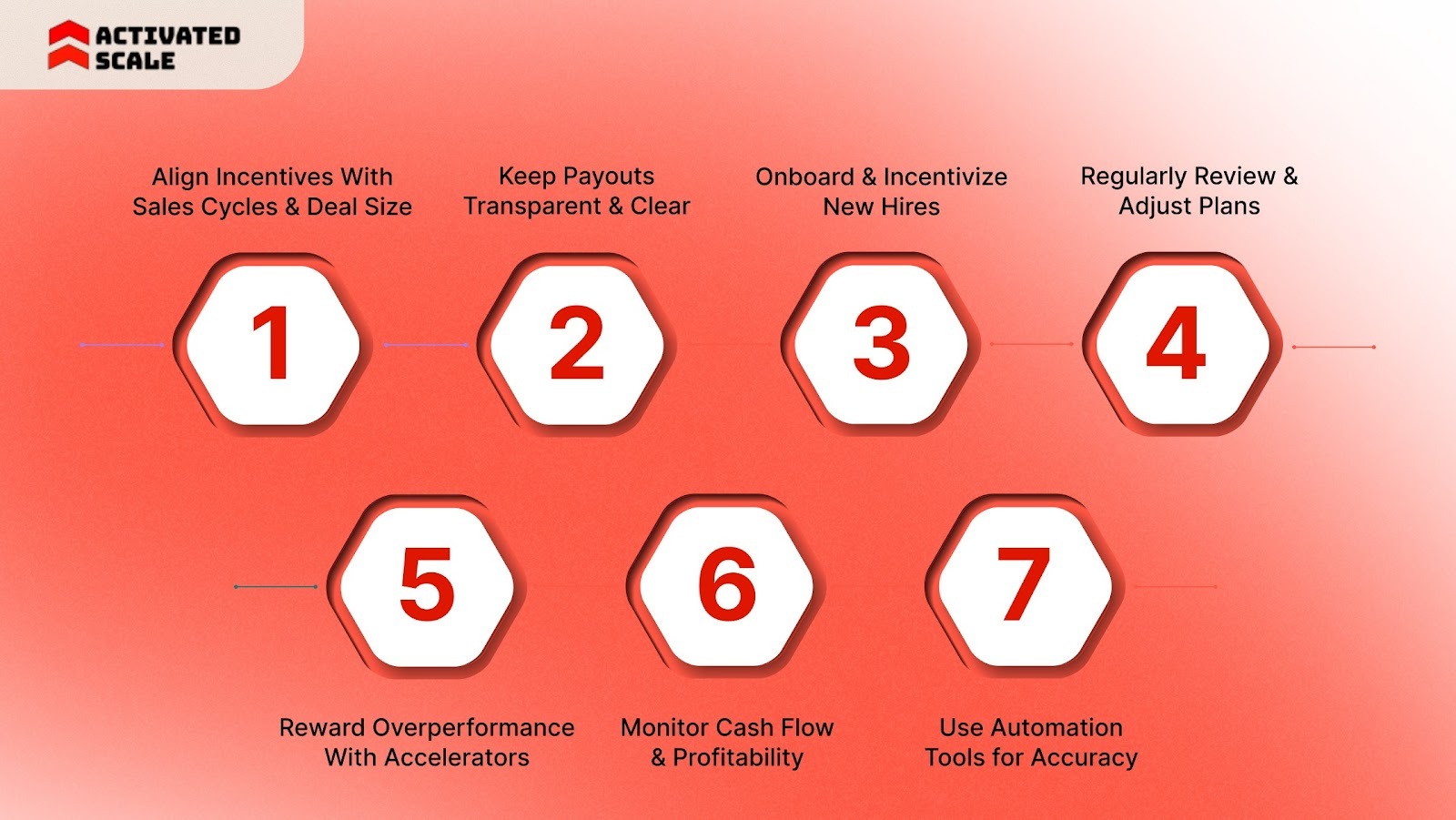
Creating an effective sales compensation plan can make a critical difference for startups. A well-structured plan motivates your team, drives revenue, and ensures sustainable growth, all without jeopardizing cash flow. Here are the essential practices startups should follow, along with pitfalls to avoid.
1. Align Incentives With Sales Cycles and Deal Size
Link compensation to the length of your sales cycle and typical deal value. For longer cycles, consider milestone-based payouts rather than front-loading commissions. This keeps reps motivated throughout the process while protecting cash flow.
Pro Tip: Reward progress at key stages, initial qualification, proposal, and closed deal, to maintain steady engagement.
2. Keep Payouts Transparent and Clear
Ambiguity in commission structures leads to confusion and low morale. Document how commissions are calculated, payout timelines, and milestones.
Fact: Salesforce’s State of Sales Report lists transparency in compensation as a top driver of rep satisfaction and retention.
3. Onboard and Incentivize New Hires
Ramp-up periods are critical for long-term performance. Offer small, targeted incentives during onboarding for completing training, product certifications, or achieving early KPIs. This accelerates confidence and contribution from day one.
Learn more about: A 2026 How-to-Guide on Virtual Onboarding Process
4. Regularly Review and Adjust Plans
As your startup grows, reassess commission rates and quotas regularly, quarterly or semi-annually. Adjust for changes in business priorities, deal sizes, and market conditions to keep your plan competitive and motivating.
5. Reward Overperformance With Accelerators
Introduce accelerators that increase commission percentages once reps exceed quotas. For example, standard 5% commissions might jump to 8% after 120% of target. This encourages high performance and creates a culture of excellence.
6. Monitor Cash Flow and Profitability
Ensure your compensation plan incentivizes sales without hurting margins. Avoid heavy payouts at the end of long cycles or overly aggressive structures that exceed profitability. Regularly track cash flow to maintain sustainability.
7. Use Automation Tools for Accuracy
Leverage tools to track sales performance and manage payouts efficiently. Automation reduces errors, ensures timely payments, and builds trust, allowing reps to focus entirely on selling. Tools like Everstage can streamline the process for startups.
Common Pitfalls to Avoid
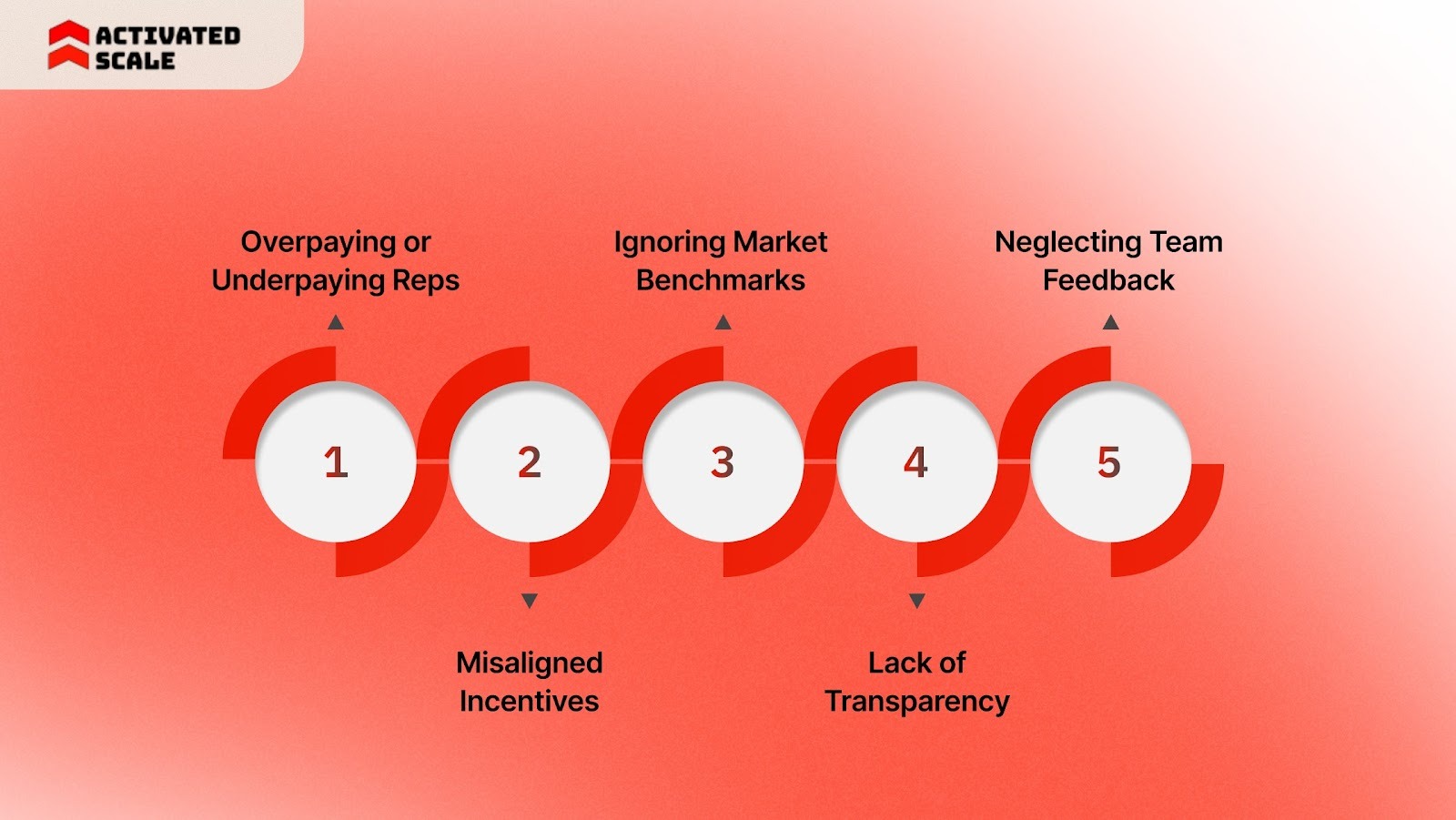
- Overpaying or Underpaying Reps: Benchmark compensation against industry standards to attract and retain top talent without straining finances.
- Misaligned Incentives: Avoid rewarding short-term wins at the expense of long-term, high-quality clients.
- Ignoring Market Benchmarks: Keep your packages competitive to stay attractive in a tight talent market.
- Lack of Transparency: Unclear payout structures damage morale and drive turnover.
- Neglecting Team Feedback: Even the best-designed plans need adjustment based on real-world sales team experiences.
Fact: Forrester highlights that outdated or rigid plans reduce incentive effectiveness and can hinder growth as startups scale.
Make Sales Compensation Work With Activated Scale
Startups often struggle to translate a well-designed sales compensation plan into real-world results. That’s where Activated Scale steps in, helping startups implement practical, performance-driven plans without the usual hiring headaches.
How It Helps
- Expert Guidance: Fractional sales leaders help craft incentive structures that balance motivation and cash flow.
- Plug-and-Play Talent: Access pre-vetted SDRs and AEs who can execute your compensation plan from day one.
- Flexible Engagements: Hire part-time or contract-to-hire sales professionals, reducing financial risk while testing plans in real conditions.
- Actionable Insights: Activated Scale provides feedback on what works, helping you fine-tune commission structures and quotas quickly.
Instead of guessing how your compensation plan will play out, Activated Scale gives startups the people, expertise, and flexibility to see it work in practice faster, smarter, and more profitably.
Final Thoughts
A well-structured sales compensation plan is a cornerstone for startup growth. It motivates sales teams, aligns incentives with business goals, and ensures sustainable revenue without cash flow. By designing transparent, flexible, and performance-driven plans and avoiding common pitfalls like misaligned incentives or unclear payout structures, startups can attract, retain, and empower top sales talent.
Activated Scale makes implementing these plans simpler by providing expert guidance, pre-vetted sales talent, and flexible hiring models. With the right team and compensation framework, startups can focus on scaling their business while reducing hiring risk.
Explore how Activated Scale connects you with top U.S.-based sales talent and expert guidance. Click to learn more.
FAQs
1. What is a typical sales compensation plan for startups?
A startup plan often combines a modest base salary with variable commissions, milestone bonuses, and sometimes equity incentives.
2. How do I balance motivation with cash flow?
Tie commissions to deal milestones or post-payment, and include accelerators for overperformance without exceeding profitability limits.
3. Can startups use fractional sales leaders for compensation planning?
Yes. Activated Scale provides fractional VPs of Sales who design plans aligned with growth goals and cash constraints.
4. How often should sales compensation plans be reviewed?
Quarterly or semi-annually, adjusting for market trends, sales performance, and changing business priorities.
5. What common mistakes should startups avoid?
Overcomplicated plans, misaligned incentives, lack of transparency, ignoring market benchmarks, and neglecting sales team feedback.
The Ultimate Guide to Hiring a Salesperson!
Get the step-by-step guide to hiring, onboarding, and ensuring success!