_edi.png)

Outsourcing software development isn’t risky because teams work remotely; rather, it is risky when decisions are rushed or poorly defined. And the cost of getting it wrong is high. According to McKinsey, 45% of large IT projects run over budget, deliver less value than expected, or miss deadlines altogether.
Founders usually feel this risk early. Timelines slip. Requirements change. Communication breaks down. Suddenly, what was meant to accelerate progress starts slowing the business.
The companies that outsource successfully don’t rely on luck or low rates. They follow a disciplined process, clear scope, the right model, experienced partners, and constant alignment.
Before we dive in
- Software development outsourcing succeeds when scope, ownership, and communication are clearly defined upfront.
- Choosing the right outsourcing model (onshore, nearshore, offshore, or hybrid) matters as much as the vendor itself.
- Costs depend on location, skill level, project complexity, and timeline, not just hourly rates.
- Rushing timelines or optimizing only for price often increases long-term costs.
- The most effective teams validate execution before committing long-term.
- This same flexible mindset applies to scaling sales teams, which is why founders use Activated Scale’s contract-to-hire and fractional models to reduce hiring risk.
What Is Software Development Outsourcing?
Software development outsourcing is when a company works with an external development partner to build all or part of a software product. Instead of relying solely on an in-house team, businesses delegate development tasks to specialists who already have the required skills, tools, and processes in place.
Companies usually choose this route for practical reasons. Some don’t have an internal engineering team. Others face skill gaps, hiring delays, or limited bandwidth and need experienced developers to move faster. In many cases, outsourcing supplements an existing team rather than replacing it.
The appeal goes beyond cost. Outsourcing can improve delivery speed, provide access to specialized expertise, and help teams stay focused on core priorities. But these benefits only materialize when the right outsourcing model and partner are chosen. A poor fit can slow progress just as quickly as it accelerates it.
Types of Software Development Outsourcing Models
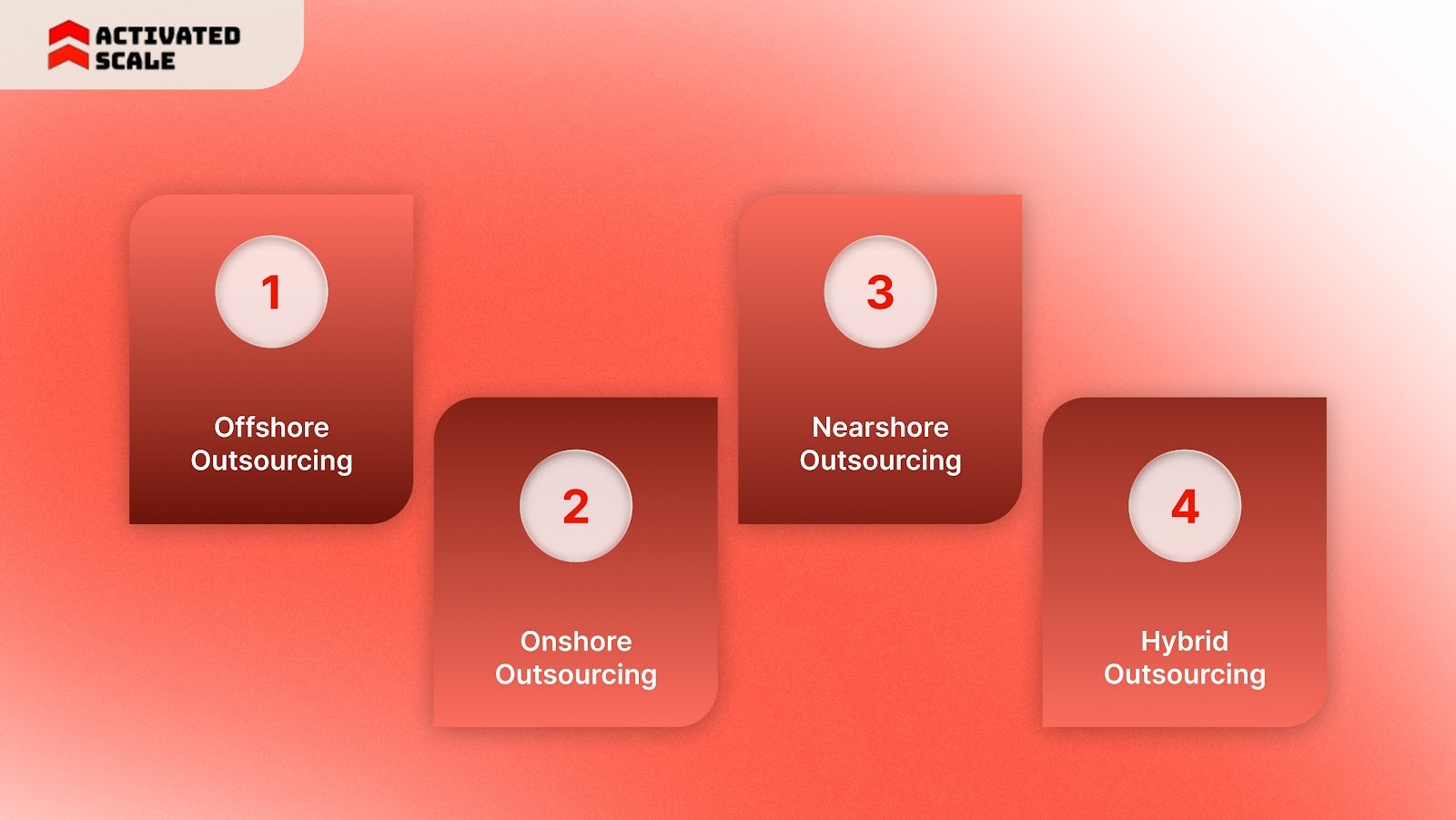
Software development outsourcing isn’t a one-size-fits-all decision. Companies choose different models based on budget, speed, collaboration needs, and risk tolerance. Each approach comes with trade-offs, and understanding them upfront helps avoid mismatches later.
Below are the four most common outsourcing models and when they make sense.
Offshore Outsourcing
Offshore outsourcing involves working with a development team located in a different region of the world, often far from the client’s home country.
This model is commonly chosen for:
- Lower labor costs
- Access to a large global talent pool
- Faster scaling for well-defined tasks
The trade-offs usually appear in communication. Time zone gaps, cultural differences, and legal considerations can slow feedback loops if not managed carefully. Offshore outsourcing works best when requirements are clear and processes are well documented.
Onshore Outsourcing
Onshore (or domestic) outsourcing means partnering with a software development provider in the same country.
Its main advantages include:
- Easier communication and collaboration
- Shared cultural and business context
- Fewer legal or compliance concerns
The downside is cost. Onshore outsourcing is typically more expensive than offshore or nearshore options, which can limit its appeal for budget-sensitive projects.
Nearshore Outsourcing
Nearshore outsourcing sits between offshore and onshore. The development partner is located in a neighboring or nearby country.
Companies often choose nearshoring to:
- Reduce time zone differences
- Improve real-time collaboration
- Balance cost savings with proximity
While nearshoring improves coordination, labor costs can still be higher than offshore options depending on the region.
Hybrid Outsourcing
Hybrid outsourcing combines multiple models to fit specific needs. For example, a company might offshore routine development tasks while keeping architecture, product decisions, or sensitive work closer to home.
The advantage is flexibility. Teams can use each model where it performs best. The challenge is management, coordinating multiple vendors requires stronger oversight, clear ownership, and tighter processes.
Also read about: What are the Three Types of Outsourcing: Pros and Cons Explained!
10-Step Process to Successfully Outsource Software Development
Successfully outsourcing software development isn’t about finding the cheapest vendor. It’s about making a series of deliberate decisions that reduce risk, preserve momentum, and keep ownership where it matters. Each step below builds on the previous one.
1. Get Absolute Clarity on What You’re Building
Outsourcing fails most often because the product vision is unclear, not because the developers are incapable.
Before speaking to vendors, align internally on what you’re building and why. This doesn’t require perfect documentation, but it does require shared understanding.
Ask yourself:
- Is this a proven concept or a new idea?
- Do you have a PoC or technical validation?
- What problem does the product solve?
- What core technology will it rely on?
When clarity exists, communication improves. When it doesn’t, even the best outsourcing partner will struggle to deliver what you expect.
2. Translate the Vision Into a Clear Project Scope
Once the idea is clear, the next risk is scope creep. A well-defined scope protects timelines, budgets, and relationships.
Your scope should clearly outline:
- Project objectives and success criteria
- Deliverables per phase (MVP vs full product)
- What’s explicitly out of scope
- Timelines, milestones, and constraints
- Stakeholders and approval authority
This discipline mirrors how strong sales organizations operate. Experienced leaders don’t just chase activity, they define outcomes. That’s the same reason founders rely on structured execution models in sales and engineering alike.
3. Decide Whether Outsourcing Is the Right Move
Outsourcing isn’t always the answer, but it often is when speed, flexibility, or skills are limited internally.
Ask:
- Is hiring locally too slow or expensive?
- Is this a temporary or specialized need?
- Would external expertise accelerate delivery?
Founders already think this way when scaling revenue. Instead of hiring prematurely, many teams work with Activated Scale to access talent through Contract-to-Hire Sales Recruiting, validating performance before committing full-time. The same logic applies to development.
4. Choose the Right Geography Model
Location affects cost, collaboration, and control.
- Onshore offers easier communication but higher costs
- Nearshore balances time-zone alignment with moderate savings
- Offshore provides cost efficiency but requires stronger process discipline
There’s no universally “best” option. The right choice depends on how complex the work is and how closely your team needs to collaborate day-to-day.
5. Select the Right Outsourcing Engagement Model
Beyond location, how you work together matters just as much.
Common models include:
- Staff augmentation for filling skill gaps quickly
- Managed teams for partial ownership with reduced oversight
- Project-based outsourcing for hands-off execution
This is similar to how sales execution scales. Some companies need extra hands, others need leadership. That’s why Fractional Sales Leadership works well when strategy and structure matter more than headcount.
6. Shortlist the Right Partners
Once decisions are clear, narrow your options thoughtfully.
Use:
- Review platforms like Clutch or G2
- Referrals from peers who’ve outsourced before
- Curated talent or freelancing platforms
Avoid relying on a single source. A strong shortlist usually includes vendors with different strengths.
7. Evaluate Vendors Beyond the Pitch
This is where many companies cut corners, and regret it later.
Evaluate vendors on:
- Company stability and longevity
- Relevant tech and industry experience
- SDLC and DevOps maturity
- Communication quality and time-zone flexibility
- Portfolio, compliance, and security practices
Strong vendors explain trade-offs clearly. Weak ones promise everything.
8. Use Consultations to Test Real Fit
Free consultations aren’t about sales decks, they’re about thinking alignment.
Use these conversations to discuss:
- MVP approach and roadmap realism
- Cost and timeline assumptions
- Collaboration style and ownership
- How change requests are handled
The goal is to understand how they solve problems, not just how they code.
9. Lock in Legal and Delivery Expectations
Before development begins, formalize expectations through:
- NDA to protect IP
- MSA for long-term terms
- SLA for quality and performance metrics
- SOW for deliverables, timelines, and scope
Clear contracts reduce friction later and allow both teams to focus on delivery instead of disputes.
10. Set Up a Communication and Delivery Rhythm
Outsourcing succeeds when communication is predictable.
Define:
- Tools for task tracking and updates
- Meeting cadence and escalation paths
- Ownership for approvals and feedback
This is no different from managing distributed sales teams. If you’re struggling to keep execution aligned, teams often turn to Fractional Selling from Activated Scale to maintain momentum without overloading internal managers. The same discipline keeps development projects on track.
Successful outsourcing isn’t about geography or cost, it’s about clarity, structure, and flexibility. The same principles founders use to scale sales responsibly apply to software development too.
That’s why companies trust Activated Scale for revenue execution: access experienced talent, reduce hiring risk, and scale only when it works. Apply that mindset to development outsourcing, and the results become far more predictable.
Learn more about: What is the First Step in Managing Outsourcing?
How Much Does Software Development Outsourcing Cost?
There’s no flat rate for outsourcing software development, and that uncertainty is often what makes founders hesitate. Costs vary based on several interconnected factors, and focusing on just one (usually hourly rates) often leads to the wrong decision.
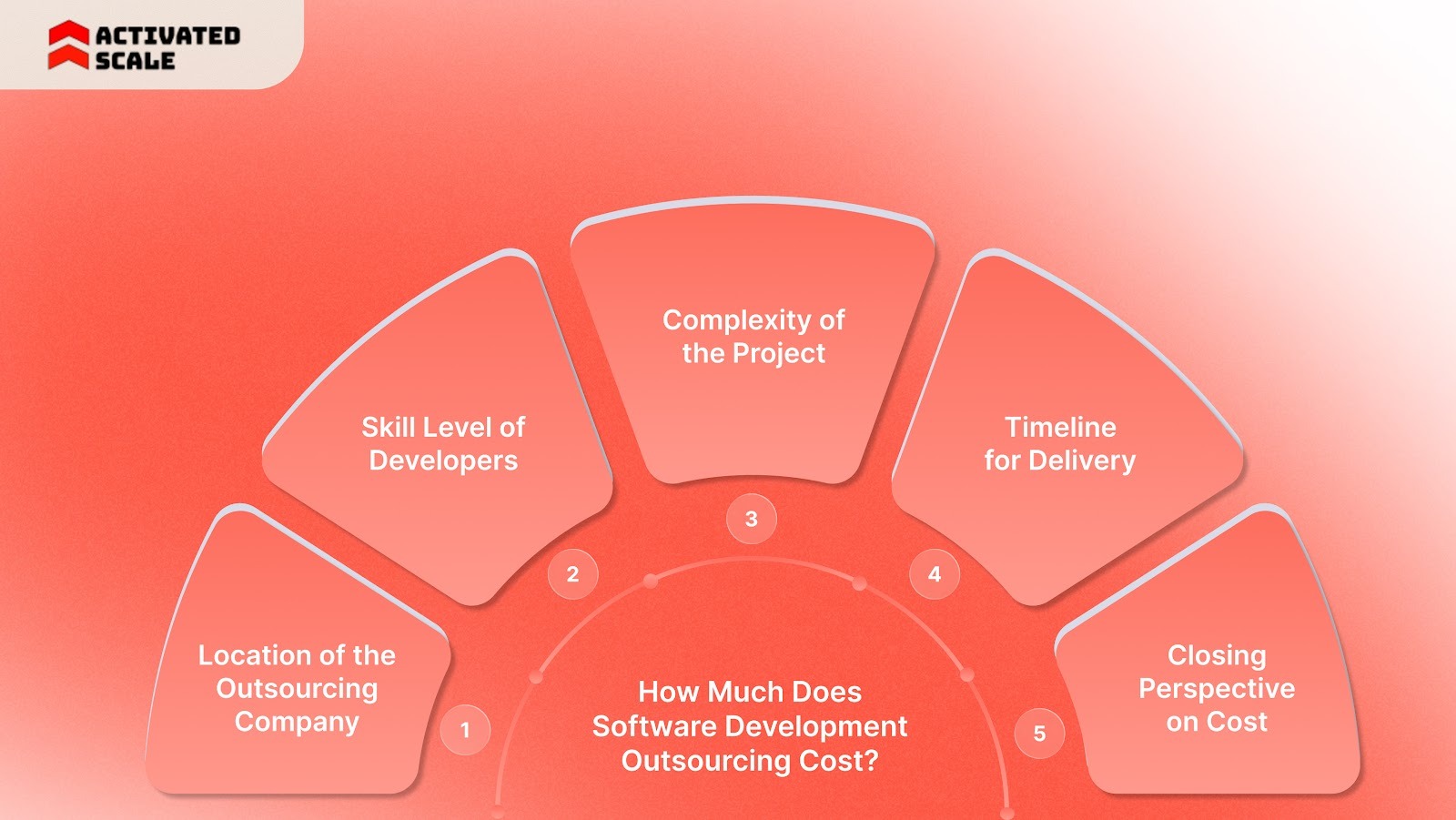
The real question isn’t “What’s the cheapest option?” It’s “What combination of cost, quality, and speed makes sense for this stage of the business?”
Below are the key factors that shape outsourcing costs and how to think about them realistically.
Location of the Outsourcing Company
Geography plays a major role in pricing, but not for a single reason.
Cost differences usually come from:
- Labor costs: Developer salaries vary widely across regions. Countries with lower wage benchmarks naturally offer lower rates.
- Operating expenses: Office rent, infrastructure, utilities, and business overhead differ by location and influence pricing.
- Economic conditions: Currency exchange rates and inflation can make some regions temporarily more cost-effective, or riskier.
That said, lower cost doesn’t automatically mean better value. Communication challenges, time zone gaps, and process maturity can quickly offset savings if not managed well.
Founders face similar trade-offs when building sales teams. That’s why many use Activated Scale to balance cost and quality, accessing US-based sales talent through contract-to-hire and fractional models, instead of optimizing for cost alone and paying for it later.
Skill Level of Developers
Experience costs more, and often saves money.
Senior developers with specialized expertise command higher rates because they:
- Solve complex problems faster
- Make fewer architectural mistakes
- Require less oversight and rework
Market demand also matters. When certain skills (AI, cloud security, data engineering) are in short supply, rates rise. When talent is abundant, pricing becomes more competitive.
This is why paying more per hour can still reduce total cost. The same principle applies in revenue hiring: founders often choose experienced operators through Fractional Selling because execution quality matters more than headcount cost.
Complexity of the Project
As scope grows, so does cost, not linearly, but exponentially.
Complex projects require:
- Multiple specialists (developers, QA, designers, analysts)
- More coordination and communication
- Additional tools, infrastructure, and integrations
For example, a simple MVP might need a small team. A feature-rich platform may require cloud infrastructure, third-party services, and strict performance or security standards, all of which add cost beyond developer hours.
The key is aligning complexity with business goals. Overbuilding early is one of the fastest ways to overspend.
Timeline for Delivery
Time directly impacts cost.
Longer timelines mean:
- More development cycles
- More testing and revisions
- Higher cumulative labor costs
On the other hand, aggressive deadlines can increase costs too, requiring overtime, parallel teams, or rushed decisions that lead to rework.
The most cost-effective approach is usually a realistic timeline with clear milestones. This mirrors how strong sales leaders operate: measured execution beats rushed expansion. That’s why Fractional Sales Leadership works well, setting pace and priorities without burning budget unnecessarily.
Closing Perspective on Cost
Software outsourcing costs are best understood as a risk-management exercise, not a pricing exercise. Optimizing for the lowest number often leads to delays, rework, and hidden expenses.
Founders who manage costs well usually apply the same principle across teams: start flexible, validate outcomes, and scale deliberately. That’s the logic behind Activated Scale’s approach to sales talent, and it applies just as well to software development.
What Outsourcing Software Teaches Founders About Scaling Sales
Successful software outsourcing works because it follows a simple rule: define clearly, test carefully, then scale. Teams don’t commit long-term until scope, execution, and fit are proven.
The same logic applies to sales hiring, and this is where many founders get stuck.
Instead of rushing full-time hires, teams can reduce risk by using flexible, trial-based models. That’s exactly how Activated Scale helps growing companies build sales teams without unnecessary overhead.
Activated Scale lets founders:
- Start with clarity: align on goals, buyer persona, and growth stage before hiring
- Access proven talent: work with pre-vetted US-based sales professionals who’ve sold to similar buyers
- Test before committing: hire through Contract-to-Hire Sales Recruiting instead of guessing long-term fit
- Stay flexible: use Fractional Selling or Fractional Sales Leadership when full-time hires are premature
Just like software development outsourcing, the goal isn’t to move faster at any cost, it’s to move intentionally. Validate execution first, then scale what works.
Build with Intent, Not Assumptions
Successful software outsourcing isn’t about finding the fastest or cheapest team. It’s about setting clear expectations, choosing the right model, and validating execution before scaling. When scope, communication, and ownership are defined early, outsourcing becomes a growth lever, not a gamble.
The same principle applies beyond engineering. Founders who scale responsibly use flexible, trial-based approaches across the business. That’s why companies work with Activated Scale to access experienced sales talent through contract-to-hire and fractional models, reducing hiring risk while maintaining momentum.
If you’re thinking about outsourcing or rethinking how you scale key teams, let’s talk. A short conversation can save months of misalignment later.
FAQs
1. When does it make sense to outsource software development?
Outsourcing works best when internal teams lack capacity, speed matters, or specialized skills are needed temporarily. It’s also useful for MVPs and early-stage builds.
2. Is outsourcing cheaper than hiring an in-house team?
Not always upfront, but it’s often more cost-effective when you factor in hiring time, benefits, overhead, and the ability to scale up or down as needed.
3. What’s the biggest reason outsourcing projects fail?
Unclear requirements and poor communication. Most failures trace back to weak scoping and misaligned expectations, not technical skill.
4. How do I choose the right outsourcing partner?
Look beyond price. Evaluate experience with similar projects, communication quality, process maturity, and their ability to explain trade-offs clearly.
5. How can founders reduce risk when outsourcing critical work?
Start small, define milestones, review progress frequently, and avoid long-term commitments until execution is proven, whether in software development or sales hiring.
The Ultimate Guide to Hiring a Salesperson!
Get the step-by-step guide to hiring, onboarding, and ensuring success!