_edi.png)
Hiring overseas employees has become a mainstream talent strategy, not just a remote-work experiment. In 2025, 86% of HR and finance leaders say they plan to expand global hiring over the next two years, and nearly half expect international employees to make up 50% or more of their workforce by 2027 as companies chase skills, cost advantages, and growth flexibility.
But for U.S.-based startups and GTM teams, “hiring overseas” means much more than posting a remote job. It involves legal compliance, tax exposure, cultural coordination, and often slower onboarding, all of which directly influence how quickly a revenue team can start producing results.
Understanding when global hiring adds real advantages versus when it creates friction is critical. This guide cuts through the noise to help you assess overseas hiring, so your team can make confident, execution-ready decisions.
In a nutshell:
- Legal Readiness Comes First: Hiring overseas employees requires visas, local labour laws, tax rules, and worker classification missteps can lead to fines, delays, or hiring restrictions.
- Cost Savings Aren’t Guaranteed: Lower salaries can be offset by legal fees, compliance tools, payroll services, and ongoing management overhead.
- Execution Speed Takes a Hit: Time zone gaps and coordination challenges often slow onboarding, feedback loops, and day-to-day execution.
- Revenue Roles Carry Higher Risk: Sales and GTM roles depend on U.S. market context, buyer behaviour, and fast iteration areas where overseas hiring often underperforms.
- Flexible U.S.-Based Hiring Reduces Friction: Fractional, U.S.-based sales talent allows teams to move faster, test performance quickly, and scale without legal or operational complexity.
Three Ways to Hire Overseas Employees
Even with the added complexity of hiring overseas employees, companies generally choose one of three models. Each option comes with different costs, risks, and levels of control, making the right choice highly dependent on business stage and intent.
Below is a clear breakdown to help you evaluate what fits your goals.
1. Setting Up a Legal Entity
Establishing a legal entity in another country is the most traditional approach to international hiring. It allows companies to hire employees directly, manage payroll in-house, and operate as a local employer.
This option makes sense when:
- The company plans to build a long-term presence in the market
- Hiring volumes are large and sustained
- There is sufficient budget and internal legal capacity
However, entity setup is rarely simple. It requires deep knowledge of local employment law, tax systems, payroll compliance, and ongoing regulatory maintenance. The process is expensive, slow, and often disproportionate if the goal is to hire only a small number of overseas employees.
For early-stage or resource-constrained teams, this approach often creates more operational drag than value.
2. Partnering with an Employer of Record (EOR)
An Employer of Record offers a faster and more flexible way to hire overseas employees without setting up a local entity. The EOR becomes the legal employer on paper, while the company manages day-to-day work.
An EOR typically handles:
- Employment contracts and compliance
- Payroll and local tax requirements
- Benefits administration and HR support
This model works well for companies that want to:
- Enter a new market quickly
- Test international hiring before committing long-term
- Hire overseas employees while an entity is still being set up
That said, EOR services add recurring costs and limit direct control over certain employment processes. For some teams, it’s a practical bridge, but not always a permanent solution.
3. Hiring and Paying Contractors
Hiring international contractors is often the fastest and most flexible option. Contractors are self-employed and provide services without the obligations of full-time employment.
This approach is commonly used to:
- Access specialised or short-term skills
- Control costs and scale headcount flexibly
- Test new markets with minimal commitment
The risk lies in worker misclassification. Many countries apply strict rules around what defines a contractor versus an employee. If a company controls schedules, tools, or work methods too closely, it may be required to provide employee benefits retroactively, along with fines and penalties.
Contractor models can work well, but only when boundaries are clearly defined and consistently respected.
Understanding the Legal Framework for Hiring Overseas Employees
Hiring overseas employees requires upfront legal planning. For U.S. companies, it involves immigration approval, employment compliance, and strict documentation before work can begin.
Most roles require work authorization through U.S. Citizenship and Immigration Services (USCIS). Visa type, eligibility rules, and processing timelines directly affect hiring speed and cost.
Common risk areas include:
- Delayed or rejected visa applications
- Non-compliance penalties or fines
- Onboarding delays that slow GTM execution
Because these risks surface early, many startups involve immigration experts before making hiring decisions. Understanding the legal effort upfront helps teams decide if hiring overseas employees fits their timeline, budget, and revenue goals.
A Practical Step-by-Step Approach to Hiring Overseas Employees
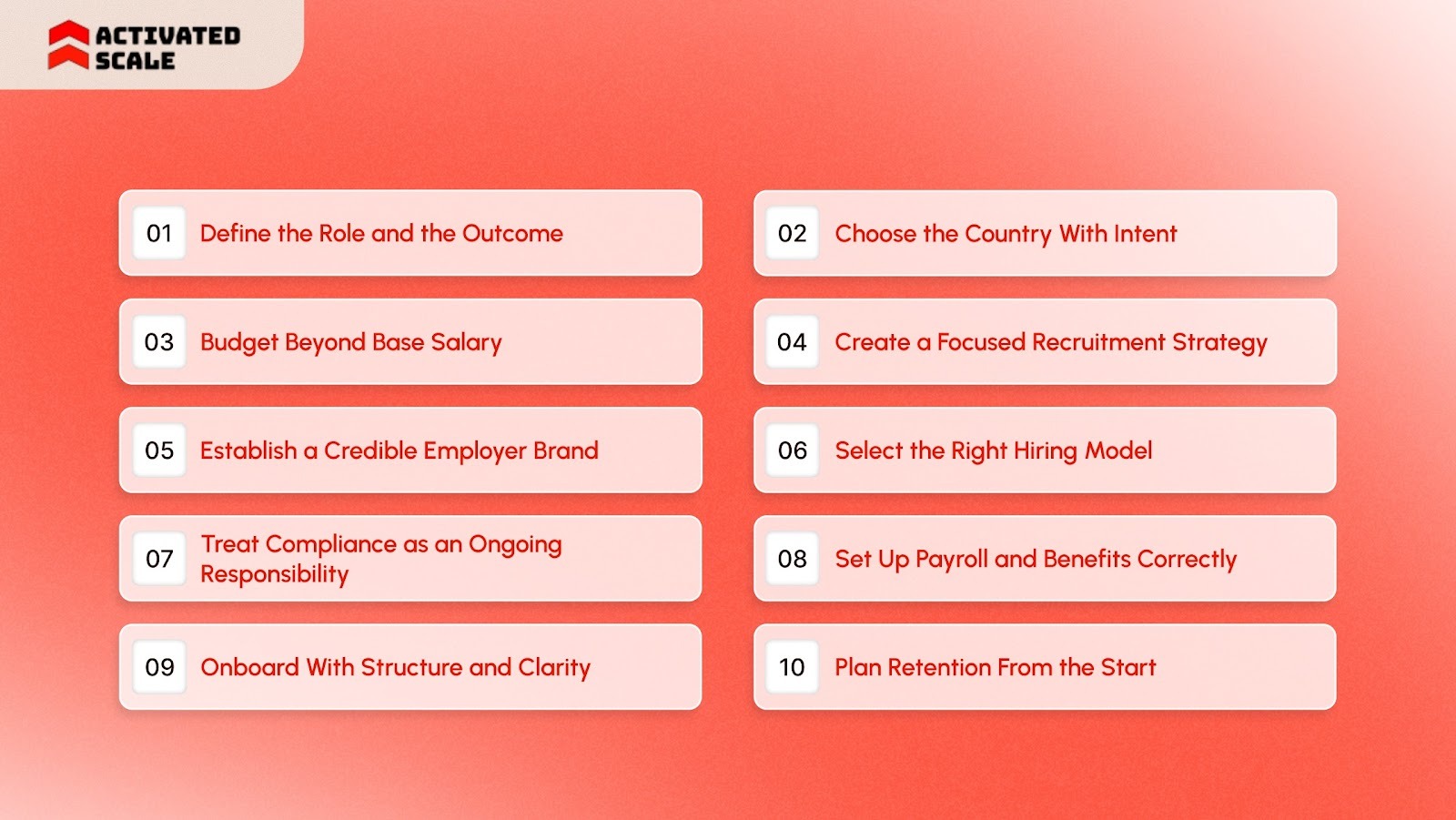
Hiring overseas employees introduces operational and compliance complexity that compounds quickly if decisions aren’t structured upfront. These steps help teams make deliberate choices that align hiring decisions with execution speed, risk tolerance, and growth priorities.
Step 1: Define the Role and the Outcome
Start by defining what the hire must accomplish, not where the person will be located. Clear outcomes prevent teams from choosing overseas hiring purely for cost, only to face execution gaps later.
Key questions to clarify:
- Is this role tactical support or tied to revenue delivery?
- Does the work require real-time collaboration or customer interaction?
- Is flexibility more important than long-term ownership?
Once the role is clear, choose between contractor or employee, based on control, compliance risk, and duration of need.
Step 2: Choose the Country With Intent
Location decisions should support productivity, not just lower payroll. Each country introduces trade-offs that directly affect collaboration, compliance, and cost predictability.
Evaluate countries based on:
- Depth of relevant talent for the role
- Time zone overlap required for day-to-day work
- Language proficiency expectations
- Labour laws, termination rules, and statutory benefits
- Cultural work norms and communication styles
The right country is the one that fits the role’s execution needs, not just the budget.
Step 3: Budget Beyond Base Salary
Salary alone does not reflect the true cost of hiring overseas employees. Employers must account for region-specific obligations that materially change total spend.
Budget considerations include:
- Employer taxes and social contributions
- Mandatory benefits and paid leave
- Currency exchange risk and transaction fees
- Payroll administration and compliance overhead
Building a full cost model upfront prevents hiring decisions from becoming financial liabilities later.
Step 4: Create a Focused Recruitment Strategy
Overseas hiring requires more precision in how roles are communicated and evaluated. Vague job descriptions and inconsistent interviews lead to misaligned hires across borders.
Best practices:
- Write clear, outcome-driven job descriptions
- Avoid jargon; state scope, expectations, and compensation clearly
- Specify working hours, collaboration needs, and remote setup
- Use a consistent interview framework across regions
A structured hiring process improves candidate quality and reduces early churn.
Learn more about: Direct Sourcing Strategies to Recruit Top Talent
Step 5: Establish a Credible Employer Brand
International candidates assess employer credibility before engaging. A weak or unclear employer brand limits access to high-quality overseas employees.
Strong signals include:
- Clear mission and operating values
- Transparent expectations around work style and growth
- Visible commitment to learning and development
- Remote-friendly communication practices
Employer brand clarity improves trust and application quality across regions.
Step 6: Select the Right Hiring Model
Your hiring model determines speed, control, and legal exposure. Choosing the wrong model often creates long-term operational friction.
Common considerations:
- Direct employment offers control but requires local infrastructure
- Third-party hiring models reduce setup time but introduce cost and dependency trade-offs
The right model aligns with how long you plan to hire, how fast you need impact, and how much risk you can absorb.
Step 7: Treat Compliance as an Ongoing Responsibility
Employment compliance doesn’t end once a contract is signed. Laws change, and enforcement varies by country.
Critical compliance areas include:
- Employment contracts and notice periods
- Worker classification and misclassification risk
- Tax filings and statutory reporting
- Employee data privacy and security
Ongoing compliance discipline protects the business from fines, disputes, and operational disruption.
Step 8: Set Up Payroll and Benefits Correctly
International payroll adds complexity with every new country. Errors here directly affect employee trust and retention.
Payroll setup should account for:
- Local pay cycles and currencies
- Tax withholding and employer contributions
- Mandatory benefits such as healthcare and pensions
- Secure handling of personal data
Early payroll accuracy reduces downstream issues that are difficult to fix later.
Step 9: Onboard With Structure and Clarity
Overseas employees need clarity faster to become productive. A loose onboarding process extends ramp time unnecessarily.
Effective onboarding includes:
- Contracts, tools, and system access ready before day one
- Clear documentation and expectations
- Time-zone-aware communication and check-ins
- A defined 30–60–90 day plan
Structured onboarding accelerates alignment and early contribution.
Step 10: Plan Retention From the Start
Retention is not solved after onboarding, it’s designed into the role. Overseas employees disengage quickly when growth paths and expectations are unclear.
Retention drivers include:
- Regular feedback and career visibility
- Competitive, region-aligned compensation
- Inclusion across distributed teams
- Clear performance benchmarks
Keeping strong overseas employees requires the same intentionality as hiring them.
For many startups, overseas hiring adds complexity before revenue is predictable. When speed, execution, and U.S. market alignment matter more than geographic reach, Activated Scale helps teams access vetted, U.S.-based sales talent without long-term hiring risk, so growth plans stay on track.
Why Hire Internationally? Benefits and Trade-Offs
Hiring overseas employees can solve specific talent gaps, but it also introduces operational and legal complexity. The decision works best when the upside clearly outweighs the execution cost.
Where overseas hiring can help
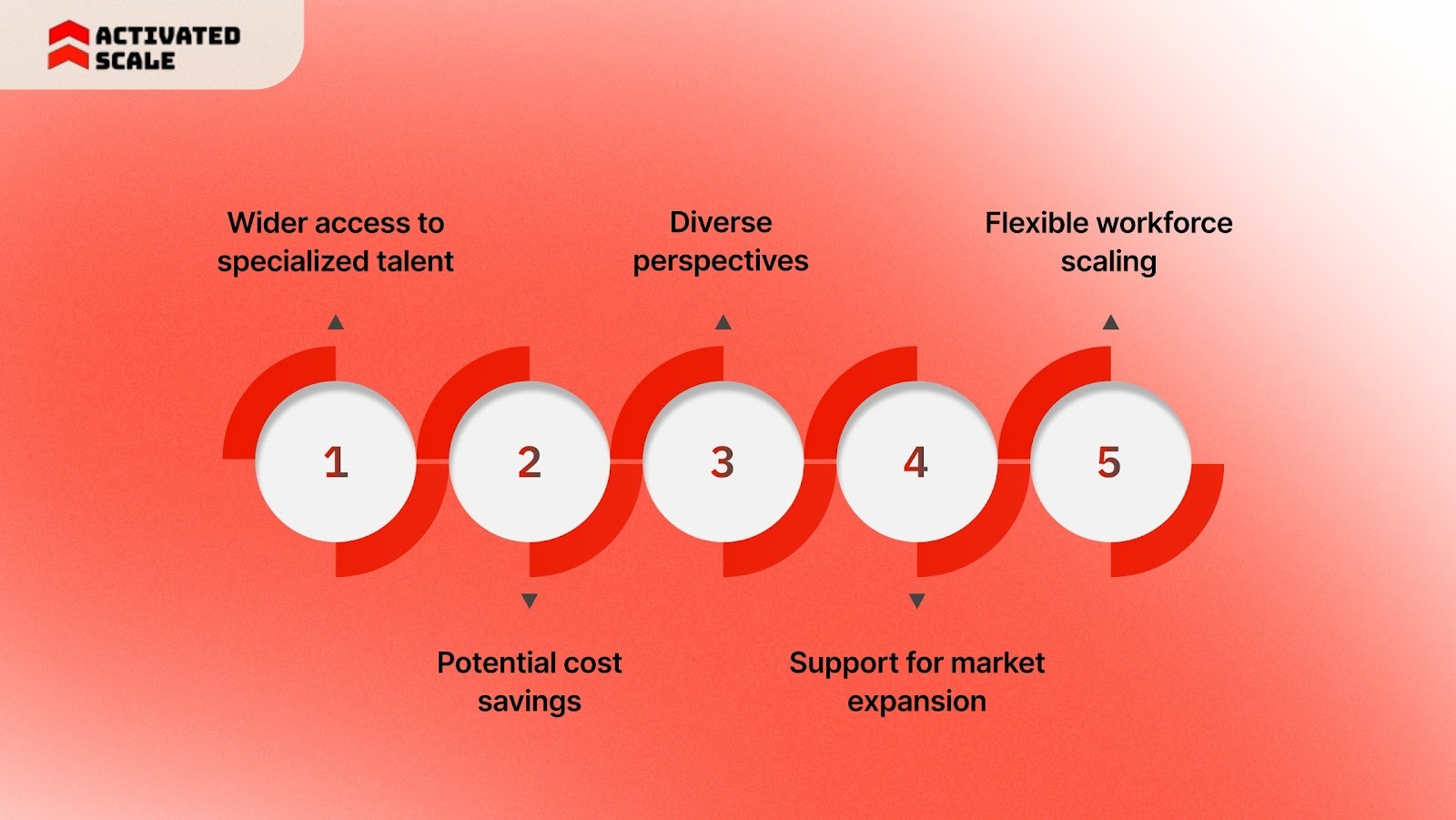
- Wider access to specialized talent
Global hiring opens doors to skill sets that may be scarce or expensive locally, particularly in technical, data, or emerging technology roles.
- Potential cost savings
In certain regions, salary expectations and benefit costs are lower, which can help extend runway when budgets are tight.
- Diverse perspectives
Teams with varied cultural backgrounds often bring different approaches to problem-solving and product development.
- Support for market expansion
Hiring in a specific region can provide local insight, customer context, and early market signals.
- Flexible workforce scaling
Remote hiring allows companies to adjust team size as priorities evolve without committing to long-term office expansion.
Where teams often struggle
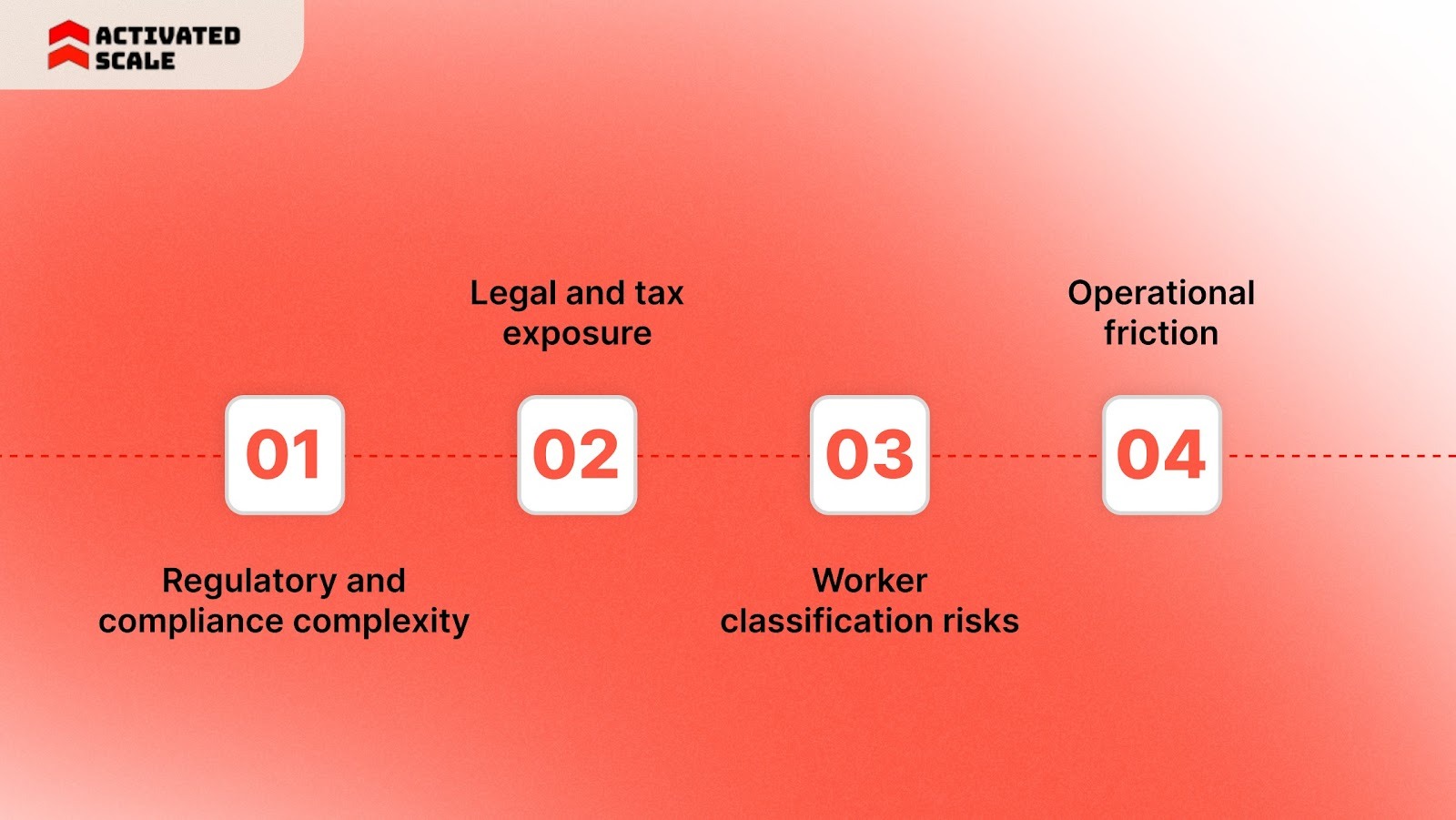
- Regulatory and compliance complexity
Employment laws, payroll rules, and worker protections vary by country and require ongoing oversight.
- Legal and tax exposure
In some cases, hiring overseas employees may require setting up a local entity or risk creating a permanent establishment.
- Worker classification risks
Misclassifying contractors as employees can result in penalties, retroactive payments, and reputational issues.
- Operational friction
Time zone differences and cultural nuances demand stronger documentation, clearer processes, and more disciplined communication.
Hiring overseas employees can work, but only with clear intent, legal readiness, and operational maturity. Without that foundation, the friction often outweighs the benefit, especially for early-stage teams focused on speed and execution.
Also Read: The New Rules for Recruiting Salespeople for 2026
Where Overseas Hiring Breaks Down for Revenue Teams
Hiring overseas employees can work well for certain roles. But when it comes to revenue-driving functions, many startups discover limits that don’t show up on a cost spreadsheet.
Sales execution depends heavily on:
- Familiarity with U.S. buyers
- Market-specific communication styles
- Real-time collaboration across GTM teams
- Speed to ramp and course-correct
This is where international hiring often introduces friction. Time zone gaps slow feedback loops. Cultural nuances affect outbound messaging. And legal complexity adds delays before a rep can even start selling.
Activated Scale was built around this exact challenge. Instead of asking startups to access visas, overseas compliance, or long ramp cycles, the platform connects them with pre-vetted, U.S.-based sales professionals who already understand the market they’re selling into.
Founders can start with fractional SDRs, AEs, or VPs of Sales, test performance quickly, and scale commitment only when results justify it. No entity setup. No international payroll risk. No months lost onboarding the wrong hire.
For teams focused on predictable revenue and fast execution, this model removes much of the uncertainty that comes with hiring overseas employees, especially in customer-facing roles where timing and context matter.
Making the Right Hiring Call for Your Growth Stage
Hiring overseas employees can unlock specialized talent and potential cost savings, but it comes with legal, operational, and execution risks that often slow growth. Compliance requirements, visa delays, and coordination challenges can particularly affect revenue-focused teams, where speed and market knowledge matter most.
Startups need to weigh whether international hiring fits their current stage and capacity to manage complexity. For fast-moving teams, reducing hiring friction often drives better outcomes than expanding the global talent pool.
Activated Scale offers a solution for these challenges. By connecting startups with pre-vetted, U.S.-based sales professionals, teams can start generating results quickly without long-term commitments or legal complications.
Don’t let hiring delays stall your growth. Explore how Activated Scale brings the right sales talent to your team, fast, flexible, and ready to deliver.
FAQs
1. Is hiring overseas employees legal for U.S. companies?
Yes, but it requires compliance with U.S. immigration laws, local employment regulations, and tax rules in the worker’s country. Legal guidance is strongly recommended.
2. What are the biggest risks of hiring overseas employees?
Common risks include visa delays, misclassification penalties, permanent establishment exposure, and slower onboarding due to time zone and communication gaps.
3. Is hiring overseas employees always cheaper?
Not always. While salaries may be lower, legal fees, compliance tools, payroll services, and management overhead can reduce expected savings.
4. When does overseas hiring make the most sense?
It works best for specialized or long-term roles when the company has the legal structure and operational maturity to manage complexity.
5. Are overseas employees a good fit for sales roles?
Often, no. Sales roles typically require deep familiarity with U.S. buyers, fast feedback loops, and real-time collaboration, areas where overseas hiring can introduce friction.
The Ultimate Guide to Hiring a Salesperson!
Get the step-by-step guide to hiring, onboarding, and ensuring success!