Introduction
Moving upmarket changes everything about how you sell. The volume-based outreach that worked for SMB deals falls flat with enterprise buyers who expect a business case, not a cold pitch.
Hire the wrong first enterprise SDR, and you'll watch pipeline stall for months while you re-recruit.
The stakes are real: enterprise contracts carry bigger price tags, but the buying journey stretches out too. 6sense's 2025 study of nearly 4,000 B2B buyers found an average 10.1-month buying cycle for purchases with a $200K-$300K median deal size. That's a long runway where the wrong hire can burn through cash and credibility fast.
This guide breaks down what an enterprise SDR actually does, what to look for when hiring one, and how a contract-to-hire model can de-risk the decision.
TL;DR
- An enterprise SDR qualifies leads inside large, complex organizations instead of running SMB volume plays
- Startups moving upmarket need this role once founder-led selling can't keep pace with enterprise pipeline growth
- Evaluate candidates on deal complexity, research skills, compensation fit, coachability, and tech fluency, not resume pedigree
- Fractional or contract-to-hire models let founders test real performance before committing to full-time pay and equity
What is an Enterprise SDR?
An enterprise SDR prospects and qualifies leads within large, complex organizations, not SMB or mid-market accounts. The work centers on fewer, higher-value target accounts rather than a high-volume dial-and-email cadence.
The differences from a standard SDR role show up fast:
- Longer research cycles before the first outreach goes out
- Multiple stakeholders to map and engage, not one champion
- Account-based approach built around a specific company's priorities, versus a repeatable script
Core Responsibilities of an Enterprise SDR
Three responsibilities separate this role from a typical SDR seat.
Deep Account Research & Point of View
Enterprise SDRs dig into public filings, earnings calls, and strategic initiatives before sending a single message. A generic SMB-style script doesn't survive contact with a VP who's evaluating five vendors and has seen every version of "quick question for you."
Multi-Stakeholder Qualification
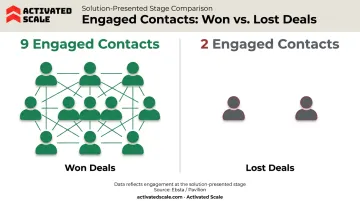
Enterprise deals rarely hinge on one contact. Ebsta and Pavilion's analysis of 4.2M opportunities found won deals averaged nine engaged contacts by the solution-presented stage, compared to just two in lost deals. An enterprise SDR has to map finance, ops, and end-users early, not after the deal stalls.
Handoff & Collaboration with Account Executives
Instead of a clean handoff after booking a meeting, enterprise SDRs stay in the loop through follow-up calls and stakeholder introductions. The sales cycle is too long and too political for a "toss it over the wall" approach to work.
Why Startups Scaling to Enterprise Need This Role
Founder-led sales works until it doesn't. Once inbound enterprise interest picks up or a target ICP gets clearer, the math stops working in a founder's favor.
Bringing in a dedicated enterprise SDR:
- Fills the pipeline consistently with qualified, enterprise-level prospects instead of relying on inbound luck
- Frees up founder time previously spent on manual outreach and cold research
- Builds a repeatable motion that supports larger contract values, not one-off wins
- Shortens how deeply a founder has to stay involved in every single deal
The founder's instincts still drive strategy and closing decisions, while the SDR takes over prospecting and top-of-funnel outreach.
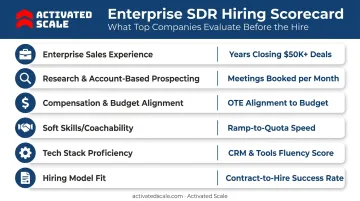
What to Consider When Hiring an Enterprise SDR
Hiring your first SMB-focused SDR and hiring your first enterprise SDR are different exercises entirely. The criteria below connect a candidate's profile to measurable pipeline and revenue outcomes, not just gut feel from an interview.
Enterprise Sales Experience & Complex Deal Cycles
Prior experience navigating long, multi-stakeholder sales cycles matters more than raw activity metrics from an SMB role. A candidate who's only worked high-volume, transactional deals will struggle to slow down and build the kind of account depth enterprise buyers expect.
KPI it influences: quality of sales-qualified opportunities passed to AEs.
Research & Account-Based Prospecting Skills
The ability to build a custom point of view per account beats a polished generic script every time. Gong's analysis of more than 25 million cold emails found that leading with a product pitch cut reply rates by as much as 57%. Senior buyers can tell the difference between research and a template within the first sentence.
KPI it influences: response and meeting-acceptance rates from senior stakeholders.
Compensation & Budget Alignment
Enterprise SDR pay runs higher than standard SDR compensation because the skill bar is higher. Betts Recruiting's 2025 placement data puts standard US SDR base salary between $55,000 and $80,000, with OTE reaching $85,000-$100,000 for experienced remote reps. Enterprise-focused SDRs typically command a premium above that range.
Founders should budget realistically for base plus OTE rather than anchoring on entry-level numbers.
KPI it influences: cost-per-qualified-meeting and overall CAC.
Soft Skills: Resilience, Coachability & Curiosity
Technical skills can be coached. Resilience and curiosity are harder to teach and predict who sticks around long enough to become productive. A candidate who gets defensive in feedback sessions during the interview process will likely struggle with the same dynamic on the job.
KPI it influences: SDR retention and ramp-to-productivity time.
Tech Stack Proficiency (CRM & Sales Engagement Tools)
Familiarity with CRM platforms like Salesforce or HubSpot, sequencing tools such as Outreach or Apollo, and AI-assisted prospecting shortens the learning curve for a lean startup team that doesn't have bandwidth for extensive tool training.
KPI it influences: time-to-first-qualified-meeting.
Hiring Model: Full-Time vs. Fractional/Contract-to-Hire
Founders can lower hiring risk by testing a candidate on a fractional or contract-to-hire basis before committing to a full salary and equity package. This mirrors how marketplaces like Activated Scale structure engagements, letting founders evaluate a rep's real performance for a few months before extending a full-time offer.
KPI it influences: reduces mis-hire cost and founder hours spent interviewing.
How Activated Scale Can Help
Testing an enterprise SDR before making a full-time commitment shouldn't require months of recruiting overhead. Activated Scale's try-before-you-buy model gives founders access to fractional sales talent without the cost and risk of a traditional search.
Unlike a typical recruiting agency or a DIY job posting, Activated Scale offers:
- Vetted, US-based sales talent with backgrounds at companies like Salesforce, Oracle, and IBM
- Connect and hire in 7 days or less, so pipeline gaps don't sit open for weeks
- Contract-to-hire option with a clear path to converting a strong performer to full-time
- 20+ hours of founder time saved on sourcing and interviewing candidates
- 10-15 qualified meetings per month, with clients generating $50,000-$250,000 in new monthly revenue
For a founder juggling product, fundraising, and go-to-market all at once, that's the difference between guessing on a hire and validating one.
Conclusion
Hiring the "best" enterprise SDR on paper matters less than finding one whose working style and experience match your enterprise ICP and sales motion.
A mis-hire early on can cost months of pipeline momentum, which is why testing fit before committing full-time matters. A contract-to-hire engagement, like Activated Scale's, lets you validate fit before extending a full-time offer. As your startup scales further into enterprise accounts, revisit the SDR function regularly. Treat it as an evolving decision, not a one-time box to check.
Frequently Asked Questions
What is an enterprise SDR?
An enterprise SDR is a sales development rep focused on prospecting and qualifying leads within large, complex organizations. The role relies on deep account research and account-based outreach rather than volume-driven scripts.
What is the difference between SDR and enterprise SDR?
A standard SDR runs volume-based outreach across SMB or mid-market accounts. An enterprise SDR builds a custom point of view per account and engages multiple stakeholders over a longer sales cycle.
What does SDR stand for?
SDR stands for Sales Development Representative. They sit at the top of the sales funnel, generating and qualifying leads before handing them to an Account Executive.
How much does it cost to hire an enterprise SDR?
Standard US SDR compensation runs $55,000-$80,000 base with OTE up to $100,000, and enterprise-focused SDRs command a premium above that. Fractional or contract-to-hire options lower upfront cost while you validate fit.
When should a startup hire its first enterprise SDR?
Look for signals like growing inbound enterprise interest, founder-led sales cycles stalling under the weight of research and outreach, or a defined enterprise ICP that's ready for outbound targeting.
Should startups hire a full-time or fractional enterprise SDR first?
A contract-to-hire or fractional approach, like the model Activated Scale uses to place vetted SDRs, is the lower-risk starting point. It lets founders validate real performance before committing to full-time salary and equity, which matters most when early-stage budgets are tight.