Introduction
Investors want pipeline. Founders want revenue. And you — as the VP Sales — are caught between both pressures while staring at a headcount budget that doesn't support a full SDR team yet.
Hiring a full-time SDR before the sales motion is proven carries real risk. According to Bridge Group's 2023 SDR Metrics Report, the average SDR takes 3.2 months to ramp, nearly a quarter of the year before you get reliable pipeline data. Add a median OTE of $85,000, benefits, tools, and recruiting costs, and you're committing $110,000+ in year one to a motion you haven't validated yet.
A fractional SDR program offers a different path. You get experienced prospecting capacity within weeks, variable costs tied to actual output, and real market data — conversations, objections, interest signals — before you commit to permanent headcount.
This guide covers what a fractional SDR program looks like from the VP Sales seat, how to build and run one effectively, and how to choose the right partner.
Key Takeaways
- A fractional SDR program gives VP Sales leaders immediate outbound capacity — no lengthy ramp, no fixed headcount costs
- The VP Sales owns the strategy; the fractional SDR executes within that playbook
- Average SDR ramp is 3.2 months — fractional programs generate activity data significantly faster
- Track activity metrics weekly and pipeline contribution metrics monthly to keep the program on track
- About 40% of fractional SDR engagements convert to full-time hires — a true try-before-you-buy model
What Is a Fractional SDR Program?
A fractional SDR program is a structured outbound prospecting function built around part-time or contract-based Sales Development Representatives. The key word is structured — this isn't a single external hire dropped into your inbox.
It's a repeatable system with defined ICPs, outreach cadences, qualification criteria, and reporting that the VP Sales owns and manages.
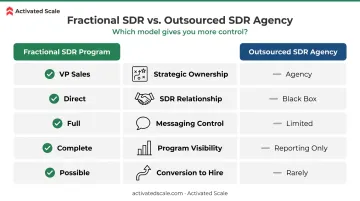
How It Differs From an Outsourced Agency
Many VP Sales leaders conflate fractional SDR programs with agency retainers. The distinction is sharper than it looks.
| Fractional SDR Program | Outsourced SDR Agency | |
|---|---|---|
| Strategic ownership | VP Sales | Agency |
| SDR relationship | Direct | Black box |
| Messaging control | Full | Limited |
| Program visibility | Complete | Reporting only |
| Conversion to hire | Possible | Rarely |
In a fractional SDR program, the VP Sales sets the goals, approves the messaging, and uses the fractional SDR as an executor within their playbook. Strategic ownership stays in-house. That distinction matters when you're trying to learn what actually resonates with your market, not just fill a calendar with meetings.
Why VP Sales Leaders Choose the Fractional SDR Model
The Cost and Speed Case
A fully-loaded full-time SDR — salary, variable pay, benefits, tools, management time, and ramp — is a substantial fixed cost before you've confirmed outbound is even the right channel. Betts Recruiting's 2025 compensation data puts entry-level SDR base salaries at $55,000–$70,000, with variable compensation adding another 20–60% on top.
A fractional SDR converts that fixed cost into a variable, performance-linked expense — typically $2,800–$4,500 per month plus commission — with no recruiting fees, no benefits overhead, and no 90-day ramp period before you see results.
Start time is the other variable. A vetted fractional SDR with relevant B2B experience can begin outreach within two to three weeks of engagement. For a VP Sales building pipeline under investor pressure, that's a meaningful head start.
ICP and Messaging Validation
Before committing to a full in-house SDR team, you need to know which personas respond, which value propositions land, and which sequences actually generate conversations. A fractional program lets you run those experiments at the $2,800–$4,500/month price point rather than at full hiring cost.
The signal you get back — actual objections, response rates, what stops prospects cold — is worth more than months of internal hypothesizing. Most teams have enough data to adjust targeting and messaging within 60–90 days.
De-Risked Hiring
For VP Sales leaders who eventually want a full-time SDR team, a fractional engagement functions as an extended working interview. You assess the rep's skills, business judgment, and culture fit over months of real work rather than three rounds of interviews.
Activated Scale's data shows that approximately 40% of their fractional SDR engagements convert to full-time hires — a meaningful signal that this try-before-you-buy approach builds real pipeline and real teams.
Flexibility
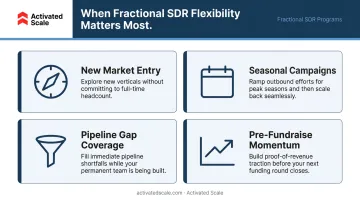
Fractional programs scale based on pipeline need, seasonal campaigns, or market expansion plans. At the Seed to Series A stage, that agility is hard to replicate with permanent headcount. Key scenarios where this matters:
- New market entry — test a vertical before committing to a dedicated hire
- Seasonal campaigns — ramp outreach for a product launch or conference push
- Pipeline gaps — fill coverage quickly when a full-time rep departs
- Pre-fundraise momentum — show traction metrics to investors without locking in fixed costs
How to Build and Structure a Fractional SDR Program
Most fractional SDR programs underperform for one reason: they start before the VP Sales has done the setup work. Here's the right sequence.
Step 1: Define the ICP Before Anyone Picks Up a Phone
The single most common reason fractional SDR programs fail to generate quality meetings is a vague ICP. If your SDR doesn't know exactly which companies to target, why they buy, and what problem your product solves for them — no amount of outreach volume will compensate.
Define these before day one:
- Firmographics: company size, industry, revenue range, tech stack
- Buyer personas: titles, business problems, decision-making authority
- Negative signals: accounts that look like a fit but aren't
Step 2: Build the Outreach Playbook
The VP Sales owns the outreach playbook — not just approves it. That means creating or signing off on:
- Cold email sequences
- Call scripts
- LinkedIn messaging
- Objection handling guides
A strong fractional SDR can co-develop this material. Activated Scale's SDRs, for example, actively participate in messaging refinement during the first 45 days. But the VP Sales must own the narrative and positioning. The messaging reflects your go-to-market strategy, and that's not something to hand off entirely.
Step 3: Set the SQL Definition
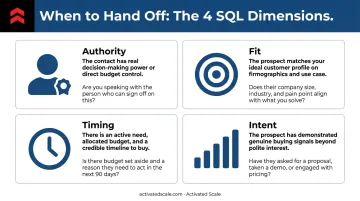
Define what a Sales Qualified Lead looks like before your SDR books a single meeting. A clear SQL definition tells them exactly when to hand off to you or an Account Executive. Most teams anchor their SQL criteria on four dimensions:
- Authority: Is the prospect a decision-maker or key influencer?
- Fit: Does the company match your ICP on firmographics and use case?
- Timing: Is there an active need or near-term budget cycle?
- Intent: Has the prospect shown buying signals beyond polite curiosity?
Without this, meetings get booked that waste everyone's time and distort your pipeline data.
Step 4: Set Up the Tech Stack
The fractional SDR needs access to:
- Your CRM (HubSpot, Salesforce, or equivalent)
- A sales engagement platform for sequencing
- Data enrichment tools for prospect list building
- Phone and LinkedIn access
All tools should be client-owned. Activated Scale's model ensures that all data — prospect lists, email templates, call scripts — stays with your company. Clean CRM logging from day one gives you reliable data to make program decisions, rather than chasing down activity records later.
KPIs and Metrics VP Sales Should Track
Three metric categories tell the full story of a fractional SDR program: activity, pipeline contribution, and cost efficiency. Each one answers a different question — and together they give you the data to manage up and course-correct fast.
Outbound Activity Metrics
Activity metrics are leading indicators you monitor weekly. They tell you whether the program is actually running and help you diagnose problems before they show up in pipeline numbers.
Track weekly:
- Accounts contacted
- Emails sent
- Calls made
- LinkedIn touches completed
If qualified meetings are low, the first question is whether it's a volume problem (not enough activity) or a conversion problem (enough activity, wrong message). Activity data answers that question.
Pipeline Contribution Metrics
These are the numbers investors and founders care about. Track monthly:
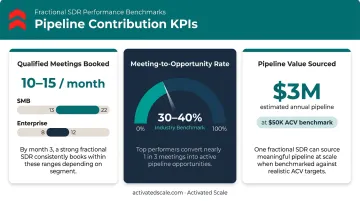
- Qualified meetings booked — Activated Scale clients average 10–15 per month by month three, with results varying by target segment (13–22 for SMB targets, 8–12 for enterprise)
- Meeting-to-opportunity conversion rate — industry benchmark is 30–40%; below that signals qualification or discovery issues worth addressing
- Pipeline dollar value sourced — Bridge Group's 2024 planning model provides a useful reference: a fully ramped SDR generates approximately 5 Stage 1 opportunities per month, representing around $3M in annual pipeline at a $50K ACV
Cost Efficiency Metrics
At Seed to Series A, every dollar of sales investment needs justification. Two formulas worth tracking:
- Cost per qualified meeting = Total SDR program cost ÷ Held qualified meetings in the period
- Cost per pipeline dollar = Total SDR program cost ÷ SDR-sourced qualified pipeline
These metrics let you demonstrate ROI to leadership and decide whether to scale, hold, or pivot the program.
Common Pitfalls to Avoid
Treating the Fractional SDR Like a Vendor You Can Ignore
Hands-off management is the fastest way to sink a fractional SDR program. Without regular touchpoints, the SDR loses market context, messaging drifts, and meeting quality drops.
At minimum, build these three into your cadence:
- Weekly syncs to share market feedback and pipeline context
- Message reviews to catch drift before it compounds
- Call debriefs to reinforce what's working and fix what isn't
These aren't overhead — they're how you protect your investment.
Misaligned Role Expectations
A fractional SDR's job is to generate qualified conversations. Not to close deals, build go-to-market strategy, or operate without a defined ICP. VP Sales leaders who blur these lines waste months before realizing the SDR was never set up to succeed.
Locking In a Static Playbook
The best fractional SDR programs treat early outreach data as signals — adjusting messaging, switching target personas, testing new sequences. Salesloft's 2023 benchmark data shows an average outbound email reply rate of just 2.8%, with strong cadences reaching 3–6%. If you're not iterating, you're leaving performance on the table.
What to Look for in a Fractional SDR Partner
Not all fractional SDR solutions are built the same. Evaluate partners on these criteria:
Rep quality and background. Look for US-based reps with prior experience in your industry or comparable B2B deal types. Activated Scale draws from a talent network that includes SDRs and BDRs with backgrounds at Salesforce, Oracle, Zendesk, ZoomInfo, Datadog, and IBM — professionals who understand enterprise sales contexts and work independently.
Engagement model transparency. Evaluate whether the partner offers:
- Contract-to-hire flexibility (so a high performer can become a permanent hire)
- Clear, upfront pricing with no hidden fees
- Fast start times — Activated Scale can connect and match a vetted fractional SDR in 7 days or less, with first outbound activity beginning within the first two to three weeks
Reporting and accountability. The right partner should deliver structured visibility into program performance. Activated Scale's standard engagement includes:
- Weekly activity reporting tied to agreed KPIs
- Documented learnings from prospect conversations
- Monthly performance reviews against metrics defined in the Statement of Work
- Pipeline data formatted for your founding team's review
Conversion to full-time hire. If you find a strong performer, you want the option to bring them on permanently. About 40% of Activated Scale's engagements convert to full-time hires, making the fractional engagement one of the most reliable recruiting channels available to early-stage sales teams.
Frequently Asked Questions
How much does a fractional SDR program cost?
Costs typically range from $2,800 to $4,500 per month plus commission, depending on the rep's experience level and program scope. That's well below the fully-loaded cost of a full-time SDR hire — salary, benefits, tools, recruiting fees, and ramp time included — with far less financial risk while you're validating the channel.
How quickly can a fractional SDR program generate qualified meetings?
Most programs begin producing outbound activity within the first two to three weeks once messaging and targeting are defined. Qualified meetings typically start appearing within 30–45 days — considerably faster than the 3.2-month ramp average for a full-time SDR hire.
How many fractional SDRs does a VP of Sales need to start?
Start with one. Most early-stage VP Sales leaders use a single fractional SDR to validate ICP and messaging, then scale based on meeting volume and pipeline results. Adding headcount before validating the motion compounds the risk you're trying to avoid.
What is the difference between a fractional SDR program and an external SDR agency?
A fractional SDR program is VP Sales-owned: you control the ICP, messaging, and qualification criteria, and work directly with the rep. An external agency manages the entire function independently, giving you limited visibility, limited messaging control, and a summary report instead of real market learnings.
How does a VP of Sales manage a fractional SDR who isn't a full-time employee?
Weekly syncs, shared CRM access, defined weekly activity targets, and a clear escalation path for qualified leads. The VP Sales who treats the fractional SDR as part of the team — rather than an external vendor — consistently gets better output. The management approach is the same; the employment structure is different.
When should a VP of Sales convert a fractional SDR to a full-time hire?
Convert when the rep is consistently hitting meeting targets, pipeline volume justifies the fixed cost, and the company has enough product-market fit and budget for permanent headcount. At that point, you've already de-risked the hire with months of real performance data behind you.